
More KC breweries closed than opened in 2025. Why such a ‘challenging market’?
The doors are locked to the rectangular brick building in Kansas City’s Crossroads district.
They have been since March, when Double Shift Brewing Co. — situated in an area dubbed Brewer’s Alley — said goodbye to its fans of 10 years and filled its last chalice.
Its departure left a hole in the beer-loving block and saddened longtime customers. But unfortunately for the local craft brewing industry, it wouldn’t be the last closure in the metro.
Pathlight in Shawnee, Crane in Raytown, Boho in Parkville, The Big Rip in North Kansas City and Dubious Claims in Excelsior Springs have all shut down this year. Grains & Taps has closed its downtown Lee’s Summit tasting room, though it still remains open on Blue Parkway.
Not a catastrophic amount of businesses, but unusual enough to catch the attention of beer drinkers and brewery operators. Many breweries that remain also told The Star that 2025 saw lower beer sales than years past.
Are the closures a temporary blip or a sign of a shifting industry?
Local breweries are still trying to answer that question, simultaneously finding ways to keep their business afloat in a market with increasingly less elbow room, potentially thanks to a growing sober population and a demand for experiences over products.
Steve Holle, owner of KC Bier Co., told The Star candidly that many of his colleagues are feeling the pinch.
“It’s a challenging beer market overall for everybody right now,” Holle said.
‘This feels very different’
While “for lease” signs hang on former Kansas City breweries, the rest of the country seems to be in a similar situation.
For the first time in 20 years, more breweries closed than opened in the U.S., according Matt Gacioch, staff economist at the Brewers Association — a national nonprofit organization representing the country’s breweries.
Across the board, Gacioch said brewery openings are down 1%. That number might not sound colossal, but in the 2010s, brewery openings were up 10 times the amount of closures.
“It felt like new breweries were opening all the time, and so this feels very different,” Gacioch said.
Beer sales themselves were also down 0.5% in the first half of 2025, according to industry publication American Craft Beer.
Locally, brewers are also noticing a dip. Holle, who’s opening a second location of KC Bier Co. in Lenexa next year, says distribution sales were down in 2025.
Meanwhile, his taproom sales are up. And Holle thinks he knows why.
Looking for an experience
Holle’s new beer garden will live at 98th Street and Ridgeview Road — a larger-scale version of his original Waldo space.
At 15,000 square feet, the new location will have a stage for live music, outdoor games, a private mezzanine space and a designated area for dogs to play off-leash. The spot will also serve a more expansive German-American food menu, offering pizza, sausages, rotisserie chicken, pretzels and more.
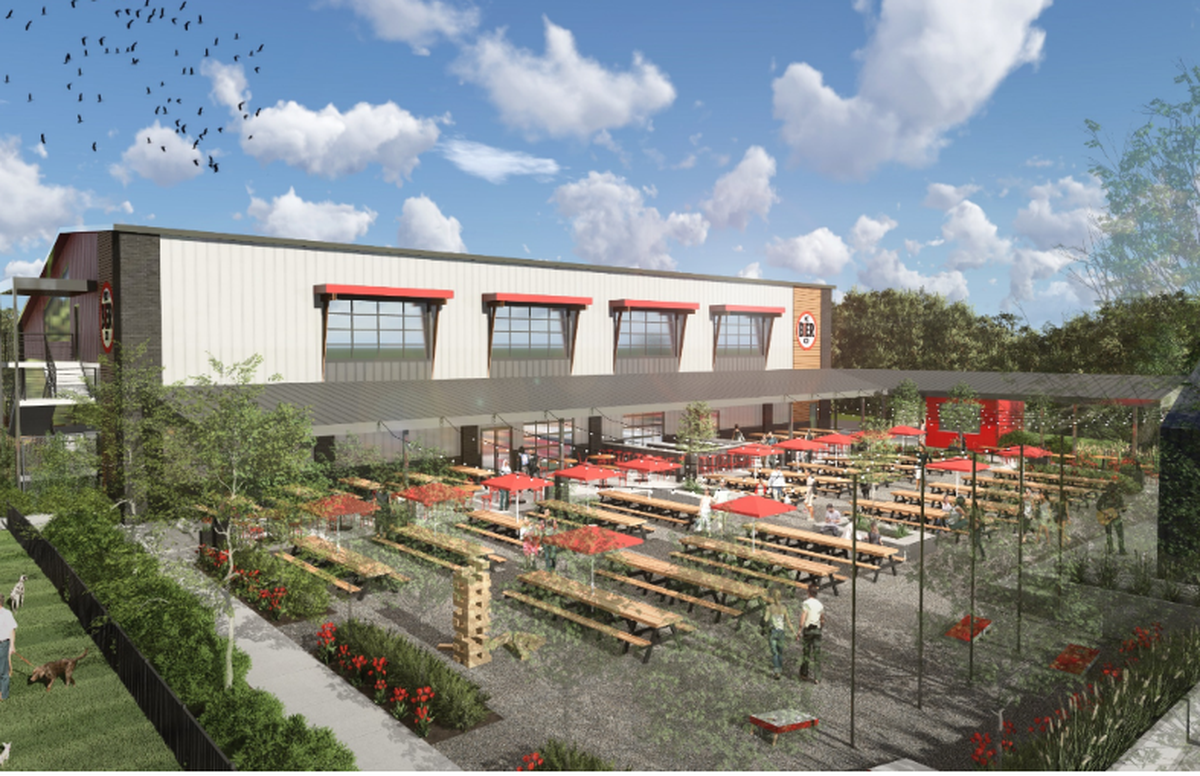
The space, with all its bells and whistles, is partially a response to a change in consumer habits.
“I think people are looking for an experiential opportunity to drink beer,” Holle said. “It’s hard for a smaller brewery like us to compete with large brewers who are … the biggest distribution networks.”
While Holle is “sticking to his guns” and providing niche German-style beer he thinks attracts a loyal customer-base for its quality, he’s committed to meeting customers’ cravings for entertainment.
Sherry Wohlgemuth, executive director of the Missouri Craft Brewers Guild, keeps track of brewery trends in the state. More and more, the breweries that are succeeding offer some sort of attraction.
“Most of the taprooms have trivia night or paint and sip. … They have all different kinds of events that are low or no cost to get people involved,” she said.
Gacioch with the Brewers Association concurred. Breweries across the country are opening pickleball courts, mini golf courses and comedy shows. Anything that they think will drive folks in the doors.
Mike McVey — owner of Transport Brewery and chairman-elect of the Greater Kansas City Restaurant Association — isn’t too worried about the slight dip in breweries this year. He’s seen good numbers at his two Johnson County locations. Better than last year, even.
He did say, however, that adding a pizza kitchen to his Gardner brewery boosted sales.
“Breweries without food are becoming fewer and further between, just with trends,” he said.
On the riverfront, beer garden Two Birds, One Stone opened this summer next to CPKC Stadium. It offers a full menu and beer from several local breweries, though it does not brew its own.
Iowa’s fast-growing Big Grove Brewery plans to enter the metro with a Prairie Village location. But it, too, offers an extensive food menu and outdoor space.
.jpg "Big Grove Des Moines (1).jpg")
Brewing up alcohol-free beverages?
An emphasis on experience is perhaps a side effect of another puzzling trend: Gen Z drinks less than its counterparts.
According to an August Gallup poll, only 50% of young adults drink — down from 59% just two years ago and putting their drinking rate below middle-aged Americans.
Gallup, who’s been tracking drinking trends since 1939 (six years post-Prohibition), says the drinking rate has fallen to a record low. More than 53% of all adults today believe that drinking in moderation, or “one to two drinks a day,” is unhealthy. That number was 25% just 20 years ago.
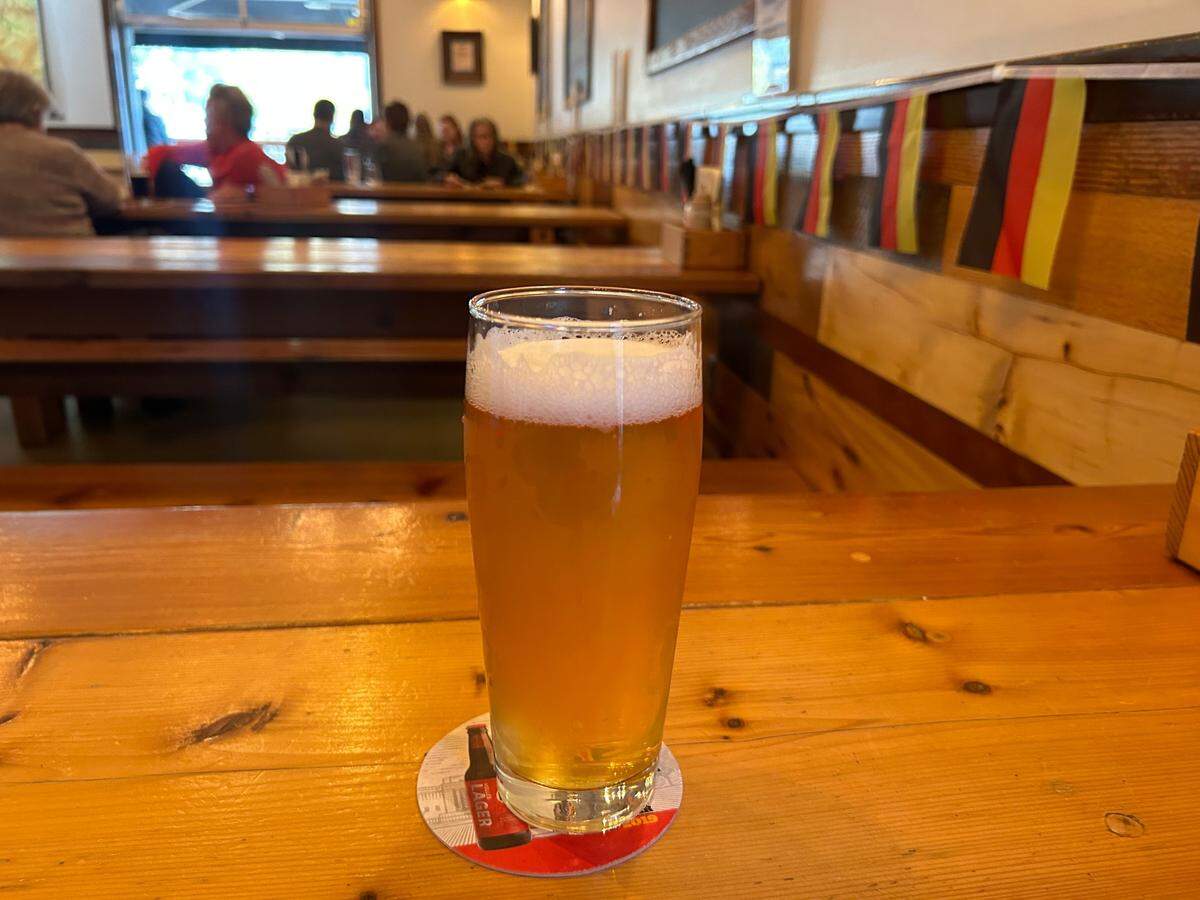
While the drinking rate continues to fall rapidly, Kansas City breweries are adjusting.
Holle now offers a nonalcoholic “Hopwater,” a sparkling seltzer drink flavored with hops, though he concedes non-beer products make up roughly 2% of his total sales.
Gacioch with Brewers Association said that close to a quarter of breweries offer “beyond beer” products. Those include craft sodas, nonalcoholic beer, and THC-based products.
Kansas City-based Boulevard Brewing Co. announced last month that it would begin offering a THC-infused, zero-proof Quirk seltzer.
While alcohol is on the downward slope with the younger generation, THC beverage sales in the U.S. are expected to grow from $1.1 billion last year to nearly $5.6 billion by 2035, according to Whitney Economics, a data analysis organization for the cannabis industry.
‘Exceeded its saturation point’
While data isn’t overwhelmingly positive for Kansas City brewers, it’s likely not a reason to panic.
Gacioch thinks the closures are partially an evening out of a perhaps crowded market that saw a boom of openings in the 2010s.
“Markets will always correct according to supply and demand,” he said. “A mature industry doesn’t see exponential growth year over year, over year for decades.”
Keith Thompson, who owns Brewery Emperial and has been in the industry since 1994, remembers the days when there weren’t many tasting rooms.
He also remembers the time in 2015 and 2016 when Kansas City brewery openings exploded. It seemed, at the time, like they were opening on every block.
“It just maybe exceeded its saturation point, is kind of how I feel about it,” he said.
Gacioch encouraged brewery fans to continue to patronize their favorite breweries and have open conversations about what they’d like to see, if they hope to see them around in the next five to 10 years.
But the beloved, honey-colored drink that’s been around since at least ancient Mesopotamia likely isn’t going to evaporate from the public sphere anytime soon.
“Beer has been around since the dawn of civilization. I don’t think that beer as a category is just going to disappear,” Gacioch said. “Brewers need to understand their customer base and their target audience to get them what they really need.”
This story was originally published November 6, 2025 at 5:00 AM.