
Negro Leagues baseball great Hilton Smith honored as more than ‘Satchel’s shadow’
AI-generated summary reviewed by our newsroom.
- Hilton Smith was a dominant Kansas City Monarchs pitcher and also a key field player.
- Smith wrote Monarchs owner J.L. Wilkinson, urging him to sign Jackie Robinson in KC.
- Hilton Smith was memorialized with a new grave marker at Mt. Moriah Cemetery.
If Hilton Smith had been born a decade or so after his birth in 1907, he could well have been forever celebrated for breaking the color barrier in Major League Baseball the way we cherish the name of Jackie Robinson — whose career arc, as it happens, Smith helped create.
If he’d been born a decade or so earlier than whenever Satchel Paige actually came into the world and/or was infused with just some of Paige’s uncanny showmanship, chances are Smith would have had a claim to Paige’s self-proclaimed and widely authenticated stature as “world greatest pitcher” … instead of too-often being overlooked as “Satchel’s Shadow.”
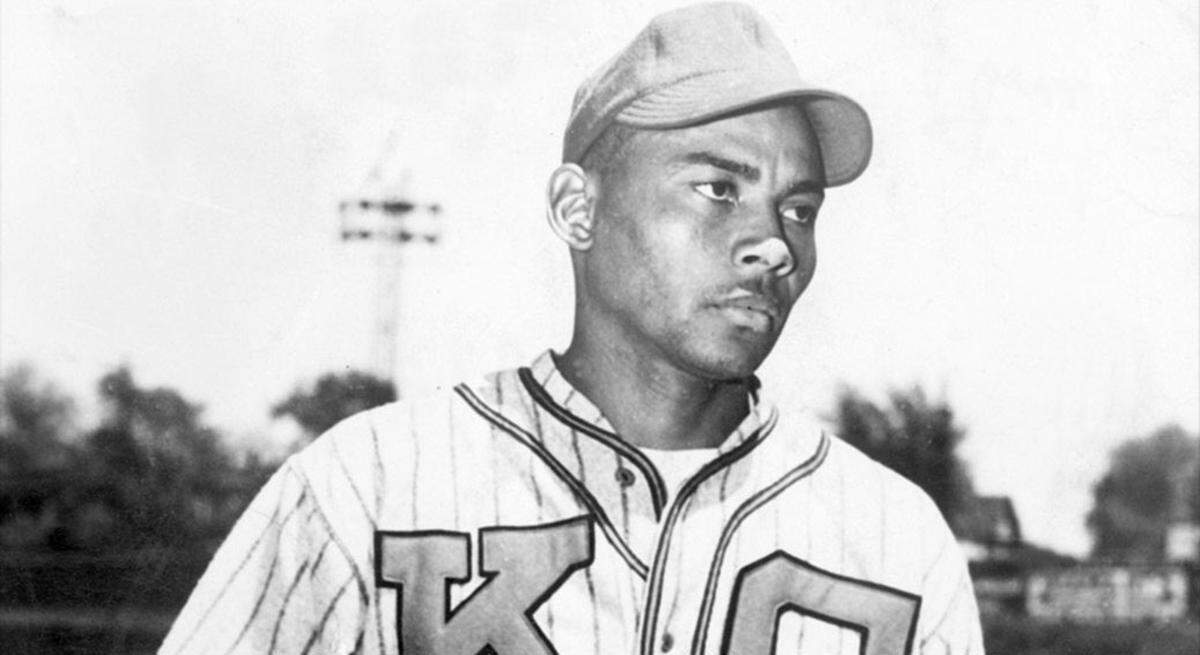
So, surely he didn’t feel like Buck O’Neil, whose autobiography was called “I Was Right on Time” and viewed Smith as his best friend.
But the man O’Neil liked to say was a better baseball player than anybody “in this whole wide world” was too understated, gracious and dignified to resent Robinson or envy Paige.
So humble was Smith that it’s doubtful many who worked with him at Armco Steel after his playing days knew he’d been one of the greatest pitchers there ever was.
Nor did many, if any, of the youths he coached know him as anyone but “Mr. Smith” until he was inducted in the National Baseball Hall of Fame in 2001 — 18 years after his death.
While Satchel Paige in many ways is the enduring face and even aura of the Negro Leagues, the essence of it all is as much to be found in Smith — who on Friday was memorialized anew with a grave marker at Mt. Moriah Cemetery more befitting his stature.
.jpg "unnamed (4).jpg")
A stature, Negro Leagues Baseball Museum president Bob Kendrick said at the ceremony, that “to me epitomized what it meant to be a Negro Leagues player.”
That went well beyond being an extraordinary talent for the Kansas City Monarchs, embodied in winning 20-plus games in 12 straight seasons while also being a key player in the field — a skill-set rather common in the Negro Leagues that Kendrick has enjoyed casting new light upon with the advent of two-way superstar Shohei Ohtani.
And it went well past being part of the 1942 team as one of four future Hall of Famers.
Or possessing a curveball that Hall of Famer Monte Irvin called “so sharp that you could know it was coming and still couldn’t hit it.”
It meant being quiet, unassuming and intellectual, Kendrick said.
Being the sort of man who typically stayed in his hotel room writing letters instead of going out when he was on the road.
The sort of person known to spend bus rides teaching illiterate teammates how to read, a process likely guided by a primer text booklet, Kendrick said.
Standing behind the new marker established on Friday made possible by what Kendrick called the diligence of Kevin Kenney and generosity of Lonnie Shalton, Smith’s son DeMorris simply called his father a man who lived to “do what’s supposed to be done.”
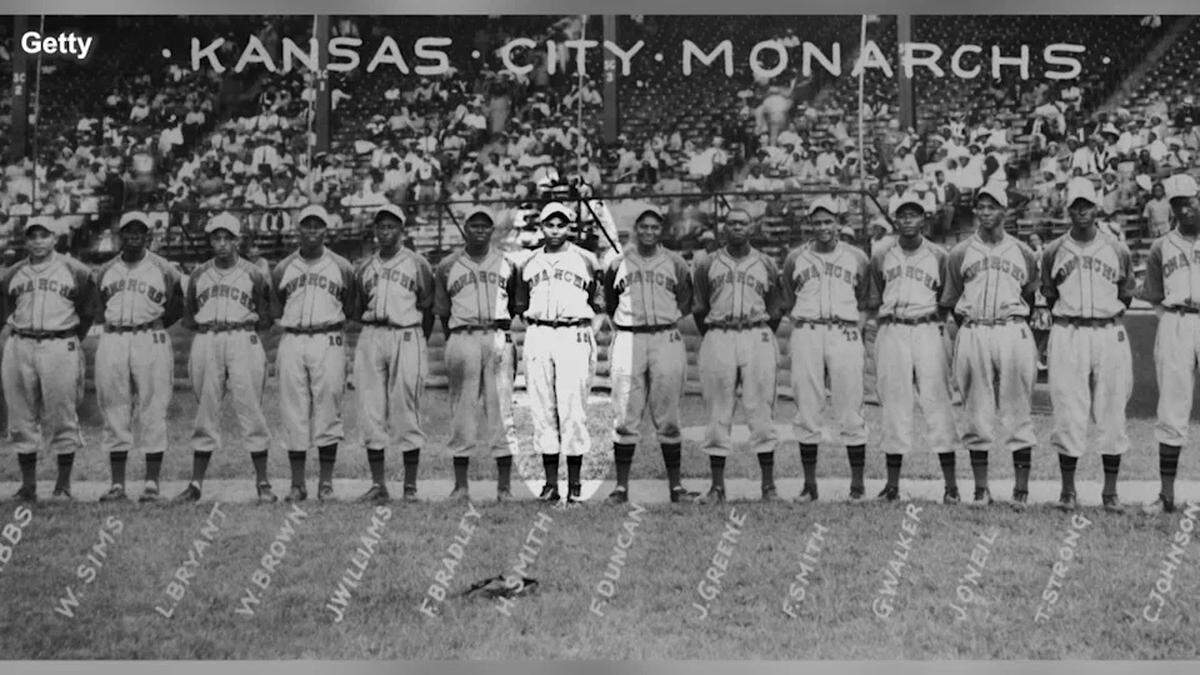
That included the substance with which he complemented the instinctive showmanship of Paige, who combined that with his stupefying talent and unfathomable durability to make him what Kendrick called a “global icon.”
More often than not, Paige’s fame would be the draw for any game and entrench him as the starter.
.jpg "unnamed (3).jpg")
Quite often, though, that meant Paige would pitch the first two or three innings … and Smith the rest.
“Everybody wanted to see the old man pitch,” Kendrick said, laughing.
But the old Monarchs Kendrick got to know put it like this:
“If you were going to get anything, you’d better get it off Satchel,” Kendrick said. “Because you weren’t going to touch Hilton Smith.”
Perhaps paralleling how he was underappreciated in his time, the Texas native evidently was cut from the Prairie View A&M baseball team.
While some historic documents say he left of his own volition to seek his career in minor-league baseball, DeMorris Smith tells a story about his father later playing on a local town team against Prairie View.
As he mowed down player after player, the man who cut him wondered what that guy was.
“‘Coach, that’s the kid you cut,’” the story goes.
With a laugh, Kendrick added, it was reminiscent of the coach that cut Michael Jordan from the varsity basketball team and put him on JV.
Because Smith went on to flourish in a similar way, even if it was out of view to a large degree.
Upon the occasion of his no-hitter against the Chicago American Giants on opening day in 1937, the Kansas City Call splashed Smith’s name across the top of its sports section and wrote of his “thrilling” and “seat-twitching exhibition of pitching.”
Only two balls even reached the outfield, the Call wrote, in a game attended by 5,000 people at the KC venue best known as Municipal Stadium.
In 1938, the Atlanta Daily World called Smith the “greatest pitcher in the league.”
By 1939, The Black Dispatch was calling Smith “a magnet at the gate … on the way to becoming one of the greatest hurlers of his day.” The story went on to say “there is no better liked chap on the Monarchs roster, or on any team in major league baseball, than Smith.”
Part of that surely was because he was as modest as he was resolute, as fierce a competitor as he was self-possessed.
Those sort of traits would have served him well if he’d been a few years younger, as the seismic shift of integration in baseball was beginning to rumble.
That would prove to be the apt legacy of Robinson, whose journey, in fact, Smith helped pave.
Soon after seeing Robinson play in a 1942 exhibition game between Black stars and white players from the then-segregated major leagues, Kendrick said, Smith wrote a letter to Monarchs owner J.L. Wilkinson encouraging him to sign Robinson.
After Robinson’s court-martial from the U.S. Army, according to research by the National Baseball Congress, Wilkinson remembered Smith’s recommendation and signed him for the 1945 season as a teammate.
That was the portal to Branch Rickey signing Robinson and integrating baseball in 1947 with the Brooklyn Dodgers.
While Robinson came to meet the moment in a remarkable way, Smith was 40 by then and retired from baseball in 1948.
Like too many others of his time, Smith’s sheer greatness tends to be obscured, his legacy overlooked. Such is the prime reason for the existence of the NLBM: “So that we should be remembered,” co-founder O’Neil liked to say.
And it was a principle point of the ceremony Friday, which follows similar such endeavors in the last few years in the name of Oscar Charleston in Indianapolis and Charles Wilber “Bullet Joe” Rogan at Blue Ridge Lawn Memorial Gardens.
To say nothing of the notable memorials to O’Neil and Paige at Forest Hills and Calvary Cemetery.
“From a mainstream perspective, they kind of toiled in anonymity,” Kendrick said. “They shouldn’t lie at rest in anonymity.”
Especially if they’ve been overshadowed by other twists of birth and history.
Because even if Smith might be rolling over in that grave at all the fuss, Kendrick added, people “should know who Hilton Smith is.”
This story was originally published May 1, 2026 at 5:37 PM.