
‘Across a Rubicon’: Why this week makes 2026 World Cup real & spectacular for KC
AI-generated summary reviewed by our newsroom.
- It’s been a decade since Kansas City began working toward a World Cup bid.
- Match draw and ConnectKC26 transport plan this week finally make it all tangible.
- Team assignments will trigger travel bookings, volunteer mobilization and tourism.
All of a sudden, it’s been a decade since the Kansas City Sports Commission, the Chiefs and Sporting KC began serious conversations about bidding to be one of the 2026 FIFA World Cup hosts.
Years of exhaustive work later, an entire story in itself, Kansas City in 2022 reveled in being selected among the 16 North American sites, including 11 in the United States.
As the smallest city ever to have played host to an event anticipated to bring 650,000 visitors here for six games — including a quarterfinal — the World Cup in many ways looms larger in Kansas City than anywhere else. Signs of its impending arrival — from an endeavor to activate empty storefronts to Fan Fest renderings to countdown clocks to calls for volunteers — have been gathering momentum for months.
For almost anyone other than those working feverishly on the cause, though, it’s been easy to think of this monumental event as still out there over some remote and vague horizon.
Until now, that is.
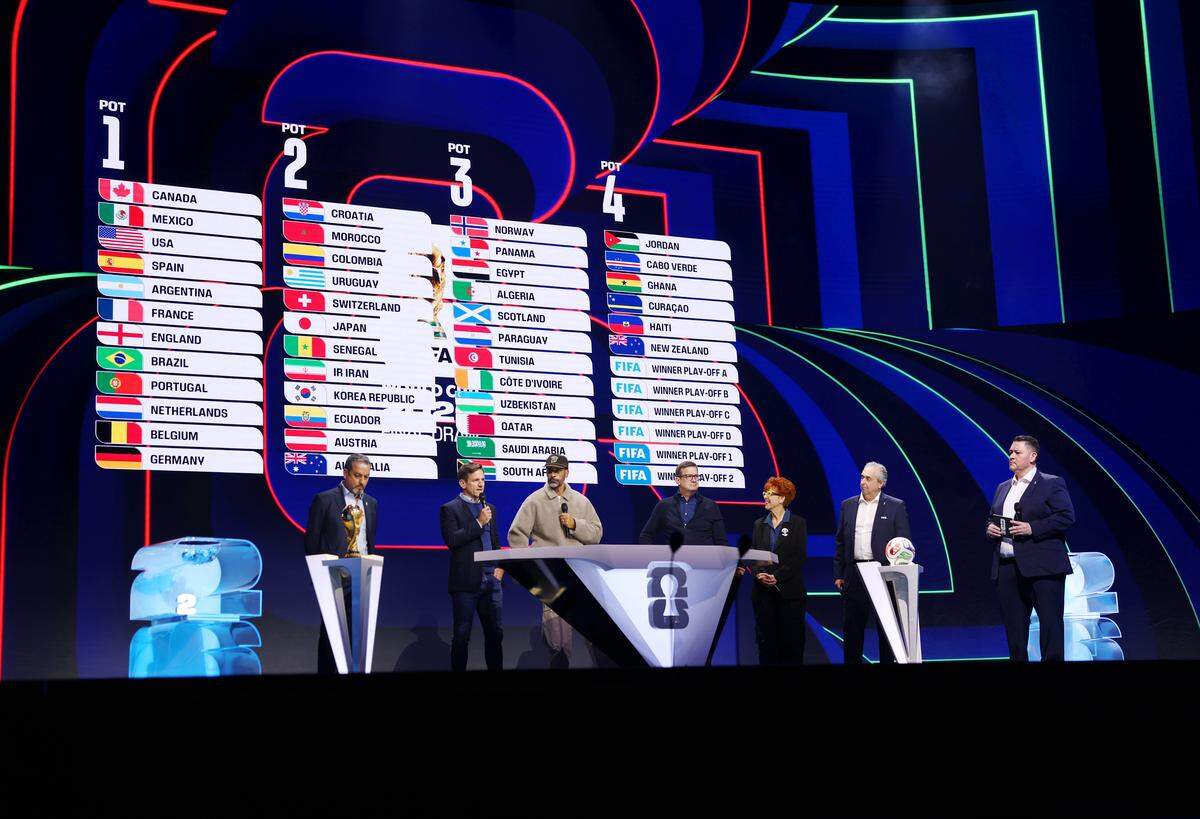
Because it’s finally getting real in ways that will animate anticipation and amplify how imminent the games of June 16-July 11 are — a time frame that also will feature teams from around the world making use of up to three regional base camps.
Synergizing the announcement earlier this week of an ambitious regional transportation plan (ConnectKC26) that FIFA described as so exemplary as to be a model for other cities, the draw for the 48-nation field is Friday in Washington, D.C., and will feed into the more pertinent announcement Saturday of the group-stage matches and where they’ll be played.
Making it all tangible is one of the most substantial developments in the decade since the effort was launched.
It’s a turn that instantly will accelerate international interest in Kansas City: from countries whose teams will be headed here to flipping an economic development switch in terms of prospective travelers booking hotels and rental cars, etc.
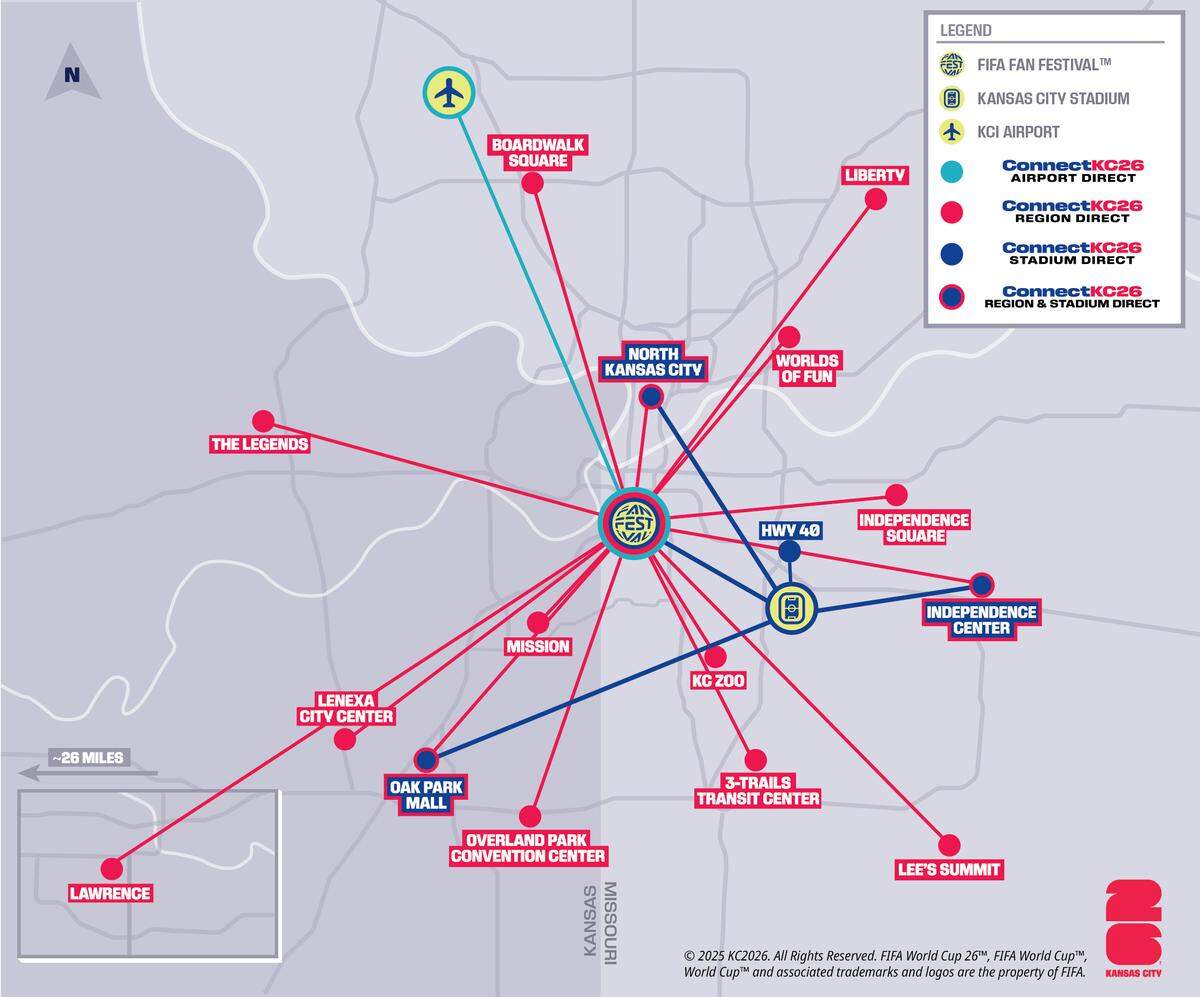
“I’m exhilarated to finally see who’s coming here (because of) the concreteness,” Kansas City Mayor Quinton Lucas said after the transportation plan announcement Tuesday at Lenexa City Hall. “There has been a lot of, I won’t say ambiguity, but just kind of a lack of understanding on the part of all of us in terms of what’s coming ahead. …”
“I think it is fair to say that this week you really do cross a Rubicon in a way. We have heard a lot of kind of ancillary discussions: ‘Will games get moved? Will any number of (other) things kind of happen? How will you be ready for transportation? What’s the biggest fear?’
“This is where we’re saying … ‘We’re ready to move.’”
Having such clarity in both form and function makes this what KC2026 CEO Pam Kramer called a milestone week.
“We’ve been pointing to this moment this weekend for as long as I’ve been involved, and certainly prior to that,” said Kramer, who has been saying “every day matters” since being named to KC2026 job in July 2024. “So to have it be here and to have some certainty around at least the teams that will play here is a huge moment, and I think it’s a point where we can start getting excited about soccer.”
Vital as logistics are, Kramer told me and Star colleague Blair Kerkhoff, “At the end of the day, this is about soccer. And the reason people are coming is because of the matches and because of the excitement that surrounds it.”
As much as the announcement of the matchups make for a watershed in terms of stoking global interest in where, when and who their teams will play, it also figures to have a meaningful impact on our end of the spectrum to finally know just who’ll be here.
Whether it’s international powerhouses and their massive entourages or, say, Curacao, the Caribbean island of fewer than 200,000 people that last month improbably became the smallest nation ever to earn a World Cup berth.
By way of example, Kramer smiled as she thought of Curacao having the potential to be reminiscent of the famed underdog Jamaican bobsled team that inspired the 1993 movie “Cool Runnings.”
That sort of dynamic, those sorts of stories among countless others from all nations great and small, no doubt will capture our imaginations and even endear themselves to us.
“Those are the kinds of moments that I’m excited about,” Kramer said, smiling and adding, “And the big teams, too.”
A vision a decade in the making finally coming into the most clear focus yet of a region on the move.
With a transportation plan that we should all hope makes for a transformative model legacy for a region in dire need of more efficient public transportation.
And with the eagerly awaited reveal of the human elements that made this event so coveted to begin with.
This story was originally published December 4, 2025 at 12:34 PM.