What Royals owner John Sherman’s open letter did, didn’t say about downtown ballpark
READ MORE
What we know about Royals stadium move
The Kansas City MLB team has set its sights on leaving its ballpark of nearly 50 years, Kauffman Stadium, and potentially building a new stadium and sports entertainment district downtown.
Expand All
In the 14 months since Royals chairman and CEO John Sherman announced that the organization was considering moving out of the Truman Sports Complex to a downtown location, about the only clear element of the exploration has been its deliberate pace.
So much so that it’s been easy to wonder what the holdup has been over crucial details, such as a site, price tag, timeline, specific concepts of any new stadium and what would be entailed in Sherman’s stated notion of a district around it to create “meaningful community impact that is real and measurable.”
Much remains to be clarified. But on Tuesday, in an open letter to fans and the community, Sherman and the Royals at last revealed some notable specifics and some tentative broader elements even as they reiterated this all remains on a meticulous trajectory — one that suggests it’s improbable the project could be done before Kansas City becomes a 2026 World Cup host, with games to be played Arrowhead Stadium.
We’ll come back to all we still don’t know. And why we won’t have an entirely clear picture for a while yet, with the Royals touting a gradual “keep the line moving” approach that harkens to their drip by drip playoff comeback against Houston en route to winning the 2015 World Series.
First, though, let’s shade in what now can be seen more distinctly.
For starters, Sherman estimated this would be a $2 billion project in which the Royals for the first time specified they would “invest hundreds of millions of dollars directly into the ballpark and the ballpark district,” while stating they “would not ask Jackson County citizens to contribute any more tax dollars than you already do today.”
(What “hundreds of millions of dollars” means, of course, is vague. And however much that means, that leaves a whole lot of would-be funding still to be explained. Also unspecified: How much of that proposed figure would be designated for the ballpark itself, and how much toward the ballpark district? )
Another point of tentative clarity: While it might have seemed a foregone conclusion that the Royals would indeed make this move, Tuesday was the first time they’d stated it with virtual certainty.
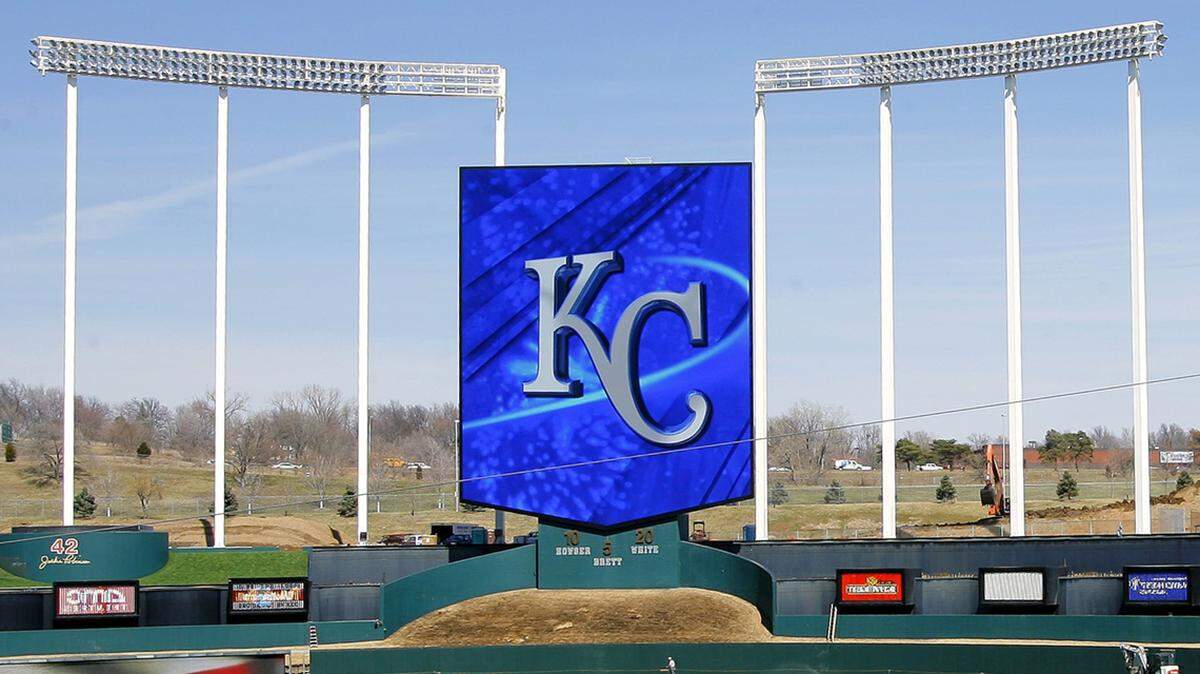
“As you may already know, it’s become challenging to maintain The K,” Sherman wrote. “When its current lease with Jackson County concludes at the end of this decade, it will be 60 years old. The renovations required at The K to achieve our objectives would cost as much or more than the price tag to develop a new ballpark.
“A new home would be a far better investment, both for local taxpayer dollars already supporting our facility, and for the Kansas City community.”
We’re talking about the Royals here, but a quick aside:
The Chiefs have said that they are mulling their own future, but contingent first in the context of what the Royals choose to do.
Even without knowing the ultimate destination for the Royals, their stated intent to leave could engage the next gears in the process for the Chiefs, who say they are considering whether to renovate Arrowhead, rebuild a new stadium at the Truman Sports Complex site with further development or build elsewhere.
In his first media session since the letter was sent out, Royals president Mark Donovan on Friday stated again that the Chiefs are on a different timeline than the Royals (at least in part because Arrowhead will be a World Cup host).
“We’re still looking at 2031. We’re still in the middle of all the due diligence, we’re learning more every day and the options that I laid out before are still the same options,” he said.
Donovan also noted the distinction between the Royals “making their intentions known” and having a move decided and said it would be “inefficient to go too far” at this stage.
Later asked to elaborate on “looking at 2031,” Donovan said: “That’s our lease and we’re going to figure out what we’re going to do going into the end of the lease. Obviously if you’re going to do something in ‘31 – either new or renovate – you have to be doing that in ‘26, ‘27, ‘28. But we do have (the) World Cup in ‘26 so our plan is still the same that that would be the time frame.”
He added, “Because we share a lease (at the Truman Sports Complex), if things happen to that lease that allow the Royals to go earlier then we have to look at that. How’s that affect us and would that affect our timing?”
“If things happen to that lease,” of course, speaks to a Royals departure. And just when and to where remains unclear.
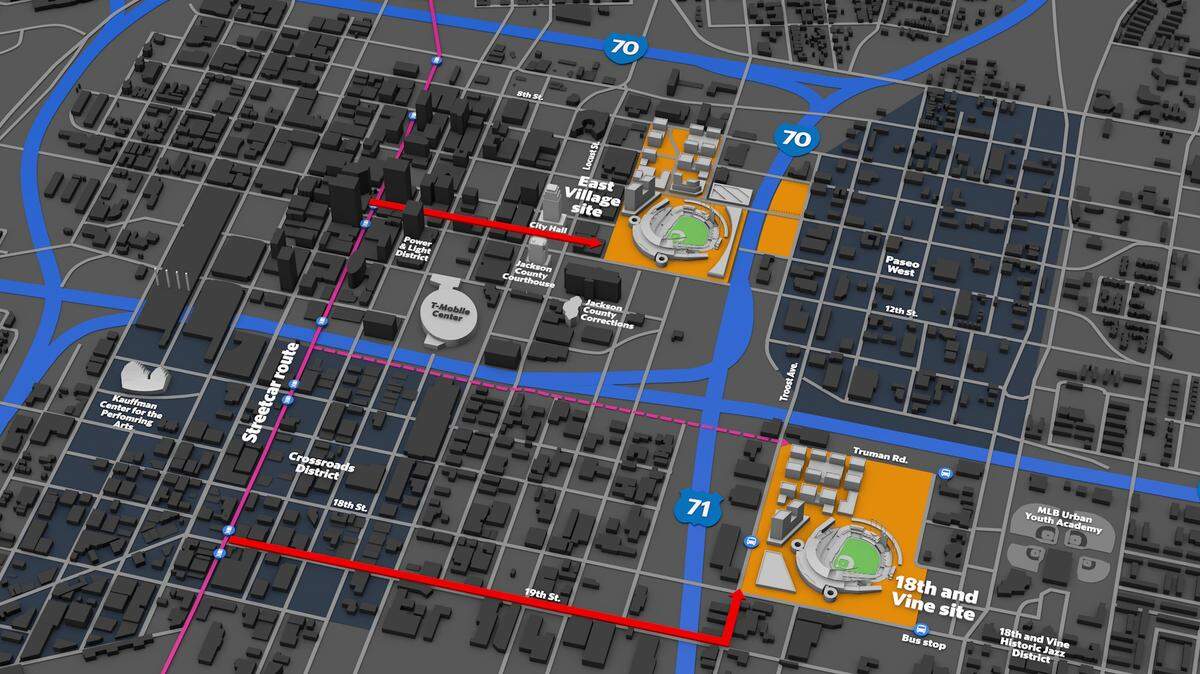
Sherman’s letter said the search for sites allowing for “residential, commercial, and community components” of a ballpark district has led to “several leading locations under close consideration both in downtown Kansas City and close to it.”
Yes, we’d all like to know precisely where. Especially since we often hear from people who insist they know deals are done … and then tell us conflicting locations.
The Royals, though, insist no decisions have been made. And there is no indication that top officials in the city have been told of a decision.
So why is it taking so long to propose a site?
It’s believed that the process rests on a variety of factors, from varying infrastructure matters here to potential financial perks there to securing land anywhere and political considerations everywhere. And, the Royals stress, wanting more community input as they further study the best prospects.
Toward that end, Sherman wrote that the Royals “look forward to seeking input from the public … about our vision to best serve our residents and build on the momentum our city is experiencing.”
They plan to do that, he wrote, though a “listening tour” around the region and by beginning “in earnest a discussion with local, state, and federal officials regarding possible additional sources of funds to help make this project a reality.”
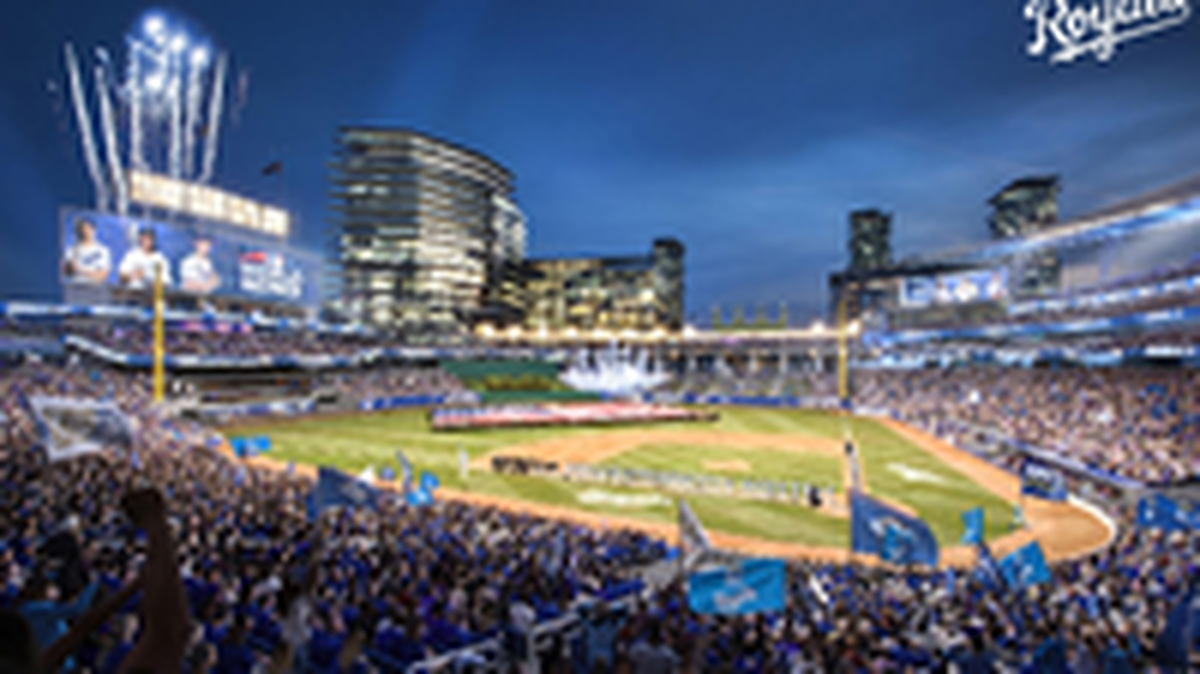
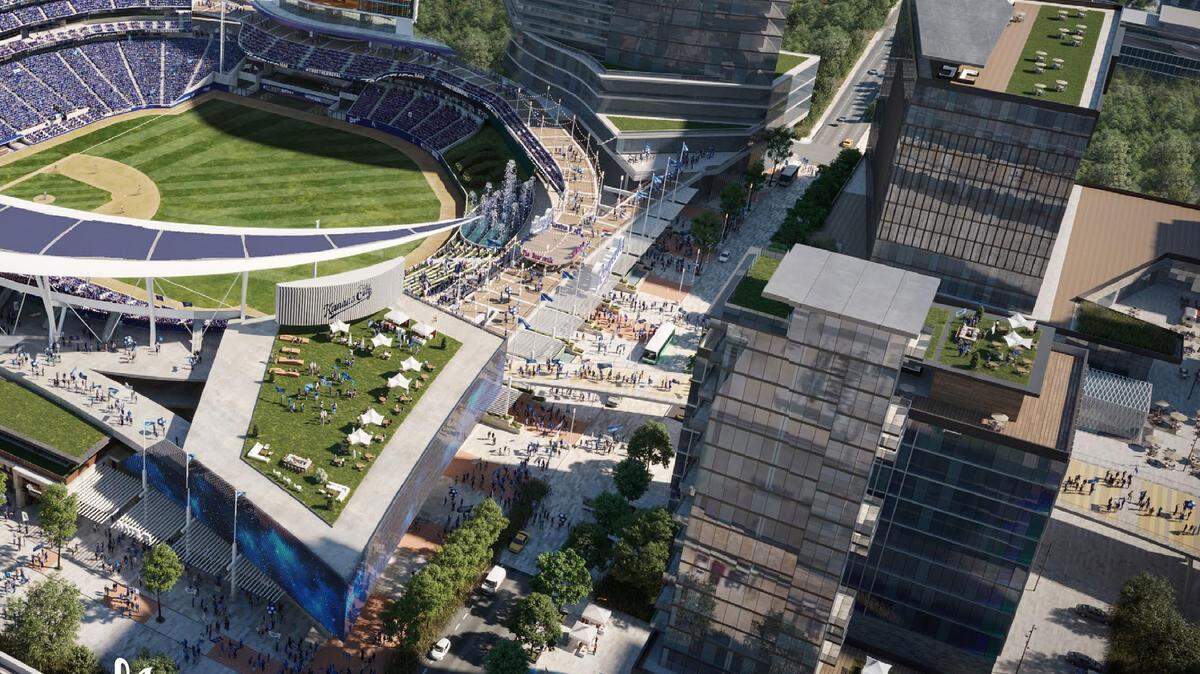
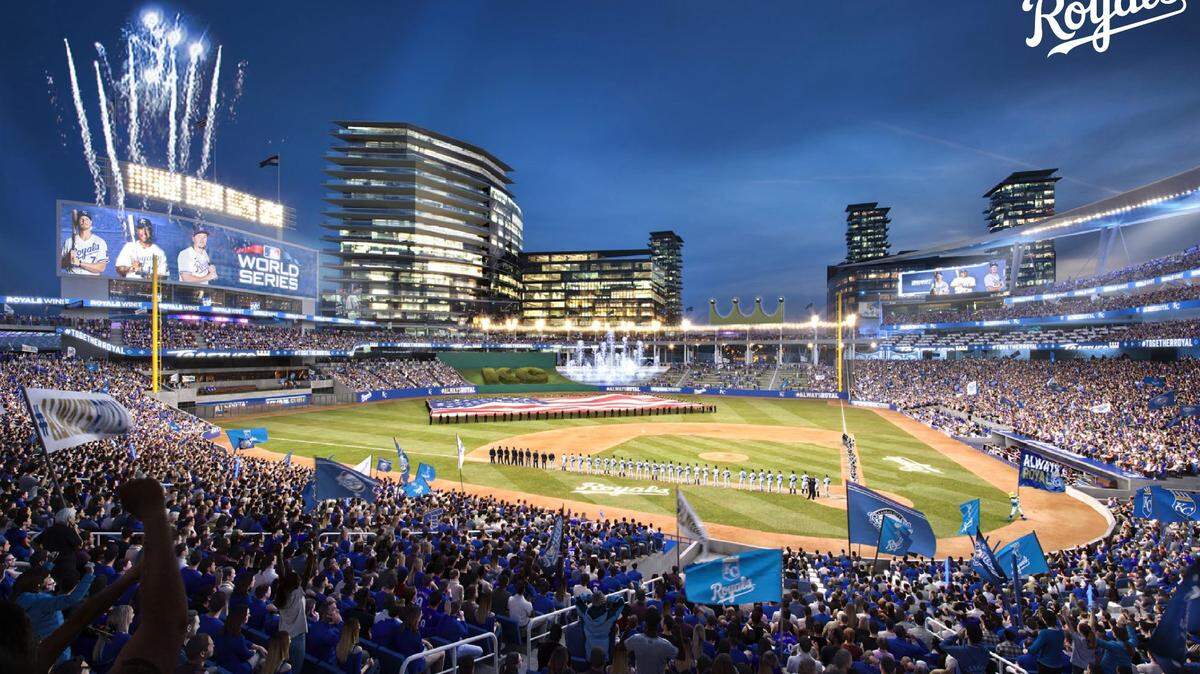
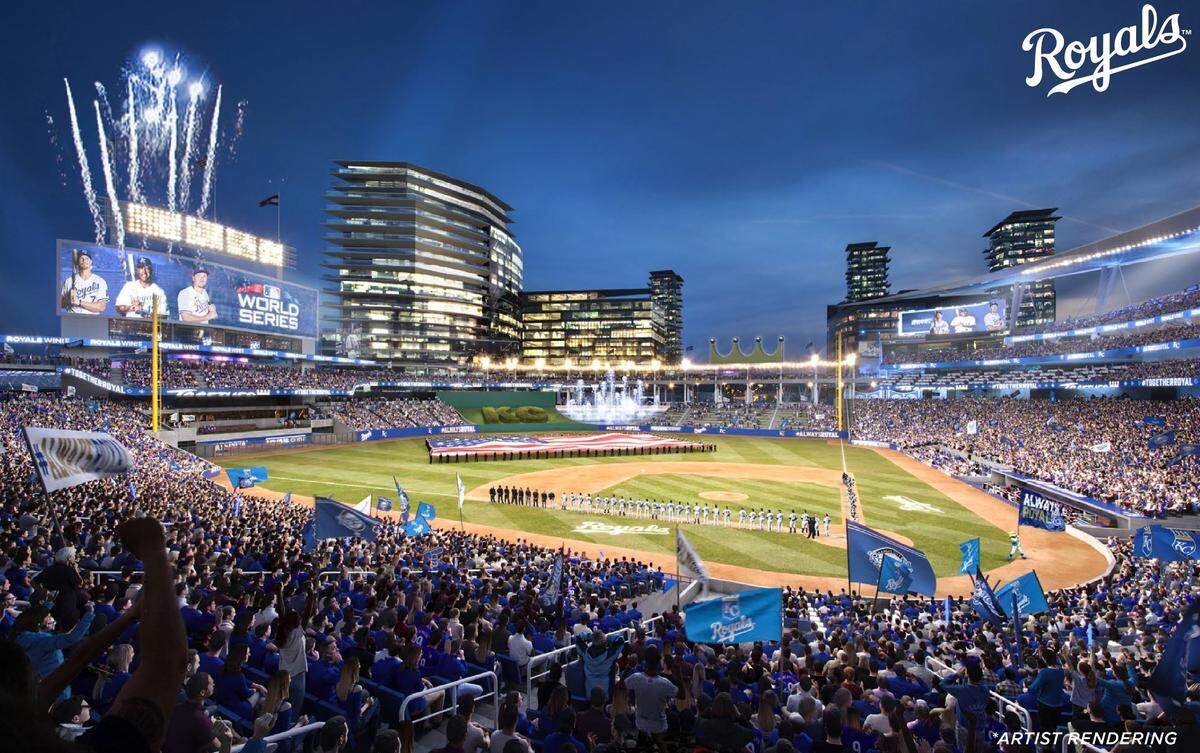
Attached to his letter also were preliminary renderings, certainly subject to change but that provided a first-look of sorts at some of the vision. Given that any flourishes of the stadium surely will be evolving and contingent on location, perhaps most notable in the renderings is the scale of the buildings around it.
And Sherman’s words about both aspects were his most expansive yet:
“Our vision is to not just build a facility that does justice to the spirit of The K. We want to construct a world-class experience — a new ballpark district and all that comes with it — one that is woven into the fabric of our city, can host events and concerts, and boosts our local economy. We also envision incorporating our Kansas City fountains, the Royals’ crown and our team’s rich traditions and history in a new ballpark district.
“The proposed ballpark district would become a new home for Royals fans far and wide — both inside a state-of-the-art ballpark and in the revitalized surrounding area. We will marry the traditions of The K with a better experience for our fans.”
As for that revitalized surrounding area?
“With a mixture of public and private investment, including our own intention to invest hundreds of millions of dollars directly into the ballpark and the ballpark district, the long-term vision remains a work-in-progress,” Sherman wrote. “We envision local restaurants and shops, office spaces, hotels, and a variety of housing opportunities accessible for Kansas Citians from all walks of life. Affordable housing options will be important to our efforts.
“We would also work closely with our local transportation leaders to ensure public transportation options accommodate a new ballpark district.”
Sherman goes on to cite economic impact studies. While these sorts of projections offered by those seeking to build often are optimistic and hard to embrace without knowing the specific data behind them, for your consideration:
“Going forward with this process would result in the largest public-private development project in Kansas City history, expected to be $2 billion as currently envisioned. Construction of this new ballpark district could create 20,000 jobs, $1.4 billion in labor income, and an estimated $2.8 billion in total economic output, as well as spur additional adjacent investment.”
Sherman added that the Royals would anticipate that the inaugural year of the ballpark would drive “approximately $185 million more in regional economic output than The K does today” and that spending in the new ballpark district would “drive more than $60 million in new tax revenue over the first decade.”
Moreover, he said development in the area “could attract 2,200 onsite jobs, with employment representing $200 million in annual labor income and more than $500 million in annual economic output.”
Only time will tell how accurate such forecasts may be.
And it figures to still be some time until we see the full picture.
It remains unclear when the Royals expect to zero in on a site and whether they hope to have some tax question on the ballot in April.
Considering Sherman’s statement that Jackson County taxpayer would not be asked to pay any more than they do today, it might be surmised that the Royals will seek to extend the 3/8-cent sales tax that has been in place since 2006 for renovations to Kauffman and Arrowhead.
So it’s great to get a better sense of such an ambitious concept, one that along with the imminent finish of the new airport and the beginnings of the building of the KC Current stadium could indeed bring real and measurable community impact.
The details we still don’t know and can’t yet see, of course, are vital to the success of this.
From where we sit, the slow boil is because Sherman and the Royals are committed to doing this right and not hastily. And Sherman’s history tells us he’s both an astute and enterprising businessman and remarkably civic-minded.
But being skeptical about what this will entail and ultimately produce isn’t just healthy but necessary.
So here’s hoping that upcoming listening tour is as illuminating and sincerely solicitous as described.
And that the Royals respectfully respond to major concerns and essential questions with answers and actions that more clearly illuminate that this project is in the best long-term interests of the city.
This story was originally published November 15, 2022 at 8:50 PM.