How Bob Kendrick became the Kansas City Negro Leagues museum’s indispensable man
READ MORE
Highlighting Black stories
A collection of stories from The Star from the past year centered on Black life across the Kansas City metro.
Expand All
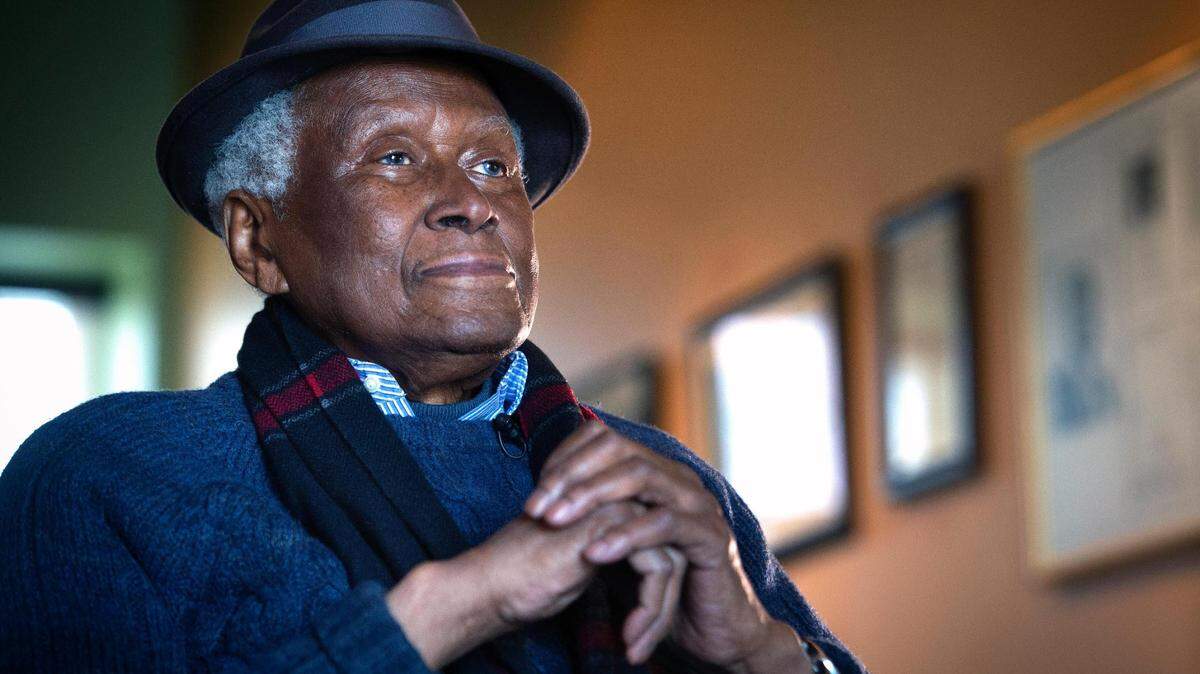
Bob Kendrick is about the most elegant and eloquent person you’ll ever meet. Outgoing as he is, odds are you will indeed meet this ever-engaging man if you haven’t already.
That persona, not to mention his hats and colorful suits and otherwise dynamic threads, are so entwined with the fabric of Kansas City that few might realize he’s of this place but not from it.
Or that his journey to animating and watching over a cherished civil rights institution was launched from down a dirt road in rural Georgia, in a small town that embodied the struggle for equality, for which he marched before he even knew why. Or that basketball was the way here for the man who came to make baseball much of his life ... and that his blue-collar work in the pressroom at The Kansas City Star would lead to a calling that makes him a city treasure.
In fact, he’s become such an illuminating Kansas City institution in himself that if Mayor Quinton Lucas needed a tour of the city given to, say, a U.S. president of either party, he’d turn first to Kendrick, the president of the Negro Leagues Baseball Museum.
Because Kansas City has no more appealing ambassador than Kendrick, who can relate to anybody and has a remarkable knack for being able to align disparate places and events into a compelling narrative. Even in the Twitter-verse that Lucas notes can be a “toxic cesspool,” Kendrick prevails as a unifying force to people from all walks of life.
“Not a lot of people can do that,” said Lucas, adding that he’s never met anyone like Kendrick.
You can see that brought to life on any given day at the NLBM, where Kendrick has become so synonymous with the mission that his role almost seems destined here in the city where the Negro Leagues were founded in 1920 and gave birth to what became its most fabled team, the Kansas City Monarchs.
Certainly, he’s an extraordinary fit, as well-suited to his work as seems humanly possible. He’ll tell you it must have been enabled by some divine intervention.
That force, he reckons, includes one of his idols, Buck O’Neil, whom Kendrick often can feel on or looking over his shoulder. And sometimes, you get to see exactly why he feels like that.
Days after O’Neil finally was named to the National Baseball Hall of Fame in December, Kendrick stood adjacent to the museum’s Field of Legends speaking of his joy over the honor and O’Neil’s ongoing presence.
“You can’t help but think that somewhere in that great somewhere, ol’ Buck is looking down on us and he’s smiling,” he said.
Precisely as he said that, recorded cheers suddenly could be heard from a film playing quietly in the background the previous 10 minutes. Sure, it was a coincidence. But it also epitomized how much this all seems meant to be. And maybe it really was.
But not as simply as it might appear.
Because if Kendrick indeed was born to do this, to preside over what should be considered a social justice museum among its other meanings, it was no obvious path. And it didn’t even unfold so neatly along the way: Foolishly, and almost irreparably, this place that he loved once passed him over before realizing he was the answer all along.
That made his own answer the hardest question he’d ever have to ask himself.
A tin roof, an unpaved road
Like his five brothers before him, Kendrick was born in Crawfordville, Georgia, and delivered at home by a midwife. The house with a tin roof down an unpaved road might not have had dirt floors, Kendrick says, laughing, “but, man, you could sure see the dirt.”
It also had no indoor plumbing, a fact that his older brother and surrogate father, Fred, attributes not just to poverty but institutional racism persisting in the early 1960s in the hometown of Alexander Stephens — vice president of the Confederacy and later the governor of Georgia.
The city didn’t run water to that effectively segregated side of the tracks, Fred said, until years and years after Bob was born in 1962 in the town about 90 miles east of Atlanta with a population of around 800.
Times were such that when the family traveled on Highway 78 to Atlanta, their mother, Clara Pearl, put together meals to go. As a child, Bob figured part of the delicious fried chicken recipe was having it packaged in wax paper inside a shoebox.
“As you got older, you realized why she did this: Because they were not going to stop anywhere on that route until they got to Atlanta,” he said. “Because it was still too frightening to stop along the way.”
Other elements of bigotry that would help shape Bob even before he was immediately conscious of them were less subtle in Crawfordville, where eating facilities and schools remained segregated.
By 1965, Crawfordville was embroiled in protests and boycotts and demonstrations that led to state police mobilizing there and the Ku Klux Klan invading and Dr. Martin Luther King Jr. coming to town to lend support.
Deeply moved by President John F. Kennedy’s 1963 address to the nation on civil rights as a 15-year-old, a speech from which he still recites and called “one of those things that you could not shake,” Fred Kendrick became an activist.
Early on, Fred was arrested during a sit-in at Bonner’s Cafe, where Blacks were permitted only to enter and sit in the back. Next thing you know, the group was moved from the local jail some 20 miles away to Warrenton, Georgia … with no notice to the family where they were. For 10 days.
“I had never been away from my mother for 10 hours,” said Fred, then 16 or 17, who never was brought to trial for the trespassing charge.
The story of those days in Crawfordville is infinitely more complicated and deeper than that. But the climate combined with Fred’s dedication to the cause — including serving as an organizer for King — was a profound influence on Bob, who participated in marches with Fred before he even understood what it was all about.
That was just one way Fred, the fourth child and 14 years older than baby Bob, has been as influential on Bob as anyone.
Because their father, Roger, often had to go to Atlanta to get work, and their mother was so busy with housekeeping jobs, Fred embraced a fatherly role in the feeding, changing and all-around care of Bob. Much of his motivation for trying to change the world was driven by the notion of “how will I be able to make it better for Bob?”
“He was, he is, my heart,” said Fred, retired from a long career in administration at Gallaudet University in Washington, D.C. “I have a daughter, but Bob is like the first born.”
The way to Kansas City
While all this was going on around him and surely infusing him in certain ways, Bob also was living what he considered an idyllic childhood, a perspective that seems a combination of nurtured resilience and a naturally buoyant disposition.
Even the fire that burned down their house when he was 12 doesn’t seem traumatic to him now. No one was injured, after all, and the only thing he remembers losing was the metallic purple three-speed bike with a white banana seat that Fred had bought him.
Plus, the fire led to moving into a house with indoor plumbing.
Meanwhile, he didn’t know what he didn’t know about not having much or why there were no white kids in the school where he graduated as the valedictorian.
(“Now, I never tell people there were only 13 in the class,” he said, beaming as ever. “So it was more process of elimination than anything else. Somebody had to be it.”)
What he did know was he had everything he needed, including a loving family and a mother who kept him in line. Clara Pearl made it so he never “got punished for the same crime twice,” Bob said laughing.
That was in part because “she didn’t play” and in part because she came to seem clairvoyant to him as she anticipated his actions in ways that seemed impossible, once practically materializing before him at the train depot she told him to avoid.
Since his school offered only basketball and track as sports options, and since “anyone who knows me knows I don’t believe in running for the sake of running,” basketball became his game.
Good thing, because that’s what eventually brought him here.
His shot was honed through the tin lard cans with the bottoms knocked out that they nailed to the side of the house. Later, his brothers and friends cut down a tree, built their own backboard with 2 by 4s, nailed on a real rim and net and planted the tree with a hole-digger to create their own dirt court.
By the time he was playing on blacktops and gyms, where the ball bounces back true, Kendrick had become a very good shooter. That paved his road to Kansas City.
He had hoped to attend Howard University in Washington, where Fred lived. But Howard didn’t want to offer him any scholarship money for basketball, and it was unaffordable without that.
For reasons he still doesn’t understand, out of nowhere Park College (now Park University) coach Hal Shaver contacted him.
“‘Hey, we’ve got a little money for you,’ ” he remembered Shaver saying. “ ‘Why don’t you come here?’ ”
Employee of the Month
So in the summer of 1980, he arrived with few belongings beyond a windbreaker that wasn’t adequate for a Kansas City winter. Moreover, his father died suddenly that fall, and his basketball ambitions faltered when he suffered a bad ankle injury in his second season. Not harbingers of making his life here ever since.
But Kendrick was finding fresh direction working in the athletic department and doing radio broadcasts for the basketball team and writing for the campus newspaper, the Stylus. Studying communication arts, he came to have a regular column, Kendrick Korner. Then his first job out of college in 1985 was at The Star, starting in the composing room to get his foot in the door.
“Everybody knows me today for wearing suits and hats and being fashionable and all of that stuff,” he said. “But back then I was wearing an apron. A denim apron! Wasn’t very stylish at all. I had a pica pole and an exacto knife.”
That proved a stepping stone to a job in marketing and promotions, which ultimately led to working on a Star campaign for a fledgling not-for-profit organization: the Negro Leagues Baseball Museum.
In September 1993, Kendrick was the centerpiece of the Star’s employee of the month presentation for his work on that. He still has a framed copy of that.
It’s hard to picture now, but Kendrick had known little about the existence of the Negro Leagues before the “love at first sight” that helped earn him that distinction.
The night in April 1974 when he was running around makeshift bases in the family living room to mirror Hank Aaron’s path to his 715th home run, he hadn’t known there had been Negro Leagues ... let alone that Aaron had come through them.
Now, he wanted everyone to know the real story of not just Aaron but so many others in this microcosm of America itself. That zeal also was sparked by his first meeting with the charismatic O’Neil ... and what he told Kendrick when he asked why the museum meant so much to him.
“‘So that we would be remembered,’” O’Neil said.
Kendrick soon joined the museum board and served as a volunteer, overseeing much of the marketing, public relations, advertising and event planning before being hired as the museum’s first director of marketing in 1998.
“And the journey began,” he said.
Exile and return
For a good eight years, the journey that included endless travels with Buck was blissful. Kendrick was immersed in something that felt like a part of him and helped the museum grow in so many ways.
Then, 2006 represented a chance at a monumental new tier of exposure and a crowning achievement for O’Neil, who seemed certain to headline the Hall of Fame class emerging from the Special Committee on the Negro Leagues election.
But Buck missed the cut. By one vote. Kendrick was left to deliver the news, and it took everything he could muster to get it out.
“And he looks up at me and he smiles, and he says, ‘That’s how the cookie crumbles,’ ” Kendrick recalled.
Then Buck asked how many had gotten in. Seventeen, Kendrick told him. O’Neil smacked the table in what Kendrick called “utter jubilation,” a feeling Kendrick wanted to have, too.
“But I’ll be honest,” he said. “I wasn’t excited. I was outraged.”
In the moment, though, he also beheld a wonder that would sustain him then and also prove pivotal later: O’Neil’s grace.
His concession speech at the museum, imploring the audience not to be bitter and to “just keep on lovin’ ol’ Buck,” left Kendrick with tears flowing freely.
“Instead of us consoling him, he’s consoling us in what I still say to this was day was one of the most amazing displays of strength of character that I’ve ever witnessed,” Kendrick said.
He was equally moved by O’Neil’s impassioned speech at the Hall of Fame to give voice to the 17 honored posthumously.
Still, it was in many ways the hardest year of Kendrick’s life. Buck died that fall. And on the very day they honored him at the museum, Kendrick’s brother Henry died. Earlier that year, the mother of Kendrick’s wife, Vanessa, died.
“I think I carried that pain for quite some time,” said Kendrick, the father of three sons.
With the museum’s “power hitter out of the lineup” after Buck’s death, its energy and reach were diminished. That triggered what Kendrick called “some consternation” on the board about the direction ahead.
That led to Kendrick in late 2008 somehow being passed over for president, in an eight to seven board vote, in favor of Greg Baker … a former administrator in the Kansas City Aviation Department who had no sense of the heartbeat of the museum.
“The museum operated in (O’Neil’s) shadow,” Baker told The Star in 2009. “For it to survive, we’ve got to change that.”
That mindset turned off many longtime supporters, and the museum in the next fiscal year was left reaching into its reserves to cover a loss of more than $300,000. That started three straight years of six-figure losses for an organization that once had known $1 million surpluses. Baker resigned in 2010.
The focus turned to Kendrick, who had left the museum to work for the National Sports Center for the Disabled because of his concern that Baker may feel him “looming and lurking.”
Cognizant of O’Neil’s example after missing his dream by one vote, Kendrick tried to handle his departure with as much dignity as he could summon. Jarring as it was, he was uplifted by friends and family and told himself that he can’t be angry.
That chapter of his life, though, he considered over.
But Fred urged him to remember, “It’s not the end of the story. … Just take a step back, take a deep breath, let them see that they’ve made a mistake and then do what you have to do.”
Still, when the museum called, Kendrick initially wasn’t interested. Then he became torn before making what he called “the most excruciating decision” of his life. Ego was part of his hesitation, he said, laughing, but the biggest reason was fear.
“What if you can’t get it done?” he said. “Because we never remember the guy who messed it up. We remember the guy who was there when the ship sank. …
“So I’m asking myself, ‘What if it’s too far gone, and you can’t get it fixed?’ ”
Trying to apply head over heart, he kept talking himself out of it. But the more rationally he approached it, the more he felt Buck perched on his shoulder saying, “Come on back home.”
Finally, he realized he couldn’t stand by and watch the museum crumble without doing all he could to revive it.
And so he has, since taking his rightful place in April 2011.
A divine plan
Since then, the museum has become more and more a Kansas City treasure through Kendrick’s enthralling outreach efforts and personal tours.
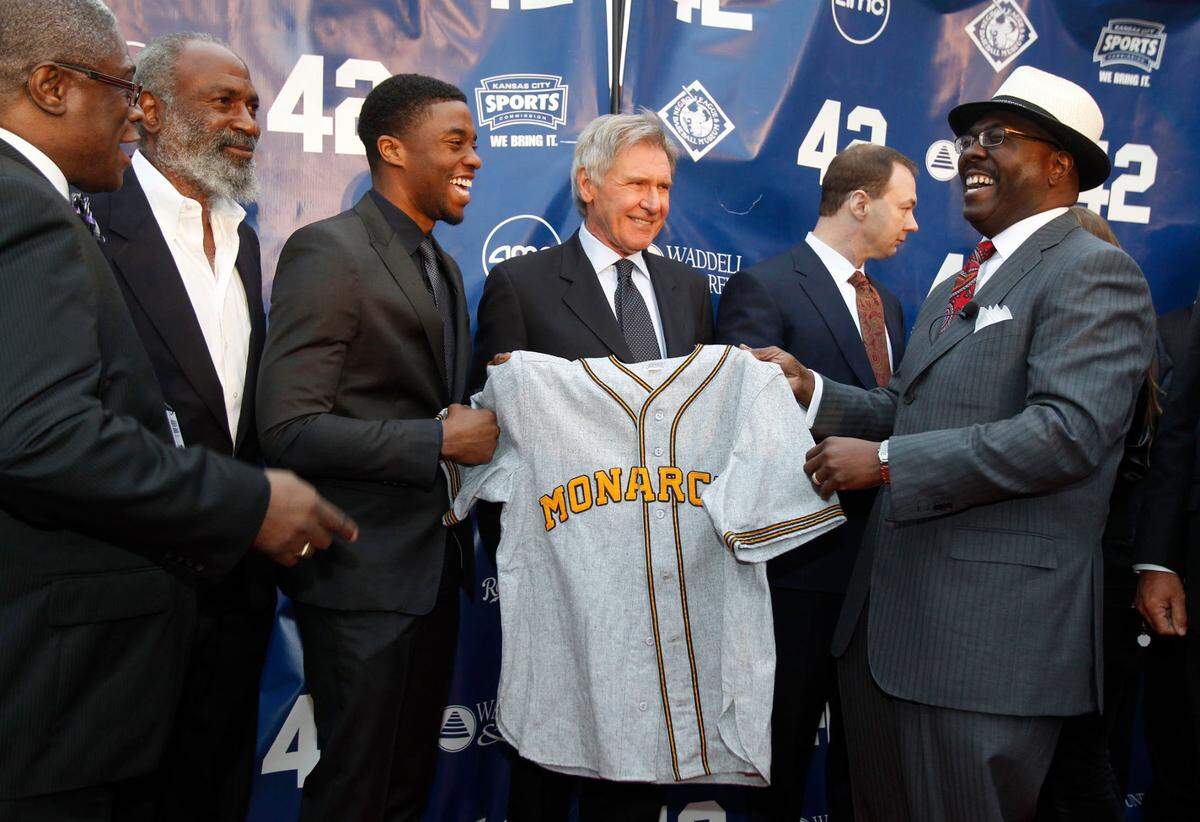
Then there has been the series of savvy engagements, such as O’Neil’s 100th birthday in 2011, connecting with the MLB All-Star game in 2012 and the release of “42” here in 2013, with Harrison Ford and co-star Chadwick Boseman walking the red carpet.
Having the Royals play in back-to-back World Series in 2014 and 2015 also helped draw traffic and increase momentum for the museum — which Kendrick says has operated in the black every year since his return, and is so financially stable that sights can be set on the long-term future.
That’s also because Kendrick and the board and his staff had the wherewithal to pivot through the pandemic in circumstances that might have ruined a 100th anniversary year of celebration in 2020.
Embodying that adaptability, they converted a “Tipping Your Cap” salute scheduled for stadiums to going viral online. Among other developments that year, the museum’s profile and financial prospects were further enhanced by the Negro Leagues Baseball Centennial Commemorative Coin Act that could reap up to $6 million and went on sale last week.
Finally, there was December 2021 and, at long last, Buck being named to the Hall of Fame and all that could come with that for Buck’s museum.
Whatever the outcome that day, Kendrick swore he wasn’t going to cry this time. But “no one makes me cry more than Buck O’Neil,” he said. He couldn’t hold back the tears because of his bond with Buck.
“Some would feel the weight of Buck O’Neil’s shadow over them,” he said. “I don’t. I feel like it protects me.”
All part of a divine plan, perhaps, even if what was meant to be wasn’t what met the eye all along.
This story was originally published January 12, 2022 at 5:00 AM.