Alvin Brooks and Kansas City: A love story imperiled by racism, saved by service
READ MORE
Highlighting Black stories
A collection of stories from The Star from the past year centered on Black life across the Kansas City metro.
Expand All
Editor’s note: During the month of February, in honor of Black History Month and the vibrant Black community in Kansas City, The Star will feature profiles of Black Kansas Citians by telling their stories and highlighting their businesses, causes, and passions
Had it not been for goat’s milk, moonshine, a Winchester 44 rifle and some High John the Conqueror root, Alvin Brooks might never have come to Kansas City.
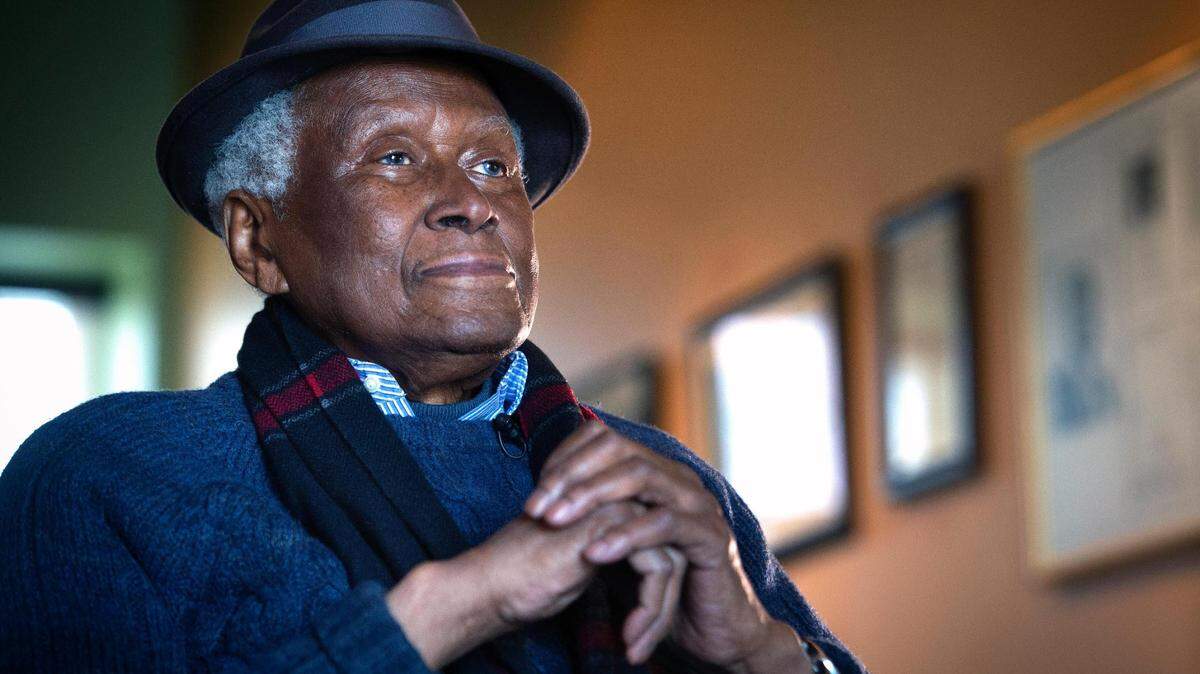
In the years since he arrived as an infant with a Black couple he thought were his biological parents, Brooks, 88, has become one of Kansas City’s most beloved and well-known civic leaders — Black, white or otherwise.
“That man loves Kansas City,” said Carrie Brooks-Brown, the second of his five daughters. ”He thinks it is the greatest city in the world.” When it comes to his greatest loves, she said, “It’s God, family and Kansas City. That’s the order he puts them in.”
When it comes to his legacy, the list goes on and on: community engagement, social justice, civil rights, education equity, criminal justice reform — he’s had a hand in every bit of it.
Over four hours of Zoom interviews with The Star, Brooks, sitting at his kitchen table, recounted a litany of stories — humorous and heartfelt — that document his life and its intersection with some of Kansas City’s most notable moments. From his 10 years as one of the few Black officers on Kansas City’s police force during the 1960s to launching a citywide crime prevention organization to eventually becoming mayor pro tem, Brooks has led a life of service to his city, and he’s not done yet.
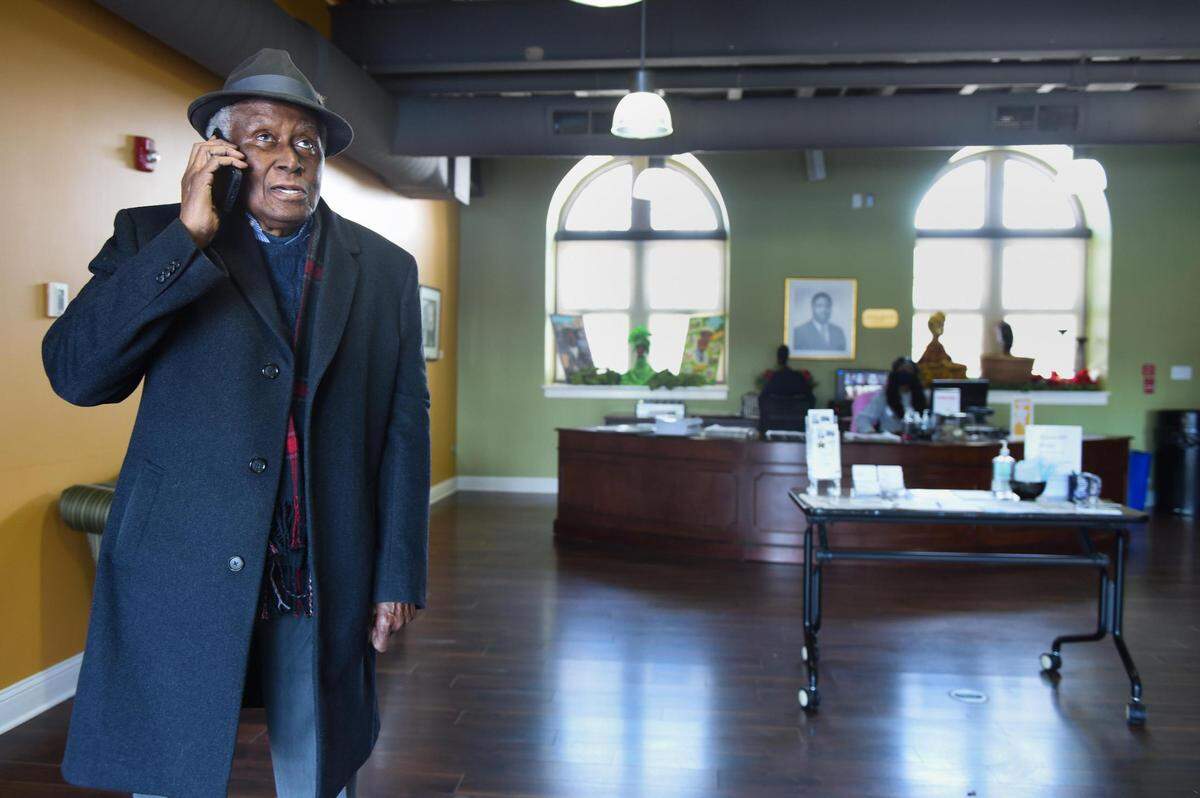
In 1989, President George H.W. Bush named Brooks one of America’s 1,000 Points of Light. In 2016 he received the Harry S. Truman Public Service Award and in 2019 the Greater Kansas City Chamber of Commerce named Brooks Kansas Citian of the Year.
Brooks has turned down at least a handful of job offers in other cities. Nothing, he said, could pull him away. “This is home,” he said. But it didn’t start here.
“I was born in North Little Rock, Arkansas, May 3, 1932,” Brooks said.
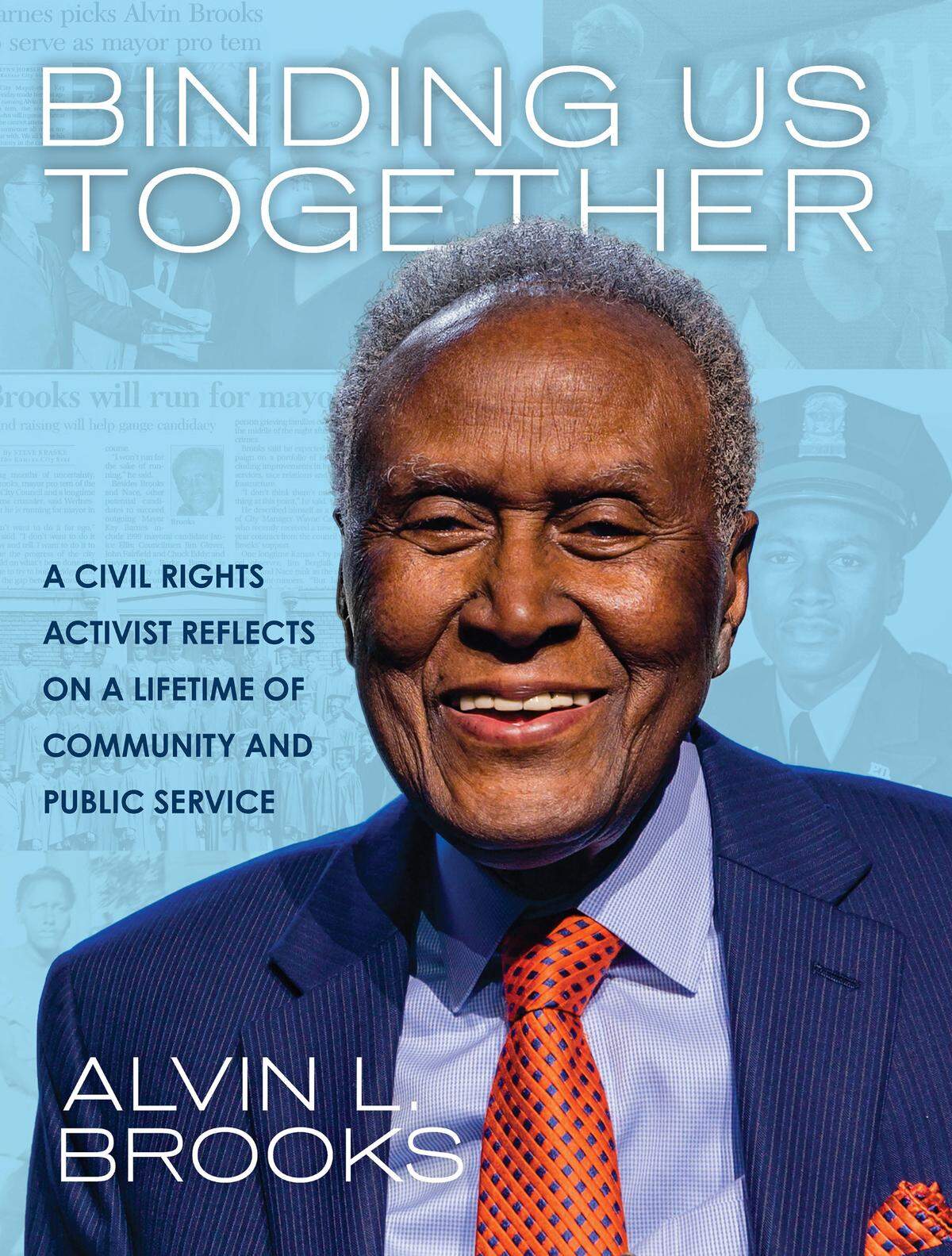
Brooks rattles off dates that way, as if they were as familiar as reciting his own birthday. “He remembers everything,” said Estelle Brooks, his oldest daughter. But it also could have been that those dates were fresh in his mind, given that Brooks recently finished his memoir, “Binding Us Together,” set for release Tuesday by Kansas City-based Andrews McMeel Publishing.
“The story of Alvin Brooks reminds us of what true heroism looks like in everyday life,” Academy Award-winning screenwriter and University of Kansas film professor Kevin Willmott wrote in an endorsement of the book. “He fought to make Black lives matter before it became our national cry.”
The root of the problem
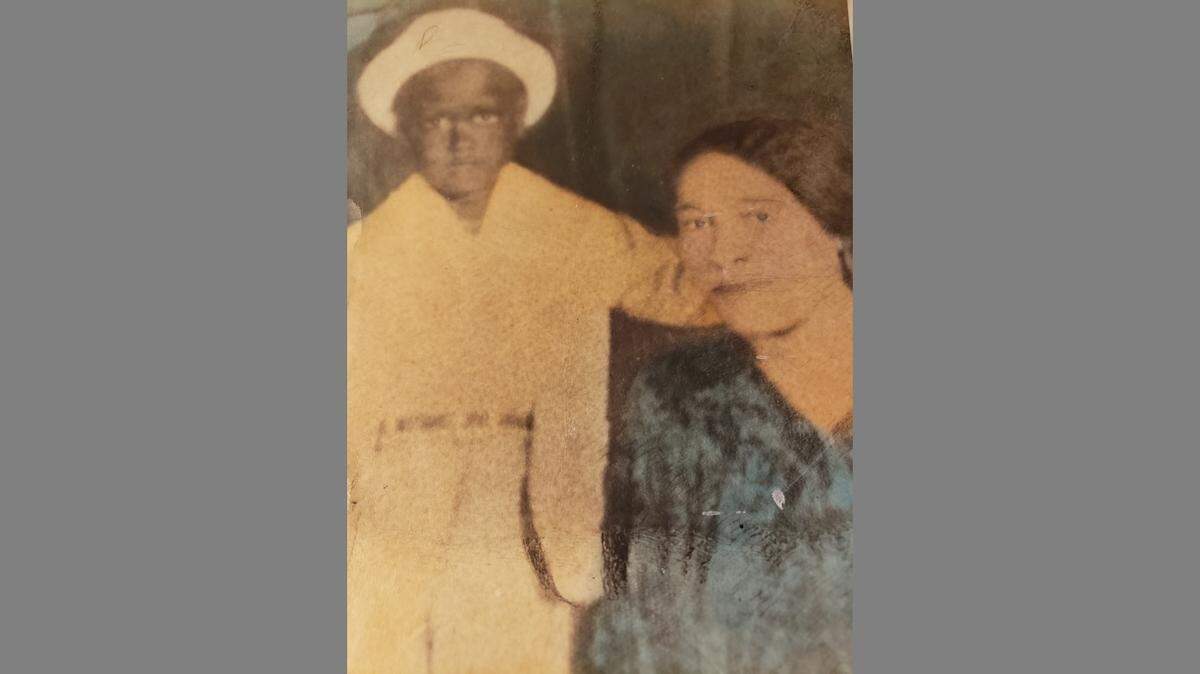
Cluster and Estelle Brooks weren’t his biological parents, but they were the only ones Brooks knew for about a quarter of his life. His actual mother was 14 and unmarried when she had him, a scandal back then. So while pregnant, she left her Florida hometown to stay with an older sister in Arkansas.
A pregnant teen didn’t sit well there either, Brooks said. So under pressure from family, she moved across the street to stay with the Brooks family. After Brooks was born, his mama left him there.
“I didn’t know that the Brookses weren’t my real parents until 1954,” Brooks said. “I was 22 years old when my biological mother found me. Nine years later, in 1963, she found my biological father, and the three of us became very close.” He didn’t know until writing his book that Estelle and Cluster Brooks had never actually adopted him.
They saved his life though. As a baby, Brooks had a mysterious ailment and vomited everything he ate. “I was dying of malnutrition,” he said. A local doctor suggested the baby be fed goat’s milk. The family bought a goat. The milk worked.
Brooks was less than a year old when they all fled Arkansas.
Cluster Brooks was known for making “the best moonshine in Pulaski County, Arkansas.” During an argument over whether that was indeed true, Cluster, brandishing his Winchester rifle, shot and killed a white man. The penalty for a Black man killing a white man in 1933 was certain death.
A conversation with Brooks means listening to a host of old sayings, mama-saids and story after story. He clearly loved retelling this one and smiled when he got to the end of it.
The story Brooks heard growing up was that his dad, awaiting his fate, had his mom go talk with the judge. His dad told her to chew on a piece of High John the Conquerer root and at the right moment spew some of the muddy-brown juice on the judge. A sneeze did the trick. In folklore, the root is named for a Black slave whose spirit was never broken. It is said to bring luck.
The judge told Cluster either he would die for his crime or he would leave the state of Arkansas for good. The family sold nearly everything they had, packed the rest along with Nannee, the white, pink-nosed Saanen goat, in Cluster’s Model A Ford and fled “under the cover of darkness,” Brooks said.
“That’s how we got to Kansas City. And I have been here ever since.”
Education a priority
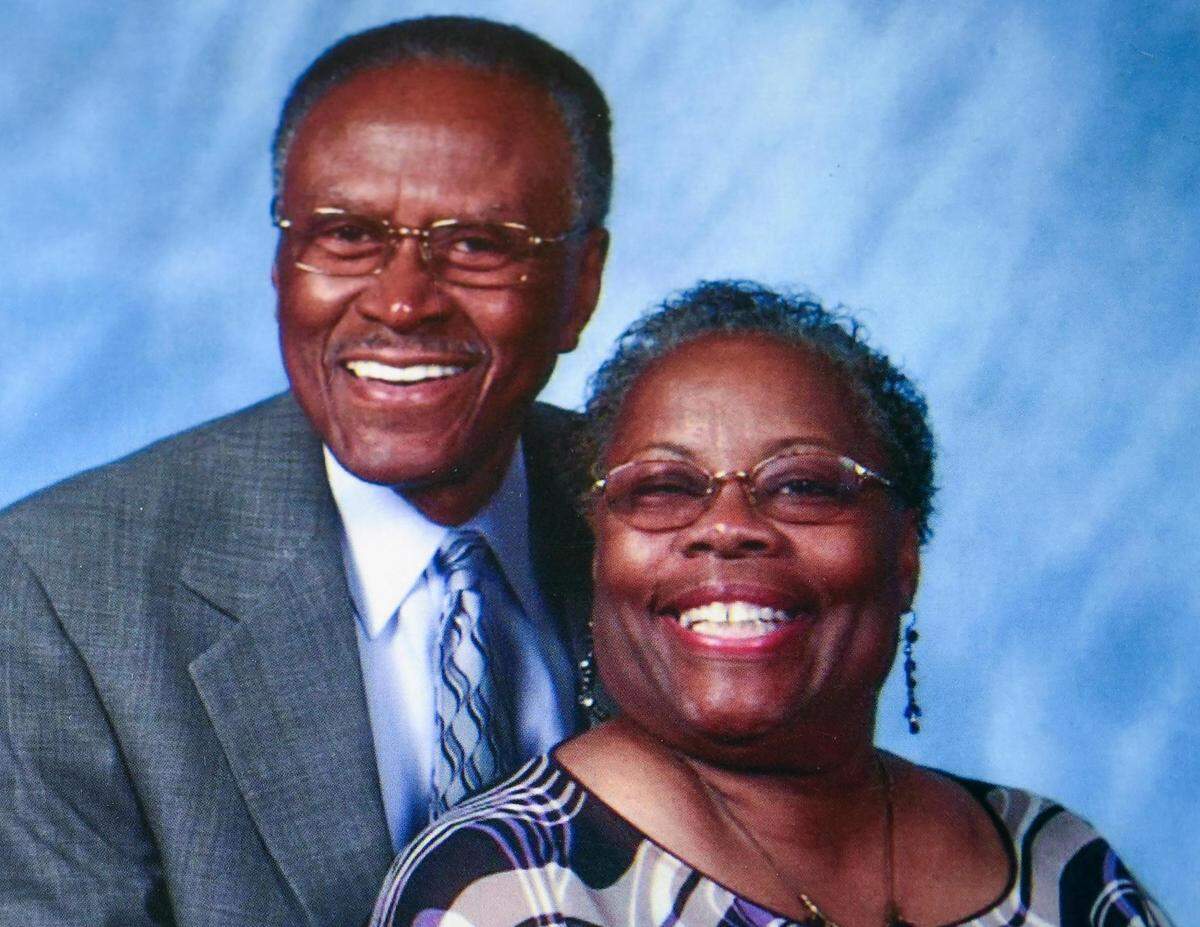
Brooks said his parents always told him, “Get an education, son, get an education. And they used to say white folks can take anything away from you if you’ve got it in your hands, but if you’ve got it in your head they can’t take it away from you. And you had to be more educated than the previous generation.”
His family first settled in the Leeds area near Arrowhead Stadium, “a poor Black area where houses had no running water inside,” Brooks recalled. When he was 9 or 10, his parents rented a house “in a poor white area off of Linwood and Brighton.”
The Brooks family was poor too. “We didn’t have electricity,” Brooks said. They did raise some farm animals, and Brooks remembers selling eggs and goat’s milk to his white neighbors, “as long as I took care of the chickens.”
When they first moved in, fights with the neighborhood boys were a regular occurrence. Later they became close friends. “We got into trouble together. Well, not bad trouble,” Brooks said. “Good trouble,” like the times his friends would buy him food at the whites-only lunch counter and then coax him to sit down with them and eat fast before the waitress shooed them all out for eating with a Black kid.
They couldn’t go to school together either. His friends went to the all-white school nearby.
“I had to walk all the way to Dunbar Elementary School, “where the Black kids went,” Brooks said. He would later attend R. T. Coles Vocational Junior High School and then Lincoln High School. “At that time there were 10 high schools in Kansas City, eight for white kids and two for Black.”
His mother died in 1950, “the year I graduated from high school,” he recalled. He later attended Lincoln Junior College, “the Black junior college, which was on the third floor of Lincoln High School. Because we couldn’t go to the white junior college.”
Brooks was already married by that time. He was 18, and in his senior year, when he wed Carol LaVern Rich. The couple had six children and were married 63 years before she died in 2013. His son, Ronall Brooks, a U.S. Air Force veteran, died in 2003 after years of substance abuse.
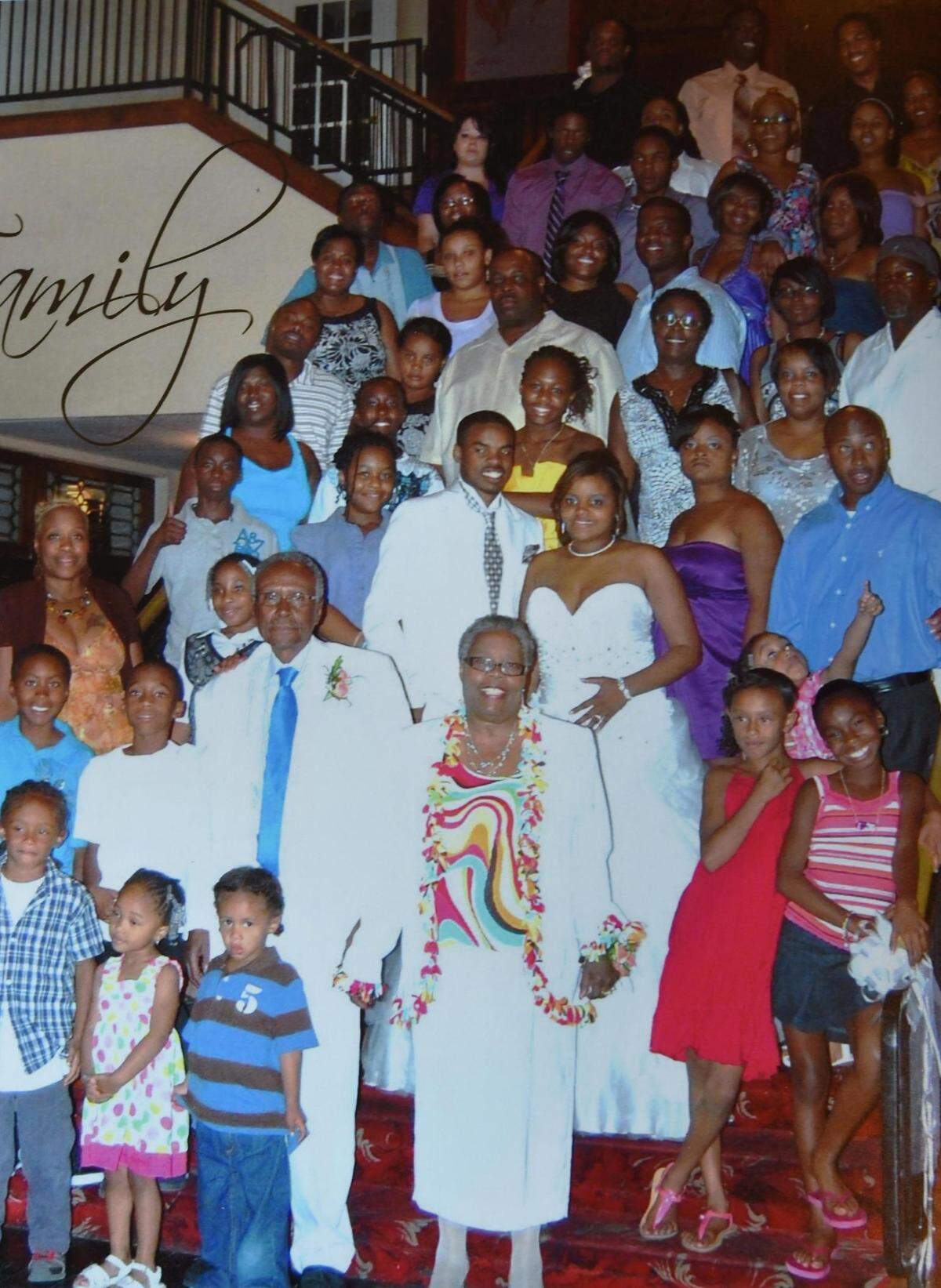
Brooks was a family man, his daughters said, but “Mom was the orchestrator of everybody’s calendar and kept him informed so he knew just when to step in on something,” said daughter Roslind Wesley speaking in an online interview along with her four sisters. “Dad had the weirdest punishments,” but most of the time he would lecture, sometimes close to an hour. Brooks-Brown preferred a spanking. One time two sisters were fighting. “Dad made them sit on the steps and hug for an hour,” she said.
A community policeman
But most of the time, they said, their dad was “super busy.” People would call their house all hours, day and night, asking for his help with something going on in the city or their lives. “Dad would get up and go,“said Estelle Brooks, the oldest sister. It didn’t matter whether it was a local dignitary or the grieving mother of a son accused of murder.
“Alvin deliberately takes up the pain of others,” the Rev. Wallace Hartsfield, who died last year, told The Star in 2003. “He doesn’t have to do that. He has his own pain. But he has surrendered his life for others, and that is the secret to his strength.”
“It was a part of what I felt I had to do,” Brooks said. “My wife would say, ‘You don’t belong to us, you belong to the community. Just make sure the checks are mailed here.’”
His daughters, now all professionals and running their own businesses, said they learned their work ethic from him.
Out of high school, Brooks had wanted to be a pharmacist, until one of the three Black pharmacists serving the Black community told him no white-owned pharmacy in town would ever hire a Black man. He wasn’t sure the city could support another Black-owned pharmacy.
Brooks went to Lincoln Business College instead. Before he could graduate, the school was shuttered by the federal government for some wrongdoings. All the school records Brooks needed to prove he had the education were confiscated, gone. He had to start over.
He worked three years as a janitor — one of the only jobs a Black man could get — at Ford Motor Co. Assembly Plant. He then got hired as one of 16 Black officers on the city’s police force.
When he shared his career choice with his dad, “He said, ‘Son, why you want to do that? You know how they treat us.’ But my thought was that I was gonna be a better cop,” Brooks said.
Black officers were only allowed to patrol in Black neighborhoods until 1958, when a new chief, Bernard C. Brannon, sent a few to patrol the city’s Northeast Area, where many European immigrants lived.
One night Brooks was called to Northeast High School on a report of a body hanging from the flagpole. Turns out, when officers pulled the figure down, “it was a mannequin splattered with ketchup with a note pinned on it that said ‘Al Brooks, nigger go home.’”
Brooks said they never found out who did it. But his fellow officers carried the mannequin back to the station and propped it up in a chair, where it stayed for days. Brooks found no humor in it and one night sneaked back to the station and tossed it in a dumpster.
Brooks, a detective in the gang unit, would face racism many times during his 10 years on the force.
“I took the sergeant’s test and passed it three times. But I couldn’t get promoted,” he said. But he’s quick to say how much he’s seen change on the force over the years and was happy to see Darryl Forté named the city’s first Black police chief in 2012 and, in 2018, the first Black sheriff of Jackson County.
Brooks took the community policing approach to his job. “Everybody in town knew my dad and he knew them by name,” Brooks-Brown said. She remembers as a kid when she and her dad walked into a restaurant for burgers one evening and everyone in the place stared at them.
“He asked them, ‘What’s going on here?’ and the lady behind the register pointed to this guy and said, ‘He’s trying to rob us,’” Brooks-Brown said.
Her dad knew the man and scolded him, as a parent would a misbehaving child. She said the man handed her dad his gun, and Brooks walked him outside to the backseat of his car.
“Dad took me home, then took that guy to the station.”
But in 1964 Brooks left the police force for a job in student services in the Kansas City school district. He had long cultivated a relationship with the district.
As a cop, he said, “I worked nights so during the day I’d put on my uniform and go over to the school and just sit and talk to the kids. People thought I was crazy. But all those kids knew me.”
Brooks was there for them in 1968, when students erupted in unrest in the city streets after the April 4 assassination of the Rev. Martin Luther King Jr.
“I was there on the steps of City Hall,” Brooks said. “I marched with about a thousand of those kids from 22nd and Vine all the way to City Hall.”
The night before, Brooks had met with several school administrators, one of only three Black men in the room. He warned them that Kansas City, Kansas, schools were planning to close so students could mourn the death of the civil rights icon. If Kansas City stayed open, he said, “all hell would break loose.”
No one listened, and the student protest went out of control when police deployed tear gas. Three days of riots ensued. Five Black men and a 16-year-old boy were shot and killed — four of them, perhaps all — by police.

For the city and its people
Brooks left the school district six weeks after the riots and became director of human relations in Kansas City government, a first for a Black person. It was a job he never really wanted. But the city manager wanted him. Others did not.
At the time Brooks was chairman of the local chapter of the civil rights group Congress of Racial Equality (CORE). “They thought I was too radical. I’m arrogant. I took the job because they didn’t want me to have it,” Brooks said. “And friends told me to go take it because someone has to be a trailblazer over there.”
Brooks and other city movers and shakers met regularly for meals at Mooney’s Restaurant, now gone, and talked about how to advance Black Kansas City. “We called it the Black city hall,” Brooks said.
He was encouraged. And in 1972 he was appointed assistant city manager.
As if the demands of city government weren’t time consuming enough, Brooks also went and got a master’s degree in sociology from the University of Missouri-Kansas City. His thesis on social organizing and social change would become the framework for his launching the Ad Hoc Group Against Crime in 1977. The crisis intervention and prevention group supports families affected by violence.
Brooks was often among the first people at the scene of crimes, called by victims, perpetrators or their families, because they trusted him. Brooks stepped away from Ad Hoc in 2000 when the group merged with Project Neighborhood and changed its name to Move Up. He returned to lead the group again in 2008, until he retired in 2015.
Retirement, for Brooks, doesn’t mean sit and relax. He had been appointed to the Board of Police Commissioners in 2010 and continued serving until 2017. And he’s currently serving out a four-year term on the Hickman Mills school board. People still call him when they get in trouble. But he doesn’t get up and go as often as he used to.
Over the years he has intervened in more homicide investigations than he can count, “hundreds probably.” One crime though, more than any other, rattled this old tough detective to the core, the murder of “Precious Doe.”
Three-year-old Erica Michelle Marie Green’s decapitated body was discovered on April 28, 2001, in a wooded area near 59th Street and Kensington Avenue. Her head was found nearby days later. She remained unidentified until May 5, 2005.
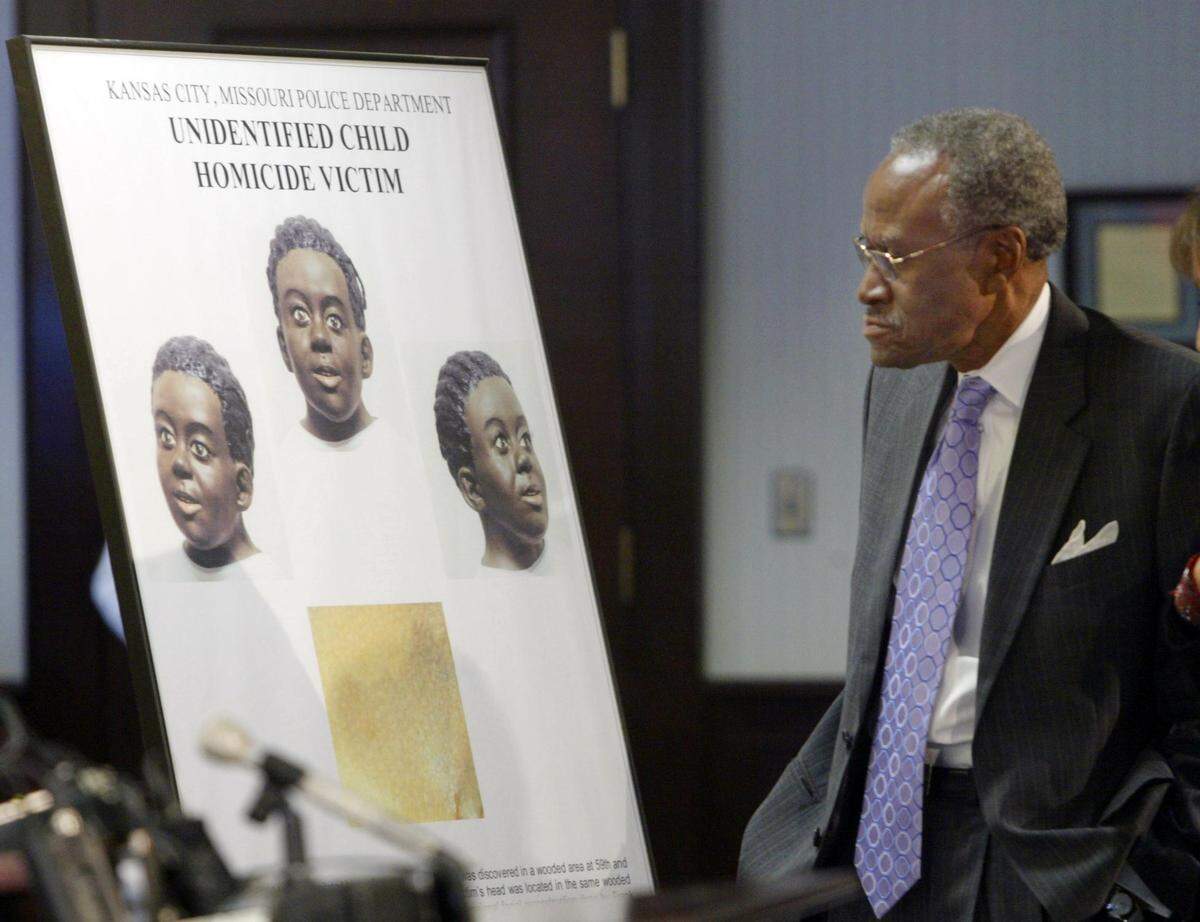
Her mother, Michelle Johnson, and her stepfather, Harrell Johnson, were charged with her murder. Police said her stepfather had used a pair of hedge clippers to sever the child’s head after she had been beaten. He was sentenced to life without parole. Brooks led an effort to raise money to establish a park in the same area where Erica’s body was found.
At the time, Brooks was a Kansas City councilman, a position he held from 1999-2003. He was mayor pro tem while former Mayor Kay Barnes was in office, 1999-2007. When her term ended, Brooks made a run for mayor and lost to Mark Funkhouser.
“I was never meant to be mayor,” Brooks said. His role, he said, has always been “to try and bring people of all races together. To serve, to be a voice that helps our community our people, all our people.”
Some call Brooks a Kansas City patriarch. A man of grace, dignity and strength who has literally helped raise and mentor many of the city’s Black leaders, including 3rd District Councilwoman Melissa Robinson and former Councilman Jermaine Reed.
“Mr. Brooks has been like a father figure and grandfather figure to me from when I was really young to adulthood,” Reed said.
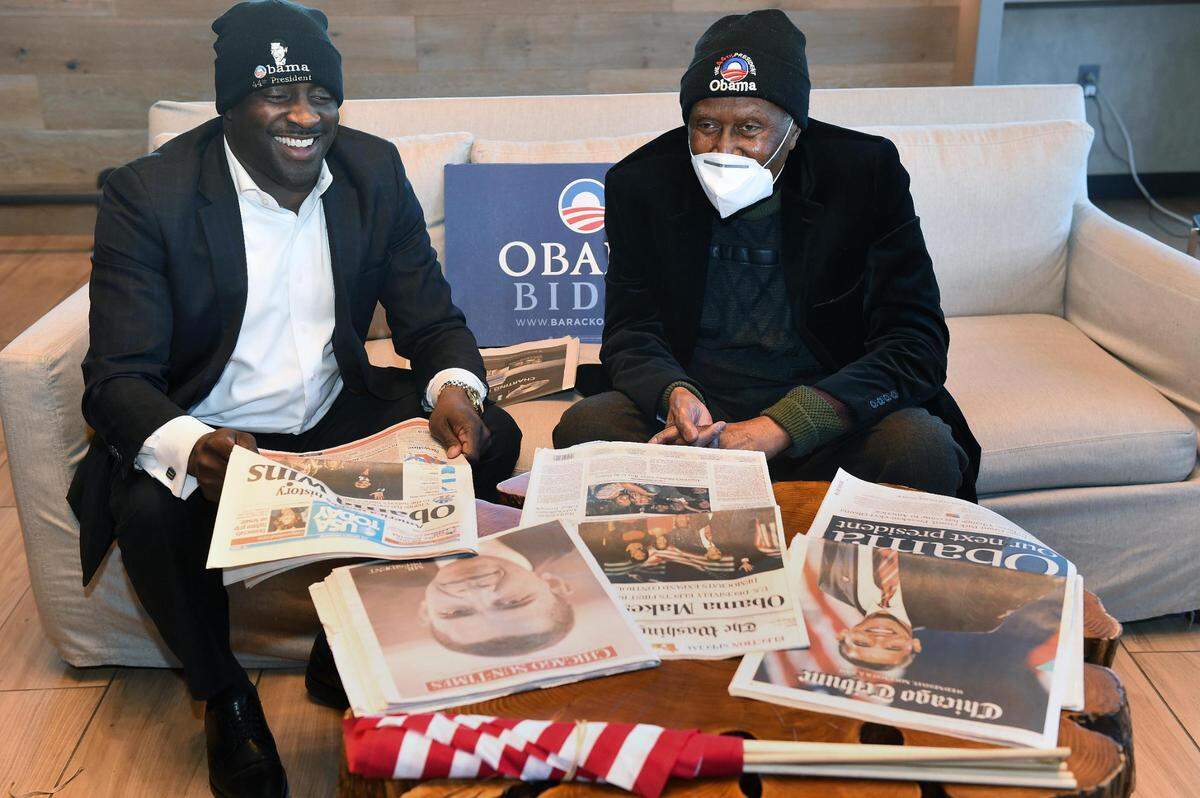
Reed said from the moment he saw Brooks being interviewed for his role at Ad Hoc, he has clung to his coattails. Brooks remembers Reed as a boy hanging out at Ad Hoc offices every day.
Reed was there to learn from Brooks. “I wanted to do what he was doing,” Reed said. “He took me under his wing. He gave me sage advice, a level of tutelage I would never have gotten had it not been for him. His level of commitment to justice, fairness, equality and to change the face of our community is remarkable.”
In 2009, Reed went with Brooks to Washington, D.C., for President Barack Obama’s inauguration. “I remember it was freezing. We had to walk a long way. Mr. Brooks didn’t complain one bit. Many African Americans thought they would never live to see another African American in the White House. And to be there that day with someone who has dedicated his life to civil rights is something I will never forget.”
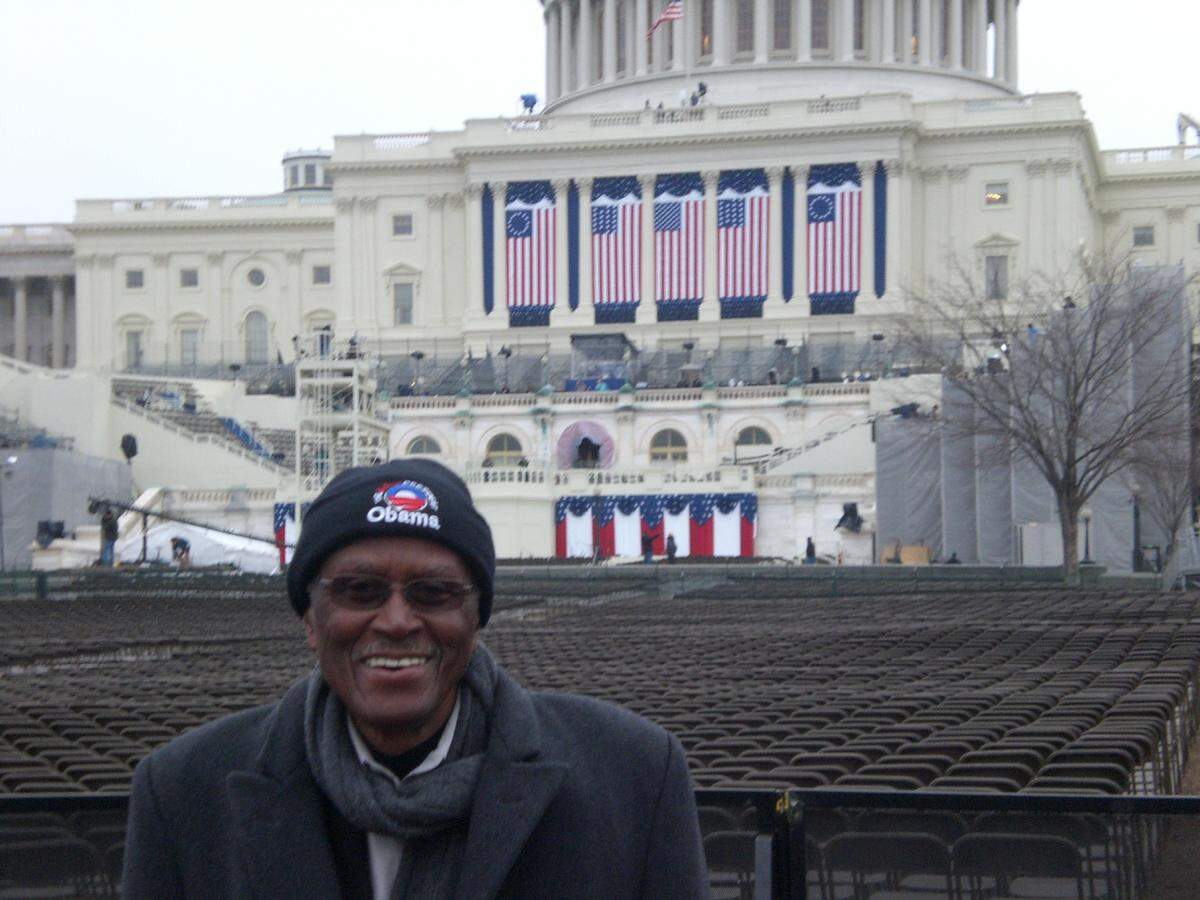
The two stood among the throngs of people in the cold listening to Obama speak. “I looked up at Mr. Brooks and tears were just streaming down his checks.”
Brooks says he still has things to do yet and spends much of his time speaking to young people, encouraging them to continue unraveling threads of systemic racism woven into the fabric of the country.
“Yeah, I’ve slowed down,” Brooks said. “But I haven’t stopped.”
Author event
Alvin Brooks will discuss his career and life with Kansas City Mayor Quinton Lucas in a livestream event that launches Brooks’ new autobiography, “Binding Us Together: A Civil Rights Activist Reflects on a Lifetime of Community and Public Service,” 6:30 p.m. Feb. 23. For details and to RSVP, see kclibrary.org or rainydaybooks.com.
This story was originally published February 21, 2021 at 5:00 AM.