MU-KU rivalry might not be the same these days, but Saturday will still be a spectacle
READ MORE
Border War returns: Kansas Jayhawks vs. Missouri Tigers
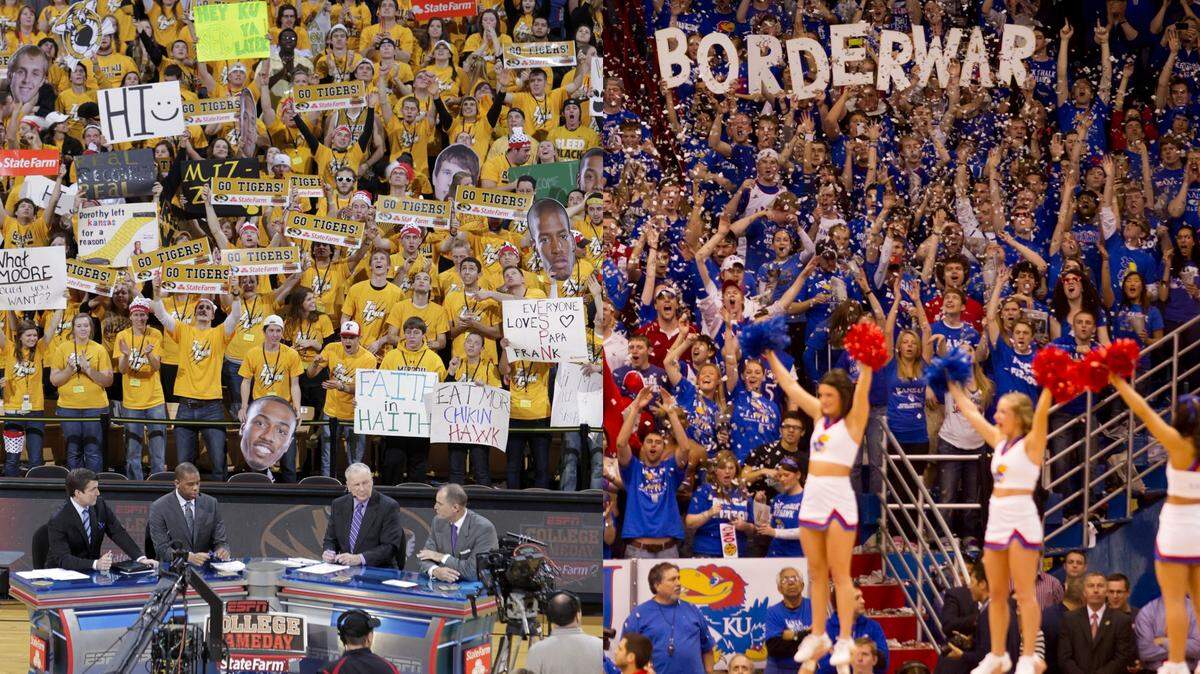
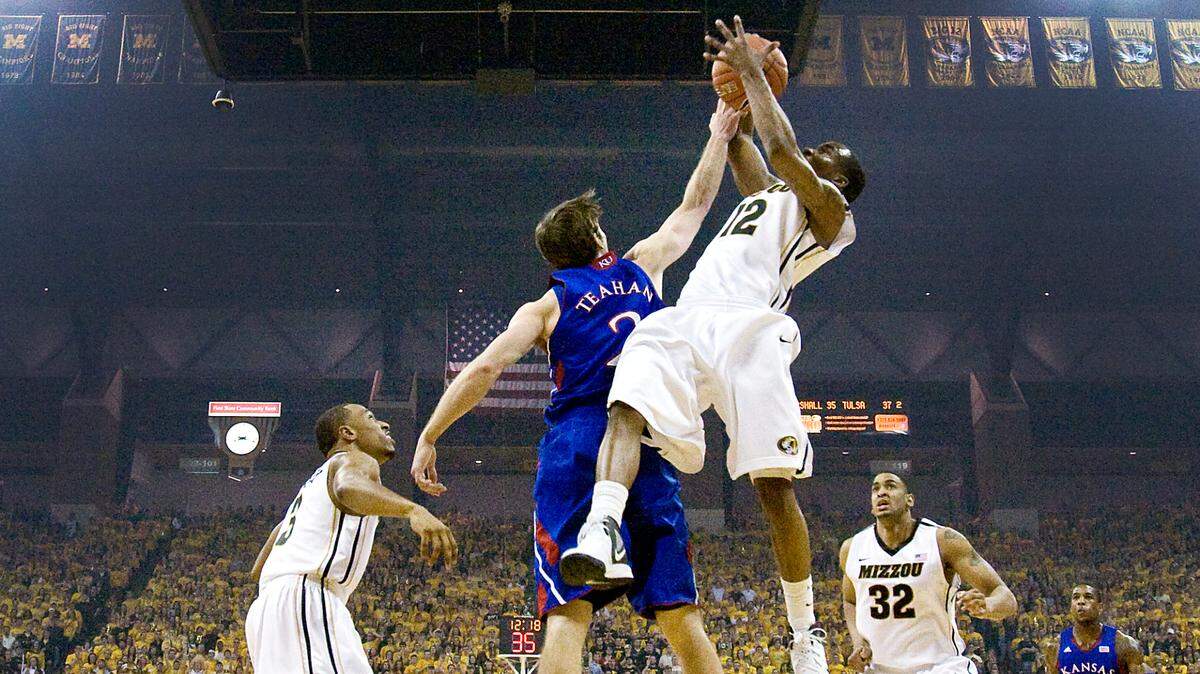
Coverage of the last men’s basketball games between rivals KU and Mizzou in 2012 and this Saturday’s return of the rivalry
Expand All
Even while he was airing grievances about why the series was dead to him as he sat in his office in the spring of 2013, Kansas men’s basketball coach Bill Self still couldn’t help but wax nostalgic about playing Missouri.
“I will admit that there’s not a game that I’ve enjoyed coaching more in on our schedule than going to Columbia,” said Self, who had been within Mizzou’s orbit one way or another for decades as a player and coach at Oklahoma State and, in fact, as a job finalist in 1999.
“Hey, I wanted the Missouri job; they didn’t hire me,” he continued. “Then I go (from Tulsa) to Illinois, which is Missouri’s biggest non-conference rival, and we have great fun in that series. Then I come here, where it’s the most bitter rival. It was always a game that was circled in my mind.
“I don’t have that same feeling now. The dynamics have changed.”
Forever, he suggested: Apathy figured to douse whatever simmering passions remained with MU’s departure from the Big 12 to the Southeastern Conference after the 2011-2012 school year … and with the intoxicating games to end all games in Columbia and Lawrence.
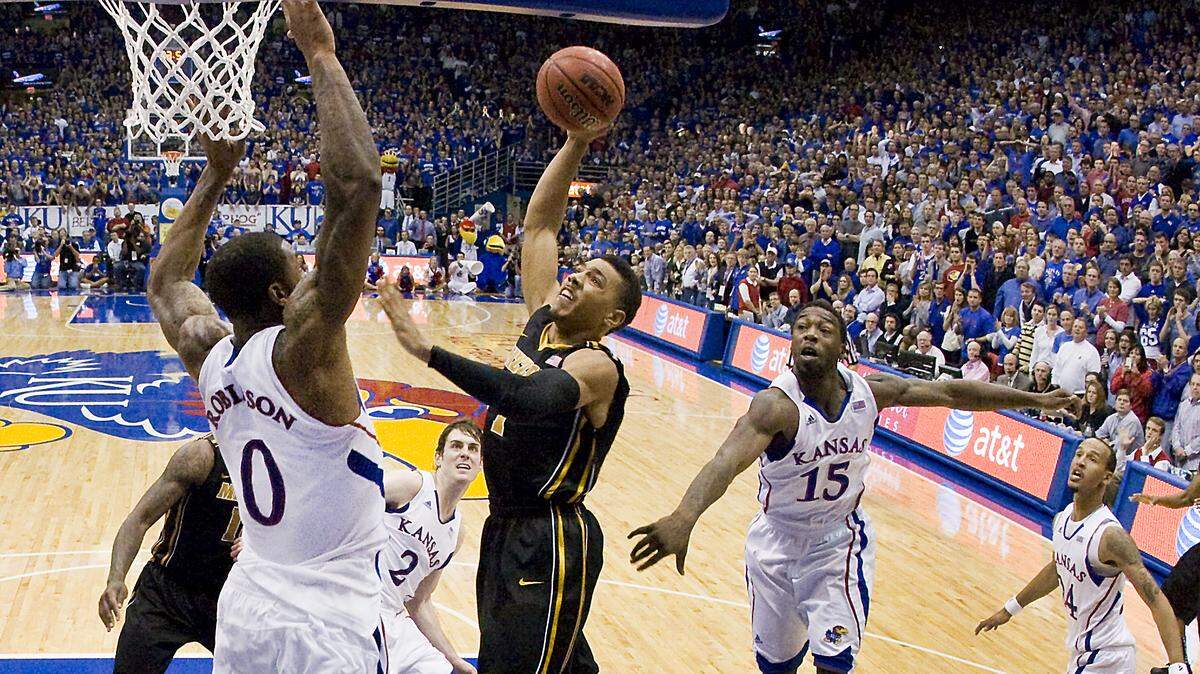
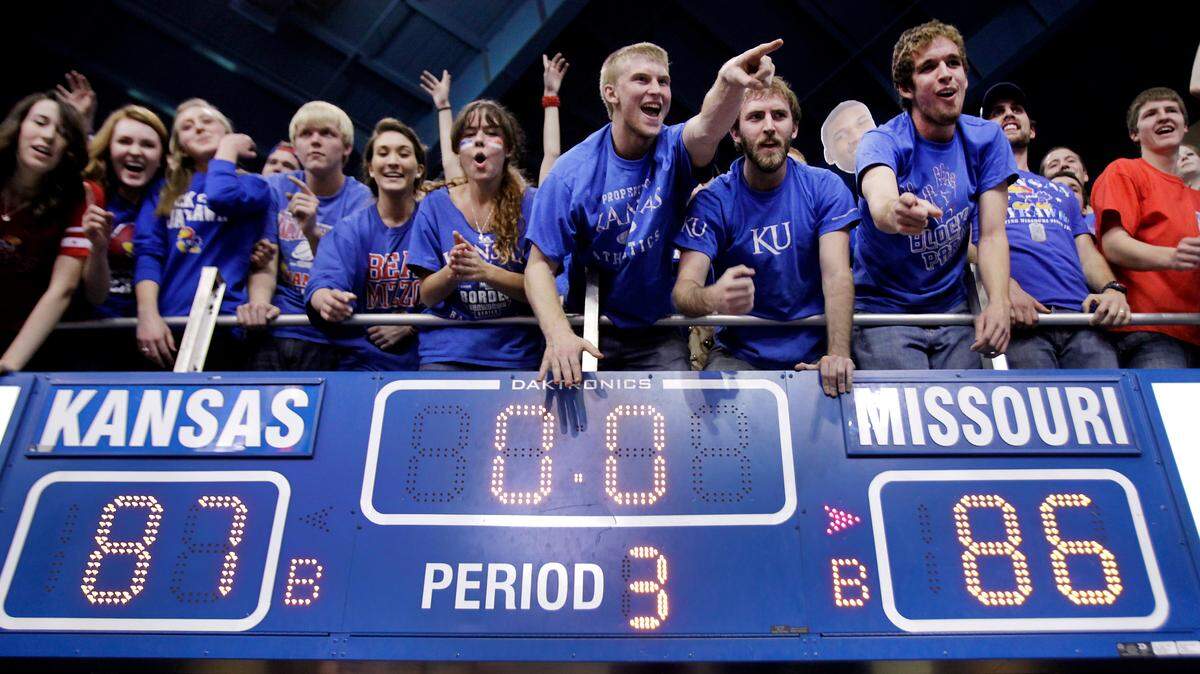
“We’re never going to be part of something as big as this game was tonight,” Kansas forward Thomas Robinson said after the Jayhawks rallied from a 19-point deficit to beat MU 87-86 at Allen Fieldhouse the last time the schools played there.
Somewhat seeming to try to convince himself that moment rendered a rivalry 150 years in the making a mere relic, Self reckoned the fever of it all would just dissolve as something else substantial materialized for each school.
“Nobody’s going to view it as a great rivalry five years from now; nobody’s going to view it as a rivalry 10 years from now,” he said in 2013. “There will be somebody else who will emerge in some way, shape or form that kind of fills that role for both programs.”
Maybe that day still is coming. But it hasn’t yet.
And when the teams resume the series on Saturday at Allen Fieldhouse, it will address, if not quite fill, a fundamental void in the Kansas City area sport scene.
And it will diminish a hollow space for each school even if it won’t make it all whole.
At least not in the way it did in the century-plus of competing in the same conference before realignment hysteria ruined much of what makes college sports special.
Still, the scheduled six-game series, along with the impending revival of the football series with four games commencing in 2025, is a vivid reminder of how tethered the schools yet remain and the symbiotic nature of the best rivalries.
If it’s not quite “you complete me,” well, former MU receiver T.J. Moe put it fluently after Mizzou’s 24-10 victory over KU at Arrowhead Stadium in the last game between the football teams 10 years ago.
“It’s like your brother: You fight with them every day but at the end of the day you need him to have your rivalry and it’s fun,” he said then. “I don’t like them at all, but, hey, you need them to have the rivalry, don’t you?”
He later added, “You don’t replace Kansas.”
You don’t if you’re Missouri. (Or if you’ve been as captivated by it all as I’ve been since my first game at Allen in 1990, when No. 2 Missouri beat No. 1 Kansas 77-71.)
And as furious as KU fans, administrators and coaches were at Mizzou its departure and all it implied, to paraphrase Bruce Springsteen, it’s also hard to forsake the ties that bind.
Either side could justify its actions, including KU’s refusal to play MU, but you also could legitimately wonder how each would have handled it if their circumstances had been reversed. And it was a shame and a waste for them to stop competing ... though maybe the series was well-served by a cooling-off period, too.
Because sometimes there could be a toxicity to the rivalry that we’re often reminded is rooted in the Civil War.
I’d heard that for years but maybe never quite understood the point until just before the monumental 2007 football game at Arrowhead in which Mizzou beat No. 2 Kansas to (briefly) ascend to No. 1 for the first time since 1960.
To try to understand how that could be, at the time I spoke with Jackson County native Tom Rafiner about his book, “Caught Between Three Fires: Cass County, Mo., Chaos and Order No. 11.” He told a story about interviewing a Missouri man whose great-great-grandfather had been murdered on his farm, apparently by a Kansan.
“And when he was telling me this story, he said, ‘And we think we know who did it,’ ” Rafiner said, emphasizing the active tense and later adding that he saw a line that connected to the passions in the sports series. “I don’t think there’s any doubt that it goes back to the 1850s and 1860s. It was too traumatic for the people living in both states not to have some of that residue left over.”
Obviously, sports aren’t war and shouldn’t be equated or conflated with such. Nevertheless, coaches all through the years harkened to that era and perpetuated the origins.
In a 1989 interview about the rivalry with former KU player and assistant coach Jerry Waugh, he reflected on how legendary coach Phog Allen often invoked the history: “The very fact that Missouri was coming into Lawrence again, and defending your state against another, or even representing your state against another state.”
Added Waugh, in his 90s and expected to attend the game on Saturday, “We were indoctrinated with the hype. The coaches fanned that rivalry as much as anyone.”
Including with some theatrics, including but not limited to the perhaps apocryphal tale of Kansas football coach Pepper Rodgers flashing Missouri coach Dan Devine a peace sign during MU’s 69-21 win in 1969 … and Devine extending half a peace sign back.
Perhaps channeling Devine, then-MU coach Larry Smith offered similar cross-the-field sentiments to Kansas coach Glen Mason as MU lost 42-23 in 1995.
But there was no more compelling spectacle than on the basketball court. And perhaps no figure more central to that than Norm Stewart through his gamesmanship with Ted Owens, Larry Brown and Roy Williams and KU in general.
A few years ago, though, we spoke about some little-known elements of it all:
Stewart was recruited by Allen and still has a book he signed with a letter commemorating the visit to Lawrence, for which Stewart recalled being reimbursed $40 in mileage and expenses.
To the chagrin of MU fans, it turns out that isn’t the only money that changed hands between Stewart and elements on the other side of the border. As much as he said for years that he refused to spend money in Kansas, that was just a bit of his.
He also took pleasure in revealing what became of the rocking chair they gave him post-retirement at Allen Fieldhouse, where they used to chant “Sit Down, Norm.”
It was being used to rock his great granddaughter, spanning yet another generation touched by this incomparable rivalry — one we’re grateful is dormant no more and can’t be replaced even if it’s not quite the same.
This story was originally published December 10, 2021 at 5:00 AM.
.jpg)