How Jason Sudeikis’ high school hoops coach became an essential ‘Ted Lasso’ influence
READ MORE
More about KC’s Jason Sudeikis and ‘Ted Lasso’
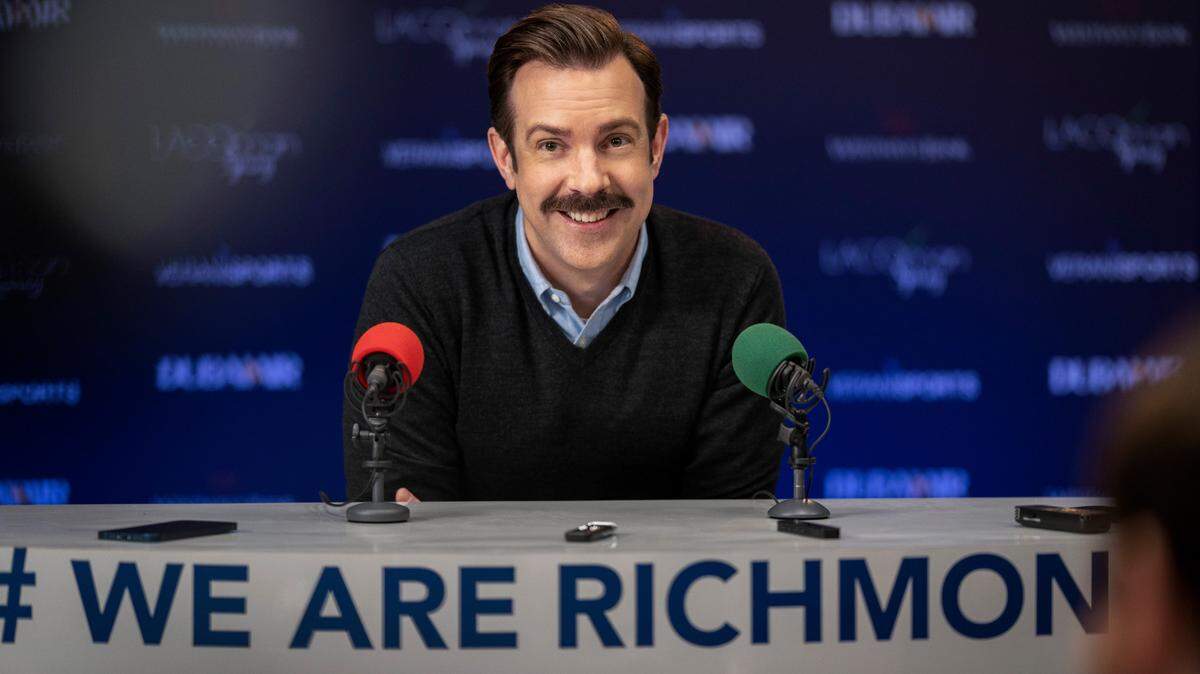
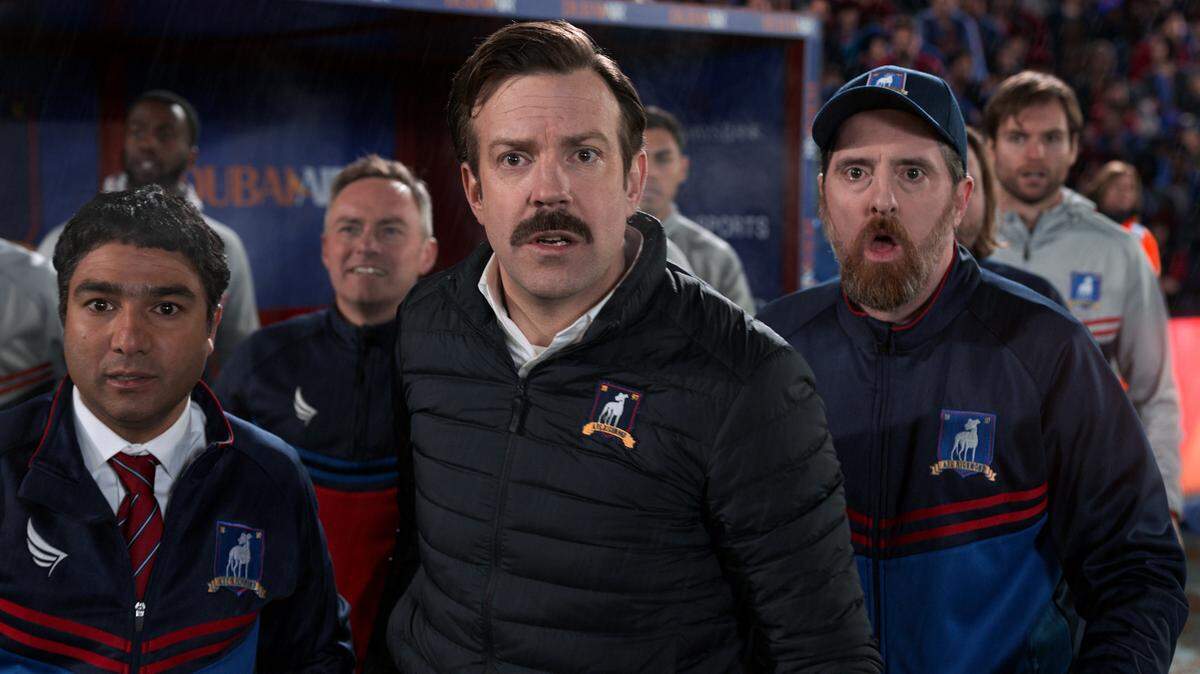
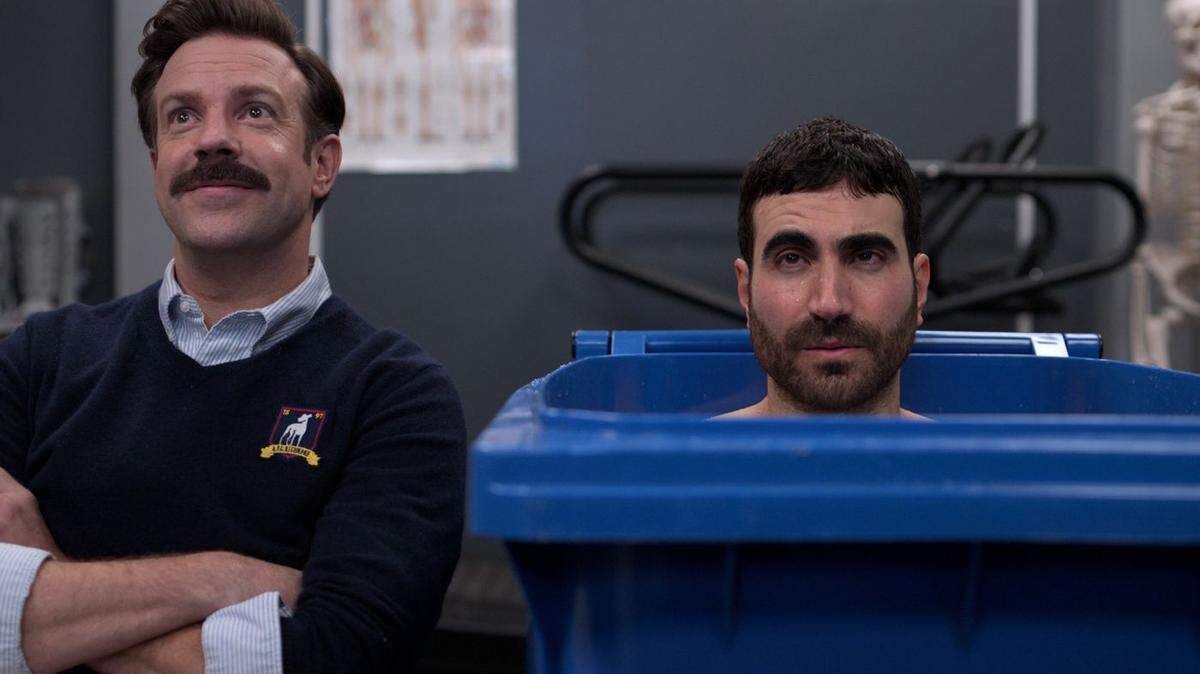
Jason Sudeikis, who grew up in Overland Park, created and stars in the acclaimed Apple TV+ series “Ted Lasso.”
Expand All
If you’ve watched the endearing and thought-provoking “Ted Lasso” and are familiar with star and co-developer Jason Sudeikis’ affinity for University of Kansas men’s basketball, it’s easy to envision the sentimental spirit and folksiness of former KU coach Roy Williams in the character.
It’s also natural to project some of current KU coach Bill Self in Sudeikis’ role, from the engaging manner to his twangy drawl that you can see Friday night in the finale of Season 2 to cap the Season 1 phenomenon that recently earned seven Emmys.
Indeed, Sudeikis has told The Star in the past that “it’s probably got a bit of Bill Self in there, if I’m being honest.”
Beyond Williams and Self, Sudeikis has cited many other influences, including Golden State Warriors coach Steve Kerr and others who demonstrate care about the person beyond the athlete. And even Robin Williams in mentor roles such as “Good Will Hunting”
But most consistently and directly, he has pointed to his ever-genial father, Dan, and a man few outside the area ever would have known of without Sudeikis making it a point to acknowledge him: Donnie Campbell, his high school basketball coach at Shawnee Mission West.
“It’s based on a few people. I mean my father, that’s where the mustache comes from and him being real loquacious,” Sudeikis said recently on the “Today” show. “And then my high school basketball coach, Donnie Campbell, he was just a fella from a small town in Kansas who spoke in those little aphorisms.
“You know, like, ‘Sudeikis, you look more nervous than a long-tailed cat in a roomful of rocking chairs.’ ”
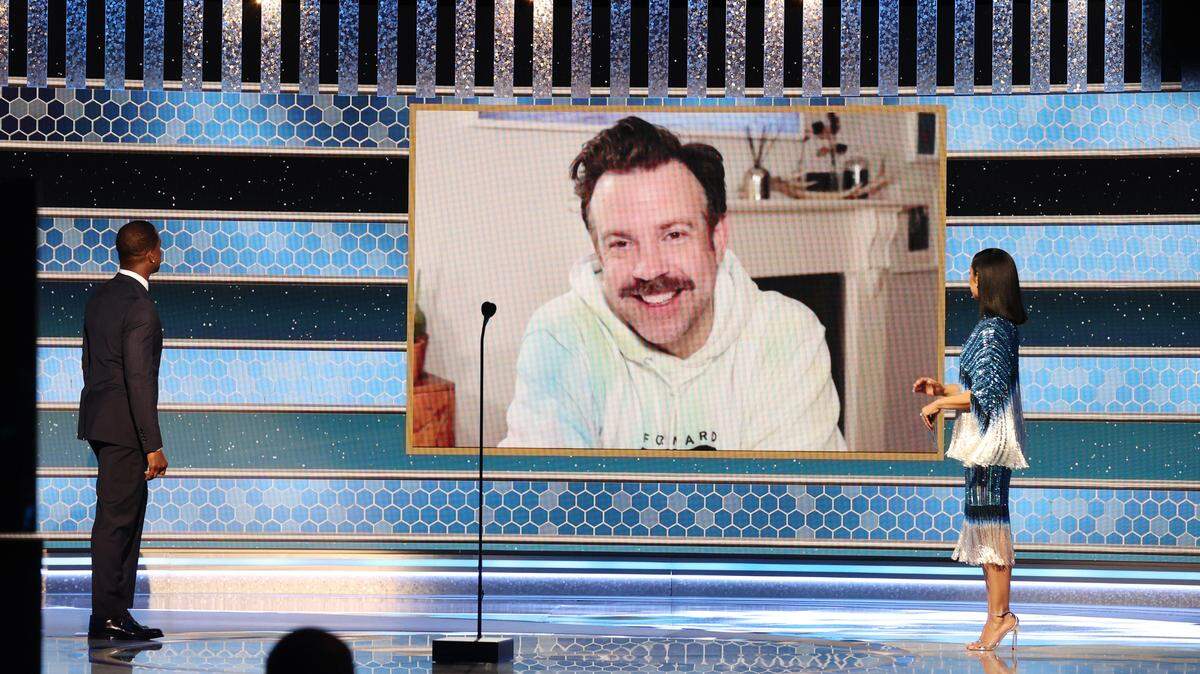
A moment later, Campbell joined in by video to congratulate Sudeikis while also playfully chiding him about his defensive play. That prompted Sudeikis to let on that Campbell tended to call him “Su-eikis” … since he didn’t provide any “D,” as in defense, for the Vikings.
That’s a true story, Campbell said with a laugh the other day in his math classroom at Lee’s Summit North, a room, incidentally, adorned with a Ted Lasso-inspired “BELIEVE” placard.
(Meanwhile, there’s also a movement now to place a BELIEVE sign in the gym at Holy Cross, which he attended from from fourth grade to eighth grade and where he was part of a CYO championship team in fifth grade.)
“Did I wish that he played a little more defense? You bet,” said Campbell, who coached Sudeikis in his first two seasons at Shawnee Mission West. “Did I wish at times that he didn’t put a lot of pastry on a lot of stuff he did? You bet.”

But Campbell, 59, also had appreciation even then for Sudeikis, a 1994 graduate of the school who averaged eight points and six assists as a senior point guard.
Because Sudeikis was at his heart a team player, paralleling the reason Sudeikis often has said he was more attracted to sketch comedy and improvisation than stand-up, and was highly coachable.
“It was never about Jason; it was always about the team,” Campbell said. “I do know that about him.”
What was unknown to the teacher and coach who still challenges kids in such ways as asking if they’re going to be an ostrich (head in the sand) or an owl (wise) was the broader long-term impact he was making on Sudeikis even as he wondered at times how much he was absorbing.
As it happens, he evidently was taking in everything from Campbell’s distinct expressions (there are many more) to how he cared (even if Campbell will tell you he was still learning to be demanding without being demeaning) to the life lessons he passed on almost daily from fabled basketball coach John Wooden, often pulled from “Wooden: A Lifetime of Observations and Reflections On and Off The Court.”
Players typically were asked to memorize the motivational point Campbell would post on a bulletin board. And well enough to be able to regurgitate it upon request at the peril of the team being made to run.
Turns out Sudeikis, who went on to play basketball at Fort Scott Community College, remembered all that a lot longer than he needed to.
And Sudeikis told Sports Illustrated soccer writer Grant Wahl (Shawnee Mission East) on his podcast, with a nod to Campbell, that he incorporated it for teaching improv classes:
“I would bring in a laminated poster, like a freaking PE teacher … with a dry-erase marker and just kind of like go through … why does this matter.”
Meanwhile, Campbell had no idea how he had mattered to Sudeikis.
The only time he’d seen him in person since he graduated, after all, was when Sudeikis came by one of his camps at Blue Valley West years ago and took some notes when he spoke for reasons he didn’t understand.
So as much as he might have heard about Ted Lasso here and there after the show debuted last year, he hadn’t been compelled to watch.
But one day months after the show was becoming a happening, a passing colleague in a hallway said, “There’s the famous basketball coach who’s the reason for Jason Sudeikis’ show.”
A puzzled Campbell asked, “What are you talking about?”
The more the show had caught hold, the more Sudeikis was in demand to talk about its influences. And Campbell’s name kept coming up, he realized with some research that led to binge-watching the series over a weekend and being an ardent fan now.
“It’s surreal; it’s humbling, it’s gratifying,” Campbell said.
Not just in the sense of the recognition of him, though. Campbell believes it’s a tribute to something much bigger than himself: the enduring influence teachers, coaches and mentors of all sorts can have even when they might not know they are getting through.
“They speak greatness into you,” said Campbell, who guided Blue Valley West to the Kansas Class 6A state title in 2007. “And that’s what I’ve always tried to do.”
Certainly, he had that benefit in his own life. Growing up in rural Lyons, Kansas, (pop: 3,379, as of the 2010 census), he had “unbelievable teachers and coaches” like Don Smith … the basketball coach and math teacher he sought to emulate.
Then it was on to Kansas State, where he played basketball and football. That led him to a tryout with the Houston Oilers. It wasn’t long until he was cut, he said, but adding, “Don’t you really feel like you learn from adversity?”
He’s come to understand that in a different way these last few years, losing both his parents and several friends in a short span in 2014 and his older brother in 2016. Crushing, all of it.
But as he spoke of it all, he thought of the reassurance of his faith and of a Japanese proverb of resilience, translated as “Fall down seven times, stand up eight.”
“I never wanted to go through that, as you never wanted to go through that, but it’s circle of life, you know?” he said. “And it puts things in perspective.”
And perspective is part of what resonates with him about the show, with its themes exploring everything from compassion to coping and forgiveness to “be curious, not judgmental.”
“That’s something I’ve got to work on myself,” he said, laughing.
It also turns a cynical world on its axis at a time we’re all yearning for better days in so many ways, reminding him a little of why he endlessly watches reruns of “The Andy Griffith Show”: It’s wholesome and often offers a lesson.
Ted Lasso doesn’t say everything is great, he adds, just that “things are going to get better. And I believe in you.”
“He is a prime example of servant leadership, a guy who’s all about serving,” he said. “You feel so good after watching it. And I’m going to tell you this right now:
“I’ve learned from it more than he ever learned from me.”
He thought more about that after he said it, about how he wished he could be like Ted Lasso all the time.
About how he was too hard on some kids in the early days and sometimes felt the need to apologize.
It’s too bad, he even reckoned, you couldn’t maybe do it all in reverse with what you know now.
Still, he also was certain that whatever he might wish he’d have done differently, well, the players always knew he cared.
(One measure of his passion for coaching: When he retired from Blue Valley West in 2017, there were days he so badly missed the feeling of nurturing a team that he cried on the drive from Kansas to Lee’s Summit to teach; he resumed coaching with freshman basketball a year later.)
He treasures that he remains in touch with so many … including those apt to text him during the show and point out something they see as a reflection of him.
And he knows now more than ever that what he said often reverberated, illustrated anew through the full circle here: a role model now feeling the influence of a pupil he hadn’t even really known he’d reached … let alone managed to inspire even all these years later.
This story was originally published October 8, 2021 at 9:31 AM.




.jpg)