This pop culture event is biggest in Arrowhead history. How did Kansas City get it?
READ MORE
Kansas City’s Arrowhead Stadium celebrates 50 years
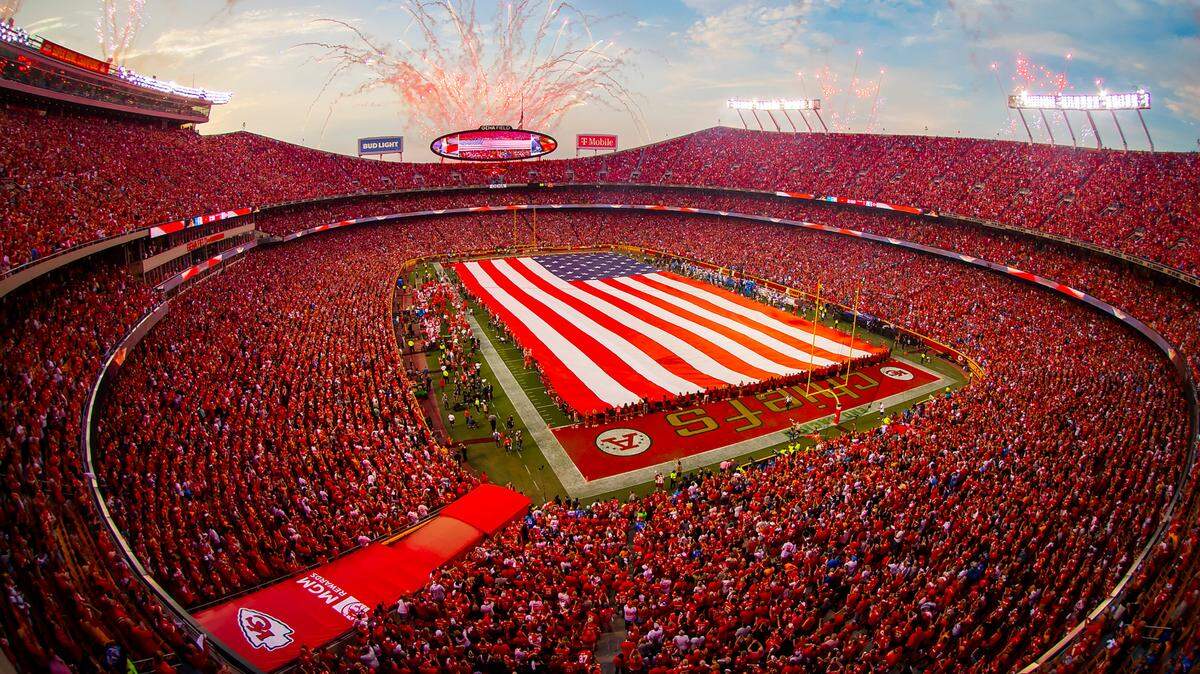
The iconic Kansas City Chiefs venue is celebrating its 50th anniversary. Look back at the concerts, tailgates and games that define it.
Expand All
With apologies to the Chiefs, The Rolling Stones, Taylor Swift, Paul McCartney, Garth Brooks and Billy Graham, arguably the biggest pop culture event in the 50-year history of Arrowhead Stadium, now GEHA Field at Arrowhead Stadium, involved none of the above.
That momentous occasion belonged to Michael Jackson.
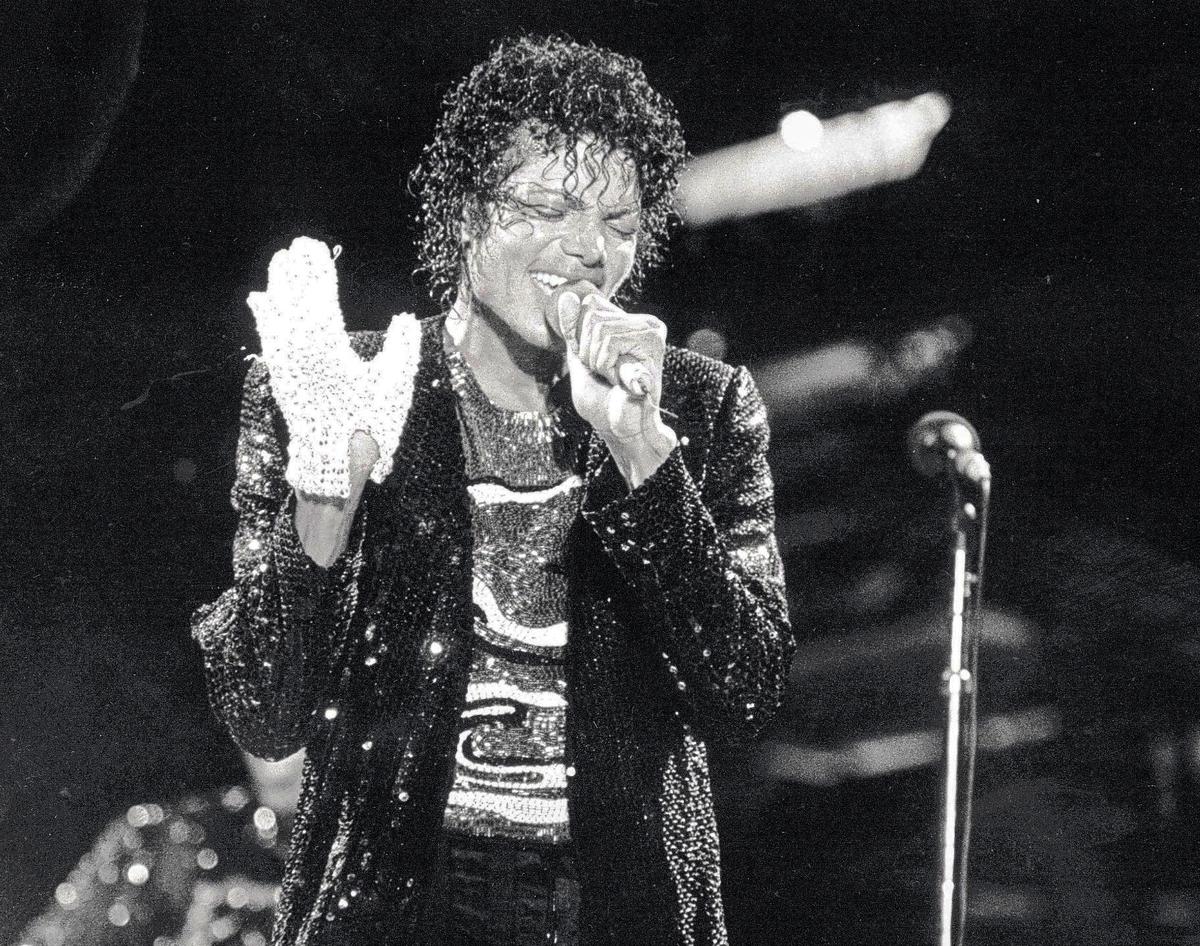
It was the summer of 1984, and Jackson was at the peak of his popularity, the top musical star on the planet. The King of Pop’s millions of fans were young and old, Black and white and brown.
Jackson was only 25, but he had been a pop star since he was 5, performing with what was then the Jackson 5.
His “Thriller” album had taken the music world by storm when it was released in November 1982 and was still No. 1 into 1984. Meanwhile, the epic “Thriller” video debuted on the fledgling MTV network and wowed viewers while changing the art form.
Jackson gained even more attention (and sympathy) around the world after being engulfed by flames from fireworks during the shooting of a Pepsi commercial in January 1984. A month later at the Grammy Awards, he became the first artist to win eight trophies on one night.
Amid it all, he and his brothers announced that their Victory Tour would start with three concerts July 6-8, 1984, at Arrowhead Stadium. The Jackson brothers hadn’t toured since 1981 — pre-“Thriller” — and Michael wouldn’t embark on his first solo tour for another three years, so interest was intense.
Don King, perhaps the most famous and flamboyant boxing promoter ever, was involved with the tour in its early stages. In his typically understated way, he said: “This tour is bigger than the Beatles, it’s bigger than Elvis Presley, it’s bigger than any other musical tour that’s ever been.”
It was, at the very least, the biggest musical tour ever to hit Kansas City.
More than 300 media members from around the world were on hand for the first of the three shows, as was ABC’s “Nightline,” which was the biggest thing in late-night TV at the time.
Gannett’s advance story said, “The Jacksons’ 1984 Victory tour is probably the most eagerly awaited series of performances since the Beatles went on the road 20 years ago.”
Newsweek called Michael Jackson the “most explosive phenomenon since the Beatles.” It also said he was the “Pied Piper of pop,” comparing him to Paul McCartney, Judy Garland, Pat Boone and even E.T. “He’s cute, wholesome and pious,” the article said.
Of course, that was long before Jackson, who died in 2009, faced child sexual-abuse allegations or underwent so many cosmetic procedures that his face was barely recognizable.
MJ in KC
So how did this momentous event wind up at Arrowhead?
“We picked Kansas City as a start for the national tour because it is ideally positioned in the middle of America,” Chuck Sullivan, who reportedly paid the Jacksons $41 million for the rights to promote the tour, said at the time.
There were at least two other factors. Sullivan was president of the New England Patriots and had close connections to the Chiefs and owner Lamar Hunt. Also, Arrowhead was considered a safe venue.
“They were worried about security, probably rightfully so,” Russ Cline, the local promoter who had worked for the Chiefs and for Arrowhead, told The Star recently. “There were some crazy things going on at that time.”
Cline said the 1980 murder of former Beatle John Lennon concerned Michael Jackson to the point that he refused to allow fans to sit in the seats behind the stage at Arrowhead, thus reducing the capacity by more than a third.
“He thought someone was going to try to shoot him,” Cline said.
Also in the not-too-distant past was a 1979 concert by The Who in Cincinnati, where 11 people were trampled to death when ticket holders rushed the entry doors, and Diana Ross’ free concert in Central Park in 1983 that led to widespread violence.
Crowds were easier to manage at Arrowhead, with its relatively isolated location and huge parking lots. Plus, Kansas City music fans were considered to be well-behaved. That turned out to be the case, with fewer than 10 arrests reported over the three days amid an army of 500 security guards.
The Philadelphia Inquirer wrote, “It was more like a 4-H fair than the gathering of rock ’n’ roll ruffians that some had feared.”
Cline said the Arrowhead concerts were the first to use metal detectors at the gates. There was another first for Cline, whose Russ Cline Associates also promoted concerts by The Who and The Rolling Stones and many other major events at Arrowhead.
“Everyone who was involved with the tour as intimately as I was had to sign an agreement that we would not give the details,” said Cline, who lives in Lee’s Summit and still operates Russ Cline Associates.
The nondisclosure agreement expired after a decade or two (he can’t remember which), so Cline can now reveal that Michael Jackson wasn’t in town just for the week of the concerts.
“He actually stayed in Kansas City for two months,” he said, indicating Jackson made the Alameda Plaza Hotel (now the InterContinental) his base for much of the ensuing tour.
“He was always undercover. He was so big. Now, Kansas City was a great place for him to be. He would wear disguises when he went out because he didn’t want to be harassed by people.”
Cline said Jackson slept during the day and was awake through the night.
“He would call our house in the middle of the night for me, because there were not cellphones at that time,” he said. “One time he called and he wanted to talk about security. Another time he called and wanted to visit Children’s Mercy Hospital.”
Still, Cline said he never really grew to know Jackson — who even then was described as a recluse — on a personal level.
“I can say I sat on a bed with him and some other people watching fireworks on the Fourth of July off the Plaza, but I wasn’t intimate with him in any way. It was business.”
Show time
Tickets for every seat, even the front row, sold for the then-extravagant price of $30. They were distributed via a lottery in which fans had to apply by mail for batches of four tickets and were required to include money orders for $120. People not selected in the lottery were mailed refunds.
Complaints forced the lottery system to be abandoned later in the tour and sparked Michael Jackson to make a rare press appearance.
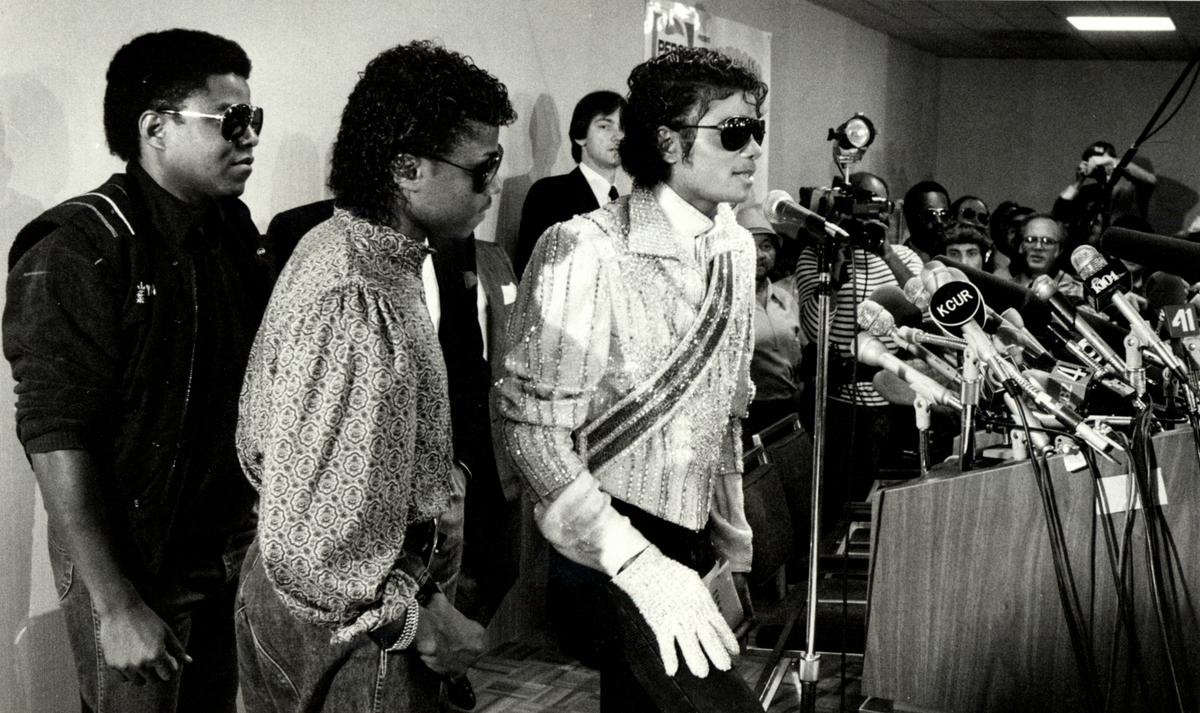
The day before the opening concert, he stood before hundreds of reporters at the Westin Crown Center and made a brief statement about the ticket policy change and how he would donate his pay for the tour to charity. Wearing sunglasses and one of his trademark glittering outfits, he spoke for a few minutes without answering questions, waved his gloved hand and said, “Hi” as he departed.
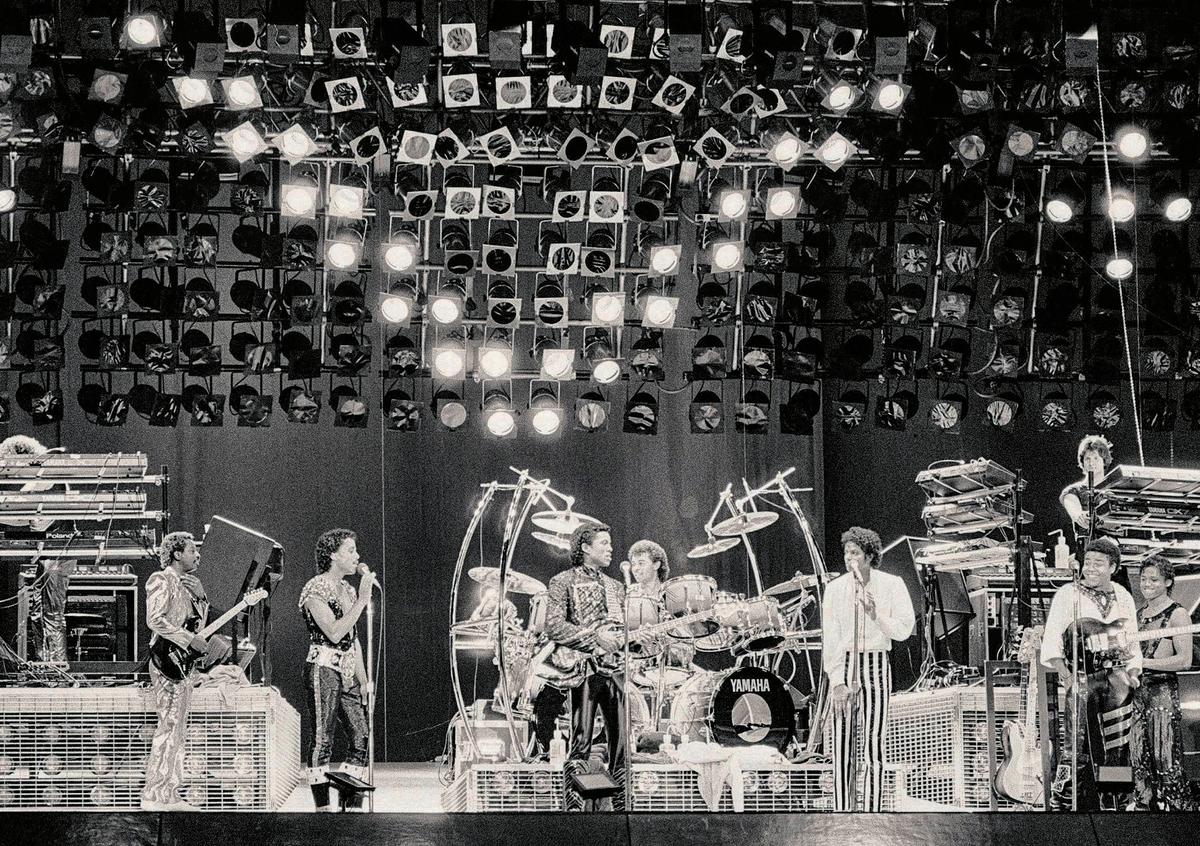
On opening night, at least six helicopters hovered above Arrowhead, where workers had constructed a five-story tall, 59-foot wide and 91-foot deep stage. Cline said organizers at first had been stymied by the Arrowhead field tunnel, which was not tall enough for the trucks carrying equipment to enter. Eventually, they dug the entrance deeper.
“That was a major hurdle,” Cline said. “If we had not been able to overcome that hurdle, we couldn’t have done the show.”
The Jacksons emerged on the Arrowhead stage at 9:45 p.m. on July 6.
‘Made for this’
Candice Price was in the Arrowhead audience that first night — as well as the ensuing two nights.
“It was unbelievable,” she said. “It was like you were in another dimension.”
Price, now CEO of the locally based Urban American Productions, was a professional singer at the time, performing around the world with KC jazz great Lonnie McFadden, and was involved in the music industry for years thereafter.
She got tickets to all three concerts “because I knew somebody who knew somebody.”
Price’s connections also provided her an insider’s view of Jackson.
“We knew a lot of the internal things that were going on, you know, the different rumors,” she said. “But he had a lot of women that loved him, that he spent time with secretly. That’s the truth. But he was private, and he didn’t want people to know that.”
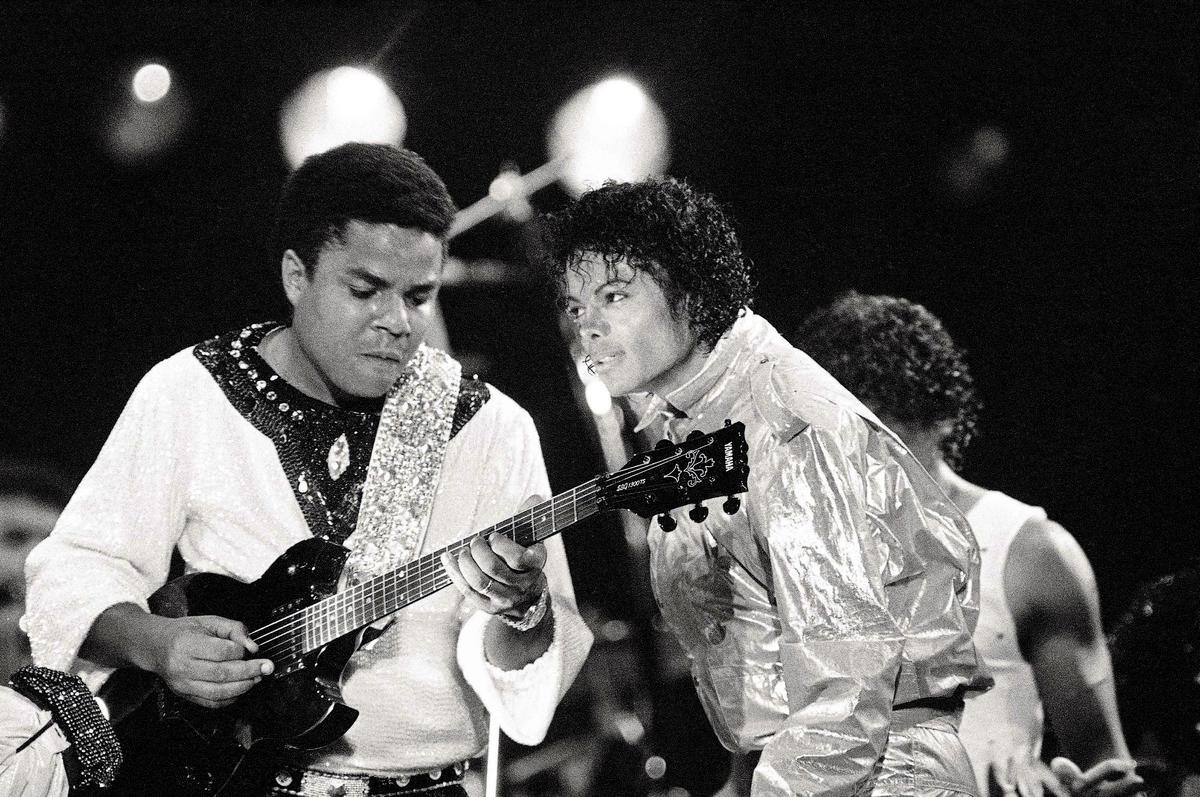
The private Michael Jackson transformed on stage into a master entertainer.
It was called the Victory Tour after the brothers’ new album, but it was all about Michael. They played no songs from the “Victory” album.
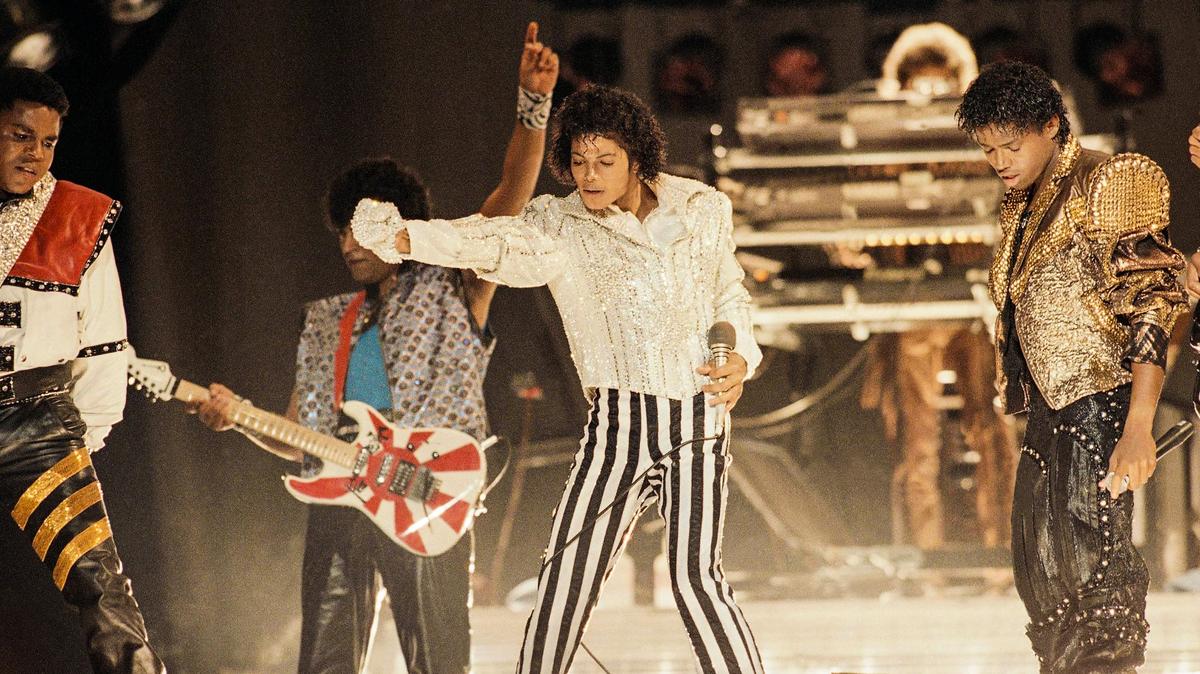
On opening night, he wore zebra-striped pants, a spangled shirt and his trademark sequined glove, which he removed after one song. After the second song, he addressed the crowd with “How you doing? Anybody here from Kansas City?”
The Star reported, “Marion, Tito, Randy and Jermaine all had enough sparkle in their clothes and in their dance steps to put Liberace and Fred Astaire to shame.”
The set list included “Beat It” and “Billy Jean” from “Thriller” and “Heartbreak Hotel” from the Jacksons’ 1980 album, “Triumph.” The concert lasted 1 hour, 45 minutes, with a fireworks spectacular at the end.
Price confirmed what media reports said at the time: that the crowds were diverse and peaceful.
“It felt so good,” she said. “There was so much love there. People were so happy.
“The talent that he possessed was unbelievable. I was around a lot of entertainers, but there was never really anybody of that magnitude like Michael Jackson. … It was like he was anointed. He was made for this.”
Final analysis
▪ Big as it was, the Victory Tour was not the best-attended event of the week in Kansas City. The first Spirit Festival, a Fourth of July music and fireworks extravaganza at the Liberty Memorial area, had drawn a crowd estimated at 225,000 two days earlier. It was free.
▪ All three shows sold out, of course, with promoters claiming total attendance of 135,000, or 45,000 each night. But Cline said the actual crowds, because of the limited capacity, were more like 38,000-plus. “Statistics don’t lie, but statisticians do,” he said.
▪ City officials said the concerts generated up to $26 million worth of business in the community.
▪ Pepsi was a well-known sponsor of the Jacksons, but Arrowhead’s contracts required that Coke be sold at the stadium. Parking, concessions and souvenirs at Arrowhead generated about $6 million.
▪ Jackie Jackson, the oldest of the brothers, missed the Arrowhead concerts and most of the rest of the tour with a leg injury.
▪ Although the tour boasted crowds totaling 2 million over 55 dates, promoter Sullivan lost about $20 million (probably more, according to Cline). His family had used the Patriots’ stadium, then called Sullivan Stadium, for collateral, and the financial setback is widely blamed for the Sullivans eventually having to sell the team.
This story was originally published October 30, 2022 at 5:00 AM.