
Crowning achievement: How Royals’ 1985, 2015 World Series winners are connected
AI-generated summary reviewed by our newsroom.
- Royals modeled 2015 roster on 1985 team blueprint of speed, defense and depth
- Both title runs featured pivotal comebacks and unsung postseason contributors
- Managerial gambles at shortstop proved crucial in securing both World Series wins
Among the first tasks when Dayton Moore took over a declining Royals organization as general manager in 2006 was to study the more successful teams in club history.
Although some finished with better records, none achieved more than the World Series champion 1985 Royals, a team built on speed, defense and pitching.
“When we came here, we researched every successful roster in Kansas City, and that’s how we tried to build our team,” said Dayton Moore, the Royals’ general manager for 16 seasons starting in 2006. “We wanted speed. We wanted athleticism.”
Slowly, the Royals made their way back to the top. The 2015 team, constructed with a similar blueprint, captured the franchise’s second crown.
The shared DNA was apparent throughout the two series quest of 1985 and three series chase in 2015. Here are the common bonds that helped lead to parades in Kansas City as the teams celebrated their anniversaries this weekend at Kauffman Stadium:
Best individual game
1985: Since dropping the final two games of the 1980 World Series, the Royals’ postseason losing streak had reached 10. They needed a hero, and George Brett put on the cape.
In Game 3 of the American League Championship Series, Brett went 4 for 4 with two home runs, four runs scored, three RBIs and a run-saving defensive play where he went into foul territory and threw out Damaso Garcia at the plate.
“I picked a good day to have the best day of my life,” said Brett, inducted into the Baseball Hall of Fame in 1999. “By far. And it was the most important game, as it turns out. If we lose that game, I don’t think we’re going to come back and win four straight.”
2015: The Royals didn’t have one closer during their two-year run of World Series appearances. They had multiple power arms to close out games. No bullpen moment shines brighter than Wade Davis’ performance against the Toronto Blue Jays in Game 6 of the ALCS.
Davis entered the 3-3 game in the eighth with one out and retired the final two hitters. After a 45-minute rain delay, the Royals took the lead on one of the most dramatic plays in team history — Lorenzo Cain scored from first base on Eric Hosmer’s single to right — and Davis returned to pitch the ninth.
Two Blue Jays reached with no outs, but Davis retired the final three: two by strikeout, and the game-clinching final out, Josh Donaldson’s groundout to third baseman Mike Moustakas.
“Our entire bullpen,” Moustakas said. “Five to seven closers in our bullpen. We just had to get to the fifth or sixth inning and we were winning that game. Wade ... was amazing.”
Turning point
1985: In Game 6 of the World Series, the Cardinals took a 1-0 lead into the ninth inning. They had been 97-0 with ninth-inning leads that season. Jorge Orta, leading off the inning, hit a slow roller fielded by first baseman Jack Clark who tossed to pitcher Todd Worrell covering the bag.
“Safe!”
That was the decision by umpire Don Denkinger. Orta didn’t beat the throw. But in a time long before replay could overturn a call, protest was useless. The Cardinals fell apart, losing this game 2-1, and Game 7 in a blowout 11-0.
“We got a good call in Game 6, in the ninth inning obviously,” Brett said. “But I’ve said this a lot of times. You’ve got to show up to play to Game 7. We did and they didn’t.”
2015: A Hosmer error put the Royals behind 4-3 in the eighth inning of the World Series opener. With one out in the ninth, Alex Gordon stepped in against Mets closer Jeurys Familia and blasted of the most dramatic home runs in postseason history.
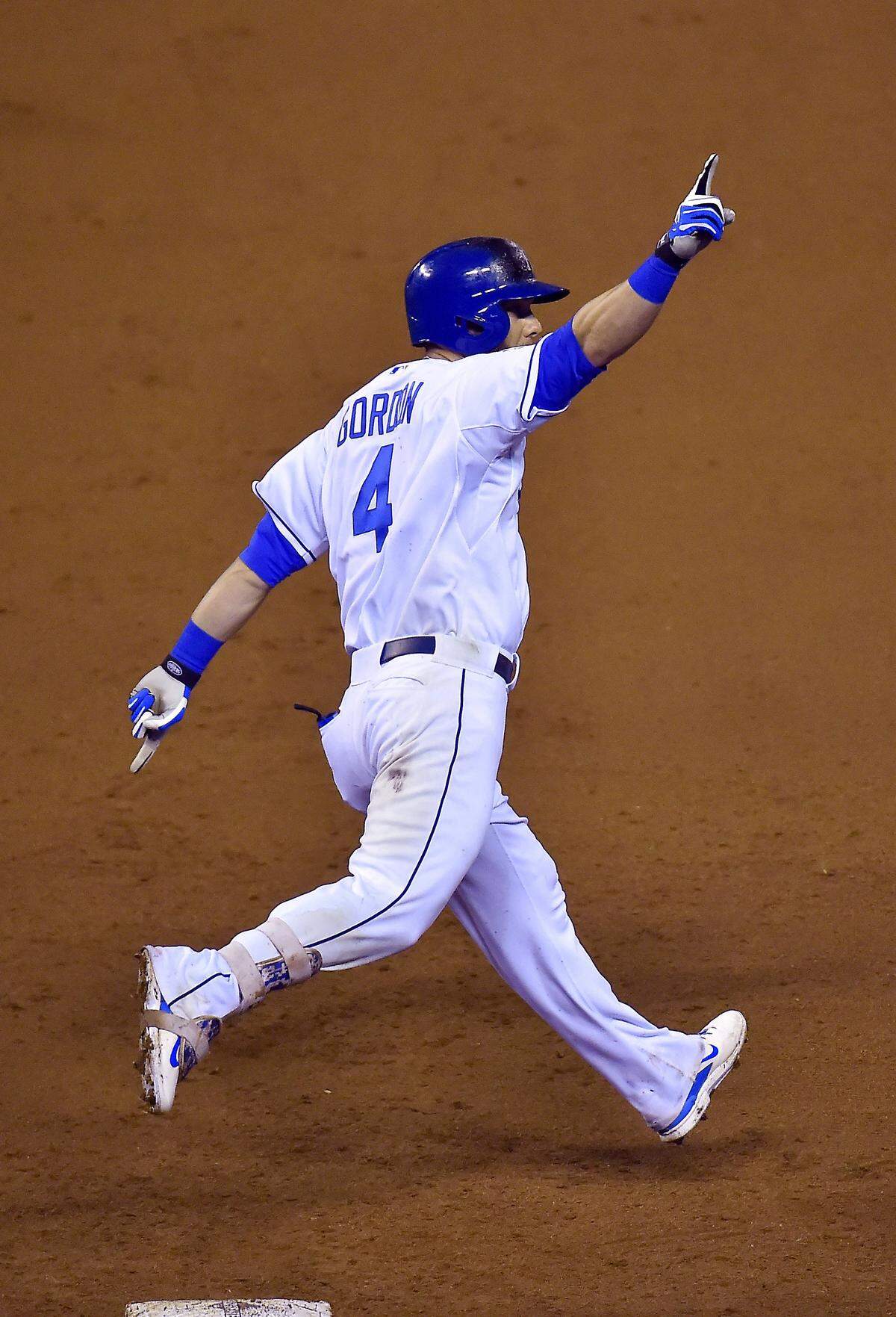
“One of the greatest moments I’ve witnessed on a baseball field,” Moustakas said. “It was epitome of us as a team. Someone made a mistake. Someone will take care of it.”
Fittingly, Hosmer delivered the game-winner with a 14th-inning sacrifice fly, and the Royals controlled the rest of the series.
Unsung hero
1985: Dane Iorg spent eight seasons with St. Louis Cardinals and won a World Series ring in 1982. In 1984, he was acquired by the Royals. Against his former team in Game 6, Iorg came to the plate for the second time in the 1985 World Series in a pressure-packed situation: The bases were loaded in the ninth inning against closer Todd Worrell and the Royals trailed 1-0.
“I’m focused but I hadn’t been to the plate for a week or so,” Iorg said in a 2024 interview. “He broke my bat and I hit a humpback liner into right field and knocked in two runs.”
Ballgame. Series tied. The next day during batting practice, Cardinals catcher Darrell Porter, who caught the late throw at home on the game-winning hit, presented Iorg with the ball.
2015: A year earlier in the Wild Card victory over the Athletics, Christian Colon drove in the game-tying run and scored the winning run in the 12th inning.
He didn’t make another postseason plate appearance until Game 5 of the 2015 World Series, when he drove in the go-ahead run and later came around to score in the 12th inning of the deciding game.
Today, Colon serves as the hitting coordinator for the Kansas City Monarchs.
Darkest hour
1985: The Royals took a 2-0 lead into the ninth inning of Game 2 against the Cardinals, and starter Charlie Leibrandt was down to his last out. In the bullpen was one of the game’s top relievers, Dan Quisenberry.
In hindsight, a bullpen move seemed like a no-brainer. But Dick Howser stuck with his starter, and Leibrandt gave up two more hits, including a bases-clearing double by Terry Pendleton as the Royals lost 4-2.
No team had ever won a World Series when losing the first two games at home, as the Royals just did. “It seems like we’ve been playing 0-2 all season,” Quisenberry said.
A week later, the Royals celebrated a championship after winning six straight elimination games against the Blue Jays and Cardinals.
2015: Trailing 2-1 in the best of five series, the Royals lugged a 6-2 deficit into the eighth inning of ALDS Game 4 at Houston. Texas Governor Greg Abbott had already congratulated the Astros on reaching the ALCS.
“There was still baseball to be played,” Moustakas said. “And as long as we have life left we were going to find a way to win.
Five singles and an error to open the inning produced four runs. A groundout drove home the fifth as the Royals took the lead. Hosmer added a two-run homer in the ninth for a 9-6 victory and the Royals didn’t trail in a series the rest of the way.
Best manager move
1985: It happened late in the regular season when manager Howser benched shortstop Onix Concepcion in favor of Buddy Biancalana. It didn’t make much sense at the time. Concepcion’s batting averaged had fallen to the low .200s. But Biancalana was hitting .188 when he became a starter in September.
The moved paid off. Biancalana hit .278 in the World Series. He even scored a moment of fame as a guest on David Letterman’s show that summer when Pete Rose was chasing Ty Cobb’s career hit record. The late night host brought out a ”Buddy Biancalana Hit Counter” to measure Biancalana’s chase of Rose and Cobb.
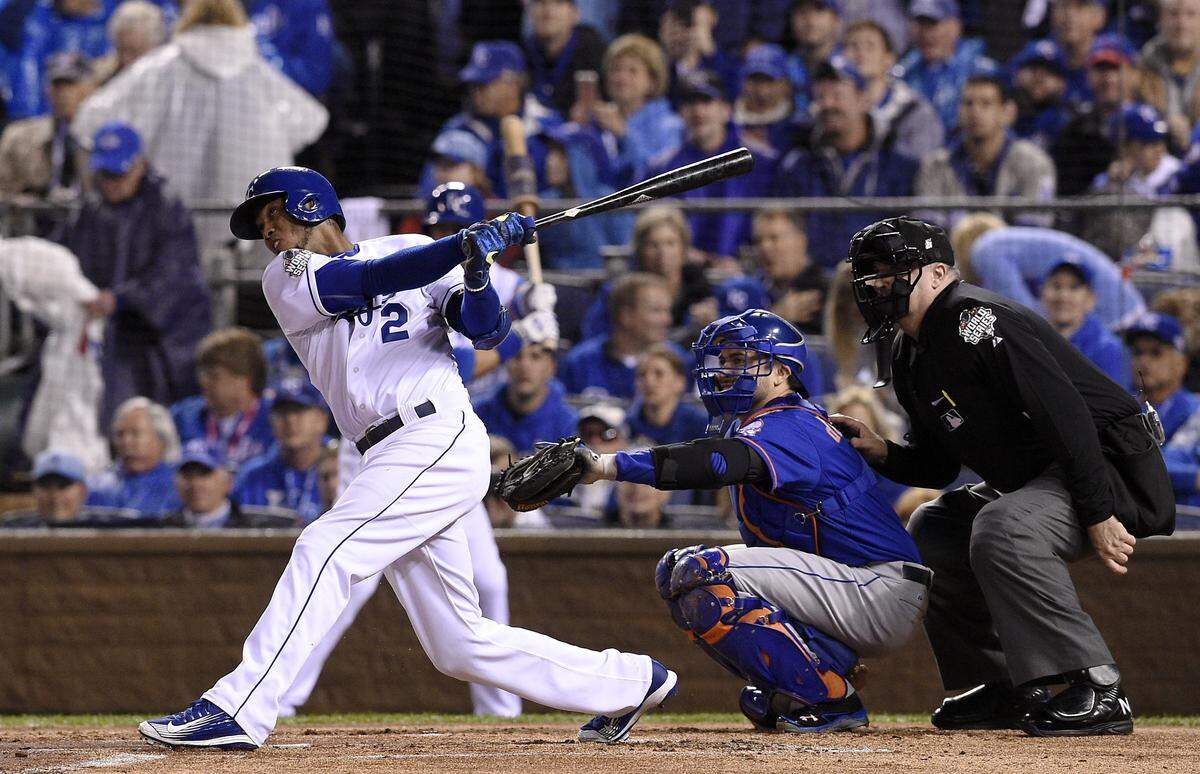
2015: Another move that involves shortstop. With a career on-base percentage of .295, there was no statistical reason for Alcides Escobar to bat leadoff. That didn’t stop manager Ned Yost from putting Escobar at the top of the order in the playoffs.
“It defies logic,” Yost said. “But it works.”
Like a charm, especially in Game 1 of the World Series, when Escobar put Matt Harvey’s first pitch into the gap for an inside-the-park home run. Twitter even had a handle for it: #EskyMagic.”
This story was originally published May 16, 2025 at 11:04 AM.