‘I don’t think our job is to recruit’: Kansas Jayhawks’ NIL collective leader says
The NCAA Division I Board of Directors on Monday issued name, image, likeness “guidance” seemingly focused on preventing boosters — including NIL collectives — from making contact with prospective student-athletes, family members or representatives during the recruiting process.
The NCAA, in relaying what 6th Man Strategies owner Matt Baty called a “reminder” regarding the interim rules it implemented last July 1, stated Monday in a news release that NCAA recruiting rules, “preclude boosters from recruiting and/or providing benefits to prospective student-athletes.”
The NCAA, in making its first official comment on NIL since last summer, indicated it now, “may pursue the most outrageous violations that were clearly contrary to the interim policy adopted last summer.”
However the group added, “Our focus is on the future.”
The University of Kansas’ current NIL policy for student-athletes (which was implemented last August) has already addressed this issue of third-party involvement in recruiting athletes via NIL.
According to KU’s policy on student name, image and likeness: “The University of Kansas and Kansas Athletics may not provide or solicit a prospective student-athlete with compensation or a promise of compensation for the use of their NIL. … A student-athlete shall not receive any payment, provision, promise or any other payment or benefit from the institution or any person acting on behalf of the institution not otherwise permissible under NCAA rules and regulations.”
Also, KU’s policy, as part of the “Jayhawks Ascend” program states, “a student-athlete shall not be paid or receive any benefit, nor accept a promise to be paid or receive a benefit, as an inducement for the student-athlete to sign a letter of intent to attend the University of Kansas.”
The NCAA’s news release Monday stated that new NCAA guidance was “developed by a task force of national leaders with student-athlete opportunity at the forefront of discussions.”
The organization on Monday, in making it clear boosters cannot contact players about potential NIL deals, defined a booster as “any third-party entity that promotes an athletics program, assists with recruiting or assists with providing benefits to recruits, enrolled student-athletes or their family members. The definition could include ‘collectives’ set up to funnel name, image and likeness deals to prospective student-athletes or enrolled student-athletes who might be considering transferring.”
Matt Baty’s take on NCAA rules
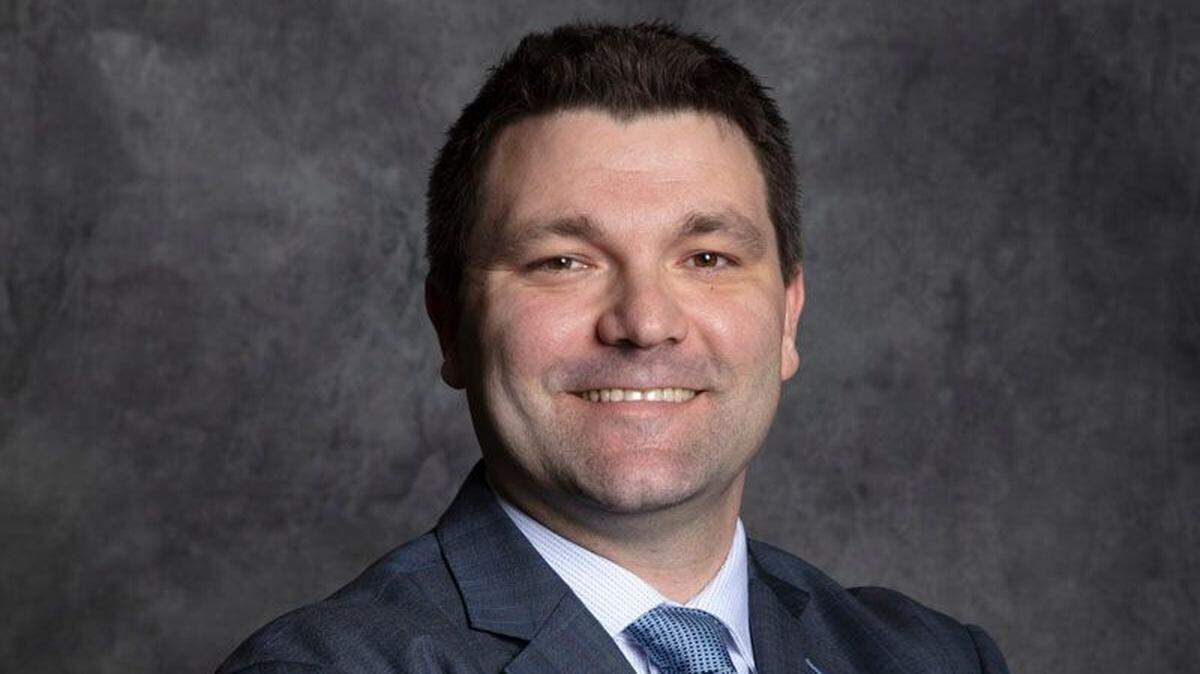
Former KU baseball player/Williams Fund director Baty, whose 6th Man Strategies (and offshoot 12th Man Strategies for football), represents KU men’s and women’s basketball players and football players in NIL, issued this comment to The Star about Monday’s NCAA news release:
“For the majority of NIL groups the news today was nothing more then a reminder of the rules set forth by the NCAA almost a year ago. Certainly there are some bad apples that should be nervous. However, today further cements that we were not only ahead of the game industry wide but doing it the right way from the start.”
In fact on Friday Baty said he thought “there should be restrictions on NIL groups being able to talk with and being a part of discussions with recruits. I don’t think our job is to recruit.
“It shouldn’t be us calling recruits or have recruits call us,” Baty added. “Our body of work for what we do with student-athletes on campus now should be the enticement for recruits to school not because you called them and offered a package.”
Baty told The Star: “The rule is NIL is not supposed to be a recruiting enticement (or) inducement to go to a university. No question around the country I think you are seeing that play out.”
He and others in the sports world have seen reports of certain prospects receiving guarantees of NIL money in choosing schools. For example it was reported by a private company that former Kansas State guard Nijel Pack would receive $800,000 in NIL money from that company over two years upon transferring to Miami. That private company according to NCAA guidance issued Monday may have committed a violation if it had direct dealings with Pack in connection with possibly attending a specific school, in this case, Miami.
“That has never been in question at Kansas. We don’t talk to recruits,” Baty said, speaking in general, not of any specific players or portal transfers.
The NCAA stressed in its news release Monday that “board members emphasized a continued support for the ability of (current) student-athletes to benefit from their name, image and likeness. The guidance is intended to provide clarity for those engaging in a rapidly evolving NIL environment, acknowledging that the environment will continue to evolve, and ongoing attention will be needed to ensure student-athletes are able to benefit from these opportunities.”
Also in the release: “The board noted that the emphasis of this NIL guidance is on boosters in the recruiting process and is not intended to question the eligibility of prospective and enrolled student-athletes involved in NIL deals. Only the most serious actions that clearly violate the previously published interim policy would have eligibility implications.”
Georgia president speaks
University of Georgia President Jere Morehead said in the NCAA news release: “The new guidance establishes a common set of expectations for the Division I institutions moving forward, and the board expects all Division I institutions to follow our recruiting rules and operate within these reasonable expectations.”
The NCAA asked the Division I Council to “continue exploring additional measures to better ensure name, image and likeness opportunities align with NCAA values and protect the well-being of student-athletes.”
In an attempt to clarify the NCAA announcement for its student-athletes, the Pac-12 Conference on Monday issued its own “guidance related to prospective student-athletes.”
Pac-12 takeaways from NCAA news release
According to the Pac-12 …
• Recruiting conversations between an individual or entity that has triggered booster status (booster/NIL entity) and a prospective student-athlete are not permissible. … Booster/NIL entity may not communicate (e.g., call, text, direct message) with a prospective student-athlete, a PSA’s family, or others affiliated with the PSA for a recruiting purpose or to encourage the PSA’s enrollment at a particular institution.
• An NIL agreement between a PSA and a booster/NIL entity may not be guaranteed or promised contingent on initial or continuing enrollment at a particular institution.
• Institutional coaches and staff may not organize, facilitate or arrange a meeting between a booster/NIL entity and a PSA (e.g., provide the individual or entity with a recruiting list or watch list, including the NCAA transfer portal).
• Institutional coaches and staff may not communicate directly or indirectly with a PSA on behalf of a booster/NIL entity.
• NIL agreements must be based on an independent, case-by-case analysis of the value that each athlete brings to an NIL agreement as opposed to providing compensation or incentives for enrollment decisions (e.g., signing a letter of intent or transferring), athletic performance (e.g., points scored, minutes played, winning a contest), achievement (e.g., starting position, award winner) or membership on a team (e.g., being on roster).”
Bill Self’s recent NIL comments
KU officials did not immediately answer a request for comment. KU men’s basketball coach Bill Self, however, recently spoke about NIL to Houston TV reporter Mark Berman at an event in Texas.
Self said the current NIL setup is “out of control. It is. I’m not saying ‘bad,’ but I’m saying we haven’t put our arms around it yet. Everybody’s kind of interpreting it their own way, which is totally permissible and legal within the rules.
“It’s changed the playing field to where it’s not quite as level as what it potentially could be. I’m all for the kids and their families benefiting from this. There’s nothing wrong with that, but once again, a kid shouldn’t transfer because he can get $50,000 more (in NIL money) or be told he can get $50,000 more somewhere else and this place (his original school) has actually done a very, very good job in helping develop him.”
Self after the recent KU basketball banquet said: “NIL already is affecting recruiting. It’s the way the game is. It’s not going away. No matter what anybody says about NIL, how negative or positive, that’s the business we live in (and) have got to live in.”
Will federal government step in?
It’s possible the federal government sometime in the future will pass a law regarding NIL.
ESPN.com’s Dan Murphy on Monday offered this take on that issue: “Laws in nearly two dozen states prohibit schools and the NCAA from punishing athletes for accepting money from third parties. These guidelines, if enforced by the NCAA, could lead to legal challenges. Athletes in states without laws that specifically address college sports compensation also could file lawsuits that claim any limits the NCAA places on their ability to make endorsement money violate federal antitrust laws,” Murphy wrote, adding, “the risk of litigation is at least part of the reason the NCAA has taken a hands-off approach to regulating the new NIL market since it opened last July, according to Tulane sports law professor Gabe Feldman. But other risks to the business model of college sports may now outweigh the fears of future lawsuits.”