NIL in college sports: Head of company repping KU athletes urges federal intervention
According to SI.com, an NCAA working group is expected to clarify some rules involving name, image and likeness of college student-athletes next week.
Included could be language stressing that schools and/or boosters that violated temporary NIL rules put in place July 1, 2021 may face NCAA penalties if they have used NIL enticements in the recruitment of high school, junior-college and/or transfer-portal athletes.
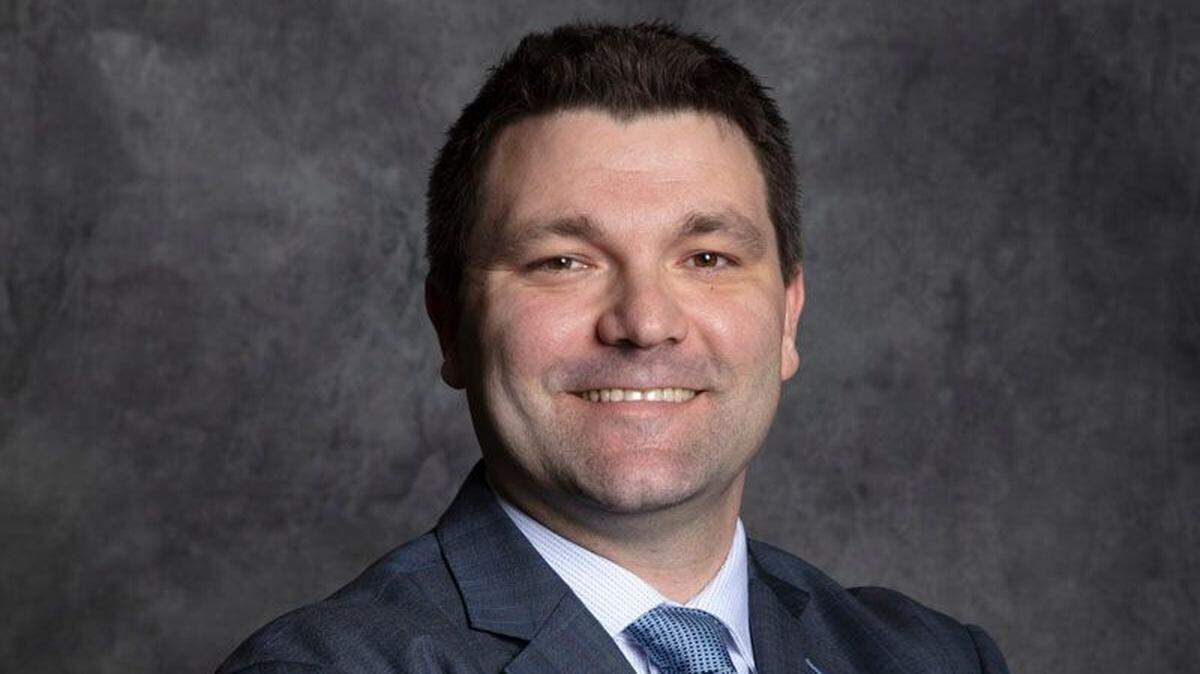
Such clarification/enforcement would be welcome by Matt Baty. His 6th Man Strategies and 12th Man Strategies companies are in charge of name, image, likeness of current University of Kansas men’s and women’s basketball players and Jayhawks football players.
“The rule is NIL is not supposed to be a recruiting enticement (or) inducement to go to a university. No question around the country I think you are seeing that play out,” Baty said Friday in a phone interview.
He and others in the sports world have seen reports of certain prospects receiving guarantees of NIL money in choosing schools. For example it was reported former Kansas State guard Nijel Pack would receive $800,000 in NIL money over two years upon transferring from K-State to Miami.
CBSsports.com notes that former Pittsburgh receiver Jordan Addison recently entered the transfer portal after reportedly being offered a million-dollar deal by an unnamed school or NIL group.
“That has never been in question at Kansas. We don’t talk to recruits,” Baty said, speaking in general, not of any specific players or portal transfers. “Our method, 6th Man Strategies or 12th Man, is if our current student-athletes are making money in NIL, that is going to help in recruiting because when that recruit comes to campus, they are going to ask that question to the current players: ‘Hey are you guys doing an NIL deal and what kind of opportunities do I have if I come to Kansas?’
“We want them (current players) to answer that question honestly and we want them to answer that question with, ‘We do these type of deals.’ That’s the best recruiting enticement,” Baty, a former KU baseball player and Williams Fund director who lives in Wichita, added.
The NCAA last July implemented its temporary ruling that players could benefit from name, image likeness. The NCAA acted because some states had passed rules allowing college players to make money off NIL. Other states, such as Kansas, had not passed a rule of any kind. The NCAA could not prohibit some schools from allowing players to make NIL money and restrict players at other schools from doing.
“Right now I think the NCAA has a history of being very restrictive, but in the NIL world they have been very, very loose,” Baty said. “They have rules that they stated NIL cannot be used for recruiting enticement. It cannot be pay for play. You can’t pay a student athlete because he scored 50 points. Those types of things. Those are good rules to have in place. But there has been zero, and I mean zero, regulation on that.
“That’s a problem for some. Some you give them a rope they are going to see how far that rope takes them. For us, we don’t need to do that. We are Kansas and we haven’t needed to operate in that space. Nor would we. We do things the right way. And we do that in a ‘compliance way’ and that’s why it’s important for for guys like me and my family — my brother and I in particular (who run 6th and 12th Man Strategies) — we’re Jayhawks.
“We want to make sure what we do is is on the up and up that the student-athletes are compliant, that our donor base is (compliant), understands the rules and regulations and that at the end our institution and our student-athletes are in good care. That’s that’s priority. We don’t need to risk that. We as a collective or NIL group or whatever you want to call us, we don’t have to get involved with what some others have chosen to do, get involved in the recruiting front. When you have a program like Kansas and a brand like that, we don’t need to get involved in the recruiting process.”
Baty said he is in regular communication with KU’s compliance department.
“Some can criticize them for being conservative (regarding NIL) and 6th Man for being conservative through our programs. Our approach as you can tell is working out in our favor because we have nothing to worry about when the NCAA starts calling these collectives,” Baty said. “We stand strong on the brand and the strength of ‘Kansas Jayhawk’ that we didn’t need to go out and do stupid stuff.”
Baty answered ““100 percent” when asked if he feels his group has played by the rules.
“We know we have operated with the best interest of not only the university but the student-athletes,” he said. “No question we have done everything by the book in a conservative, even more conservative than the rules (require) manner. Let the record be shown KU (compliance) has been at the forefront of making sure our group and any other group interested in getting involved in NIL knows what those rules are, knows the confines in which we can operate and at the end of the day making sure the student-athletes are eligible.”
In the absence of state law, KU Athletics has an NIL policy in place. In KU’s set of rules, any prospect who would choose KU after negotiating an NIL deal would not be eligible for participation.
“There is no state law,” Baty said. “We rely on the institution rules which (indicate) we can’t do (NIL) deals with drugs, sex, gambling and alcohol. The fifth thing is the student-athletes have to report (all NIL deals). The only way they get in trouble outside those four things is the fifth thing, is if they don’t report. If they go and do a $1,000 deal with somebody and do not report it, they have eligibility issues. We use Opendorse (a company that works with student-athletes’ branding) to report those (deals) that do happen.”
Baty was asked what might need to change if the NCAA puts out new guidelines next week.
“I’d like to see some controls put in place, whether that is federal legislation or state legislation,” Baty said of NIL. “What you see happening in my opinion, just from experience, is if the NCAA makes broad restrictions they may open themselves up to litigation. Litigation is where this all started.”
Indeed, players have filed lawsuits that led to some states allowing NIL and forcing the NCAA to issue those interim guidelines last July. There is a proposed bill in California that would essentially remove any NIL limitation.
“I believe the NCAA was looking to the federal government to make those needed restrictions to legislation,” Baty said. “And they didn’t so they kicked it to each state. There are 50 states. Fifty states have 50 different rules. If they have 50 different rules, one state could have very restrictive rules and restrict their institutions from NIL opportunities, which would hurt the school ... or every school could be very loose and it’d be the wild wild west;
“That’s why I think in my opinion there needs to be some federal rules put in place, legislation put in place, so there is a clean slate of rules that everybody is operating under.”
In a perfect world, Baty said, “I think there should be restrictions on NIL groups being able to talk with and being a part of discussions with recruits. I don;t’ think our job is to recruit. It shouldn’t be us calling recruits or have recruits call us. Our body of work for what we do with student-athletes on campus now should be the enticement for recruits to school not because you called them and offered a package.”
The bottom line, Baty said, is ‘We stand alongside the student-athletes for them to benefit from their name, image, likeness. This has been a long time coming, no question. They need to benefit from that. But there should be standards put in place to equalize the playing field somewhat.
“And I know that’s hard to do in a free market. But there’s got to be some type of restrictions put in place, or this is just flat-out not sustainable. I’ll tell you, in my conversations with donors there is zero interest from donors to make $300,000, $400,000, $500,000, $800,000 gifts to an athletic department that is 100% going to go to a student-athlete. There’s zero interest in that. It’s not sustainable. There’s only so much money to go around in college athletics.”
When contacted, KU officials did not wish to comment on NIL at this time. There is the possibility of comment after the NCAA working group issues its recommendations.