What’s different for KU Jayhawks football under Lance Leipold? Most players say this
Hayden Hatcher recently had to set his alarm for 5:30 a.m., but he says he only had himself to blame.
The Kansas football defensive end was a few minutes late to lunch at the team’s facility a couple weeks ago. He figured he might get away with it.
Hatcher was wrong. He was put on a list for “Championship Protocol,” which meant his discipline would be helping to clean the weight room an hour before anyone else arrived.
It was then, Hatcher says, that his first conversation with Lance Leipold popped back into his head.
“He’s been a man of his word,” Hatcher said, “when he said that he was going to give us discipline.”
The new focus was self-requested.
Hatcher, during a one-on-one interview with Leipold in May, was asked by the coach what he wanted most from the new regime. Hatcher answered with two words — “accountability” and “discipline” — while saying all the best football teams he’d played with before shared those qualities.
He wasn’t alone with those thoughts. Hatcher says many of his teammates told Leipold the same response, with the coach sharing that with them since, including one time in practice when he stopped drills a few minutes in after not liking his team’s energy.
His message then: You guys wanted me to hold you responsible for your actions, so it’s time to pick it up.
“Nobody can fuss about it,” Hatcher said, “because that’s what we asked for.”
The moment is just one example of the change Leipold and staff are trying to create.
Player after player will tell you there’s a difference between this year and others past. In trying to create a new culture, KU’s coaches have centered their attention on the minutiae.
It could be a clip-art image shown at the beginning of team meetings. Or the presentation of the Jayhawk logo as it appears in the weight room. Or a checklist by the facility’s lunch table.
All these things might seem mostly insignificant on the surface. But if KU is to turn around a long-moribund program, the team’s players are convinced — along with emphasis from the coaches — that these finer points will help get them there.
“If you all get people to buy into the little details,” KU running back Devin Neal said, “that’s what wins you games.”
‘The Difference’
KU running back Amauri Pesek-Hickson prepared himself to win the daily race — and he wasn’t the only one.
Offensive coordinator Andy Kotelnicki’s daily offensive meetings had all followed the same pattern: an introduction slide, a few words welcoming his guys, then a flip over to the image of a hand with fingers pinched close together with thumb and forefinger less than an inch apart.
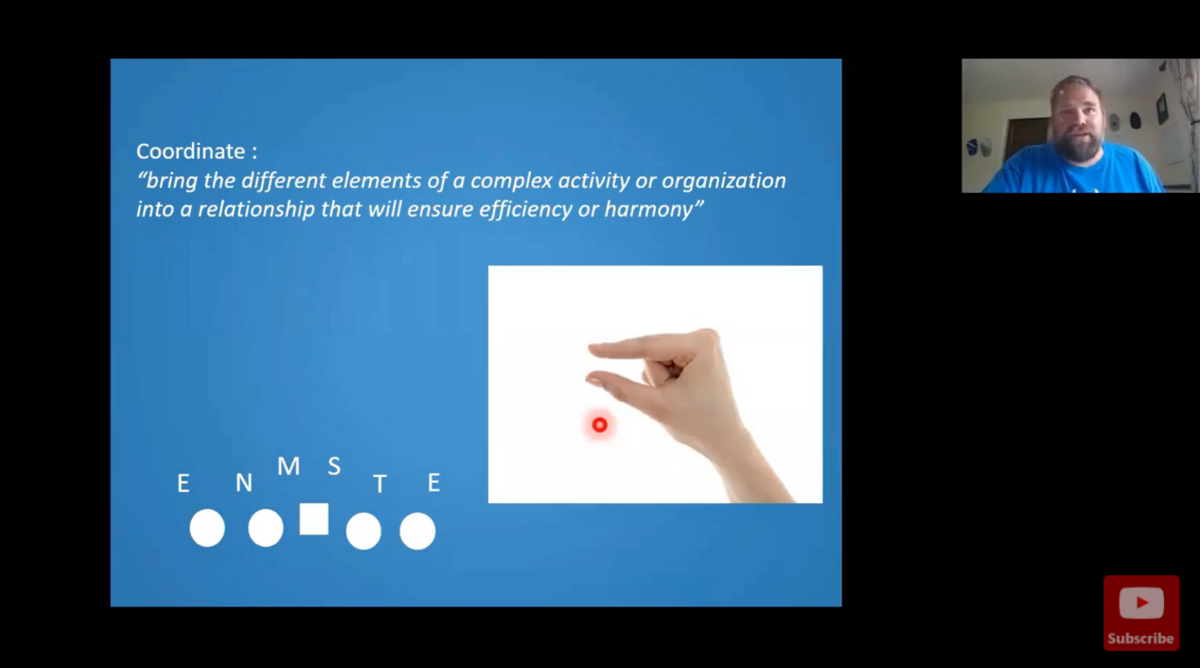
Kotelnicki had previously explained what the photo meant to him. This, he said, was “The Difference” — a visual representation of the margin he sees every week between victory and defeat.
It could be one block. Or one guy straining to the end of a play when he didn’t have to.
The film — over and over — had shown him that a team’s result each week came down to how a team fared with this hidden part of the game.
And his attempt to convey that to his players had become a game of sorts.
Each day, right as he flipped over to the second slide, KU’s offensive players had started a tradition of beating him to the punch. “The Difference!” they’d yell in unison, letting their coach know that they already knew what he was going to say next.
On this day, though, Pesek-Hickson and his buddies were too quick. Kotelnicki changed up the presentation, making it so the next screen displayed some notes about their execution in a recent scrimmage.
“We screamed out ‘The Difference,’” Pesek-Hickson said with a laugh, “and it wasn’t ‘The Difference.’”
It’s far from the only type of active learning the coaching staff uses to get teaching points across.
Another segment of Kotelnicki’s presentation goes into “What Is Rock Chalk” and “What Is Not Rock Chalk.” With the former, he might show an example of what he calls an “RBI block” — an effort where a player’s effort on a defender opens up a teammate’s touchdown run (or drives the run in, if you want to use the baseball analogy he’s going for).
The latter, meanwhile, could show a lineman jumping early, or a receiver not securing the football the way he should.
Each of those could have a huge impact.
“That really is a great tool for us,” KU offensive lineman Colin Grunhard said, “to see the difference in practice and in our lives.”
It’s teaching points like this that linebacker Rich Miller says are the reason he decided to follow the staff from Buffalo to KU.
Miller, who played all 20 games the last two seasons for the Bulls, says it’s been reiterated to him that Saturdays are for the fans, but Mondays are when teams actually win games. He says it’s not hitting that snooze button when you could — or focusing on discipline all the time so you remain that way when tired in the fourth quarter — that matters most in the end.
“You can’t practice bad the whole week and come out on game day and just think it’s gonna magically happen. It’s not,” Miller said. “That’s one thing they instilled in me, and I really like that, because that made me better as a person. That’s how I live life. Do all the little things right every day.”
So what routines have become the new normal for KU football players in 2021?
It turns out almost every Jayhawk can give you a different answer.
‘It’s almost forcing you to do right’
Defensive lineman Caleb Taylor admits the first days in the weight room under new strength coach Matt Gildersleeve didn’t exactly go smoothly.
“The biggest emotion that I saw when we first started was confusion,” Taylor said with a smile, “and I was one of them.”
KU’s strength workouts had never had this many whistles before. Not only that, players who lifted in groups of 3-4 were constantly asked to always do something, part of a change that kept each person working even if he wasn’t working on a specific machine.
An example: While one player does bench presses, another could be doing rolling exercises. They start each set of reps on Gildersleeve’s whistle, and when the subset ends, each group jogs to the next station.
They’d better get there in a hurry. Taylor says guys who don’t get to their next location with a purpose are sent back by Gildersleeve, sometimes having to retreat to the opposite end of the weight room to show they can properly run to their next spot.
“I feel like at first, some people were resistant to it, because it was new obviously. You’re going to be a bit resistant to anything,” Taylor said of the changes. “But after a while, and people really got settled in, I feel they’re starting to like it and embrace it, because we do get a lot done in the shortest amount of time possible.”
Those aren’t the only weight-room rules that were deemed important.
Each bumper plate — used for lifts like bench press and squats — has a Jayhawk logo affixed to it. When those are returned to racks, they must be done so with the Jayhawk appearing right-side up. Miller says offenders to that rule can be subject to “lots of yelling” and also up-downs.
Receiver Luke Grimm also says major changes have come about with nutrition as well. He says each player has pre-supplements and vitamins they’re given each morning ... that they check off once they receive. After practice, there’s “Refuel Road,” which contains hydration materials and food like frozen fruit. Again, players must confirm that they completed this step.
Lunch is the same way. Each player has a designated time to be there and has to sign off that he went through.
“I think a lot of guys have changed, matured from it, that discipline being there,” Grimm said. “It’s almost forcing you to do right — like you can’t do wrong.”
The strength staff works to pinpoint a player’s individualized needs. During the summer, Gildersleeve made sure each Jayhawk received a post-workout shake with a proper protein-to-carbohydrate balance needed for his strength or weight loss goals. Taylor said at times, that meant he’d have to grab a spoon or bigger straw for his own shake; a normal straw wouldn’t work because his specific smoothie contained a personalized helping of Cheerios on top.
Leipold, meanwhile, has his own ways of encouraging a strict regimen in practices. Players run between workout periods — “If you’re walking, you’re wrong” has become a common refrain — while his talks to the team at the end of drills require each person to kneel while remaining behind the yard-line that’s in front of him.
“Respect the line,” teammates have said while policing each other.
Other rules have been instituted as well. Players aren’t allowed to wear hats in team meetings, while dirty lockers also are disallowed, meaning unclean clothes need to be cleared out along with empty bottles.
Hatcher said one essential with all this was that everyone was being held to the same standard; no one is above the rules, which has made teammates accountable to each other.
What has followed, Hatcher says, is a strong foundation for discipline.
And a vision of what he was coveting for the program just a few months ago.
“It’s not just something we put on a T-shirt; it’s something that we do here,” Hatcher said. “And we see it day in and day out, whether you like it or not.”