
Guns are easy to buy online. Kansas City teens pay with their lives | Opinion
.jpg "Britney Castro-Lopez of Kansas City, Kansas, with her dog, Uzamaki. Britney was shot and killed at age 19.")
When Britney Castro-Lopez got her first paycheck, she spent the money on groceries for her family.
Her mom, Dora, told that story recently in the living room of the family’s home in Kansas City, Kansas.
Around midnight on May 31, Britney, the youngest of her six daughters, left the house. She was found three hours later in a car left by her sister’s house, with a gunshot to the head.
Britney died two weeks later. She was 19. Nine months after Britney’s death, a young man who was her ex-boyfriend now faces charges for second-degree murder.
Marialexa Sanoja, a former school officer who advocates for families, sat across from Britney’s parents that day. “I could tell you 10 other stories like Britney’s,” she would later say.
The stories often start with a simple disagreement or fight. But a situation can quickly become deadly because of how easily teens can get their hands on a gun, she explained, pulling out her phone and showing screenshots of guns posted for sale in Instagram group chats.
As Sanoja scrolled, one saw a stark display of the epidemic that has made gun violence the leading cause of death for adolescents across the U.S.
WyCo youth bought first gun at 14
On a recent Sunday afternoon, K (his first initial), 20, sat with his hands in his pockets, his eyes darting between the fries in front of him and passing strangers.
K purchased his first gun at 14, having to steal food for himself and his little brother amid an abusive home situation.
Sanoja, sitting next to K, described how difficult it is for communities to break cycles of poverty and violence.
“The systems are designed to keep people stuck,” she said, noting that K and others living in Wyandotte County, the metropolitan area’s most impoverished county, pay the highest effective property taxes.
“We make sure that the poor stay poor.”
When asked, K described how young people acquire weapons. “It’s easy to find someone who is selling,” he said.
Recently off probation, K explains that he tries to spend more time on the Missouri side of the bistate metropolitan area.
“They’re a lot stricter on the Kansas side,” he said, describing how the window tint limits and 911 response times, which differ across state lines, influence where he hangs out.
It also influences where youths go to get guns, he said. K knows what it’s like when sellers and buyers are subject to different state laws.
In states such as Missouri and Kansas with relatively lenient gun laws, getting a firearm online, for example, isn’t difficult.
“Kids communicate on social media, and gun sales are a part of that,” said Bernard Hansen, special agent in charge of the Kansas City field office of the Bureau of Alcohol, Tobacco and Firearms in a recent interview.
Platforms such as Facebook have policies prohibiting gun sales, but critics argue that sellers can easily get around this to connect with buyers.
ATF underfunded, understaffed for decades
In most states, including Missouri and Kansas, private sellers are not required to verify the legal status of buyers.
Unlike with the sale of alcohol, law enforcement must prove that a person sold a gun to someone knowing that the buyer was a minor or other “prohibited person.”
And proving that is very challenging, Hansen said.
Kelly Sampson from Brady United, a nonprofit focused on gun violence, explains that the challenges go beyond the state level.
Because of lobbying by organizations such as the National Shooting Sports Foundation, she said, we’ve seen fewer resources for the ATF, the federal agency that regulates guns.
“The ATF has been, by design, underfunded and understaffed for decades,” Sampson said.
To better understand cases where the federal government has stepped in to protect youth, I interviewed L, (first initial), 19, who recently lost her best friend to a drug overdose.
L explained that guns and drugs were both regularly sold at the last high school she attended.
Recently, Food and Drug Administration investigators seized many products from Kansas City-based Shaman Botanicals, which drew national attention for selling a new opioid known as 7-OH. The drug is “extremely physically and psychologically addictive,” an investigation by The Kansas City Star revealed.
Americans believe in regulating drugs shown to be deadly. Guns, somehow, remain different.
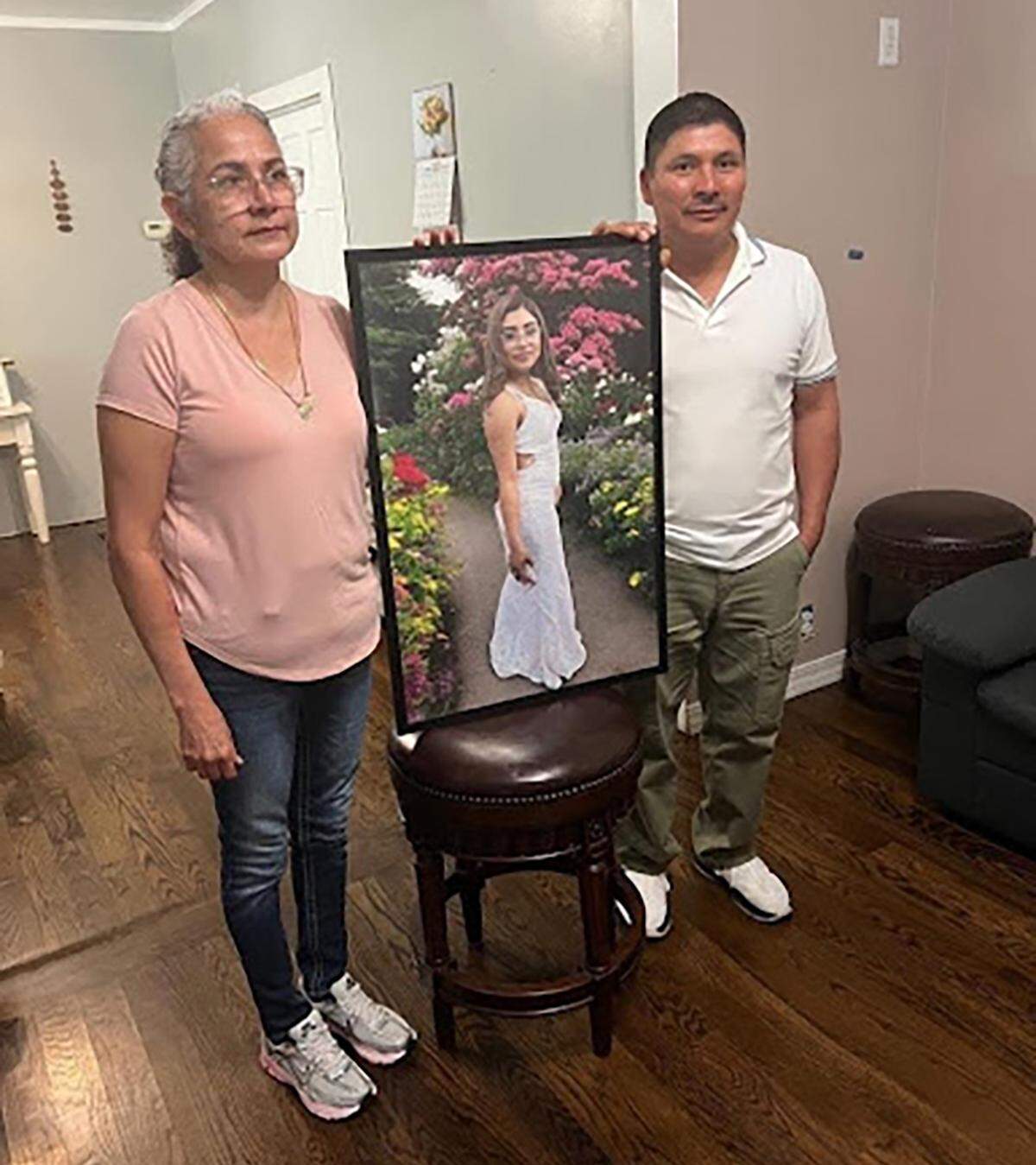
‘Her dream to go to college’
Sanoja has sat in many living rooms like Britney’s.
She described the situation from her experience in law enforcement. “You spend all day going from call to call, a stabbing and then a homicide and then an overdose. And you become numb to it.”
As Sanoja speaks, Britney’s father, Jose, looked to his wife. “I tell her that Britney is with God and one day we will see her again.”
“She was saving money for a computer,” he said. “It was her dream to go to college.”
Britney’s parents say they always knew who killed their daughter. He used to visit Britney’s grave.
Was there regret — for a heated moment now forever defined by access to a deadly weapon?
Britney’s dog, Uzamaki, barked in the other room. Britney’s mother said he still sits by the door waiting for her to come home.
Simone Matecna is a third-year Ph.D. candidate in Harvard University’s health policy program, concentrating in economics and studying how place-based and structural inequities shape health disparities.
Editor’s note: We are allowing two sources quoted in this commentary not to disclose their identity because doing so could put them at risk of retaliation.
This story was originally published April 9, 2026 at 5:06 AM.