‘It’s addictive, and it’s everywhere’: KC company’s pills hook users across US
This is the final part of a three-part series about the rise of the gas-station opioid 7-OH and its ties to the Kansas City company CBD American Shaman. You can read Part 1 about the drug’s industry takeover and Part 2 about the Shaman founder’s past.
When Don Basso joined CBD American Shaman in 2019, the Kansas City-based company was riding a wellness wave built on cannabis extracts — CBD balms, tinctures, and gummies promising calm without a high.
Over time, the product focus shifted. Owner Vince Sanders added hemp-derived intoxicants like Delta-9 and HHC, then kratom, a plant extract with opioid-like effects.
As a regional sales manager, Basso sold these products into smoke shops and convenience stores. He used them, too, turning to the products for pain after a double hip replacement. Though prescribed Percocet, he was drawn to alternative ways of managing it.
In 2023, Sanders introduced him to a new compound he was developing: 7-OH.
“He said it was 10 times stronger than morphine but not addictive,” Basso recalled.
The chewables and liquid shots quickly built Basso’s tolerance. Within weeks he required up to five daily doses to achieve the same effect. Confident in assurances from Sanders that the compound was non-addictive, and receiving the products free through the company, he saw little reason for concern.
But when he eventually did try to quit taking 7-OH, Basso came upon a rude awakening. “I had withdrawals, irritable leg syndrome, sleeplessness, chills, sweats, horrible feelings that would not go away, and a strong desire to get relief by taking more 7-OH.” He tried to switch back to Percocet, but it had no effect on the pain or withdrawals.
Basso left American Shaman in 2023. He said he felt misled about 7-OH’s safety and was troubled by what he saw in stores — customers returning daily for 7-OH, seemingly hooked like him. Continuing to sell it, Basso said, was something he “could not in good conscience” do.
Basso documented his experience in December in a sworn declaration for a class-action lawsuit against Sanders and CBD American Shaman, though his statement was never entered into the case. (The Star obtained a copy through other means.) Basso declined to comment for this story, saying he provided the declaration after being told an indictment of Sanders was imminent.
But no indictment has come to pass, and if one is coming, Sanders isn’t worried about it.
“We’re not doing anything illegal,” Sanders told The Star in early September.
The only formal action taken was the FDA’s announcement in July that it intends to petition the DEA to classify 7-OH as a narcotic, a process that could take months if not years. Meanwhile, the compound remains widely available, and Sanders has continued to grow the business.
“Sales are actually up since that FDA announcement,” Sanders said.
Lawsuits target CBD American Shaman
“This is a case about a business that profits from addiction the same way the Sackler family once did.”
So begins the above-mentioned class-action lawsuit, filed in January in the U.S. District Court of Western Missouri. The suit draws a direct comparison between CBD American Shaman and the family behind Purdue Pharma, whose aggressive marketing helped fuel the opioid epidemic. It targets Sanders and CBD American Shaman over their 7-OH product, Advanced Alkaloids, which is sold in hundreds of CBD American Shaman stores and online.
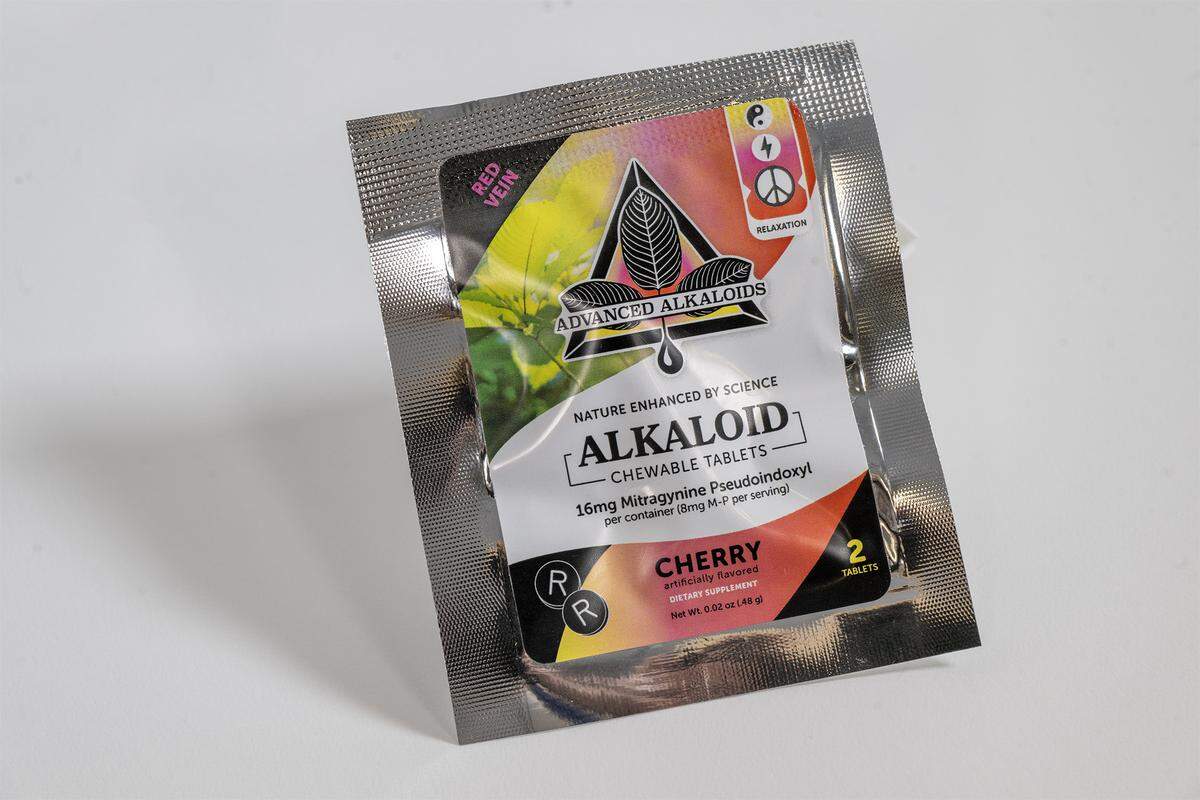
On behalf of their lead plaintiffs Jason Ferguson and Paul Teitler, the attorneys write in their complaint that Shaman and Sanders “intentionally formulated 7-OH to be extremely physically and psychologically addictive” and that “the addictive nature of the product has, predictably, caused sales to go through the roof.”
The suit does not mention Basso by name, but details experiences that match the sworn declaration, saying that CBD American Shaman “exploited at least one of its own employees as a test subject so that the company could monitor and further develop the addictive quality of the product.” They mention a different employee, also unnamed in the complaint, who left because “working for a company that sells 7-OH made him feel like a drug dealer.”
The suit asked the court to stop CBD American Shaman’s sales of 7-OH and seize the profits Sanders and Shaman made from selling the product.
“The United States has gone through an opiate crisis,” they write. “Amid this crisis, (Sanders and Shaman) are creating more addicts for no reason other than to line their pockets, without adequate disclosure of the risks and the use of false and misleading packaging and marketing. That cannot — and should not — stand.”
But stand it has. The case settled under undisclosed terms in early August, and none of the four plaintiffs’ attorneys — Leo Oppenheimer and J. Broc Exposito of Oppenheimer Law in Kansas City, and Yeremey O. Krivoshey and Joel Smith of Smith Krivoshey P.C. in Boston and San Francisco — returned messages from The Star.
Also not talking: the law firm Bursor & Fisher, which declined to comment on a class-action lawsuit it filed in June in the Eastern District of California against Sanders’ companies Shaman Botanicals and CBD American Shaman.
Its claims are similar to the suit filed in Kansas City federal court, although the lawsuit centers on the company’s sale of Soma Kratom, a kratom extract product that is different than 7-OH.
“When reasonable consumers think of opiates and opioids, they think of heroin, fentanyl, hydrocodone, oxycodone, and morphine,” the attorneys write. “They do not expect that the ‘all natural’ product bought at their local corner store operates like an opioid, with similar addiction and dependency risks.”
The lawsuit alleges that Shaman Botanicals and CBD American Shaman “engaged in a systemic effort to peddle an addictive substance to unsuspecting and oftentimes vulnerable consumers.”
Shaman has yet to file a response in the case.
‘This stuff has to be poisonous’
One indication that 7-OH represents a public health crisis in the making can be found in a growing Reddit forum called r/quitting7oh.
There, former and current users of 7-OH document their struggles to quit, swapping advice, venting frustrations and chronicling the often brutal process of withdrawal. Among the 4,500 members of the group is Grace, a 29-year-old woman from the Kansas City area whose last name The Star is withholding because she did not want future employers to be able to identify her as a former addict.
Earlier this year, Grace was given a free sample of CBD American Shaman’s Advanced Alkaloids tablets after purchasing an order of CBD gummies — a promotion the company continues to this day. She liked the way the product made her feel and bought more. She quickly went from one or two tablets a day to 10 a day in the span of a month.
“I was spending hundreds of dollars a week on 7-OH,” she said.
The product was also, she said, destroying her body.
“My hair was falling out, my skin looked horrible, I had no appetite, no energy, and could only sleep for a couple hours at a time,” she said. “It made me incredibly depressed and heightened my anxiety. I was simultaneously on edge and completely checked out.”
Grace’s wake-up call arrived in March, when she spent $200 in a day on 7-OH. She took a week off work and quit cold turkey. She didn’t sleep for two days and felt like she “was having a panic attack for a solid eight hours straight.” She had sweats, body aches, and muscle spasms. She says her digestive system has still not completely gone back to normal and her hair only recently stopped falling out.
“Yes, it does work as a painkiller, because it works on the opioid receptors in the brain, but it is a very under-studied and under-researched chemical, and we still don’t know the full long-term effects it can have on the body,” Grace said. “Having it available for anyone and everyone is dangerous.”
The Star spoke to several other recovering users across the country. Ian, an 28-year-old amateur mixed-martial-arts fighter who lives in the Pacific Northwest, had success using powdered kratom leaf to kick a heroin and Oxycodone addiction. (Ian also asked for anonymity for professional reasons.) He said he bought 7-OH for the first time thinking it was a kratom extract product.
“With regular kratom, there’s a little bit of euphoria, but with this, I couldn’t have differentiated it from Oxy,” Ian said. “A 30 milligram 7-OH pill reminds me of a 20 or 30 milligram Oxycodone pill if you’ve never done one before.”
His subsequent addiction and attempt to quit the drug mirrors Grace’s experience.
“My hair was falling out in the shower, I was having monster skin issues, panic attacks,” Ian said. “One of my pupils was bigger than the other one. This stuff has to be poisonous. I didn’t go through any of that stuff even when I was getting off heroin.”
John Vernier, a Detroit resident, struggled with opioids for years until he discovered powdered kratom capsules.
“It was a game changer,” he said. “It took away the withdrawal symptoms. I had energy, I was talkative, I could get off the couch. I was myself.”
But when he moved on to 7-OH, the experience was different. “The first tablet I took, I knew it was going to be a problem,” Vernier said. “I was higher than I had ever been in my life. Without a doubt.”
With 7-OH, Vernier said, the high was fleeting and the withdrawal brutal. “Your tolerance builds,” he explained. “I noticed I was going into withdrawal while actively using. I never had that with Vicodin.” A dose at 10 p.m. might have him awake by 3:30 a.m., drenched in sweat, shivering and nauseous. “With Vicodin it was 48 hours before withdrawal kicked in,” he said. “With this stuff, the high only lasts 30–45 minutes, and then it’s gone.”
By April, Vernier was taking as much as 500 milligrams a day and said his life was collapsing.
“It was go live on the street or get sober,” he said.
He checked into a Detroit area facility, where staff had little understanding of 7-OH, and ended up quitting on his own. The withdrawal, he recalled, lasted two to three weeks. “It was the flu times 1,000,” he said. “I didn’t eat. I didn’t sleep for a week. I threw up everywhere. I couldn’t regulate my body temperature. I lost 25 pounds.”
Vernier observed, as have many others on the r/quitting7oh group, that a huge obstacle to recovery is the drug’s ubiquity. “It’s addictive, and it’s everywhere in Detroit. You can’t walk into a gas station without seeing it.”
7-OH proliferates in stores and rehab centers
The same is true in Kansas City.
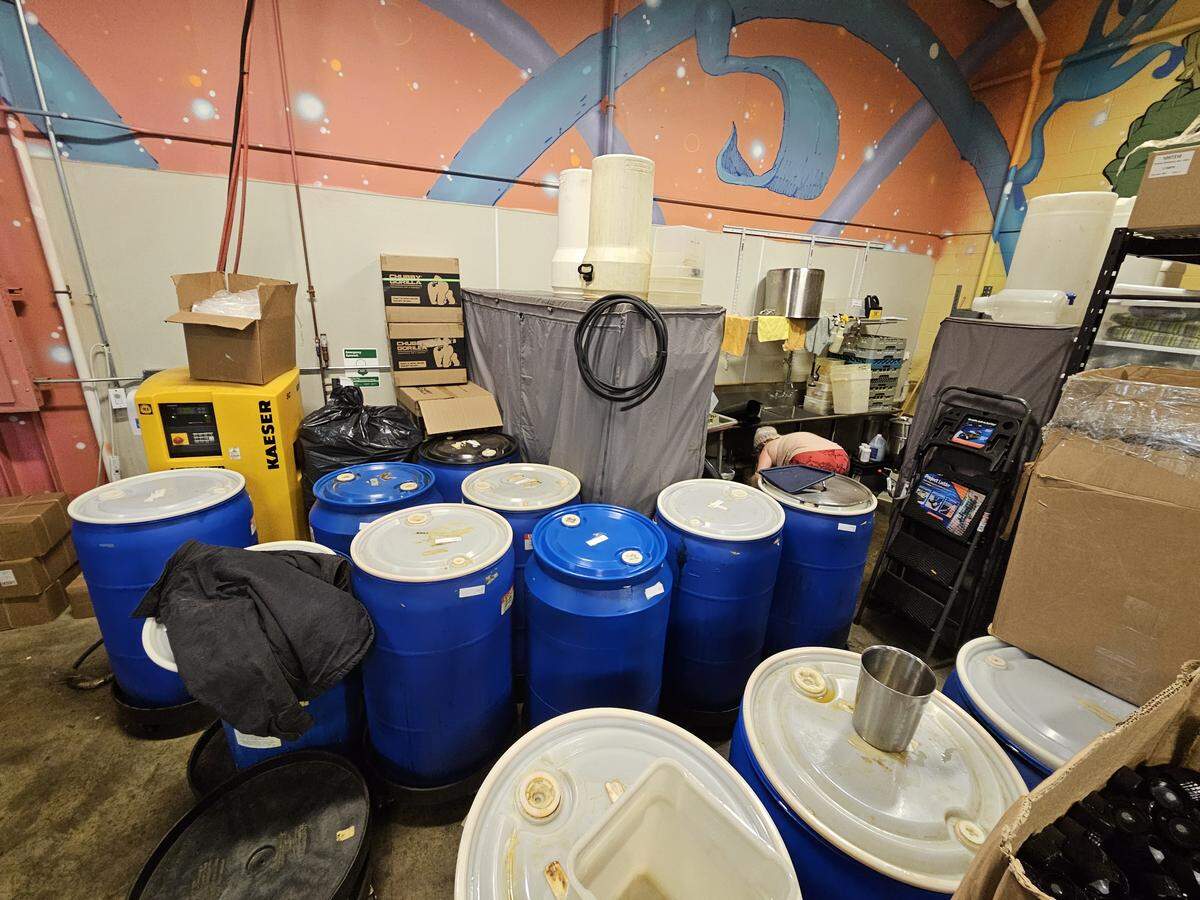
7-OH is available over the counter at nearly every smoke shop on either side of the state line. Many of those products, including the popular brands Hydroxie and Rize, appear to be made by Sanders’ company, according to photos reviewed by The Star that show those brands’ packaging materials and barrels labeled with those brands’ names. (In an interview, Sanders declined to name the brands for whom Shaman Botanicals makes 7-OH products. Neither Hydroxie nor Rize responded to a request for comment.)
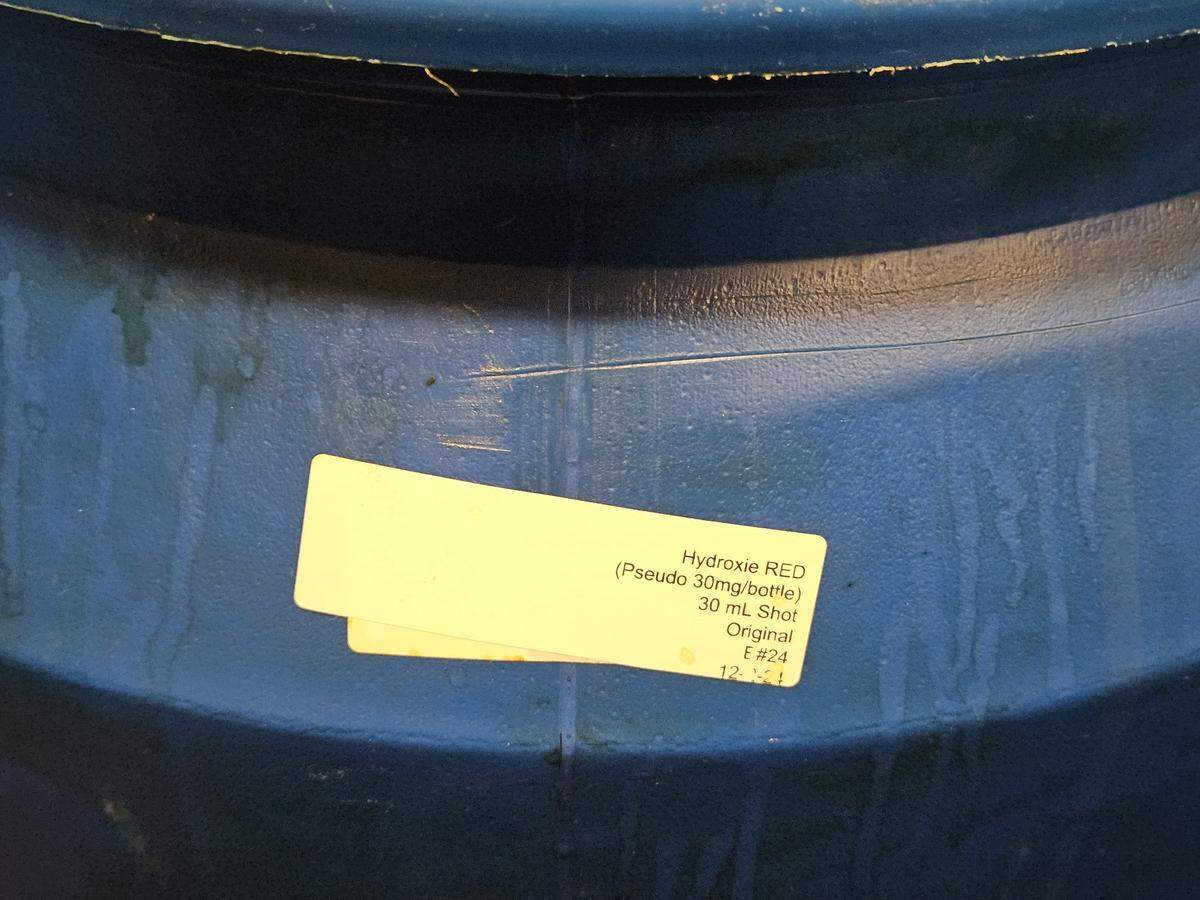
Those photos, obtained via a records request, were included in a report by Kansas City Planning and Development Inspections. That department shut down CBD American Shaman’s facility at 2405 Southwest Blvd. in December, deeming the building unsafe, calling it “dangerous to employees,” and citing its lack of structural, electrical, mechanical and plumbing permits. It has not reopened, and a subsequent report states that the inspector was told the company had moved its 7-OH manufacturing to 1501 Iron St. in North Kansas City.
EDP, headquartered two blocks away from that North Kansas City facility, says that American Shaman manufactures its 7-OH. It received an FDA warning letter in June for labeling its 7-OH Extract 50 milligram shot as a dietary ingredient.
Owner Dustin Robinson told The Star he has known Sanders since he was 14, when Sanders hired him to detail cars. Like Sanders, Robinson later went to prison for marijuana distribution. When he got out, Sanders recruited him to work at an American Shaman store in Gardner. Robinson said that Sanders then pitched him on starting a 7-OH brand: Robinson would own the company, Sanders would manufacture the product.
“We were one of the first companies to sell (7-OH) shots,” Robinson said. “Two years ago at (industry conference CHAMPS, the only people selling 7-OH were us and 7-OHMZ.”
EDP is continuing to sell 7-OH, Robinson said, despite the FDA’s announcement of a pending crackdown. He expects that a full ban won’t happen for another “six to 12 months.” Like many in the industry, he hopes to see the FDA reverse course and regulate 7-OH instead of taking it off shelves.
“But we’re not going to keep pushing it and pushing it,” Robinson said. “To be honest with you, I didn’t expect 7-OH to ever get this big. We’re slowly moving toward making energy shots with a caffeine metabolite that’s safer than caffeine.”
In addition to smoke shops and gas stations, 7-OH is also beginning to appear in more mainstream retail environments — mostly due to CBD American Shaman’s partnerships and sponsorships in the metro.
Grocery shoppers at the Hen House near 135th and Metcalf in Overland Park might be surprised to find a kiosk inside the store selling a product the FDA describes as similar to fentanyl, courtesy of CBD American Shaman.
The company was on-site at this year’s Irish Fest at Crown Center, selling its 7-OH line from a vendor booth, and will likely have a presence at the upcoming Plein Air Liberty arts festival, where it is a sponsor.
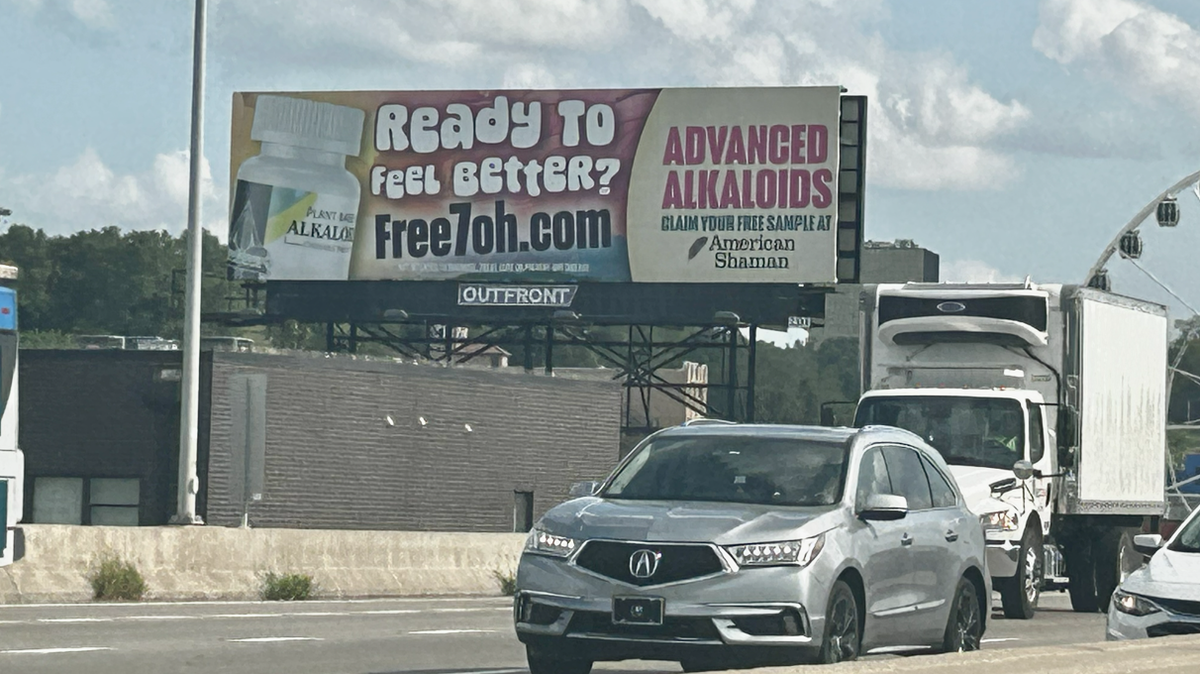
And for the past two months, drivers on I‑35 near the Crossroads have seen a billboard for Sanders’ Advanced Alkaloids: “Ready to feel better? Free7oh.com.”
This abundance and ease of access to 7-OH is leading, clinicians in the region say, to more patients seeking treatment for 7-OH abuse.
Jon Siebert, chief medical officer at Valley Hope, a rehab center in Atchison, said 7-OH cases have become “an every-week occurrence.” About a year ago, he said, he started to see patients who became addicted after using the compound to taper off opioids. “Now we’re getting more people who come in for alcohol treatment and say, ‘By the way, I also take 7-OH every day,’” Siebert said.
Daniel Warren, medical director at the Substance Abuse Center of Kansas, has seen a sharp increase in 7-OH patients over the past six months. He also attends a twice-monthly meeting with other medical professionals in the state who treat opioid use disorder.
“7-OH is now a common topic of conversation in those meetings,” he said.
Particularly surprising to Warren has been the reports he’s heard from patients about the potency of 7-OH.
“I’ve had people say these pills are better than Oxycontin or Lortabs,” Warren said. “I’ve even seen patients who have switched directly to 7-OH from fentanyl without having issues. Which is really alarming, because fentanyl is such a high-potency drug. To have a product that compares to it on the market and entirely unregulated is just shocking.”
To Sanders and other 7-OH advocates, that fentanyl-to-7-OH anecdote is a feature, not a bug. They argue that 7-OH doesn’t have an affinity for the brain receptors that cause people to stop breathing, which is how traditional opioids kill most people.
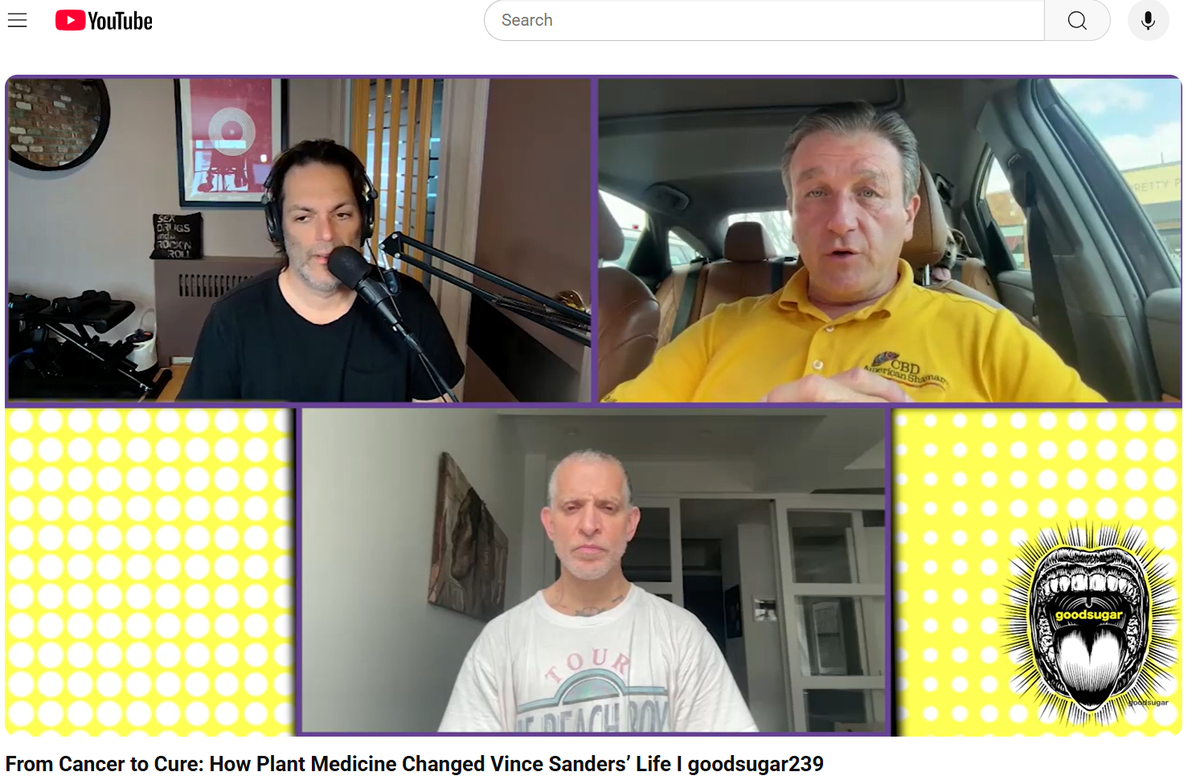
“There’s a significant number of people that have learned they can use (7-OH) as an off-ramp from harsh opioids like fentanyl — that you can successfully transfer to 7-OH without going into withdrawals,” Sanders said on the “Good Sugar” podcast in May. “So once you’re in that safe space, you can enjoy that feeling and if you don’t want to change, you can safely continue to do it because you can’t overdose. Or you can start looking for therapy. In the meantime, you’re not worried about overdosing and dying.”
Sanders’ “harm reduction” argument is not a consensus medical view, though. And it is beginning to show cracks. In September, three adults in Los Angeles County died from 7-OH overdoses, with alcohol also involved, according to county health officials. One of the deceased was found with a box of Hydroxie nearby, the medical examiner’s office told The Star.
“I don’t think you can say people don’t overdose from 7-OH,” Warren said. “For one, it hasn’t been around long enough. I’m not aware of any toxicologists looking for it in overdose cases. Also, here in Sedgwick County, the regional forensic science center is six months behind on autopsies, and that’s about when we started to see more 7-OH cases turning up around here. So the data isn’t in.”
Maybe research will one day show that 7-OH is as useful as suboxone or methadone for opioid treatment, Warren said. But the evidence is far too limited to accept that claim.
“We can’t just go on what the company that sells the stuff says,” Warren said. “We have comprehensive treatment programs for a reason. We can give people better choices than just, ‘Kill yourself on fentanyl or spend all your money on 7-OH.’”
What does research say about 7-OH?
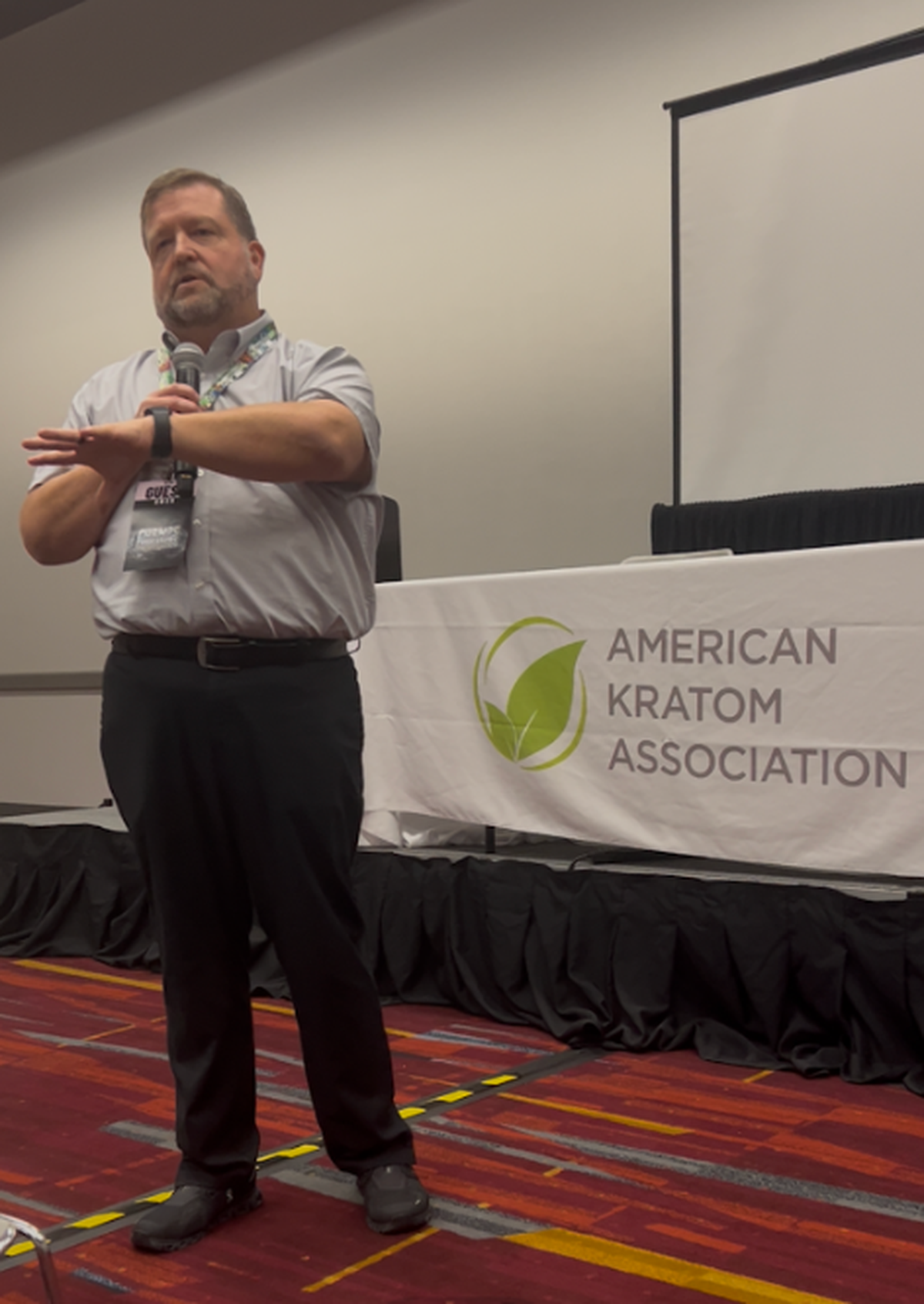
What research does exist largely comes from the University of Florida College of Pharmacy, home to Dr. Christopher McCurdy, who has been studying kratom for 20 years. Other scientists and researchers interested in the drug have followed McCurdy to the Sunshine State, making the college something of a kratom research hub.
McCurdy and his team there have watched the kratom market shift from simple leaf powder to concentrated extracts and now to semi-synthetic compounds like 7-OH. Along the way, they have tracked kratom use through a mix of methods — poison control and ER data, chemical analysis in labs, animal studies on dependence, and surveys of users about how and why they take it.
McCurdy’s conclusion?
“I think the only product that should be in the market is the natural leaf,” he said during a panel at the CHAMPS conference in July.
Even kratom leaf is not fully legal, though. In fact, the DEA in 2016 announced its intention to classify kratom as a Schedule 1 controlled substance — the same course of action it is now pursuing against 7-OH. But that plan triggered a wave of opposition that included more than 140,000 petition signatures and pushback from members of Congress. The agency backed down within two months.
Since then, kratom has remained in federal limbo, unscheduled but under steady FDA pressure and a patchwork of state bans in places like Alabama, Arkansas, Indiana, Vermont, Wisconsin, and — as of August — Louisiana. Other states have passed Kratom Consumer Protection Acts (KCPAs), which typically set age restrictions, enforce labeling and testing standards, and ban contaminated or adulterated items. (Despite attempts by lawmakers in both states, neither Missouri nor Kansas has a KCPA.)
7-OH advocates and sellers like Sanders hope to spark the same kind of public mobilization that stalled the federal kratom ban, pushing back against the FDA’s attempt to restrict 7-OH. In August, Shaman Botanicals responded to a warning letter the FDA sent it the month before over the safety of its 7-OH products. That response cited the opinions of several doctors and researchers who believe current science supports the safety of 7-OH.
“No deaths or confirmed cases of respiratory depression have been linked to 7-OH,” Shaman Botanicals’ response states. “Researchers claim this is significant given millions of adults are estimated to have tried it.”
But that is not how Jay McLaughlin, a neuroscientist and pharmacologist at the University of Florida, sees the situation.
“We know that 7-OH induces both euphoric effects and respiratory depression,” McLaughlin said. “We’ve seen that in studies. And if you take too much, it can be lethal. That’s not true of kratom. We can give patients whopping amounts of kratom (leaf) and not see the same respiratory depression that we have in 7-OH.”
Shaman Botanicals’ response cites Kirsten Smith, a Johns Hopkins neuroscientist who studies kratom derivatives. Smith’s perspective on 7-OH has shifted over the past year.
“Based on the preclinical data I was seeing two years ago about its binding affinity (how strongly 7-OH attaches to opioid receptors) and mechanism of action (how it produces effects in the body), I assumed 7-OH was going to be a big problem,” Smith told The Star. “I kept waiting for a signal: adverse event reporting, local news reports. Like what happened with tianeptine. But it didn’t happen.”
Smith acknowledged that 7-OH carries the potential for physical dependence and abuse. But she doesn’t support the FDA’s plan to schedule 7-OH as a controlled substance, and she sees the drug as offering a “net benefit to its users.”
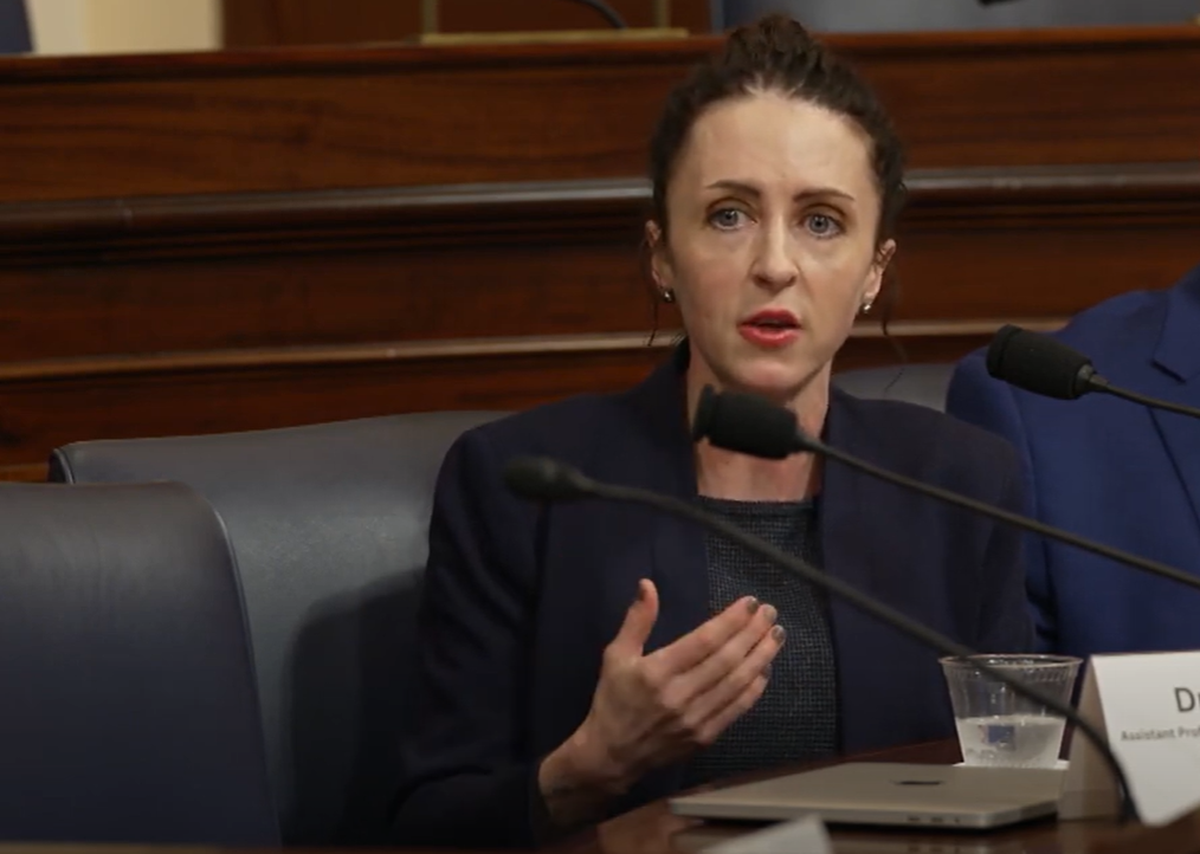
Asked about the rising numbers of patients in rehab clinics for 7-OH, Smith said she wasn’t surprised by it. “People go to treatment for a lot of things,” she said. “I’m not saying 7-OH is safe and there are no risks. But we need more research, more data.”
Smith also acknowledged that she had recently visited Kansas City to meet with Sanders and visit Shaman Botanicals’ facilities. She said she may advise Sanders on preclinical studies, surveys and eventually clinical trials related to 7-OH and potentially other compounds.
“He’s told me he’s interested in making other substances and wants to do things the right way,” Smith said of Sanders.
Among those substances, Sanders confirmed to The Star, is ibogaine.
Sanders is working with Dr. Sue Sisley of the Scottsdale Research Institute on a FDA phase one study of the hallucinogenic compound. Historically used in West African spiritual rituals, ibogaine has gained attention in recent years as an experimental treatment for opioid addiction.
For now, ibogaine is illegal. Americans typically go to Mexico for ibogaine therapy. But if Sanders succeeds, he’ll be positioned at both ends of the dependency pipeline: profiting from an opioid that increasingly traps users in addiction, as well the therapy that might free them from its grasp.
“I’m funding the research as we speak,” Sanders said.