
‘Making an Exoneree’ to look into Blue Springs man’s innocence claims | Opinion
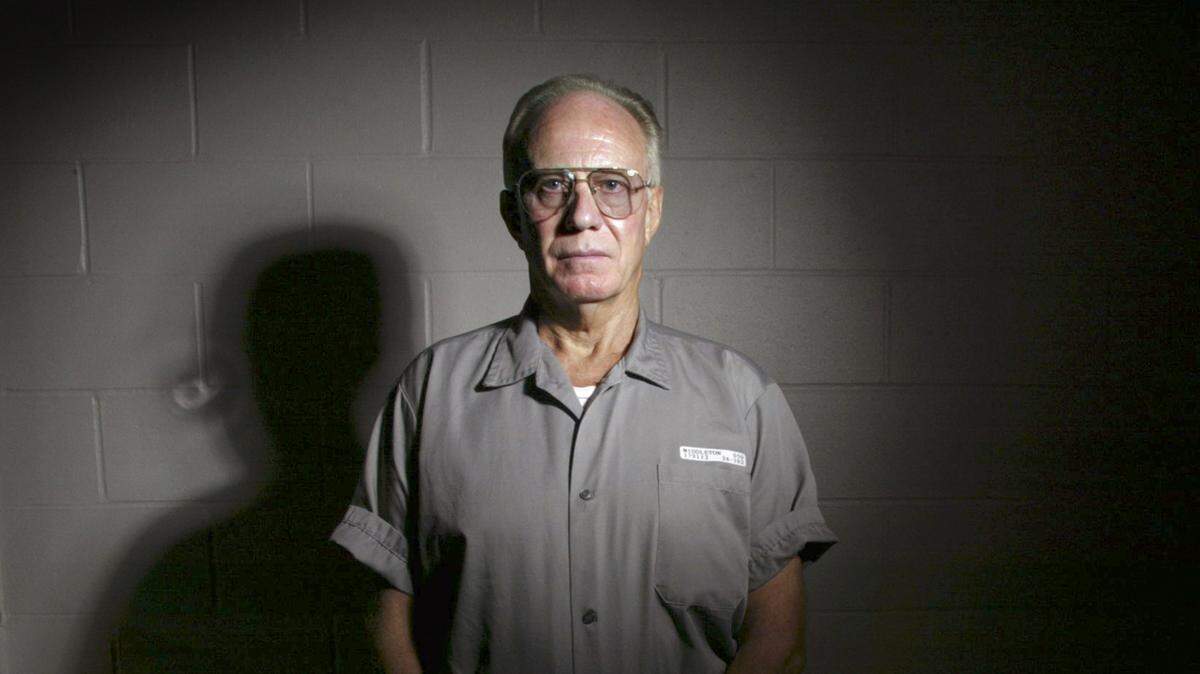
Ken Middleton is a Missouri inmate serving life in prison for the 1990 shooting death of his wife, Kathy. Ken should be a free man, his son Cliff Middleton contends — because a judge ruled more than two decades ago that Ken’s then trial attorney was ineffective.
Because of that ruling, his son – and I agree – that the 81-year-old Blue Springs man deserves at least a new day in front of a jury of his peers.
However, it’s likely Ken will stay behind bars for the foreseeable future because his latest attempt at freedom recently hit a significant roadblock when Jackson County Prosecutor Melesa Johnson denied Ken’s petition for post-conviction relief.
But there is still a glimmer of hope that one day Ken will be freed. In January, a group of law students at the University of California at Santa Cruz will take a deep dive into Ken’s claims of innocence, according to Cliff. The cohort will work alongside a student from Georgetown University Law Center and Ken’s Kansas City-based appellate attorney Kent Gipson to reexamine the case, Cliff said.
The review is part of Georgetown Law’s Making an Exoneree initiative, Cliff said. He recently shared with me an email sent to Gipson from program director Emilia Cipriano confirming the news.
“In January, a group of undergraduate students from UCSC, along with one Georgetown Law student, will be working on the case under your supervision and that of our program staff,” Cipriano wrote. “At that time, you can expect the students to begin reaching out to you and Mr. Middleton to learn more about his case and story. In the meantime, our team may continue to reach out for additional documents or information as we prepare for the semester.”
Under the program, a group of law students work together each spring semester to reinvestigate likely wrongful conviction cases. The program started at Georgetown eight years ago and has spread to four campuses, including UCSC, Princeton and New York universities.
Since 2018, the Making an Exoneree website shows the program has examined 59 cases resulting in 13 innocent people being released from prison.
While this news is encouraging to the Middleton family, the fact that out-of-state law students have to take up the case is disheartening. More than 20 years has passed since former Jackson County Circuit Court Judge Edith Messina ordered Ken a new trial due to ineffective trial counsel.
However, back then the Missouri Attorney General’s Office appealed Messina’s ruling and the Missouri Court of Appeals reversed Messina’s order over jurisdictional issues — ruling that she did not have the authority to set aside Ken’s guilty verdict and vacate his life sentence, according to court documents.
But the merits of Messina’s decision have never been questioned or debunked in open court.
Right to a fair trial
In this country, every one has a right to a fair trial. Under the Sixth Amendment, ineffective counsel is a clear violation of the U.S. Constitution. When basic tenets of our democracy are ignored — as it has been repeatedly in Ken’s case — we all must question if justice is truly being served.
In this instance, I don’t believe it is.
In 1991, Ken was convicted of first-degree murder and armed criminal action in the shooting death of Kathy, his wife. He was sentenced to life in prison plus an additional 200 years, according to court records. Ken has maintained Kathy accidentally shot herself when she fumbled a gun. He once turned down a guilty plea that would have set him free after he had already served more than10 years in prison.
Although Ken’s conviction was overturned in 2005 by Messina, the former Jackson County judge, he remains locked up at the Crossroads Correctional Center in Cameron. Multiple appeals filed on Ken’s behalf over the years have been denied.
Johnson’s recent decision to deny Ken relief is disappointing in some ways. Under Missouri law, duly elected prosecutors are allowed to redress wrongful convictions in their jurisdictions based on actual innocence or constitutional error at the original trial.
Whether we believe Ken is innocent or not, the fact that he did not receive a fair trial cannot be disputed, according to Messina’s ruling. During a two-day evidentiary hearing in 2004, she found Bob Duncan, Ken’s attorney at trial, ineffective.
If that factual conclusion does not meet the definition of constitutional error, what does?
In a letter sent to Cliff in September, Johnson informed him that her office would decline to join Cliff in his effort to free his father.
Johnson’s office forwarded me a copy of this letter via email.
“Dear Mr. Middleton,” Johnson wrote on Sept. 18. “We are writing to inform you that we are declining to join you and your father’s efforts for conviction relief.”
In the letter, Johnson wrote: “In conducting this type of review, we examine all available materials to determine if clear and convincing evidence of actual innocence or a constitutional violation exists. This is the applicable legal standard. Additionally, we approached this review with care and attention to not only that legal standard but also the interests of justice. In doing so, we weighed whether the circumstances and evidence require further action to reverse a conviction.”
According to Johnson, the decision was made after a thorough review over the past several months.
“That work included a review of the file and the claims raised by you,” she wrote to Cliff. “The core of those claims concern the proposed evidence that you identify as new and the actions of your father’s trial attorney. First, it is our judgment that the proposed evidence you identified, when weighed against the evidence of guilt, does not shake our confidence in the jury’s finding of guilt.”
Johnson added her office also examined the procedural history of Ken’s case and various appellate decisions.
“Of note in our review was the Missouri Supreme Court review of your father’s most recent State Habeas claims in which there were claims raised about the proposed evidence,” she wrote. “In that action, the Supreme Court was attempting to determine whether your father was being unlawfully incarcerated. In declining to grant your father relief, the Supreme Court did not order an evidentiary hearing which, in part, suggests that they did not find that the proposed evidence was sufficient to warrant any further action.”
She added: “Second, we examined trial counsel’s actions, the proposed evidence, and the evidence of guilt and the Court rulings reviewing these allegations. Based on that review we do not believe that there is clear and convincing evidence of a constitutional violation concerning trial counsel’s actions in your father’s trial.”
Personally, I find it hard to believe that Johnson’s office concluded that Duncan was not ineffective at trial when Messina reviewed evidence and came to a much different conclusion.
Ineffective trial counsel
Duncan died in 1997. Five years before his death, he was found guilty of tax evasion and disbarred. Of note: At least five of Duncan’s cases have been overturned. Three of his clients were on death row when they were either exonerated or had their death sentences vacated. In each, Duncan was found ineffective, according to legal records.
Over the years, several issues with Ken’s case raise serious doubts of his guilt including but not limited to: destroyed gunshot residue, an altered police report, and a restaged crime scene.
But the one thing that stands out to Cliff — and to me as well — is the constitutional error found by Messina, who oversaw Ken’s original trial in 1991 and the evidentiary hearing 13 years later.
“The Missouri Court of Appeals, Western District, did not review or reverse Judge Edith Messina’s order finding prejudice, it reversed solely on a jurisdictional defect,” Cliff wrote in an email.
I’ve written about Ken’s case and Cliff’s crusade to free his father more times than I can count. And based on the litany of court records and post-trial evidence I’ve reviewed, I remain convinced Ken has gotten a raw deal.
Now that Johnson has passed up an opportunity to help right this wrong, law students in California and one in the nation’s capital will try to do what should have been done decades ago: Free Ken Middleton.
This story was originally published November 16, 2025 at 5:04 AM.