
My father’s conviction was overturned 20 years ago. He’s still in a Missouri prison | Opinion
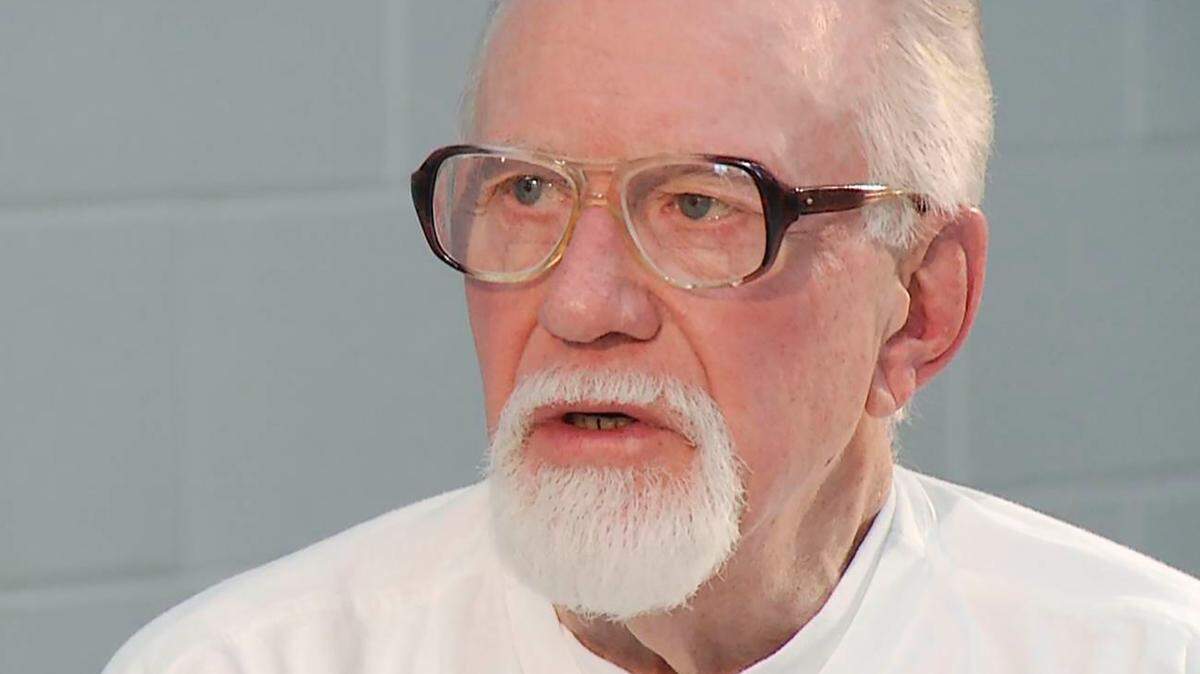
It’s hard to believe that The Kansas City Star first covered the overturning of my father’s wrongful conviction in the death of my stepmother 20 years ago. By now, I should be able to tell you stories of how he walked out of prison with his head held high, how we hugged and cried tears of relief. I should be able to tell you how he spent the past two decades watching his grandkids and great-grandkids play ball, how he reclaimed the life stolen.
But I can’t.
Instead, my father remains in prison — 34 years and counting — not because he’s guilty, but because Missouri’s justice system values finality over fairness. Rather than ensuring innocent people don’t die behind bars, the system fights to deny them relief at every turn.
Stripped of the right to a fair defense
When Missouri prosecutes someone, that person has the right to use their own resources to defend themselves. That’s fundamental to a fair trial.
But not for Ken Middleton. Before his trial even began, the Jackson County prosecutor’s office froze his assets under an unheard-of bond order, preventing him from hiring the defense team he needed. It was like forcing someone to fight Mike Tyson with one arm tied behind their back.
The U.S. Supreme Court later ruled in 2016’s Luis v. United States that the government cannot freeze legally obtained assets to stop a defendant from hiring an attorney he can afford. This decision reaffirmed a core principle: A fair trial requires an unrestricted right to counsel. But decades before this ruling, my father was denied that right.
Twenty years ago, the trial judge Edith Messina — who knew her case better than anyone — vacated my father’s conviction because of egregious trial errors. Rather than accepting this, then-Jackson County Prosecutor Mike Sanders — later convicted of corruption — appealed.
The Missouri Court of Appeals didn’t rule on my father’s innocence. Instead, it used a procedural technicality, ruling the trial judge lacked jurisdiction to overturn the case. That technicality was corrected in 2021 when new legislation restored local trial judges’ power to overturn wrongful convictions — the same law that freed Kevin Strickland.
Surely, my father would be next. Unlike Strickland, Middleton’s own trial judge had already ruled he was wrongfully convicted.
Conviction integrity unit fails its purpose
Despite overwhelming evidence of a wrongful conviction — the very kind the new law was meant to address — former Jackson County Prosecutor Jean Peters Baker’s Conviction Integrity Unit denied my father’s application. Their reasoning? Because his trial attorney knew police had altered gunshot residue evidence before trial, it wasn’t considered “new evidence.”
This ignored the fact that Judge Messina had already ruled his attorney was ineffective for not alerting the jury — an omission she found could have helped changed the trial’s outcome. The CIU’s logic rewards lawyer incompetence as a reason to deny relief, undermining the entire purpose of the unit in the first place.
If there were any doubt about his innocence, consider this: In 2004, after exhausting all appeals, my father was offered an Alford plea — a deal that would have let him walk free if he falsely pleaded guilty. He refused. Only an innocent man would spend two more decades in prison rather than lie.
To put this absurdity into perspective, imagine the Kansas City Chiefs winning the Super Bowl — only to have the NFL revoke their victory afterward, not because they didn’t win, but because the league decided they won in the “wrong” stadium.
That’s what happened to my father. His trial judge ruled he was wrongfully convicted, but instead of justice, the state exploited a loophole to keep him in prison—essentially claiming he won in the “wrong courtroom.”
Now, newly elected Jackson County Prosecutor Melesa Johnson has the power to correct this injustice. She can change the CIU’s flawed “new evidence” standard to include all evidence the jury never heard — rather than using a lawyer’s incompetence as an excuse to deny justice.
This isn’t just about Ken Middleton. Since enactment of the 2021 legislation, only one wrongful conviction has been overturned in Jackson County under the new law — a stark reminder that the system remains broken. If the Conviction Integrity Unit continues relying on legal loopholes instead of truth, it won’t just fail one man — it will fail every wrongfully convicted person still waiting for justice.
Jackson County deserves better.
This story was originally published March 16, 2025 at 5:05 AM.
CORRECTION: This commentary originally contained an error about the number of convictions have been overturned in the state since the new 2021 legislation. This version of the text reflects the accurate information.