Judge throws out KCK homicide conviction that ‘had Golubski written all over it’ | Opinion
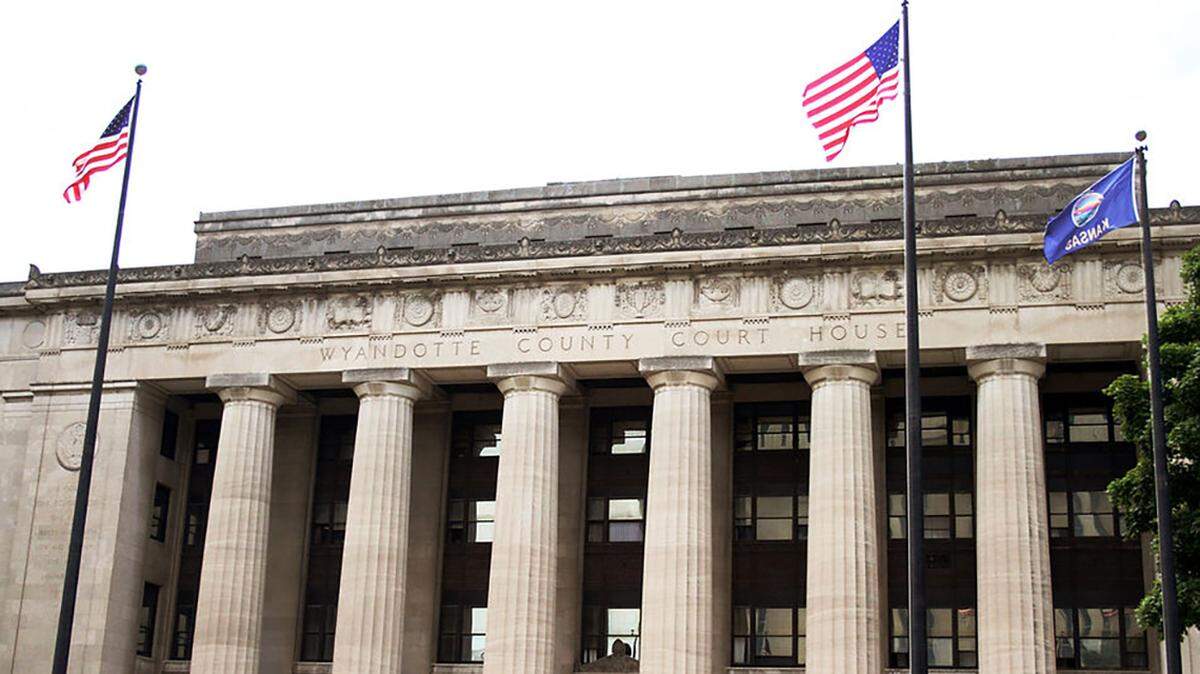
Roger Golubski is dead, but KCK’s Golubski problem is very much alive.
And as of Monday, another of the former KCKPD detective’s many victims, a man convicted of a double homicide in 2010, is entitled to a new trial.
Wyandotte County Judge Aaron Roberts ruled that 34-year-old Cedric Warren did not get a fair trial almost 15 years ago. So he threw out Warren’s conviction and said the state can if it chooses start over.
I don’t think the case will be retried, though. For one thing, because then Golubski’s involvement would be litigated, too.
In 2009, Cedric Warren was charged with killing two people and attempting to kill a third man in a shootout in a KCK drug house on Webster Avenue. He was arrested only an hour after police finished taking the formal statement of the surviving victim — a severely mentally ill man, homeless at the time — whose testimony was and is the only thing tying Warren to the shooting.
This was an investigation supervised and signed off on by Golubski, who apparently shot himself in the head last week rather than face nine of the women who have accused him of rape and other sex crimes in federal court. At trial, we were going to hear about how, for the 35 years he was on the police force, he used his position, as well as raw violence, to exploit and extort mostly Black women.
But if you’ve been following this awful story, you know that the first Golubski victim most of us knew anything about was Lamonte McIntyre, who was just 17 when the detective framed him for the drug-related 1994 broad daylight murder of two men he did not even know.
Likewise, Warren’s out-of-nowhere arrest for killing Charles Ford and Larry LeDoux “had Golubski written all over it,” Warren’s father, an engineer named Cedric Toney, told me after his son’s Monday hearing.
Toney and his former wife, Kathy Warren, who died in 2018, had at one point played cards with Golubski and his wife, a childhood friend of Kathy’s. But then the cop started stalking Kathy. For about a year, this went on. “He was trying to get her to meet up with him. She was afraid he was going to come after me. I couldn’t believe they were trying to charge Cedric, because he wouldn’t hurt a fly, but when they told him who the lead detective was, I knew it was all bad.” Even as Cedric Warren was being arrested, Golubski called Kathy Warren.
If this sounds like a story you have heard before, that’s because you have. As in the case of McIntyre, the investigation was over before it began. It likewise involved a sketchy photo lineup, a suspect whose mother Golubski had harassed and a Wyandotte County prosecutor who cheated to get a win in court.
Witness says police fed him the name Cedric
After the shots were fired, on Feb. 13 of 2009, a neighbor called 911. At 11:53 p.m., she told dispatchers that after hearing gunfire, a man appeared at her door saying someone was shooting at him.
That was Brandon Ford. When police found him walking in 38th Street just a few minutes later, he told officers he was scared because “guns had gone off.” He never stopped changing his story about what happened that night. But one of Warren’s attorneys, Cheryl Pilate, who also represented McIntyre, said at the hearing that Brandon Ford told police right in his formal taped statement that he didn’t come up with the name Cedric himself: “That’s the name you had. That’s the name I was told when I was shown a photo.” He did know a Cedric, but not this one.
Once Brandon was taken into police custody, Pilate told the court, there was no documentation of who he talked to or where he was held physically for 13 hours, so what went on during that time? The photo lineup was conducted during an hours-long “pre-interview,” the documentation for which no longer exists. Why they ever included Cedric Warren’s photo in that lineup is not in the record, either.
An earlier motion in the case says police records do show, however, that “Captain Roger Golubski entered the scene at 1:21 a.m. and assumed command.”
At some point in the 13 hours Brandon Ford was in custody before his formal, videotaped interview began, he seems to have been coached to talk like a cop, referring to his just-murdered brother and brother-in-law as “the deceased parties,” and saying that the suspect had been “brandishing” a gun. He said he had been in the bathroom “immediately adjacent” to the living room.
Initially, he said he was hiding in the bathroom the whole time and didn’t see anything. Later, his memory of being in the bathroom grew more vivid: “I pissed on the floor because of a couple of shots that I heard.” Then, at trial, he said no, he was still sitting on the living room couch after the first shot was fired.
What we know for sure is that Brandon was so ill at the time that some follow-up interviews were conducted in the inpatient psychiatric hospital to which the KCK police had themselves driven him the day after the shooting.
Yet neither this information nor the existence of a previous case in which he’d been found incompetent to stand trial because of his severe schizophrenia was ever disclosed to Warren’s defense attorneys.
Between the crime and the trial, Brandon was suicidal, and at one point tried to light himself on fire. His records from this period show someone with psychosis, delusions and a severely impaired memory, who did not know his own date of birth. “The only party that had these records was the district attorney’s office,” then run by Jerome Gorman, attorney Lindsay Runnels told the court. Runnels is also representing Warren, as is the Midwest Innocence Project.
And yet, despite barely being able to function at the time, Brandon Ford was put on the stand.
KCKPD drove witness to psychiatric hospital
Warren had no motive for these murders. He didn’t have the $20,000 that had gone missing from the drug house that night, or the missing kilo of cocaine, either.
He didn’t have a striped jacket, which is what Brandon had said he had been wearing. And none of the DNA, fingerprints or footprints found at the crime scene were linked to him. “At every turn, the evidence excluded Warren,” Runnels said at the hearing. All evidence, that is, except for the testimony of “a man who heard voices and could not tell the imaginary from the real.”
Judge Roberts said that the narrow issue he ruled on on Monday was whether or not prosecutors had violated Warren’s constitutional right to a fair trial by failing to turn over what they knew firsthand about Brandon’s condition from taking him to a psychiatric hospital themselves and from the 2005 finding that he was incompetent to stand trial.
He said that in failing to do that, prosecutors had violated his due process rights. And yes, Roberts said, that omission is probably what sent Warren to prison, first for a minimum of 50 years without possibility of parole and then, after that sentence was thrown out, for a minimum of 25 years without that possibility.
“The original petition contained many more claims,” the judge said on Monday, but “the court narrowed the focus.” In doing so, the judge preempted any mention of Golubski, whose name was not uttered during the hearing.
During a three-day July evidentiary hearing in Warren’s case, Judge Roberts said he would not get into the Golubski problem, and would only rule on Brady claims — failures to turn over exculpatory evidence, as prosecutors are required to do under the 1963 Supreme Court decision in Brady v. Maryland.
Sheryl Lidtke, the chief deputy DA who prosecuted the case, “had an obligation to make at least a limited inquiry” into Brandon’s mental health, the judge said, noting that the state argues that the defense request that this be done “was overly broad. This court disagrees with that.”
Lidtke also agreed to look into Brandon Ford’s history of honesty, and yet seems not to have found Brandon Ford’s 2005 bad check charge in her office’s own files, along with the subsequent finding that he was mentally incompetent to stand trial. “It is hard for this court to believe that had such a check been done,” the key witness’s history of severe mental illness would not have come to light. “The records were within the possession of Miss Lidtke.”
“The state had a duty to learn of and disclose” what was not just some “passing reference” but “police physically taking him to a mental health facility, and shortly thereafter, visiting him there and asking him questions about the case.”
“The police’s failure … became the prosecutor’s failure,” the judge said.
“Brandon Ford’s credibility was everything,” the state had, Roberts said as he ruled, “even though his story changed numerous times. Somehow — I would say against all odds” the jury convicted Warren anyway. “The jury had a right to know of his true condition”
‘Golubski could have brought the house down’
Wyandotte County District Attorney Mark Dupree’s office opposed the motion to vacate Warren’s conviction, though assistant district attorney Kayla Roehler made no oral argument at the hearing. Her brief in opposition said the office did not have the relevant records in its possession.
In court, she also opposed a motion that Warren be set free on bond for the 30 days that Dupree’s office has to decide whether or not to retry the case. So for now, he stays in Hutchinson.
But again, this case is not going to be retried, both because the state has no evidence that Warren had anything to do with these killings and because if it were, the Golubski problem would have to be aired in court.
The 12 members of Warren’s family who came to court to support him had everything all ready in case he was released for Christmas. But “if we did 15 years,” said his grandmother, Margie Warren, “we can do 30 days.” Several of his relatives wanted to make sure I wrote down that they never saw Golubski as the problem in and of himself, but only as a symptom of a corrupt system that in their view still hasn’t been called to account.
“Golubski could have brought the house down” if he had gone to trial, Cedric Toney said. And even in death, he still could.
This story was originally published December 10, 2024 at 5:01 AM.