‘I feel like a toddler out here’: At 45, she’s free for the first time in her life
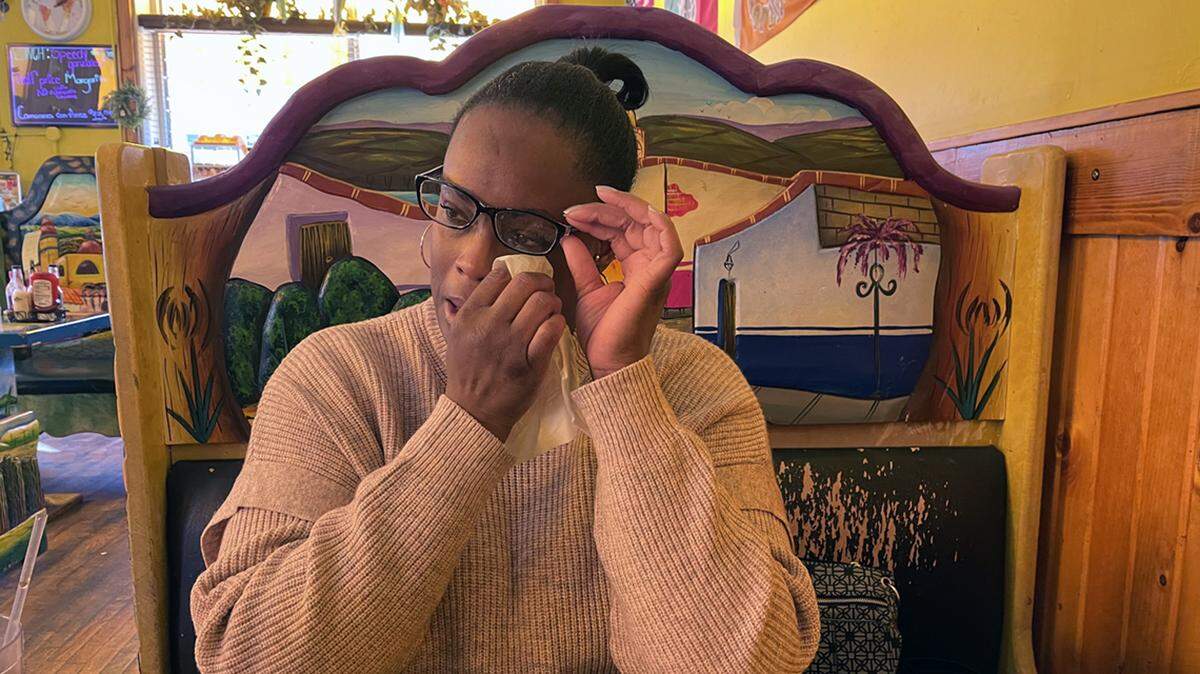
In the just over a week since Natasha Hodge was released from the women’s prison in Topeka after almost 13 years, she’s been living alone for the first time in her life. She’s taken her first selfie and made her first dental appointment, “so now I get to have a root canal; congratulations to me.” She’s discovered TikTok videos, which make her laugh, and watched her brother and daughter drive away after dropping her off in her new apartment, which had the opposite effect.
On Monday, she starts a job at the same Russell Stover candy factory where she worked as an inmate, having made the difficult decision to start life virtually from scratch, far from everyone and everything she knows in her hometown of Kansas City, Kansas. Most of us, I think, would have run right back to the familiar, no matter how fraught, “but I knew what I needed to do.”
I’ve been talking to Tasha on the phone for the last couple of years, and don’t think I’d ever heard her curse. But when we finally met in person a week ago, she said, “Excuse my language, but I’m 45 and I feel like a f---ing toddler out here. I’m sitting here with a perfectly good TV I don’t even know how to turn on.”
Of course she’s reeling: Back in 2009, when she pleaded guilty to killing the man who had nearly killed her many times, she had an old Cricket flip phone and a new president named Barack Obama. What she has never really known until now, though, is freedom, or personal safety. After running away at age 16 to escape abuse at home, she wound up getting involved with a crack addict and working as a prostitute. “I was in prison for a long time before I was ever arrested,” she says.
After immediately reporting that she’d been raped at gunpoint by a KCK police officer, William “Ed” Saunders, in 1996, then-Wyandotte County DA Nick Tomasic declined to prosecute, despite DNA evidence. Saunders went right on working, though at least one colleague also accused him of sexual misconduct, and Hodge never heard back from police or prosecutors, then or ever. Saunders is now under investigation, as part of the federal probe into KCKPD police corruption involving former detective Roger Golubski and others.
And if Natasha Hodge is a toddler, she is a grateful one. “I like to wake up and see nobody — the solitude, the cleanliness. I can actually roll over in bed.” She rented her apartment, sight unseen, after a co-worker at the candy factory told her there might be an opening in his building around the time of her release. She wrote a long letter to the landlord — “I prayed and I poured my heart out. He knew I was currently in prison. He knew the conviction, and he still made that choice.”

‘I love everything’ about Russell Stover factory job
She cries when she shows me the rental agreement that’s the first lease she’s ever had in her own name. “I’m so proud, but it’s embarrassing, too,” she says, that she’s only now getting to do these things.
She spent her first weekend scrubbing the walls in her new place, though they weren’t dirty to begin with: “It’s not really clean until you clean it yourself.”
She’s got one friend in town — another co-worker, who took her along with her to her gym the other day. And she’s made one new friendly acquaintance, a convenience store worker who recognized her as newly released. (How? “My ugly gray pants. She said that’s how she relocated here, too.”)
The arrangement between Russell Stover and the prison has been controversial, because inmates who work there don’t keep a lot of what they make, and take a long predawn ride on a bus that’s sweltering in summer, freezing in winter, and has a bathroom so rarely cleaned that it’s unhygienic all year long.
Still, “I love everything about my job,” Tasha says. “I love it. Russell Stover is a melting pot, and I love meeting all the people and hearing their stories.” Initially, she was afraid of the men who worked there, not because of anything they did, but “because of things I’d been through. I got past that, by the way. I can talk to anybody now.”
So when she didn’t hear back from the company’s HR department for a few days after arriving in Abilene, she just went there and waited until someone could see her.
During her final weeks in prison, she was barely sleeping or eating, because she couldn’t stop thinking about “what it would be like to see my daughter, and actually hug her.” Because of COVID-19, she hadn’t touched or even seen a loved one in person in almost two years. In her last moment behind bars, a friend who will never walk free held her so long that she finally had to pull away. “She said, ‘Do good out there, and enjoy your life.’ “
A corrections officer Tasha likes a lot, a Miss Turley — “She’s awesome; we always talked about the Chiefs” — waved her out the door. “I got to shake her hand, and she said she’s rooting for me.”
If the court hadn’t recognized evidence that supported her claims of abuse, Natasha Hodge would have spent many more years behind bars. But I’ll never understand why there are so many Natashas in prison, really just for protecting themselves. Where’s the “stand your ground” law for those whose ground belongs to an abuser? Year after year, we agree on the importance of criminal justice reform but then do next to nothing about it. And while we’re at it, repeat mindless, dead-wrong pieties about how only nonviolent, low-level drug offenders deserve clemency, when those driven to bloodshed by domestic violence are among the most unfairly treated and needlessly incarcerated.
Dream of Hallmark Cards line for the incarcerated
Even now, with so much to celebrate, Tasha says, “there is a thin sheet of anxiety over everything.” With so little experience in the day-to-day decision-making that wasn’t even allowed in prison, why wouldn’t there be? “You can check your brain in there,” she says, “because you won’t need it.”
Both for better and for worse, though, Natasha is “a thinker,” she says. “Always have been.” In a better world, she could have done anything, and I mean that.
In this world, her dream is to work for Hallmark, creating a line of greeting cards for incarcerated people. Because in prison, she says, a piece of mail that you can hold and hold onto and look at again and again is “priceless.”
She used to help other inmates put their feelings into words on the page, Cyrano-style, “and I’m good at it. I know I can do a lot of good. I’m not going to let all that time in prison be in vain. And I was in prison before they arrested me, so I’ve been freed times two.”
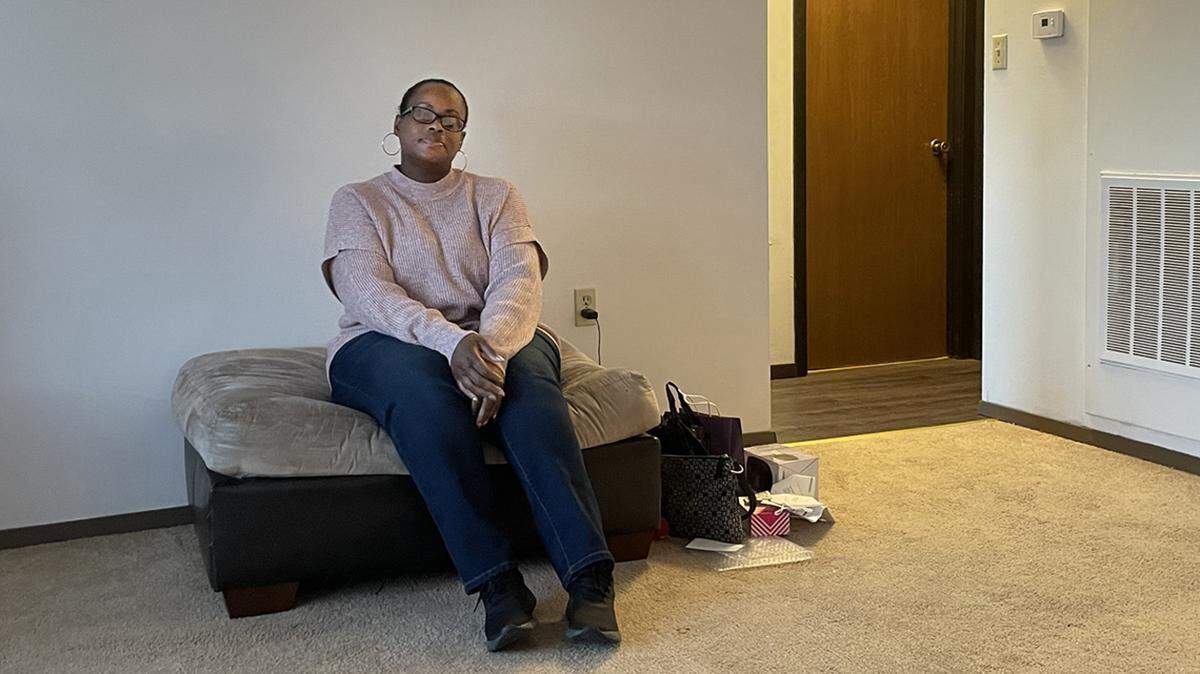
Her other goals include owning a cat, getting an Alexa and remaining independent. When the super shows up to give her a mailbox key, she’s overjoyed at all that means.
If you’d like to help Natasha Hodge in her new life, where she’s started with $50, plus the bed and TV her brother gave her, her daughter has helped her start a GoFundMe here.