No, Missouri ban on ending dangerous ectopic pregnancies was not ‘misrepresented’
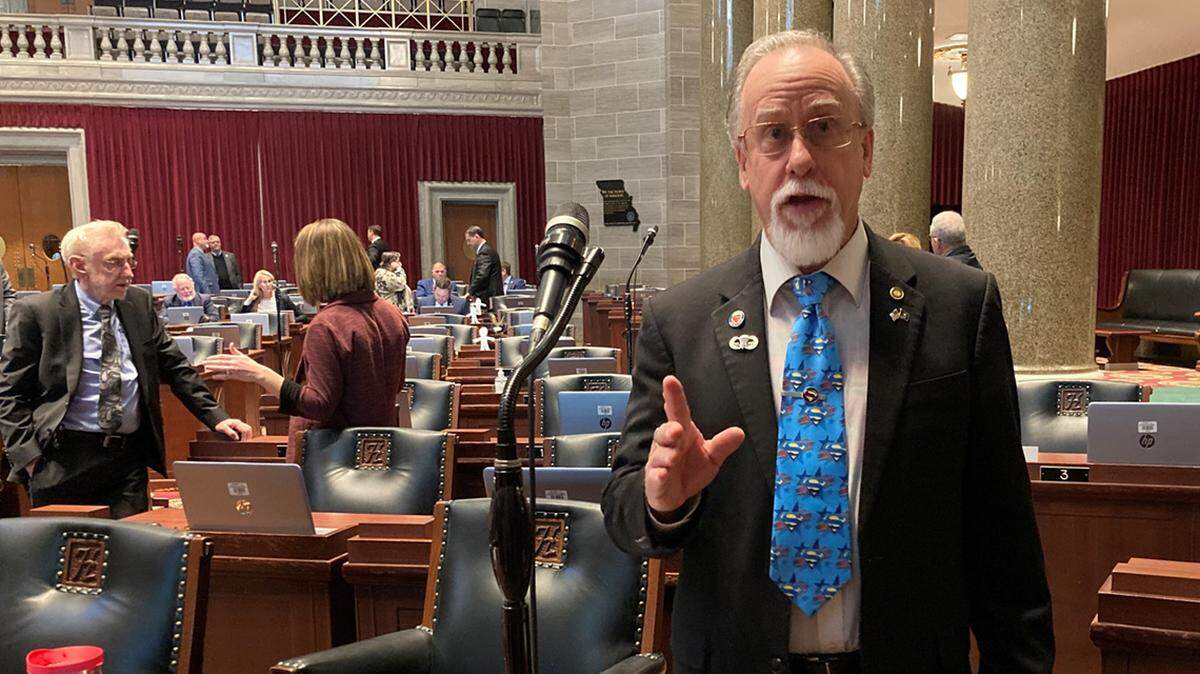
When Missouri state Rep. Brian Seitz was running for office two years ago, the Baptist pastor and business manager for Splash Car Wash in Branson spoke out against the “grievous” prospect of a local ordinance that would “restrict individual liberties and freedoms” and “make criminals out of individuals and businesses that refuse to comply.”
He was talking about the threat of $100 fines for those who refused to wear a mask to minimize transmission of COVID-19. That lifesaving act of charity was too much to ask. These days, of course, exercising the individual freedom to wear a mask absent any mandate is enough to get a child snapped at by a Republican governor with presidential ambitions. Not because Florida’s Ron DeSantis was moody that morning, but because certain voters have shown that they can be counted on to reward behavior they once would have seen as a sign of poor character.
Which may be how Brian Seitz wound up attempting to make felons of anyone who would try to save the life of a Missouri woman suffering an ectopic pregnancy. For those who slept through health class, that’s when a fertilized egg implants in the fallopian tube, ovary or somewhere else other than the uterus.
These pregnancies have no chance of ending in a live birth, and every chance of killing the woman. Seitz admitted during last week’s hearing that no, he didn’t really know what treatment for an ectopic pregnancy consists of.
But when knowledge is an object of suspicion and cruelty mistaken for strength, there’s no such thing as either knowing too little or going too far.
This bill would also outlaw the use of the “morning-after pill” by rape victims.
Seitz, who wrote the bill or had it written, has said that his proposed legislation, House Bill 2810, is intended to make what we have come to call internet abortions impossible in our state. “What I’m just attempting to do is to stop the importation or the trafficking of these types of drugs to be used in an illegal manner,” he said. But drugs used to end an ectopic pregnancy would under his bill be illegal, period.
He says he never meant to ban the termination of ectopic pregnancies, and is promising to “clarify” that by amending his bill.
He’s also said that the provision dealing with ectopic pregnancies has been “misrepresented.”
But here’s the language in the bill: Ending a pregnancy is a Class A felony in a number of instances. One is if “the abortion was performed or induced or was attempted to be performed or induced on a woman who has an ectopic pregnancy.” The sentence for a Class A felony in Missouri is 10-30 years to life.
There’s no wiggle room there, no possibility of misrepresentation. Purposely ending or attempting to end an ectopic pregnancy would in all cases be a Class A felony.
If that’s not what Seitz intended, why is that language in his bill? Many bills are written by lobbyists, and if that’s what happened here, who was this ghostwriting “pro-life” paragon, and what was he or she thinking? He did not respond to my email asking how that language got into his bill without his approval.
Missouri is also considering legislation based on the Texas abortion law that offers a financial incentive to those who turn in women seeking an abortion. But the Missouri bill, introduced by Seitz’s fellow Republican, state Rep. Mary Elizabeth Coleman, would go even further by allowing anyone who’s up for it to sue anyone who helps a Missouri woman get an abortion in another state.
In the hearing, Seitz said he didn’t actually know the penalties for felonies in Missouri, yet suspects that the life sentences possible under his proposed legislation “are probably not even strict enough.”
Do you mean to say the death penalty would be more appropriate, a colleague asked him. And Seitz is so “pro-life” that he didn’t flinch. “We’ll have to look at that in other legislation,” he answered.
So when we hear that this whole episode was an oopsie — How did that thing get in my bill? — or a “misrepresentation,” or a provision that was never any more viable than an ectopic pregnancy, I don’t think we have any reason to assume that’s the case.