Poop in the mail: JoCo teachers intimidated and overworked — but still give their all
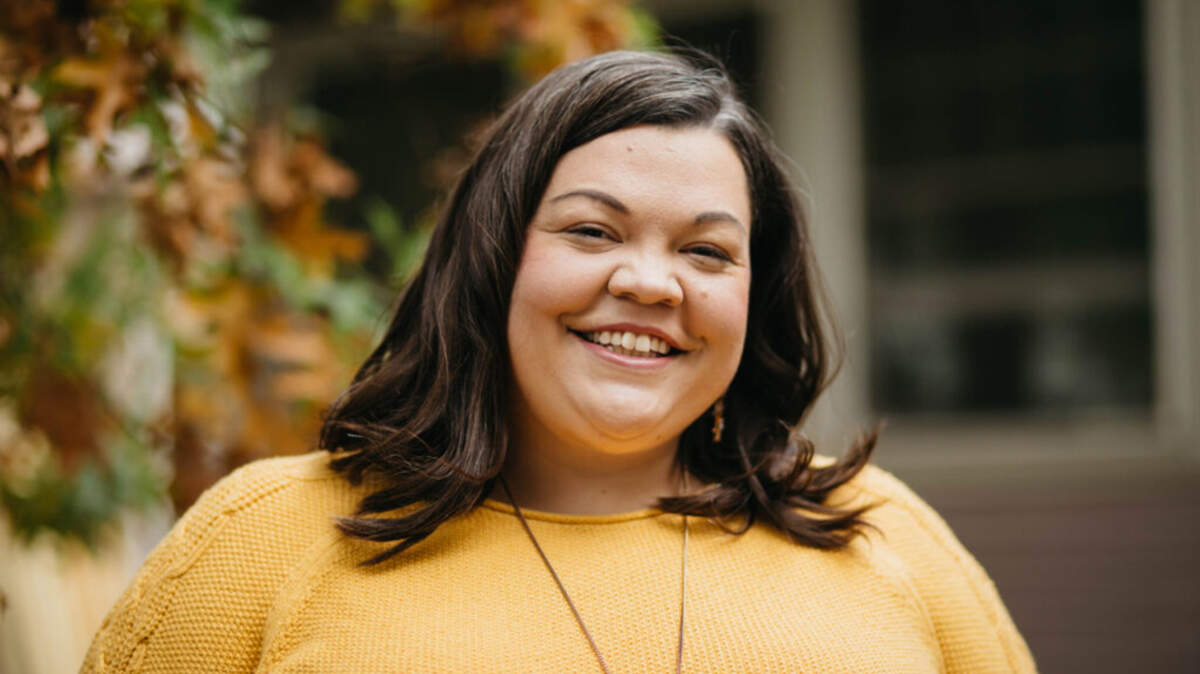
Not long after Tabatha Rosproy was named the 2020 National Teacher of the Year, she received a bag of poop in the mail at her then-home in Winfield, Kansas.
This was also right after she’d posted on Facebook that she did not plan to patronize local businesses that sold masks yet didn’t require customers or employees to actually wear one. But for her, that special delivery perfectly sums up how teachers have been treated during COVID, over the last year in particular.
At 34, she’s not sure how much longer she can do what she does, which is teach special education preschool and support other such teachers in Johnson County. “When families started bashing teachers on social media and showing up to school boards talking about us like we don’t love their kids, that’s gotten a lot of teachers down.”
Though Rosproy will always be in education in some capacity, she says, “I do wonder how long I’ll be able to champion other teachers from inside a classroom, and that makes me very sad.”
Just last week, at an early childhood screening, “I got cornered with a discussion of ‘CRT’ and masking, and I was unsure how to handle it because none of these are issues at a preschool level.” She told the dad who was in her face that “we focus on love, empathy and kindness, but it was an aggressive conversation,” she says, and the man was unnervingly angry.
So even a nationally recognized special ed preschool teacher — and do we really think there’s a surplus of those? — has to try to prove that she’s not up to some wokey-wokey evildoing with kids to whom less altruistic souls would never devote their lives. That makes me sad, too, Tabatha.
‘We’re so short-staffed, and there are no subs’
As last week’s shooting at Olathe East reminded us, teachers and administrators can make themselves targets, figuratively but also literally, just by showing up for work. And educators who were willing to be underpaid and overworked before parents showed up with virtual pitchforks are leaving for other jobs or taking early retirement now.
That’s often “at great detriment to their families’ finances,” Rosproy says, but is happening “because their mental health was suffering so much from people who don’t live their lives” or even know what goes on in a classroom. Not that anything that happens there is a secret.
As a result, “we’re so short-staffed, and there are no subs. You don’t know how many times we hear, ‘Can you combine classrooms? Can you cover?’ There’s no plan time, no break. It’s a different life.”
Even some of the most dedicated teachers are not only being run out of the profession, but have become convinced that’s the goal of political donors who stand to gain from privatizing education. Rosproy and other Kansas teachers I talked to believe that’s why far-right politicians in their state and across the country are trying so hard to convince parents that public school teachers are leading their children astray.
Of course, suspicion about what is taught in American classrooms is such an old story that it includes the notorious 1925 prosecution of a Tennessee science teacher who dared to teach evolution. And such concerns have not only been raised in public schools. In 1968, my parents complained to the nun who ran my Catholic grade school that marching us all down to the music room to watch a Hubert Humphrey speech about Vietnam on the school’s tiny black and white television was indoctrination of the first order.
But social media, Russian bots and well-financed partisan campaigns have taken the accusations and animus to a new level. “Nobody’s listening to teachers,” Rosproy says. Or thinking through what will happen if they keep leaving.
If you who are worried did listen to teachers, even for a few minutes, I’m hopeful that you’d be a lot less concerned about what they’re up to, and a lot more anxious about what we’d do without them.
Proposed bills ‘causing a lot of intimidation’
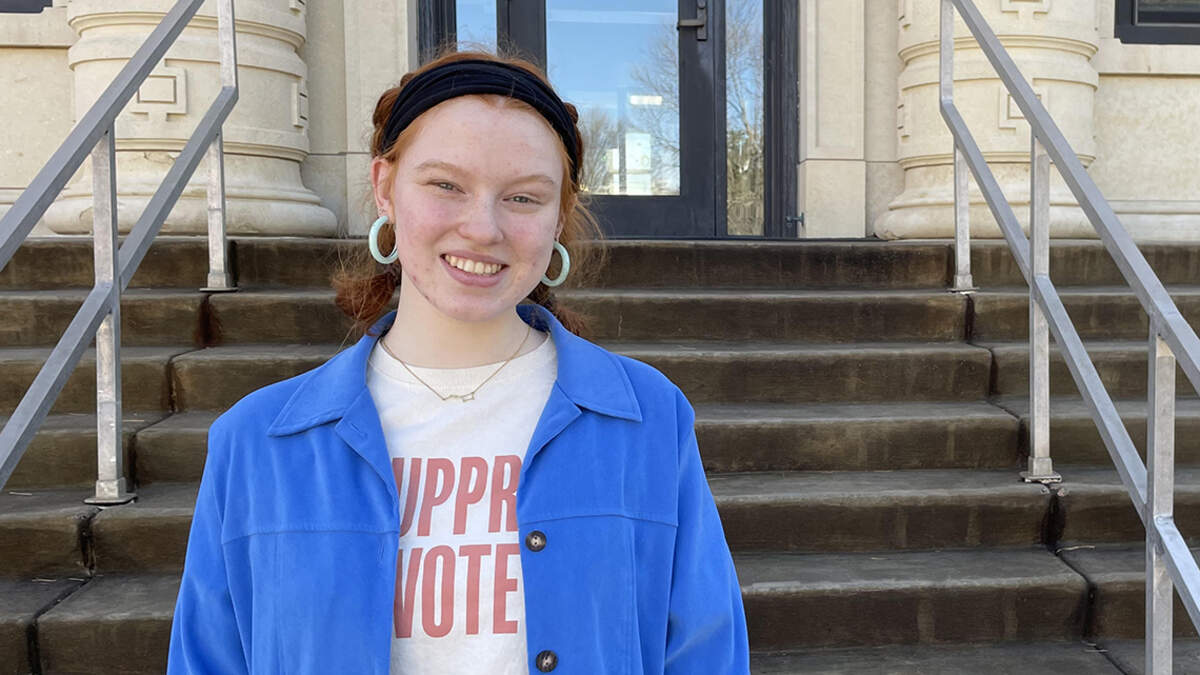
Student teacher Chloe Chaffin is grateful to have been raised in what she calls a “pro-school culture” in Olathe, where she felt championed and inspired by so many of her public school teachers that “I wanted to be able to be that light for future students.”
Spend any time at all with Chaffin, a Washburn University sophomore who speaks in paragraphs, and you’ll see that she could do anything with her talents. “Some of the teachers that meant the most to me were the ones that not only were excellent in the classroom but took time outside of their day to be my debate coach, or to spend extra time with me on a subject I didn’t understand,” she says. “The extra care that they took made me think it was something I wanted to do as well. I wanted to be one of the teachers who could take that extra time to connect with students outside of 8 a.m. to 3 p.m.”
She still wants that, but her classes keep shrinking, because some of her fellow education majors are deciding that on second thought, they might prefer to pursue a less politicized, and in this environment, less high-pressure way to work with children. “They are worried they might be bullied out of the classroom,” Chaffin says. Bills under consideration in Topeka “are causing a lot of intimidation.”
If that’s the whole point of the “parents’ bill of rights,” it’s working before it’s even been passed. In a recent survey of Kansas teachers, 76% said they would not recommend the field to their own students.
But the proposed legislation, which is based on recommendations from the Heritage Foundation, the conservative D.C.-based think tank, would do considerably more damage if it became law.
“It’s billed as being about transparency,” Chaffin says, “but the uproar comes from people who don’t realize how much transparency there already is,” through “programs that allow you to see all of your children’s assignments right now.”
So what’s the harm? For one thing, requiring teachers to lock in all plans for professional development before the school year even starts would, as Chaffin and others see it, limit their ability to respond to emergency situations.
When she was enrolled at Prairie Trail Middle School, two students committed suicide at the high school that school feeds into, Olathe Northwest, over a single, terrible weekend. “There was an immediate, emergency professional development, and overnight we were having conversations like never before about mental health. I myself was a student dealing with anxiety and depression, kind of in secret at that point in time, and I know that I got so much out of those conversations. If (the parents’ bill of rights) had been in place, they wouldn’t have been able to pivot.”
‘Parents’ bill of rights’ would encourage cheating
Chaffin is also concerned that the bill would encourage dishonesty, in a couple of different ways. First, requiring teachers to put all tests and quizzes online at the beginning of the year sounds like a cheater’s dream, though that’s not how she says it:
“It’s already standard procedure to put online, ‘This test will cover these materials and these topics,’ but I fear if they have every single quiz question at the beginning of the year, then students will get the impression that they aren’t responsible for the entirety of the material and some students, not all, of course, may zone out in class and just cram the night before for exactly which questions are going to be on the test. That promotes the wrong kind of collaboration. It hurts them on college entrance exams and in the long-term, severs their relationship to learning.”
The bill would also attempt to keep students from learning about people who are different from them, and who does that help? “You might be able to pull your student out of a classroom because you don’t like the material that’s being taught, but when that child grows up and works in a corporate office setting, if they are going to be doing DEI (diversity, equity and inclusion) trainings, you can’t call their HR and get them pulled out of work that day.”
When people talk about “critical race theory,” which is not being taught in Kansas schools, what they’re really talking about is not wanting their children to hear a version of American history that includes race, and that is kind of like leaving war out of the history of the Roman Empire. Kansas Sen. Roger Marshall is among the many who say teaching the whole story is “teaching our kids to hate themselves, hate each other and hate this nation.”
But as someone who learned the all-roses version, I can tell you that I felt like the kid who is last to find out there’s no Santa when during my sophomore year abroad in France, I discovered to my embarrassment that the average French 19-year-old knew more about my country’s past than I did. Learning only belatedly about the aborted and unfinished work of Reconstruction did not make me hate either myself or my country, but it did make me think I’d been swaddled and swindled. It also made me want to help us do better, and hate no one.
As Chaffin says, “I understand that people are trying to protect their children from having those hard conversations, but it’s only going to get harder if they have those conversations at age 20 rather than 15.”
‘I’ve given it all to my job’
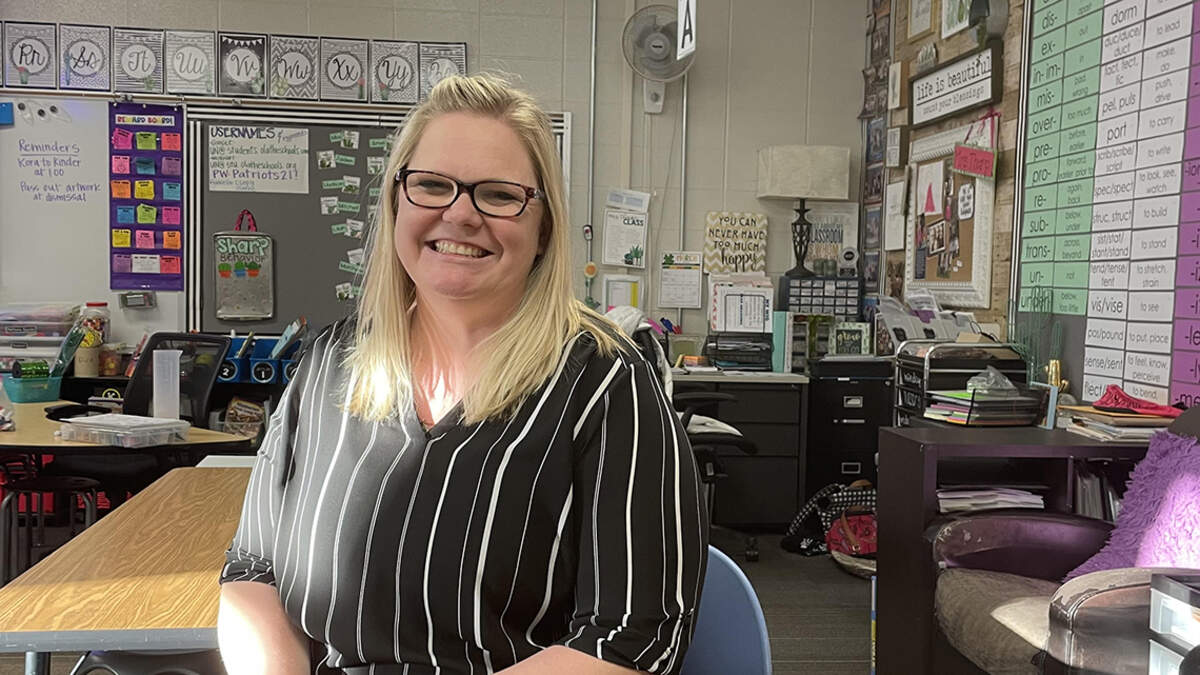
After school at Pleasant Ridge Elementary, where she teaches the third grade, Jeremie Tharp is catching up on some of the many things she didn’t have time to do during the school day. As on lots of afternoons, her own third grader, her 9-year-old son Cooper, is sitting in the corner of her classroom reading a book. And occasionally, he lobs a joke in our direction, like, “What does a ghost have inside his nose? Boooo-gers.”
In the last five work days, Tharp says, the earliest she’s left the building is 7 p.m. In part, that’s because parents who trust teachers less than they used to require so much more of them now.
“My teammate, two of her kids had a conflict at recess yesterday, and it really was nothing. But because of the state of the world right now, and nobody just giving teachers the benefit of the doubt ever, it’s turned into I think 20 emails back and forth with parents, and now the principal’s involved.”
In a time that she hopes isn’t gone forever, “if I said, ‘I’m handling this,’ parents would almost always be like, ‘Let me know when it’s done and I’ll follow up.’ But now I have to make daily reports, send daily emails and make daily phone calls” about the most minor matters, even though “it’s just not feasible. We don’t have the hours in the day.”
The proposed education bills just wouldn’t work, she says, for one thing because they’d leave less wiggle room on pacing. “We looked for an earring for 20 minutes today. Last Friday, I had four girls crying during phonics. Well, you can’t keep teaching phonics when you have meltdowns happening. Or if they’re not understanding equivalent fractions, I need two more days on it. I have to adapt to what my kids need, and I couldn’t do that if I was going to be penalized for it.”
“I try not to follow the comments on Facebook posts, but people are mean,” and getting more so. “When people say things like, ‘Anybody can be a teacher,’ it’s disheartening. I’ve spent 18 years practicing my craft and I’ve got a master’s degree.”
“I spend a lot of time thinking about things like, ‘Why did (a certain student) yesterday understand what the denominator meant, but today she didn’t? She’s ELL (an English language learner), so maybe it’s because she didn’t understand the language. It’s so much more than just managing the behaviors of these wild beasts that are in my classroom every day. You have to understand the brain, and understand children.”
Her sister who works as a LASIK technician makes more money working fewer hours with a high school diploma, and that bothers her more than it used to. “I was willing” to work for less pay “when I felt like people valued the work I was doing,” but that’s no longer the case, even though “I’ve given it all to my job. I’ve affected a lot of kids. They know how to find the denominator.”
‘Can’t grow up knowing nothing about history’
Tharp has seen some politicians come right out and say, “Let’s bury teachers in piles of paperwork so they’ll leave” and poof, no more public schools. Only, “private schools are not going to take all of your kids. I’ve looked around my classroom, and they would maybe take 10 of my 20.”
She’s perplexed, too, by all of the talk about “CRT.”
“I don’t even know what CRT is. Do we talk about how people are different and equal? Do we talk about what happened to Black people in our country? Yes, we do, because it’s part of life. You can’t grow up knowing nothing about history. That’s all in the state standards. It’s all there.
Am I trying to make white people feel guilty for being white? No. Hello, I’m white.”
“Hey guys,” calls her son just then, “what do you call a fish with no eyes? A fsh! What instrument goes in the bathroom? A tuba toothpaste.” Nine-year-olds do keep you laughing.
Still, one of Tharp’s favorite colleagues left in December “because it was too much. It was taking a toll on her health. And you take a major penalty when you leave in the middle of your contract.”
Yes, she’s tempted to leave, too. “I really love this job and really love these kids and I think about it all the time.”
“We all want the best for our kids, and I don’t blame parents; this is just what they’ve heard, what they’ve read, what they’ve talked about in their mom groups. It’s the world we live in right now.”
One antidote, as she sees it, would be for parents to volunteer in their children’s classrooms and see for themselves what’s going on there. One current student’s grandma, a former teacher, comes in once a week to help out, and that support is deeply appreciated.
She also wrote Kansas House Speaker Ron Ryckman, Jr., who is from Olathe, recently and told him, “I know you’re being fed a bunch of lies, so why don’t you come see for yourself?”
“We aren’t hiding anything. Our doors are very open.”
Doctors told her she wouldn’t walk
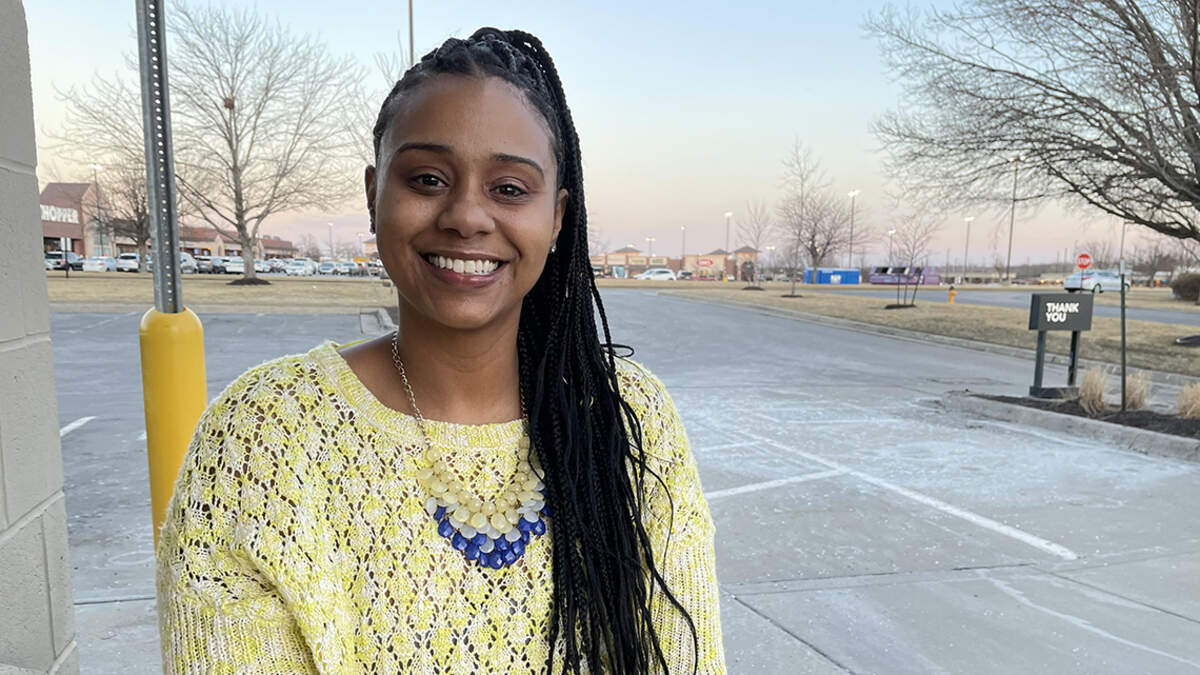
Enemies of public education, be warned: You will not be running 28-year-old first year teacher C’Awna Ford-Johnson out of her dream job at Blue Valley Northwest High School. Because Miss C, as her students call her, worked too hard to get there, and has too much to offer kids.
When she was growing up, “my mom worked two, three jobs, so I was the kid who was dropped off at school early, was at school all day and after school at night. Most of my teachers are family to this day,” and she’s never stopped wanting to do what they did for her for other children. “I’ve been dropped off at teachers’ houses in the morning. I’ve been picked up by teachers from my mom’s job.”
On April 20 of her junior year in high school in Manhattan, Kansas, she was in a head-on collision on her way to school and was life-flighted to Kansas City, where she spent weeks in the ICU. “I share all of that because I don’t remember the bad moments in the hospital; I remember my teachers being there, traveling from Manhattan to KU Medical Center. I remember the ‘You’re strong, C’Awna’ banner with all the kids’ signatures from school hanging in my hospital room. That love and that support got me back up and walking.”
Then she put herself through college while also working full-time in call centers and in customer service. “When people look at me, they don’t know that story. They don’t know the obstacles I’ve had to overcome and how strong-minded I had to be, and how many doctors told me, ‘You won’t walk.’”
She knows that certain parents are wary of her “based on how I look, and the texture of my hair. You either feel like you’re welcomed and embraced or you don’t, and some are more, ‘My kids love you; why?’ There’s a question mark, waiting for that mistake to be made.”
Part of that comes from her, too, she says — the worry that maybe “I won’t say the right words, or I might be judged based on how I look. If I use improper English or improper grammar are they going to consider me human and I made a mistake, or will they think I have imperfections I shouldn’t as an English teacher?”
She wants parents to know a couple of things. First, this: “Everyone’s safe around me. In my room at least, they know that not only will they be embraced, but that everyone in that room is safe. We’re not doing any hate speech. We’re not doing any name-calling because we’ve done enough of that in history.”
“I’m just going to teach your kids persistence and hard work and overcoming whatever it is life throws at you, and making the most of it. I promise, I’m not going to teach them anything that’s going to go against your values.”
‘I steer clear of politics.’
In fact, “I steer clear of politics. We’ve had our media unit and talked about misinformation, but I always try to find examples outside of politics. I don’t want to be the one to initiate the conversation, in fear of making someone uncomfortable. I just try to be as safe as possible. The kids, they’ll bring up politics. I don’t shut it down, but it’s definitely a conversation I allow them to direct.”
Before the Kyle Rittenhouse verdict, for instance, she had students say, “‘Miss C, I don’t think this is gonna go the way that it should.’ A lot of times, I just have to say, ‘I know.’ If I agree with what they said or not, I’m just like, ‘This world we live in,’“ she says, shaking her head.
“Which is such a clichéd statement but it’s being safe, because I understand that I’m working with other people’s children. I understand they aren’t my biological kids, even though I call them my kids. I know how protective my mother and my family is of me, and I have to respect that.”
At the same time, though, she also wants parents, and lawmakers, too, to know this: The parents’ bill of rights “would definitely limit us. Teaching is like dancing; you’re constantly moving, constantly changing. Each class, literally, is different. It looks different, it sounds different; it’s what the kids need. So if we’re not going to have the room or the flexibility to do that dance, what are we doing?”
And then too, “I don’t know that everyone understands the need for diversity in schools. I don’t see very many people who look like me on a daily basis. I see a lot of kids who look like me, but do they get the chance to see teachers that look like them? Not only do students of color need to see teachers of color, but so do all other students, because that’s what our world looks like. I’ve had so many students of color tell me this year, ‘I think I could be a teacher, too,’ and it makes me feel so good.”
She can relate to students, no matter what they look like: “Yeah, I have these eyes on me, and I might slip up and make a mistake, but these kids feel the exact same way every day. They’re so afraid to fail. I’m like, ‘as long as you show up, you’ll never fail.’”
Finally, know this: C’Awna Ford-Johnson will keep showing up for your children, and maybe you should ask them why they love her. “I won’t stop what I do,” she says, “and I’m not afraid to speak out because my intentions are pure. I’ve always wanted to be in this career, and I’m going to roll with it.”
This story was originally published March 9, 2022 at 5:00 AM.