Replacement for fired prosecutor: ‘I’m here to see what kind of shoes you’re wearing’
Two members of Wyandotte County’s Community Integrity Unit were caught on tape laughing that convicts claiming to be innocent are already right where they belong, in prison. And prison is right where who knows how many wrongfully convicted men and women remain today, thanks to the attitude and inaction of that so-called integrity unit.
“Here we are protesting,” for one thing for more resources for this very team, says Khadijah Hardaway, of the advocacy group Justice for Wyandotte, “and you mean to tell me the thing we’re protesting for is corrupt?”
Now there is no integrity unit. District Attorney Mark Dupree had to fire the last two lawyers in that office. After KCTV5 told him they had audio of prosecutors cracking each other up while disparaging people who are Black, gay, trans, disabled, Chinese, unemployed and/or looking for justice, what choice did he have?
They were secretly recorded by a third member of the team, who had already been fired by Dupree because he “lacked compatibility” with the other two.
What does it say that the employee who was offended by the stream of toxic waste flowing through that office was the one Dupree fired first? And let’s look at what the implosion of that unit means for two men, Celester McKinney and his cousin Brian Betts, who the facts say really were wrongfully convicted.
James Antwone Floyd Sr., one of the two who was fired for making offensive comments, was also the prosecutor who was supposed to be handling McKinney’s wrongful conviction for the 1997 murder of corrupt former Kansas City, Kansas police detective Roger Golubski’s nephew. Floyd did not return the messages I left on his cellphone.
Last October, the Kansas Court of Appeals ruled that new information about Golubski’s role in a case involving his own family, along with new information about Golubski himself, should at least entitle McKinney to an evidentiary hearing on a new trial.
File missing, fired prosecutor says
Days before Floyd was fired, I was in the Lawrence law office of McKinney’s attorney, Sarah Swain, reading documents related to the case, when Floyd called Swain to talk about McKinney. Swain put Floyd on speaker phone, so I heard him speak frankly about his view that yes, McKinney is entitled to a new trial.
Floyd said he was planning to call just a few witnesses at an evidentiary hearing this summer. These included Carter Betts, who said even before McKinney’s sentencing that he had been coerced — told he’d be charged with murder, too, unless he testified against his nephews, Les and Brian. This is the only evidence against them, as the state has admitted in the past.
Floyd said he’d also call Daniel Cahill, “the prosecutor accused of influencing” Betts, along with two KCKPD detectives. “I think he’s currently a sitting judge for us, so he shouldn’t be hard to get.” And then there’s “the detective, Golubski, if we can get him to testify.”
Swain asked Floyd if he’d seen the police file, and he answered, “When I went to look in our file room, I’m not sure we could find it, which I thought was strange.”
I don’t find it strange. Welcome to Wyandotte County, where files go to disappear.
The documents Floyd had already given Swain, as legally required, were all he’d found in the KCK police department’s digital file, he told her. “I think what I gave you was 60 pages, and that seemed kind of thin for me for a murder, so I thought it was weird.”
Swain asked Floyd if he thought Golubski would testify, and he laughed. “My guess is even if we subpoenaed him, he won’t show up. And if he did, he’d plead the Fifth.”
From the time the court sent the McKinney case back to Wyandotte County to take another look at whether he should get a new trial, Floyd said, he’d thought that the answer was yes.
“When it got remanded,” he said, “my initial was, even if claims are unprovable, or not unprovable, but can’t be completely substantiated, I was, ‘Well, if Roger doesn’t show up, I’m not sure how they can effectively defend it.’ My gut inclination was this is going to a new trial.”
As it should, without any further delay.
Only now that Floyd has been fired, the case has been temporarily reassigned to another attorney in the office, Darrell Smith.
Swain taped her recent meeting with Smith, which begins with him telling her, “I’m just here to see what kind of shoes you’re wearing.” Just to switch up the racist comments out of this office with a sexist one, I guess.
Case of wrongful conviction? ‘I haven’t read it’
Swain reminds Smith that the court has already said — seven months earlier, in fact — that there needs to be a hearing on whether McKinney is entitled to a new trial. To which he says, “I haven’t read it.”
“I haven’t looked through the whole file and I don’t know when I’m going to have time to do that.”
Sure, because what’s the hurry? Asked when she can meet with his supervisor, Chief Deputy District Attorney Damon Mitchell, Smith says, “He doesn’t want to meet with you.”
The lack of urgency here is maddening. What’s another year when we’ve already stolen 23 of those from your client? Again, that’s how long Les McKinney and Brian Betts have been behind bars for something they didn’t do.
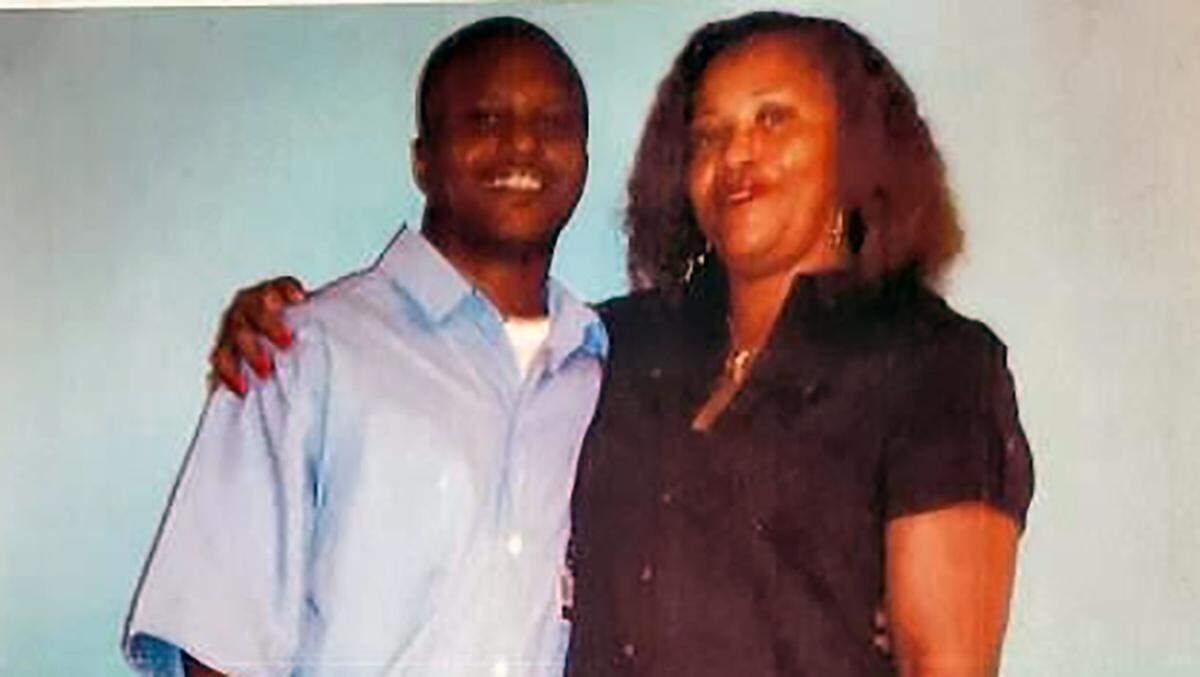
Last week, Betts wrote me a letter, thanking me for looking into and writing about his case. He was at home with his girlfriend and their baby when the murder happened. He went to prison when his son, Shuron Hodge, was just 8 months old. Hodge, who is serving in the U.S. Army, has three children of his own now.
“I used to pray for the day to come that I will be blessed to be freed from this wrongful conviction and be able to be a daily presence in my son’s life, helping to raise him,” Betts wrote. “Now I say that prayer hoping for the opportunity to be there for my grandchildren.’’
So when will Mark Dupree’s office get serious about the wrongful convictions and cases of police corruption that no one else in KCK officialdom wants him to pursue? He can’t argue that he ever assigned his best people to this job. Or at least I hope those weren’t his best; another attorney in the Conviction Integrity Unit, as it was originally called, had to leave because she wasn’t even licensed to practice law in Kansas.
The reason that those who trust Dupree do believe in him is that he corrected what he rightly called the “manifest injustice” of Lamonte McIntyre’s wrongful conviction in 2017. Olin “Pete” Coones, who served 12 years for a murder he did not commit, was released last November, not long before he died of cancer. But so many others are still waiting for justice.
Nikki Richardson, also of Justice for Wyandotte, said she’s still giving Dupree the benefit of the doubt: “He doesn’t really have any intention of opening cold cases, but I don’t know if that’s his fault. … He needs to present some results pretty soon, or at least have more transparency, but I’m willing to give him the time to do that.”
Victims are running out of patience, though, says Hardaway, and who can blame them?
One of the first times I wrote about Roger Golubski’s corruption and violence, in 2019, Dupree’s spokesman, Jonathan Carter, told me the office would have no more to say on that subject: “We’ve addressed the McIntyre thing ad nauseam.” Ad nauseam as in you’re sick of it? “We’ve moved past it,” he answered.
The “McIntyre thing” revealed a lot about Golubski and his colleagues, who had to have known that McIntyre was not guilty of the double murder for which he, too, served 23 years. And what happened to McIntyre has happened to others, so where’s the follow-up?
While we wait, Golubski is still walking around free and collecting a pension and his victims are still in pain. Les McKinney and Brian Betts would love to be able to “move past” what the Kansas City Kansas Police Department and the Wyandotte County District Attorney’s office did to them all those years ago, but they’re still being wronged today.
It’s Mark Dupree’s own integrity, or lack of it, that will decide what happens to them now.
This story was originally published June 1, 2021 at 6:00 AM.