How a kratom giant got what it wanted from RFK and new Homeland Security chief | Opinion
A funny thing happened down in Oklahoma in December.
After two years of inaction caused by a federal court backlog, the Justice Department finally won a key ruling in its case against the makers of Feel Free, a controversial and wildly popular gas station drug that claims to blend a proprietary mix of kratom and kava.
The decision put the government in position to present evidence, test its claims and potentially shut down a company whose product has faced widespread allegations of harm.
But 12 days later, the DOJ walked away from its own case.
Why?
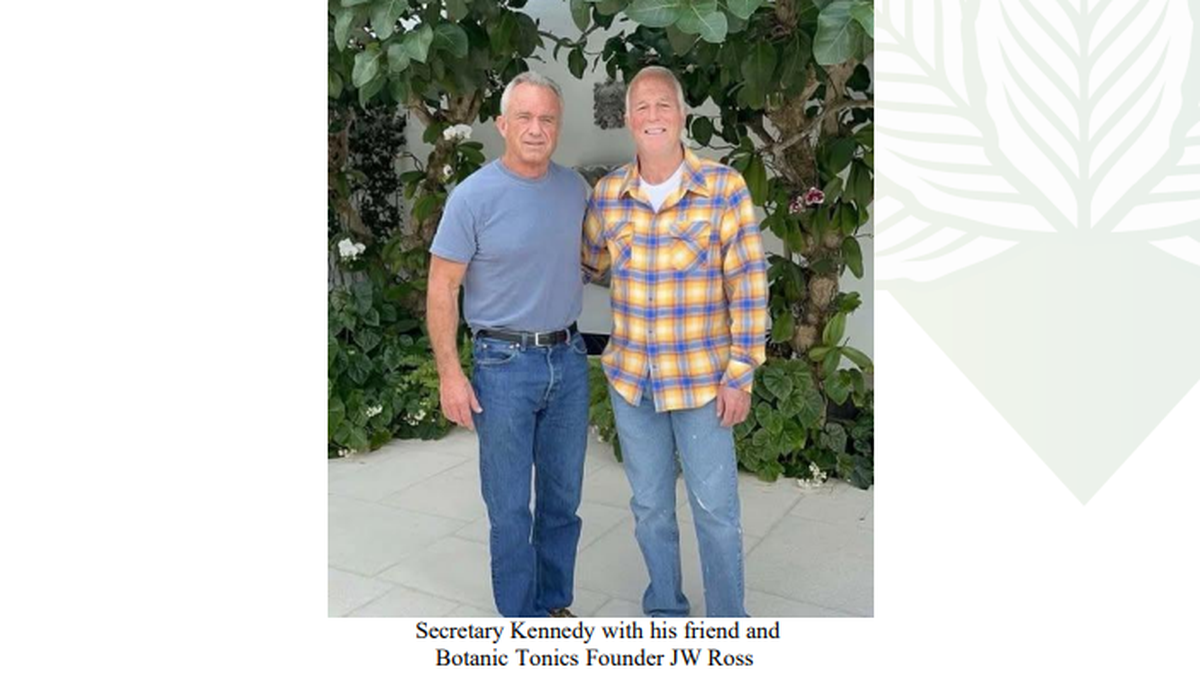
The answer likely has something to do with the overlapping relationships between United States Secretary of Health and Human Services Robert F. Kennedy, Jr.; Markwayne Mullin, the former U.S. senator from Oklahoma who was recently appointed Homeland Security Secretary and a convicted fraudster named Jerry Cash.
When he was released from prison 12 years ago, Cash changed his name. These days, he goes by J.W. Ross. He is the founder of Feel Free.
Justice Department back under Trump
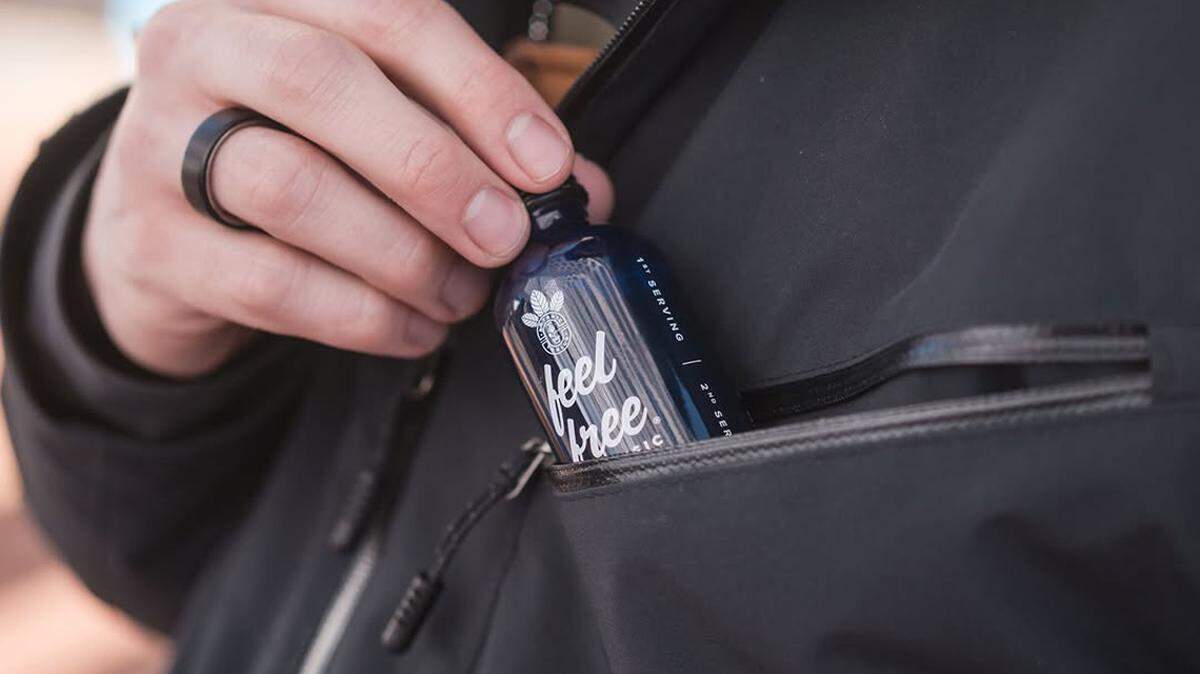
Ross’ company, Botanic Tonics, introduced Feel Free in 2020, selling it in convenience stores as a plant-based mood and energy booster. Its rise in popularity — Feel Free is available in approximately 24,000 retail locations nationwide — was accompanied by increasing reports of users surprised to find themselves addicted and experiencing withdrawal after taking a product that had been marketed as a healthy alternative to alcohol.
Eventually, the feds took notice. In April 2023, they seized hundreds of thousands of bottles of Feel Free and related products from Botanic Tonics’ manufacturing facility in Broken Arrow, Oklahoma. Prosecutors argued the kratom-based product was an unsafe “new dietary ingredient,” making it adulterated and illegal to sell across state lines.
Botanic Tonics moved to dismiss the case the next month, arguing the government hadn’t shown the product was unsafe or that kratom qualified as a “new dietary ingredient.” Then the case went dormant for two and a half years. The judge never ruled on the motion.
The reason for that, a spokesperson from Botanic Tonics said, was a federal court backlog in the Northern District of Oklahoma that ballooned after a Supreme Court ruling shifted thousands of cases into federal jurisdiction.
In December 2025, things picked back up. The judge denied the company’s motion to dismiss. The case could move forward.
But by then, the Justice Department was back under control of the Trump administration.
‘Developing its understanding of kratom’
Within two weeks of the judge’s ruling, the DOJ filed to dismiss its own case, saying the seized products had expired and pursuing its claims against Feel Free was no longer a prudent use of its resources.
On its face, that explanation didn’t quite make sense. The expiration of the product was a predictable result of that delay. And the government had just cleared the first real hurdle.
Reached Thursday, the U.S. attorney’s office in Oklahoma declined to comment.
Botanic Tonics’ explanation is that the world changed while the case was sitting still.
“When the FDA visited our facility in 2023, the agency was still developing its understanding of kratom,” a company spokesperson told me earlier this year.
By the time the judge ruled in December, the spokesperson said, regulators had drawn a clearer line. Traditional kratom products, which Feel Free claims to be, were no longer a priority for enforcement. The feds’ focus now was synthetic kratom compounds like 7-hydroxymitragynine, or 7-OH — the category of drug I’ve been reporting on in Kansas City for the past year.
It’s true that the FDA and HHS under Robert F. Kennedy Jr. have cracked down on 7-OH. But that’s not the whole story.
Ten weeks after the government dismissed the case, Botanic Tonics wrote a $500,000 check to MAHA PAC, a political group aligned with Robert F. Kennedy Jr. and his “Make America Healthy Again” agenda. Politico reported the donation last week.
Botanic Tonics did not respond Thursday to questions about the purpose of that half-million-dollar donation. Neither did MAHA PAC or the FDA.
Criminal pasts, changed name
The Oklahoma case will be familiar to those who’ve followed the news regarding CBD American Shaman.
Last fall, federal agents carried out a similar seizure in the Kansas City area, targeting products tied to that company that contained 7-OH. The legal theory was the same: The products were unsafe, unapproved and adulterated. That case, too, has moved slowly, even as the company’s founder, Vince Sanders, faces mounting legal pressure from regulators, including a case brought by Missouri’s attorney general that could determine whether his products stay on shelves.
The parallels between the two companies go beyond the courtroom. Both founders have criminal pasts. Sanders served federal time for marijuana distribution. Ross reported to federal prison in 2010 on fraud charges involving the oil and gas company he ran as CEO. He diverted roughly $10 million from the company to support a lavish lifestyle that included a $5 million Oklahoma City mansion.
Ross entered prison under his near-allegorical government name of Jerry Cash. He says that he uncovered a threat against a federal judge while behind bars and reported it to authorities — cooperation he says led to a stint in witness protection and an early release. When he got out, he took on the name J.W. Ross.
Sanders also found leverage with the feds after his arrest, assisting authorities against his drug supplier in what one law enforcement agent described as “the most substantial cooperation” he had seen in his career. It earned Sanders a reduced sentence as well.
Both men went on to build businesses wrapped in the language of wellness.
Botanic Tonics leaned hard into that image — promoting Feel Free through influencers, podcasts and even college campus giveaways, presenting it as a healthy alternative to more toxic substances.
Sanders worked the same terrain from the opposite direction, using the all-natural halo of his CBD brand to sell a product built around 7-OH, a compound some estimates put at 13 times more potent than morphine. He seeded the market with free samples, the same tactic drug dealers have used for decades.
In the end, it’s the same ugly story: Vast swaths of Americans find themselves addicted to a product they thought would give them relief. As they empty their bank accounts to support their habit, or sweat out their withdrawals, Sanders and Ross bask in fortunes few in this country could ever dream of.
Different sides of kratom industry
Despite their similarities, Ross and Sanders are on opposite sides of a growing divide within the kratom industry.
Ross has founded a group called the Global Kratom Coalition that pushes to legitimize traditional kratom products, distinguishing them from synthetic derivatives such as 7-OH that threaten Feel Free’s market share.
Sanders has responded by founding the Holistic Alternative Recovery Trust, or HART, which has fought to keep 7-OH products on the market as regulators move closer to cracking down. In August, after Kennedy’s HHS signaled a crackdown on 7-OH, HART issued a press release featuring a photo of Kennedy and Ross together, casting the two men as pals.
In that statement, a HART spokesperson accused Ross of using political connections to tilt the playing field, saying that if Kennedy is serious about “Make America Healthy Again,” he should “disregard his rich friend’s lobbying.”
But Sanders is playing a similar game. Records show his company gave the maximum $8,000 corporate donation to Kansas Senate President Ty Masterson (and gubernatorial candidate) in December. Unfortunately for Sanders, Gov. Laura Kelly in April signed a bipartisan measure banning 7-OH products in the state, stopping short of an explicit ban on traditional kratom.
For now, it seems Ross’ connection to Kennedy seems to be the winning hand.
Mirroring the federal focus on synthetic compounds, many other state and local governments — including Kansas City — have moved to restrict 7-OH while merely regulating more traditional kratom products like Feel Free.
Markwayne Mullin’s interest
Though officials have ample justification for targeting 7-OH — an unregulated opioid as easy to obtain as a Coca-Cola in most parts of the country — there are other reasons to question the purity of the administration’s posture.
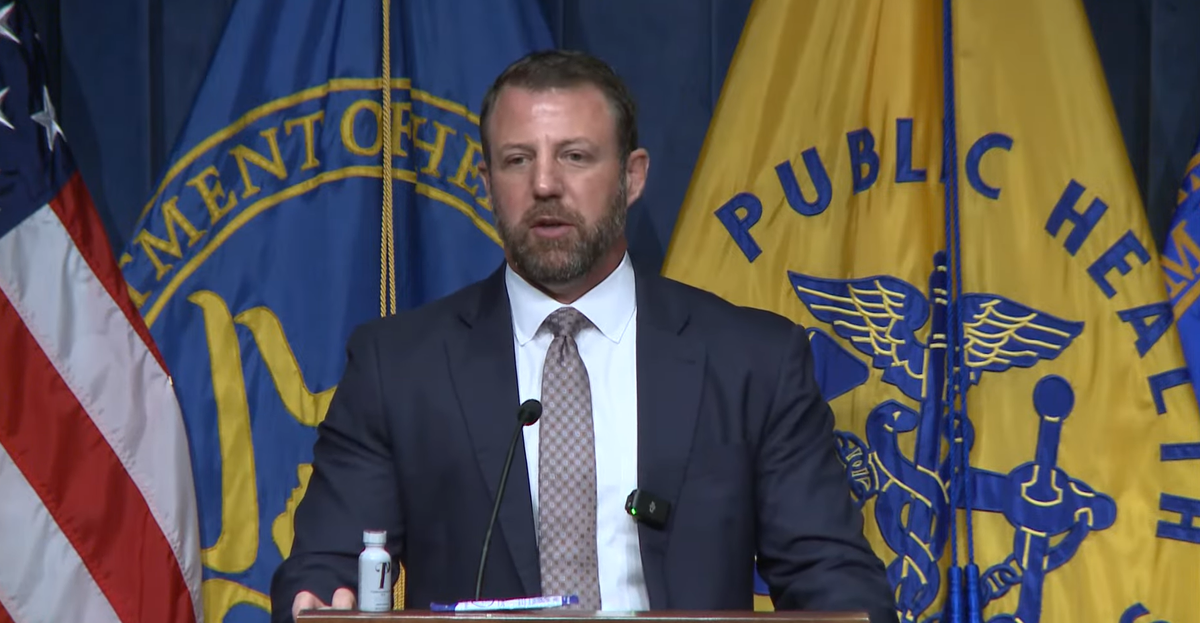
In July, when Robert F. Kennedy Jr. and FDA Commissioner Marty Makary stood on the same stage and announced they would move to classify 7-OH as a Schedule I controlled substance, they were joined, somewhat oddly, by the junior U.S. senator from Oklahoma, Markwayne Mullin.
Mullin railed against 7-OH companies exploiting the dietary supplement loophole, packaging the products like everyday consumer goods while selling something far more harmful.
“It’s legal, but it’s an addiction that’s ruining lives,” he said, praising Kennedy for stepping in.
But Mullin failed to mention an important disclosure — one he didn’t have to make until last month, when Donald Trump nominated him to be Homeland Security secretary. According to the financial filings he was required to submit for the job, part of Mullin’s $60 million net worth comes from a stake he has in an Oklahoma company operating in the same legal gray area he was condemning.
Its name? Botanic Tonics.
This story was originally published May 1, 2026 at 9:45 AM.