
Star Editorial Board endorsement on whether to vote for $474M KC school bond | Opinion
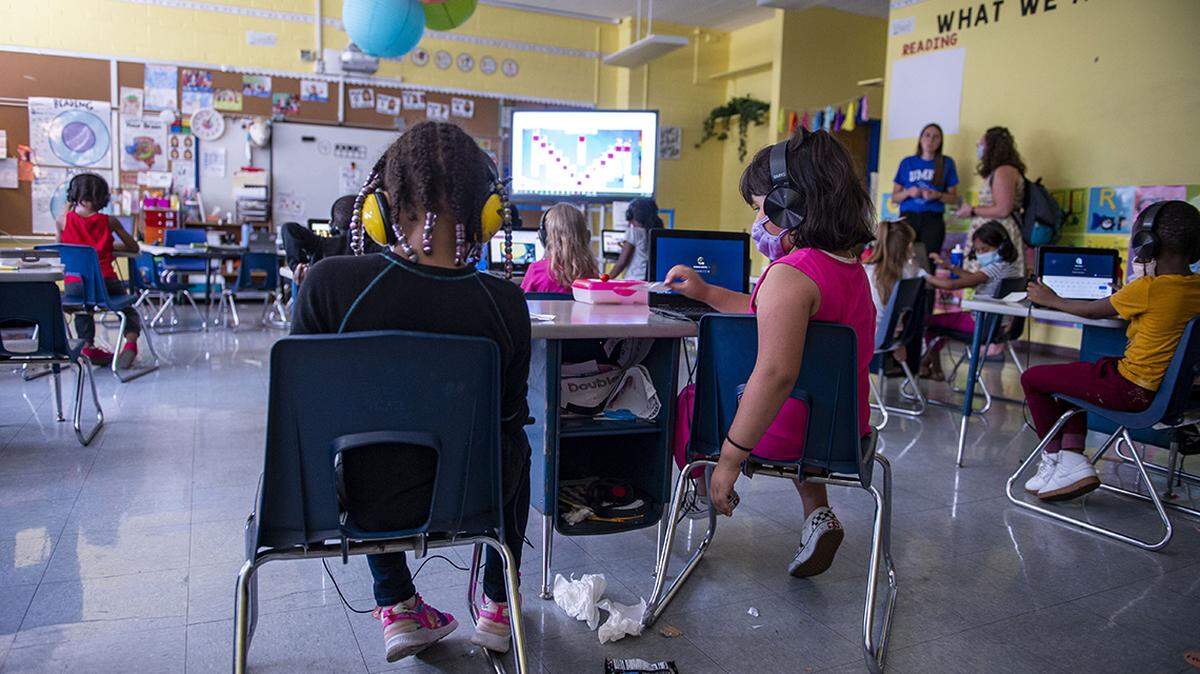
On April 8, voters in the Kansas City Public School District will decide whether the district should borrow $474 million over two decades to repair and improve dozens of school buildings across the community.
The answer should be an emphatic yes.
The reason is simple: Public education is a basic service, no different from police protection or street maintenance. A world-class city must provide a quality education for its children, and that includes buildings with safe, comfortable environments in which to learn.
Make no mistake: A community that ponders billions in tax support for stadiums, or wants to build a park over a highway, must invest in its kids first. The $474 million bond issue on the ballot, which will require a four-sevenths majority to pass, is just such an investment.
“Wouldn’t it be wonderful if we became a city people came to because of … what was happening in the classroom, because of its high-quality, state-of-the-art schools?” asked Monica Curls, one of the co-chairs of the bond campaign and a school board member. The answer is clear.
Every district school will get upgrades and repairs if the bond issue passes. Renovated classrooms, improved security features, repaired restrooms and ventilation systems are on the to-do list. They’re all essential.
“A lot of times we find ourselves in August having to do early dismissal because the schools don’t have proper (cooling) to keep the building (open),” said Matthew Oates, a former board member working on the bond campaign. “Same thing in the winter, where sometimes you find yourself canceling school, having early dismissal, because they can’t keep the building warm.”
Roofs will be fixed. New labs and music spaces will be created and finished. Better, safer playgrounds will be built.
The plan calls for building a new elementary building in northeast Kansas City, including a “family empowerment center” on the campus. A similar new facility would be constructed in the center city, near 43rd Street and Indiana Avenue. Each would cost $68 million.

Some schools would be relocated.
A new middle school would open on the old Southwest High campus, at a projected cost of $45 million. Manual technical education services would move to the Central High campus, which would undergo major renovations.
Another $50 million of the issue would be spent on charter school improvements. The transition to a sixth-through-eighth-grade middle school concept would be enabled.
All of these projects, and others, would reflect parental involvement. Supporters say the projects would also create jobs and opportunities for businesses, which will be welcome across the community.
To be clear: A project list this ambitious, and important, won’t be cheap. The owner of a $200,000 home, proponents say, will face a tax increase of $19.32 each month. That’s more than $230 a year, at a time when families are routinely squeezed at the grocery store and the gas pump.
But the cost of doing nothing is higher. School buildings don’t repair themselves — failure to enact this bond issue will simply mean higher costs in decades ahead. And those costs will inevitably be spread over a smaller tax base, since crumbling schools will hammer property values and force some families to move.
That’s one reason why homeowners, even those without children in the Kansas City Public Schools, should enthusiastically support this measure. A substandard schoolhouse is more than just an eyesore — it depresses property values and neighborhoods, leading to crime and community collapse.
That phenomenon is precisely why the federal court intervened in the district in the 1980s and 1990s: Decades of failed bond requests left Kansas City schoolrooms leaky and dilapidated. Under court order, Kansas Citians rebuilt the schools’ physical plant.
Some opponents suggest the current school district board can’t be trusted to handle near a half-billion in construction projects efficiently. Nonsense. After decades of near-chaos in some buildings, the district has improved education outcomes and achieved accreditation. Weekly reports of board accusations and dysfunction have vanished.
“They’ve done a yeoman’s job of engaging with parents, engaging with the teachers at every school, engaging with the kids directly, engaging with the neighborhoods to say, ‘what do you need in your community?” said Geoff Jolley, a parent working with the bond campaign.
Do the schools still have problems? Yes. Urban education is a challenge across the country — shifting populations, different languages, the COVID-19 crisis and disadvantaged homes have combined to make teaching kids as difficult as ever. Teachers across the district have done astonishing work to educate children in this difficult environment.
They shouldn’t have to battle drafty windows and non-functioning toilets, too.
Members of the current school board say they’ve earned the public’s trust. We agree. Even if that weren’t the case, though, we know district patrons have a remedy if board members fail to follow through on bond promises: They can elect new board members to do a better job.
Compare that with, say, the Kansas City police board, which takes hundreds of millions of dollars each year and answers to no one.
We think passage of the school bond issue will also send a strong message to City Hall to stop handing out tax breaks and incentives like candy. Dollars that should go to kids and schools are instead going to developers’ pockets. That’s one explanation for the decay of the district’s schools.
Some patrons will worry about the issue because of Jackson County’s well-publicized property assessment shortfalls. Those problems are regrettable, and have caused real damage to homeowners and businesses. They must be fixed. But kids shouldn’t be punished because adults can’t follow the rules.
The case for supporting the district’s bond issue is clear. Don’t be distracted by jabbering from anti-public school voices who suggest the package is too expensive, or too risky. Kansas City’s biggest failure in the 20th century was its inattention to educating its children. We cannot afford a similar mistake again.
Remember: It will take a little more than 57% of voters to approve the bond package. That’s a tall order, and more than a little unfair.
We must do it ourselves. We must do it now, before the price goes up, and another generation of children is lost to indifference and dysfunction. Vote yes on April 8, and let’s fix the schools.
This story was originally published March 28, 2025 at 5:07 AM.