
Kansas lawmakers push to elect justices, sparking concerns over political influence | Opinion
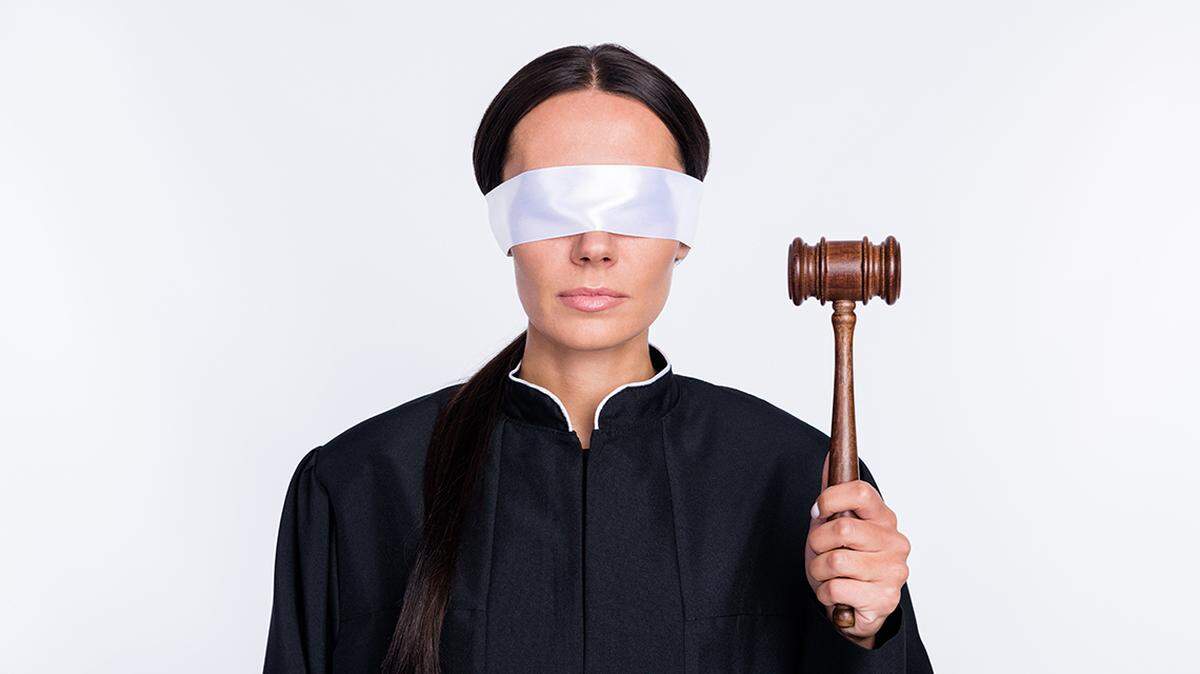
The American tradition of an independent judicial branch is suddenly but surely under assault this week — both in Kansas and at the federal level.
Let’s start with the Sunflower State. The Kansas Legislature on Wednesday approved a question for the August 2026 primary ballot that will ask voters if they want to directly elect the seven justices who sit on the Kansas Supreme Court. Justices are currently nominated by a nine-member panel — one attorney and one non-attorney from each congressional district, plus a lawyer who serves as chair — which sends three names to the governor when a court vacancy arises. The governor makes the final appointment.
Republicans behind the new initiative argue that directly electing justices will bring a welcome bit of democratic accountability to the system.
“Voters will now get to decide whether to reclaim the right to vote for justices, which they enjoyed from statehood until 1958,” said Attorney General Kris Kobach, a prime mover behind the push for judicial elections.
We are skeptical, for several reasons.
Insulation against chicanery
Kobach is correct when he notes that Kansas voters once elected their state’s Supreme Court justices. They chose to move to the current merit-based system after Gov. Fred Hall manipulated the system to have himself appointed the court’s chief justice shortly before he was to leave office. The selection process was changed to insulate the judiciary from political chicanery.
It was a good choice then. It remains so now.
Moreover, we cannot help but notice that the GOP-controlled Kansas Legislature’s enthusiasm for democracy is a bit situational. Legislators placed the ballot question on an August primary ballot, often a low-turnout election dominated by hardcore partisan voters.
Simply put: Republicans are trying to choose the electorate that will choose the court’s future.
“Why do Kansas legislators almost always have such low faith in Kansas voters that they put controversial questions on the lower-turnout August primary ballot?” Steve Leben, a former member of the Kansas Court of Appeals, wrote online. “Obviously, it’s an attempt to lessen the impact of Democrats (who have fewer voters and primaries) and Independents.”
Indeed we’ve seen this playbook before, most recently when legislators put an anti-abortion rights “Value Them Both” amendment on the August 2022 ballot in a transparent attempt to put their thumb on the scale in its favor. The effort failed nonetheless.
But the incident remains instructive. Legislators went to voters then because the Kansas Supreme Court in 2019 recognized the right to an abortion in the state constitution. The new push to elect justices is yet another attempt to reverse that decision — and to rig the game in favor of conservatives.
Trump, Musk urge impeachment
Something must be in the water. Because the Kansas debate arises at the same time that national Republicans — led by President Donald Trump and his billionaire sidekick Elon Musk — are working to undermine the independence of federal judges.
The president this week called for the impeachment of Judge James Boasberg, who had ordered a temporary halt to the deportation of alleged Venezuelan gang members so that he could sort out the White House’s legal authority for the action.
“This judge, like many of the Crooked Judges’ I am forced to appear before, should be IMPEACHED!!!” Trump posted to Truth Social.
It is not an entirely idle threat. Several GOP members of Congress are taking up Trump’s call for impeachment. And Musk threw his money behind the cause, giving the maximum allowable donation to seven House members who have endorsed the effort.
“For more than two centuries, there has never (been) such extreme abuse of the legal system by activists pretending to be judges,” Musk wrote on X this week. “Impeach them.”
It’s a silly, hyperbolic claim, but one that carries dangerous power. Threats are on the rise against federal judges who get crosswise with the president and his supporters.
Independence is essential
The connecting tissue between the Kansas Supreme Court and the impeachment crusade at the federal level is obvious: The law — and the judges who apply it — does not always produce outcomes that Republicans (or even Democrats) favor. Changing the law can be difficult, abiding by it distasteful, so conservatives have decided to change the judges instead.
Different methods are used to choose judges and justices at the state and federal levels, but in both cases the system is designed to free the judicial system — to the extent possible — from the passions of the political process. Independence is essential to the fair administration of justice.
“This independence of the judges is equally requisite to guard the Constitution and the rights of individuals from the effects of those ill humors,” Alexander Hamilton wrote in The Federalist Papers.
There is some good news. At the federal level, two-thirds of the Senate would have to affirm impeachment charges in order for a judge to be removed. That’s unlikely to happen. And in Kansas, voters will get to decide if they really want to turn judicial selection into an expensive, demagogic mess.
The judiciary — at the state and federal levels — remains independent for now. May it remain so.
This story was originally published March 20, 2025 at 11:11 AM.