
What Kansas City Public Schools will do if voters pass the district’s 1st bond in 58 years
The Kansas City Public Schools board finalized ballot language for a $470-plus million bond Wednesday and approved updated building recommendations meant to modernize the district’s schools and address decades of deferred maintenance.
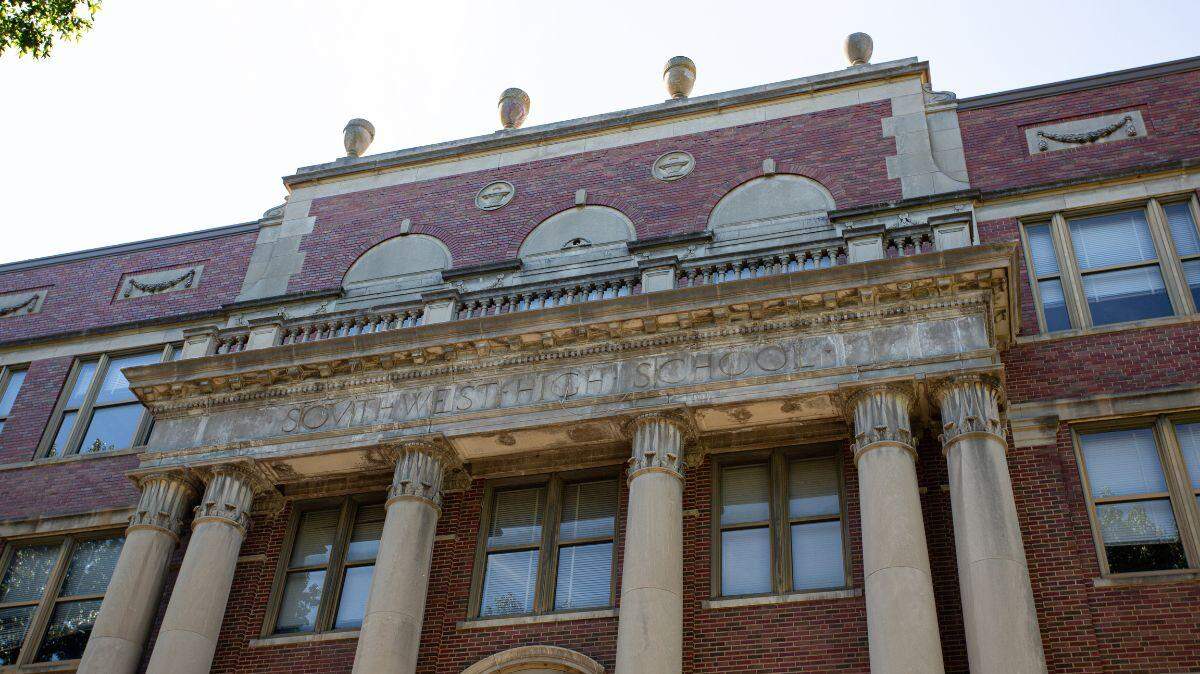
The unanimously approved plan includes adding a new middle school in the former Southwest High School building, constructing two new campuses centered around elementary schools and major renovations to several buildings.
Those major projects include expanding Hale Cook Elementary School, moving the district’s career and technical education programs into Central High School and renovations of East and Lincoln Prep high schools.
KCPS would spend at least $5 million on every school in the district during Phase I of the plan and devote tens of millions of dollars to each of several buildings getting major renovations.
Some schools would move to new locations, such as Whittier Elementary School.
At the school board meeting Nov. 20, some residents of the Lykins neighborhood spoke against that part of the plan or held signs with slogans like “repair do not relocate” and “we need Whittier.”
Though students would stay together, they said the proposed location is too far from affordable housing. They’d prefer KCPS renovate the current building or pick a location nearer to the original site.
However, no plans exist to entirely shut schools down and scatter their students to other buildings. Administrators reversed an earlier suggestion to close Wheatley Elementary School.
The board also approved agreements with nine local charter schools to pass along a combined $50 million for their building projects.
Most of the plans depend on district voters passing a bond in April 2025. That would let KCPS borrow $474 million dollars and repay the debt using property taxes.
KCPS also plans to seek a $100 million certificate of participation bond, which wouldn’t raise taxes or require voter approval, in early 2025.
The district estimates the average homeowner would pay less than 64 cents a day, or $230 per year, in increased property taxes.
School board member Monica Curls asked the community to look at the district with fresh eyes instead of trusting outdated narratives.
“We are doing so much for our students with so little,” she said. “It’s up to us adults to help make this a better situation for them.”
How a school bond works
A bond is a way for a school district to borrow money for big building projects that it couldn’t afford as part of its normal yearly budget.
In many districts, bonds routinely pass. But KCPS hasn’t convinced voters to pass a bond since 1967.
The district did receive an influx of money in the 1980s and ‘90s as a result of court-ordered taxing and spending related to a desegregation case. Some of its newer schools were built then.
The lack of a bond has left the district behind on repairs and upgrades. KCPS says it needs $1.25 billion — about $650 million to fix deferred maintenance problems and another $600 million for improvements.
Overall, KCPS wants to raise $680 million of that amount over the next 10 years.
That includes a $100 million certificate of participation bond, which doesn’t require voter approval and wouldn’t raise property taxes.
Then, in April, voters will decide whether to approve a $474 million bond — $50 million for charter schools and $424 million for KCPS. To pass, it would need the approval of four out of every seven voters.
KCPS predicts that for a $474 million bond, someone with a home valued at $200,000 would pay an additional $231.80 per year in additional property taxes. A commercial property with the same value would pay an additional $390.40 per year.
The district said the average home value in the district is $180,000.
KCPS could seek the remaining $156 million later, including through another bond.
How the bond money will be used
Funds would be used in three main areas:
- Deferred maintenance, such as roof repair, electrical, HVAC and plumbing.
- Making buildings more suitable for teaching and learning.
- Moving sixth graders out of elementary schools and into middle schools.
New middle school at Southwest
The plan the board approved calls for an additional middle school located at the former Southwest High School building in Brookside.
Currently, KCPS only has two neighborhood middle schools, which students attend based on where they live, and they only serve grades seven and eight.
The project would offer a neighborhood middle school south of Brush Creek and allow the district to move sixth graders into middle schools with seventh and eighth graders instead of elementary schools.
It also reopens a historic building that many neighbors and alumni would like to see in use.
The option was “by far the runaway winner” when KCPS collected feedback on where the third middle school should land, Shain Bergan, KCPS public relations coordinator, said in an email.
Renovations to the building, which is larger than needed for a middle school and has sections built about 100 years ago, would cost about $70 million. Of that amount, $45.1 million would come from the bond and the district plans to raise the rest through a capital campaign or other sources.
Plans could include demolishing some of the more recent additions to the building and replacing them with a secured entryway, storm shelter and gym.
New elementary school buildings
KCPS would build two new campuses centered around elementary schools.
One $68 million project at the former King/Weeks site is called the King Empowerment Campus. It would house a new K-5 King Elementary School, a family empowerment center, Richardson Early Learning Center and the Wheatley special education program.
A family empowerment center will include services such as a food pantry, clothing closet, mini laundromat, dental clinic and a site for students to receive physicals, Collier said when the plan was originally introduced. The King project is a top priority because the district promised a new school at that location years ago.
KCPS plans to use a certificate of participation bond, which isn’t reliant on voter approval, to fund the project.
The district would spend the same dollar amount on a Woodland Empowerment Campus on the current Woodland site.
It would house a new K-5 Elementary School for Whittier students, Woodland Early Learning Center, a family empowerment center and the Global Academy for students new to the U.S.
Schools that would get major renovations
Renovations and a new addition at Central High School would allow the school to house career and technical education programs. The district could then close Manual Career and Technical Center instead of doing $100 million worth of work to update the building.
The district would build an addition to Hale Cook Elementary School to address overflowing schools in the southern part of the district and replace a temporary trailer.
KCPS’ two alternative schools, Success Academy at Knotts and Success Academy at Anderson, would merge at the Knotts location. The district would renovate and add to the building to maintain separation between elementary and secondary students.
Northeast and Central Middle Schools would get renovations aimed at moving sixth graders in from elementary schools.
East High School would see a new competition gym and a relocated cafeteria, while the old cafeteria is converted into classrooms. Lincoln Preparatory High School would see about $28.3 million worth of renovations.
Schools that would move
King Elementary School would move into a brand new building, vacating the former Kansas City Middle School of the Arts building on the Paseo Academy campus.
George Washington Carver Dual Language Academy would move into that building. The move would allow the program to expand and strengthen its connection to the Paseo dual language program.
Melcher Elementary School would move into the former Carver building, which is newer and in better condition. The school grew dramatically during the 2023-24 school year.
The African-Centered College Preparatory Academy would move out of its current 1960s-era building, which is oversized, into the former Satchel Paige Elementary School built in 1991.
What if I’m not moving or getting a new school?
KCPS is suggesting districtwide updates to keep schools “warm/cool, safe (and) dry” and improve learning environments.
Not counting schools reopening, changing buildings or expecting major renovations, the district would spend at least $5 million and, in some cases, more than $7 million on each school.
Bigger projects range from around $9.2 million to move Melcher Elementary School into the current Carver Elementary School building and up to $68 million to build the empowerment campuses.
School closures
Compared to a plan from about two years ago that the district partially walked back, the current proposal is much less focused on closing schools.
In August, the district suggested closing Wheatley Elementary School. After elementary enrollment increases and community feedback, it’s now recommending Wheatley remain open.
Some buildings could be vacated as the school moves into a new or renovated building, but the school community will stay together.
How charter schools are affected
The board approved agreements with nine charter schools to receive bond money for building projects:
- Scuola Vita Nuova — $1.9 million
- KC International Academy — $6.8 million
- Kansas City Girls Prep Academy — $2 million
- Hogan Prep Academy — $9.3 million
- Gordon Parks Elementary School — $1.5 million
- Crossroads Charter Schools — $10.4 million
- Citizens of the World Charter Schools — $4 million
- Académie Lafayette — $13.6 million
- DeLaSalle Education Center — $500,000
Participating charter schools have done building assessments and have projects in mind ranging from retooling classrooms to fixing mechanical, electrical and plumbing issues, said Noah Devine, executive director of the Missouri Charter Public School Association.
The agreements specify that the charter schools can’t use the bond money to expand, but they don’t prevent them from using other funding to increase their capacity during the term of the bond.
Charter schools that aren’t participating may have been happy with their building conditions or not eligible — for example, if they don’t own their building — Devine said.
“I am happy that charter schools in Kansas City have the opportunity to have high quality and great school buildings,” he said. “We’re excited to work with KCPS to hopefully get this passed.”
Next steps
KCPS planned a press conference with Mayor Quinton Lucas the day after the bond vote.
The district will also continue community engagement aimed at promoting the bond and building plan. That includes a Dec. 13 bus tour with lawmakers and community members.
The board will vote on an even more detailed version of the 10-year capital plan during its December 18 meeting.
The bond will be on the ballot on April 8, 2025.