
Congratulations on the World Cup, Kansas City. Here’s what we have to fix before 2026
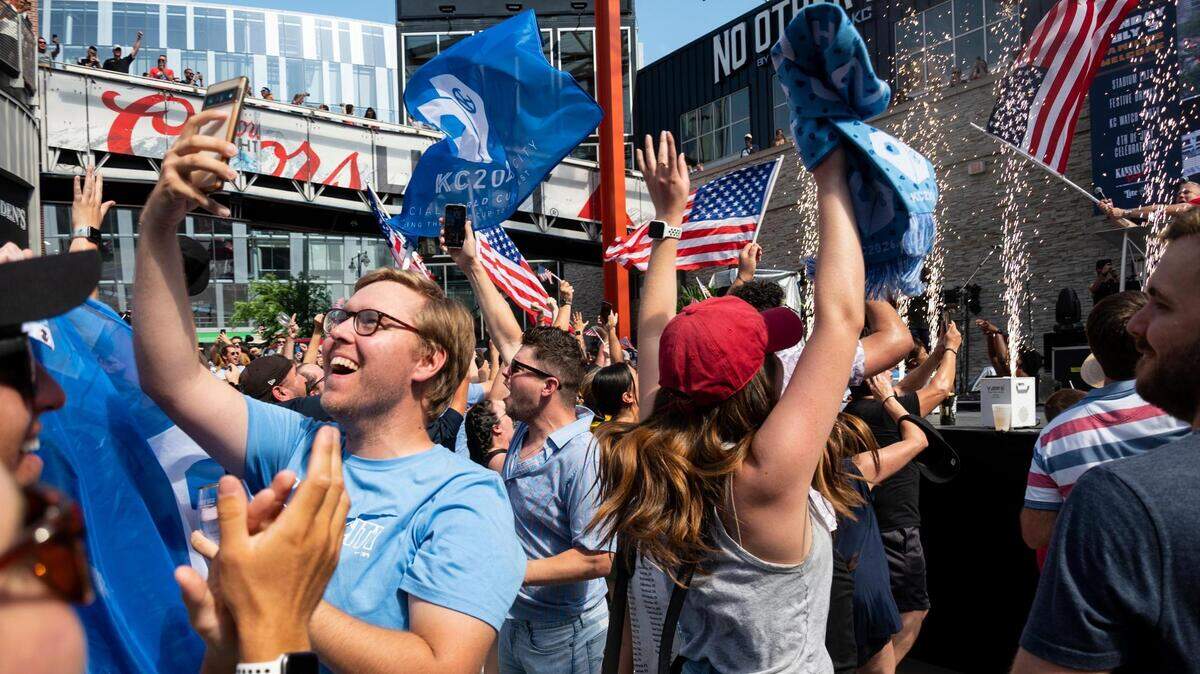
In 2026, Kansas City will host games for soccer’s World Cup, arguably the globe’s most prestigious sports tournament.
The announcement came Thursday that Kansas City is one of more than a dozen cities that will host the games in the United States, Mexico and Canada. It marked the end of five years of work from local boosters to attract the World Cup, which will bring tens of thousands of international visitors to our community.
We congratulate those who worked so hard for this day. Kansas City’s soccer community, and the thousands who play the game, provided a solid foundation for the bid.
State and local politicians did their part. A special tip of the cap goes to Kathy Nelson, head of the Greater Kansas City Sports Commission and Foundation and Visit KC, who is considered the leader of the local bid for the World Cup.
Her job isn’t over. Nor is the city’s, or the region’s. In fact, the real work begins now.
It’s tempting to see the city’s winning World Cup bid as final vindication of the work to rebuild downtown, construct a new airport terminal, establish more hotel options and build soccer’s popularity in the area. Those efforts were obviously significant, but they can’t be the end of the story.
No big event — the World Cup, a national political convention, a basketball tournament — should define a city. Had Kansas City lost the World Cup bid, it would have remained a good place to raise a family, work and enjoy the company of friends.
At the same time, winning the bid will not cure the region’s most stubborn problems. Crime, poverty, uneven educational opportunity, disinvestment in poor communities, transportation struggles and police reform remain significant challenges.
Kansas City cannot let the World Cup distract it from these concerns. In fact, we believe the opposite is the case: Now, 2026 should become the target date for a series of important improvements that will benefit the entire community — before the soccer tournament comes here, and after it leaves.
Let’s fix a spotty, underfunded mass transit system by 2026, providing reliable, free transportation for residents and visitors. Let’s finish the work of consolidating Kansas City’s public schools, meeting the promise of a quality education for every student — offered in modern, well-maintained buildings.
Kansas City’s problem with trash is well-documented. The city should initiate a comprehensive program to reduce illegal dumping and improve trash collection, particularly in poorer neighborhoods.
Street resurfacing and sidewalk repair should be accelerated. World Cup visitors in 2026 should find a clean, well-maintained community free of litter, weedy lots, vacant homes and depressed neighborhoods.
A walkable, pedestrian-friendly downtown should be on the to-do list. Small concerts, street attractions and a lively streetscape downtown are essential.
Getting World Cup games should also focus the city’s attention on violent crime. We must redouble efforts to reach troubled teens with too much access to weaponry, while convincing lawmakers to give the city more flexibility in dealing with guns.
Local police control would be good, too.
You’ll notice we did not mention construction of a downtown baseball stadium by 2026. Kansas Citians should be willing to listen to arguments on that topic, and the futures of the Royals and Chiefs should be settled by that year.
But new stadiums are not essential to this project. They should not be a further distraction from the task of improving the community in fundamental ways. Those efforts will require significant resources, and the sports teams — while massively important — should not make it harder to achieve other goals.
Finally, this can’t be a Kansas City-only project. The entire region must be willing to cooperate, and contribute, to the goal of creating a world-class city by 2026.
It can be done. Kansas City began the World Cup effort as a decided underdog, competing against bigger cities with a bigger presence on the world stage. Through hard work and focus, the city won the competition. Again, congratulations are in order.
The world will be watching Kansas City in 2026. We must show them the community we want to be, and will be, even after our visitors return to their homes.
This story was originally published June 16, 2022 at 4:32 PM.