Long waits, few routes: Even with ZeroFare, does Kansas City’s bus system work for riders?
READ MORE
How can RideKC better serve bus riders?
Kansas City’s public transportation system has celebrated free fares and electric buses. But many riders say they still have a problem with infrequent and unreliable service. What can be done?
Expand All
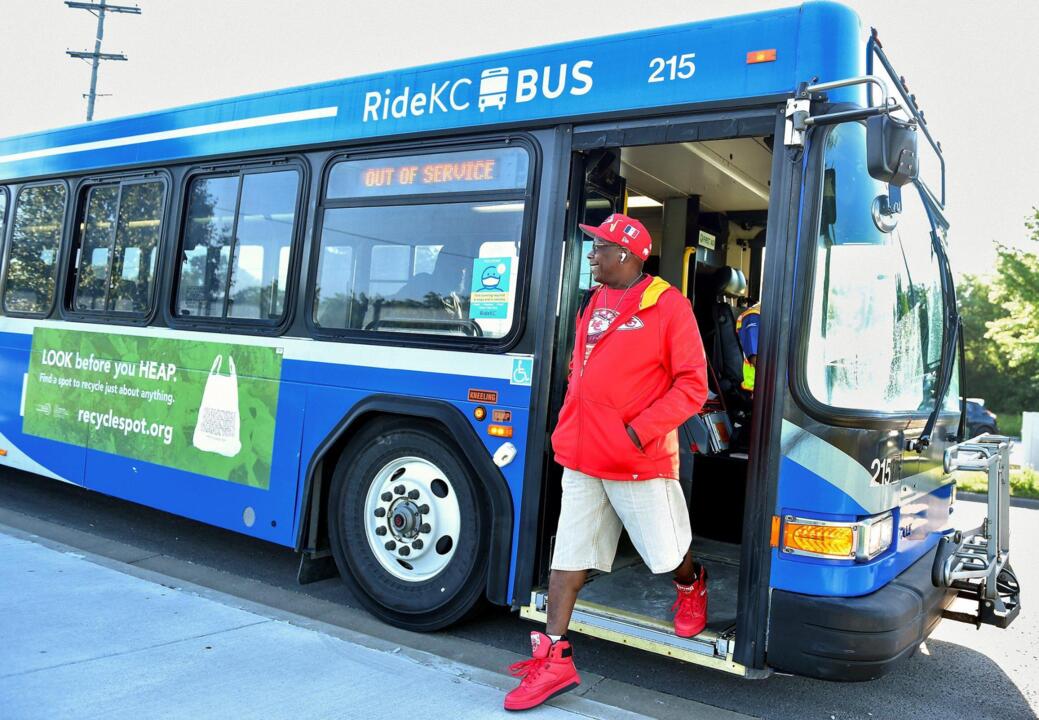
Robert Lewis leaves for work every morning before the sun peeks through the clouds, around 5:35 a.m.
He walks nine blocks to downtown, grabs a coffee at the corner store and walks three more blocks to his bus stop on 10th and Walnut streets. He needs to be to his job in Olathe by 8 a.m.
Lewis has been making this commute for 21 years. But the route he relies on recently got cut short, leaving him with an additional 25-minute walk to work once he reaches Johnson County. Sometimes, he covers the last stretch by catching a ride with a friend of a fellow commuter.
“We were calling and complaining about it, but the change still happened,” Lewis said as he waited on a recent morning for his bus. “All in all everybody got screwed in a way.”
Lewis is not alone in his frustration with the Kansas City area bus system. Dozens of riders interviewed by The Star said infrequent or unreliable service and too few routes can make the system difficult to use, especially for those who need it most.
Although Kansas City’s bus system, RideKC, has celebrated accomplishments such as spearheading free fares and introducing electric buses, many riders say that only goes so far if there isn’t enough service, or if it’s not dependable.
Buses on more than half of RideKC routes only come every hour, or sometimes less frequently, according to The Star’s analysis of the schedule.
“It’s really a 50/50 for me,” said rider Aaron Griffin in Kansas City. “Sometimes it’s good and on time, other times it’s late or early and leaves before it should. Every day is different.”
Officials at the Kansas City Area Transit Authority say that they would love to add more frequent bus service, but they don’t have enough bus drivers or funding, especially compared to other, similarly sized cities. After reducing service during the pandemic, RideKC has not fully restored it yet.
The regional transit agency strategically changes and limits routes to match ridership levels, reducing service where ridership is low.
Less than 3% of workers in Kansas City, and 1% in the metro, use the bus to commute.
KCATA Vice President Richard Jarrold said Kansas City doesn’t have enough riders to justify adding service to some areas.
“If we had an unlimited budget, I think we would do more to beef up the service in anticipation of people using it,” Jarrold said. “With our budget, we have to be prudent with where we put those resources to get the best bang for our buck.”
That reasoning presents a kind of chicken-and-the-egg problem that national transit experts say many car-centric cities struggle with: Is the poor service caused by low ridership, or the other way around?
Several transit researchers The Star interviewed say those decisions to reduce service fuel a vicious cycle, discouraging more people from wanting to turn to the bus as a form of transportation. To increase ridership, they say, you have to provide the service.
“To expect that you’re going to get an increase in riders without improving the service is unreasonable,” said Yonah Freemark, a senior researcher from the Urban Institute. “When your service is really bad, people are not going to use it.”
Mayor Quinton Lucas described the problems with bus service as “an agency challenge, rather than a policy challenge,” and as an “implementation issue” rather than a budget issue.
“KCATA is not delivering services at the level we would expect right now. I do not think that that’s the fault of ZeroFare. I don’t think it’s the fault of a lack of even increased city funding,” Mayor Quinton Lucas said. “Kansas City has put in too much money year after year to have substandard services.”
In Lewis’ case, after spending nearly an hour riding the bus down Interstate 35, he reached his final bus stop around 7:35 a.m.
The bus driver waved Lewis goodbye and assured him that there would be a bus heading back to Kansas City when he got off work. A few days prior, Lewis and a few others got stranded for a couple hours after work when the bus didn’t show.
“Sometimes they just cancel it,” he said. This has happened to him multiple times recently, so he is now diligent in calling the transit authority in the afternoon to ensure a bus will be coming to pick him up after work.
Arriving at work, Lewis asked the Star reporter who had traveled with him how she intended to get back to Kansas City.
“The bus!” the reporter said with confidence and an unwavering faith in Google maps helping figure out how to catch the route back.
In fact, a bus returning to the city along that route wouldn’t come until later that evening.
It took a 30-minute walk, a breakfast of defeat at a fast food restaurant, a $15 ride from an app service to a bus stop at Johnson County Community College, and two more buses, all to arrive back to downtown Kansas City by noon.
How often does the bus come?
Of nearly 40 regular bus riders who responded to The Star’s online bus survey, riders’ biggest concern by far was the frequency at which buses come.
Among the KCATA’s 56 regular routes, excluding two that only come once a day, 41 — or 73% — require a rider to wait for an hour or more between buses. Two of those come only once every two hours.
Only one bus route in the metro comes every 15 minutes, the Prospect MAX. Some routes like the Troost MAX and Troost local buses overlap, which can increase the frequency a bus arrives along that route.
The Main MAX route comes every half-hour, which rider Connor Alexander said makes it harder to rely on.
“If I miss one departure time, I can’t wait around 30-plus minutes for the next,” he said. “I can’t rely on it getting me to the place I need to go on time 100% of the time.”
For those who do wait a long time for buses, riders told The Star they would like to see more benches and shelters installed at stops.
Earlier this year, RideKC announced a plan to increase bus frequency for various routes called RideKC Next.
But most of those changes have not happened yet, and KCATA’s announcement has since been deleted from its website. RideKC did extend the hours of service and add weekend service for some of the routes in the plan.
“We [had] to reassess in light of our current resource availability,” said Jarrold, KCATA vice president of regional planning and development, adding that the announcement of the changes was taken off the website to prevent confusion.
“We don’t want to put stuff out there on the website telling people it’s coming when the reality is we don’t know if it’s coming or not.”
Jarrold said the goal is still to get popular routes like the MAX buses and routes along 31st and 39th streets to come every 15 minutes, instead of every 30 minutes like they are now.
He hopes routes that run once an hour can also increase service to every 30 minutes, but right now there aren’t enough riders to warrant that move.
“The last thing we want to do is run empty buses,” Jarrold said. “We try to right-size the service level to the demand.”
‘They’re taking away my livelihood’
For some residents like Raymona Turner, there simply aren’t enough routes to help her get around.
She used to ride Meadowbrook 238 four times a week to go to the grocery store, doctor’s office and to visit her granddaughter.
Then in early May, KCATA redesigned nine routes as a part of the previously mentioned RideKC Next plan, consolidating routes like Meadowbrook 238 and the 233 Vivion-Antioch.
Jarrold acknowledged that although the purpose of merging routes was supposed to be a positive, not everyone would benefit from the change.
The move eliminated the stop near Turner’s home, leaving her and her fellow residents at the Golden Oaks apartments for seniors in North Kansas City without a reliable bus route.
“They’re taking away my livelihood,” Turner said.
Now she’s paying a friend to drive her to where she needs to go.
Many Golden Oaks residents are relying on private services like those offered by the Northland Shepherd’s Center, a social service organization that provides transportation to seniors over 60 years old for a suggested donation of $10.
The organization has seen a significant uptick in riders in Turner’s neighborhood since KCATA services were cut near the apartment complex, according to Northland Shepherd Center operator Jeremiah Creek.
“They can trust that we’re gonna be there, once they get to riding with us,” Creek said.
In lieu of a fixed route, Jarrold suggests that Turner and other residents in a similar situation schedule a ride with the RideKC Flex system. Riders need to schedule 24 hours in advance by downloading the RideKC Flex app or calling 816-346-0346.
Reducing the coverage of bus routes can hurt in a place like Kansas City, which already has fewer routes than some comparable cities.
Kansas City only offers six routes within a half-mile of the average block group, according to data from AllTransit, a transit database powered by the Center for Neighborhood Technology and the Transit Center. Other midsize cities like Pittsburgh and Portland respectively have 17 and 10 routes within a half mile of the average block group.
Riders who responded to The Star’s survey said they’d like to see more routes running east to west, more routes on the East Side, more routes in south Kansas City and more connections between Kansas City and Johnson and Wyandotte counties.
Right now, all three MAX routes, which are popular routes intended to be “rapid transit,” and the streetcar run north to south.
‘We are recruiting all the time’
The three routes that were suspended due to the pandemic won’t be restored in Kansas City until KCATA has more drivers, according to Jarrold.
Will Howard, union president of Amalgamated Transit Union Local 1287 that represents bus operators at KCATA, said there has been a shortage of drivers for years. COVID-19 and other stressors have only made the shortage worse.
In addition to losing veteran operators to retirement, Howard said it can even be hard to keep new recruits.
“A lot of people once they come in, it’s hard to keep people because they’re not making the same pay [as] some of our top operators [but] all of the stress and all of the risk and danger is all the same,” Howard said. “So you have a high turnover rate.”
Before the pandemic, KCATA had a total of 763 employees. Right now, KCATA has approximately 650 employees. Of the agency’s current active staff, 303 are bus operators.
The agency is looking to hire at least 70 more operators in order to make up for the shortage of drivers and cover any future attrition in the next year or so.
KCATA launched a hiring campaign in August 2021 to hire new drivers in an effort to increase service.
Susan Miller, vice president of people development, said those efforts to recruit drivers has gone well.
“We’ve been able to, even this year, in this market, recruit qualified candidates and keep our pipeline full of staffing,” she said.
To streamline the hiring process, the agency has created a special pipeline for drivers who already have their commercial driver’s license. There is also an effort to make the training sessions flexible to accommodate prospective drivers who are still working another job.
To help make sure more people can get trained at the same time, the agency partnered with Metropolitan Community College to do some CDL training for certain employees so KCATA can focus on training bus operators.
The starting rate for most bus operators is $20.91 per hour, according to Miller. For the first four years of employment, that rate goes up until it reaches the full rate of $29.87 per hour.
The agency has also given out a number of incentives including a referral incentive for people who refer qualified candidates to join the company. There are also two retention bonuses scheduled for 2022.
“We are recruiting all the time,” Jarrold said.
Too many cooks in the KCATA kitchen?
Any solutions to RideKC’s problems become more complicated because they lie in the hands of 10 different jurisdictions that contract KCATA to offer service to residents.
Like a lot of things in Kansas City, the bus service crosses state and county lines, requiring a level of coordination and cooperation that many cities don’t need to navigate when expanding their transit systems.
KCATA was formed in 1969 as a bi-state compact, serving seven counties between Missouri and Kansas. The counties include Cass, Clay, Jackson and Platte counties in Missouri and Johnson, Leavenworth and Wyandotte counties in Kansas.
The regional body operates on a budget of around $105 million, which is funded by local, state and federal dollars.
“What [KCATA] does not have, though, is an independent source of funding for those transportation services,” Jarrold said. “So anything that we operate, we operate via agreement with a local government entity to provide the services in their community.”
Kansas City is KCATA’s biggest contract, contributing $60.5 million to the area transit authority in 2022, $1.9 million less than in 2021. However, the city has upped its financial commitment over the years: Today there is $17.2 million more in funding than in 2012.
“We have to go through this process each year negotiating an annual contract with each community. Each community has priorities, and those priorities sometimes change year to year,” Jarrold said.
Kansas City Council has had concerns with how KCATA has been using its money.
Last month when the council approved a contract for how much Kansas City would be contributing to the regional transit authority this year, they added a requirement that KCATA check in with the council regularly on various metrics that measure service improvements. The contract also requires KCATA to present its finances to city council six months after it was passed.
Councilwoman Ryana Parks-Shaw, District 5, said during the May meeting that she wanted to stand up for her constituents who shared concerns about the bus system.
“They’re excited to have zero fare,” Parks-Shaw said. “But it doesn’t matter if the bus doesn’t show up, if the bus isn’t there.”
Mayor Quinton Lucas said that the free fares are not related to KCATA’s poor service.
Johnson County in August will take over its own day-to-day management of transit services typically managed by KCATA. The move will take $585,000 away from KCATA and put it back into Johnson County, according to Josh Powers, Johnson County government business liaison.
The goal is for Johnson County to use federal relief funds to implement a number of pilot programs, like microtransit, but the changes won’t impact existing bus routes or riders for now.
Sungyop Kim, University of Missouri-Kansas City professor of urban planning and design, said that the agency probably needs a more dependable funding source if it wants to offer better service.
“Transit service improvement requires more significant and more reliable transit funding,” Kim wrote in an email. “Funding-wise, I find state funding for KCATA is an area to push.”
How could RideKC be better?
Kansas City has gotten national recognition for accomplishments like the ZeroFare KC program and electric buses. Just last week, Mayor Quinton Lucas and the city received the 2022 Mayors’ Climate Protection Award in praise of free fares.
“Kansas City is proud to be a public transit city,” Mayor Lucas said in a statement about the award, noting how Kansas City expanded free fares, upgraded to electric buses, expanded the streetcar and made progress on the new airport terminal all during the pandemic.
Freemark from the Urban Institute said the key to a successful transit system that serves residents well is frequent, reliable service.
“Transit should be something where people don’t have to check a schedule to figure out when the next bus is going to show up, they know that the bus is going to be frequent, and it’s going to be reliable,” he said.
David Bragdon, executive director of the Transit Center, a national foundation that advocates for more equitable public transit, agreed that frequency is the highest priority.
“It’s actually much more important to make transit better and more frequent than to remove the fares, and that’s the problem with transit in most places, including in Kansas City,” he said.
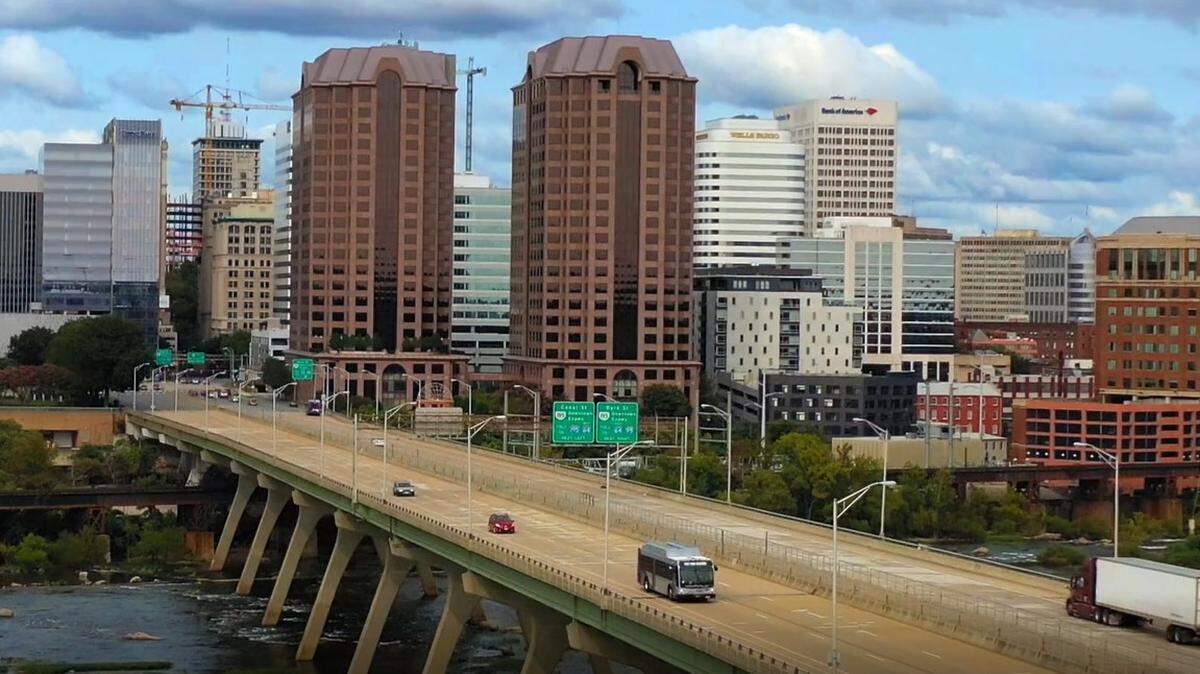
Freemark said that the Greater Richmond Transit Company in Richmond, Virginia, is one of the few comparable bus systems to successfully implement both free fares and improved bus service.
Richmond is smaller than Kansas City, but multiple experts from different organizations across the country pointed to it as a success story.
A major part of Richmond’s accomplishments came from a route redesign in 2018, increasing the frequency of buses, investing in better infrastructure at bus stops and introducing new technology to offer real-time updates on buses.
Richmond’s transit system offers 10 bus routes within a half-mile of the average block group and has an average of 62 transit stops within every half-mile of transit, according to AllTransit.
“They’ve actually done a great job in leveraging that free fare service to expand transit ridership,” Freemark said. “They have higher riders now than they did before the pandemic, which is very rare because most transit agencies actually lost riders.”
What is RideKC doing to improve service?
To help improve services, KCATA is conducting studies to see where to make changes.
The agency recently got just over $500,000 of federal American Rescue Plan money to study ways KCATA can better restore service.
The money is supposed to help transit agencies increase ridership and reduce travel times that have been disrupted by the pandemic.
And KCATA is looking into ways it can add more east-to-west services in the city.
This east-west study will look at an eight-mile corridor from the KU Med Center in Kansas City, Kansas, to the Truman Sports Complex in Kansas City.
The study will take until 2023, but is kicking off now. Riders can take a short survey to share thoughts on adding east-to-west connections.
The survey will be available here until June 17.
Cortlynn Stark contributed reporting.
This story was originally published June 15, 2022 at 5:00 AM.