Kansas City district may close, consolidate schools after years of enrollment decline
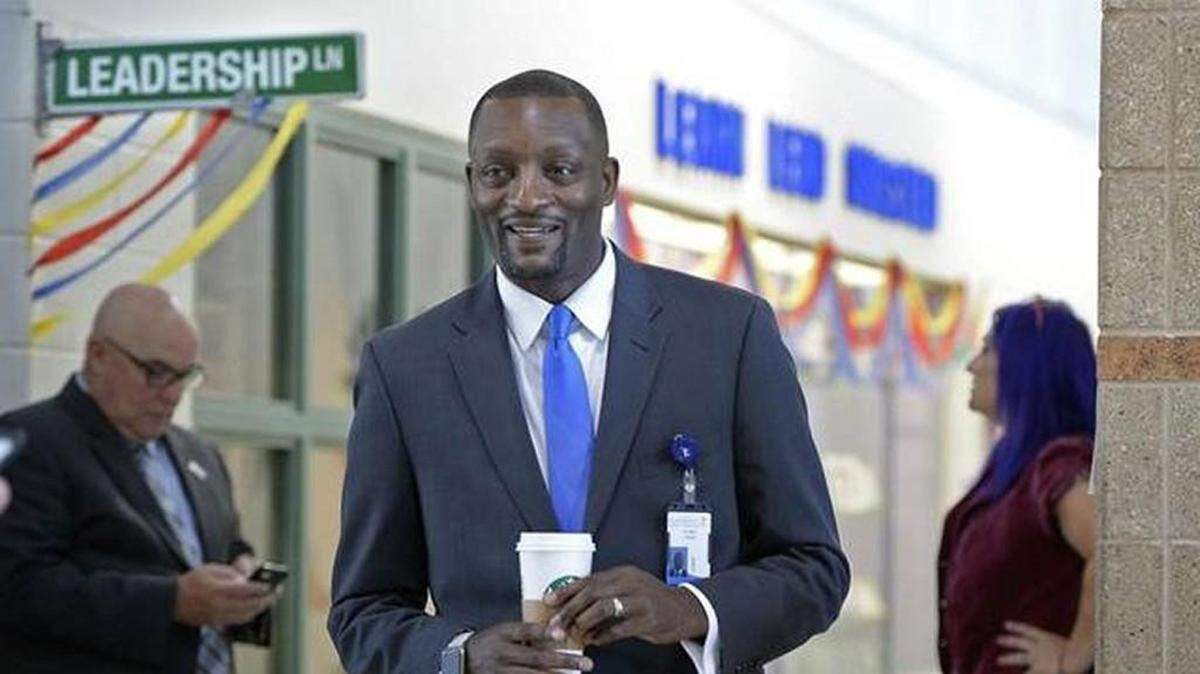
Kansas City Public Schools, after facing dwindling enrollment over the past decade, will likely need to close and consolidate some schools over the next several years, officials said Tuesday. They’re asking the community to help plan the district’s future.
As more students have left for charter schools and suburban districts, KCPS is operating several schools that are “significantly under capacity” and unable to offer all of the extracurriculars, athletics and support services that others with full enrollment do, Superintendent Mark Bedell said.
“How much do you think a high schooler can get in a school where the (enrollment numbers) are under 500? Do you think you can offer band? Do you think you can have debate? Do you think you can fill the football team throughout a whole season when you include injuries and you include COVID? … It’s not possible,” Bedell told local media Tuesday.
“And is that fair to our kids? Is it fair to our kids that we continue to operate a system like this, that does not give them a true comprehensive experience, unless you’re at Lincoln High School or you’re at East High School, where the enrollment in both of those schools is over 1,000?”
School officials are engaging families, residents and community groups to help craft the district’s plan, Blueprint 2030. Over the next several years, Bedell said the plan will aim to fix inefficiencies, expand and improve programs, plus ensure all students have access to the same opportunities districtwide, to help the district compete with neighboring systems and retain students.
Nothing is decided yet. And it won’t be without community input, Bedell said. Several community engagement sessions are planned throughout October. Officials will then develop several scenarios.
District officials are emphasizing the need for families and taxpayers to be involved in the process — something that they said was largely missing 10 years ago, when KCPS underwent a historic “right-sizing” plan that closed 26 schools.
“I think what hurt us from 2011 is when we made these closures, there were areas in the community where we left holes. And that allowed for charter schools to flourish. They opened up in certain areas and they’re thriving, because we left those holes,” Bedell said. “So you’ve got to be very intentional around what stays and what goes. And people need to have context as to why that makes the most sense.”
With the growth of charter schools over the past couple of decades, Kansas City district enrollment fell by half, to under 15,000 students. KCPS lost state accreditation, and over the past decade has been working to improve attendance and student achievement to regain full accreditation.
The district has recently seen a leveling off in enrollment, has made significant strides and is now close to achieving the goal of full accreditation. And it has added or expanded several new programs under Bedell, such as the Middle College Program that helps young adults who dropped out prepare for post-secondary education and the workforce. It has expanded its early college program. And it’s opened the International Welcome Center for English language learners and immigrant students.
Bedell said KCPS is also looking to grow evening classes.
“We’re really trying to embrace this nontraditional way of how we offer programs that meet the different sectors of our community,” he said. “And we think we have an opportunity to do that. But in order for us to sustain these practices, we also have to be efficient.”
A high percentage of students leave the district for charters, private schools and suburban districts. According to a transfer analysis report for 2017 to 2019, released last year, roughly 1 out of every 3 students transferred out of the district at the end of elementary or middle school.
“It’s hard to navigate our KCPS system in a lot of ways,” spokeswoman Kelly Wachel said. “How do we make our system predictable and easy to navigate with quality schools for every option that our kids might choose? So whether it’s grade configurations that we’re looking at, how many schools, what kind of programs, this is the big conversation, and we want the community to know how important this is.”
Bedell said in some ways, officials continue to operate the district as if it still had 20,000 students. KCPS has seven high schools, including its Manual Career and Technical Center. By comparison, the similarly sized Independence district has only three high schools.
“If I’m saying to you we’ve got seven high schools, and we’ve got high schools that are under 500 in enrollment, and you’re having to fold a football team because you don’t have enough students, there’s going to have to be some consolidation,” Bedell said. “Those things are a part of the discussion.”
District spokeswoman Elle Moxley said 26 of 32 schools do not meet the district’s school size standards.
Many district buildings are also outdated, officials said, and in need of modern upgrades. Officials gave the example of high school science classrooms that do not have sinks to use during lab experiments.
“It’s horrible. And I took a picture of it. I was like, are you serious? In 2021?” Bedell said. “In pockets of the district, we have it. But in some pockets, we don’t. So where’s the equity in how we provide services to our kids across the district?”
Bedell said students in every school should have access to the same resources, and by reconfiguring the district, schools could see additional resources, such as more math specialists, foreign language programs and school counselors.
Officials expect the process to be challenging, with tough decisions on how to operate thriving schools and reduce student mobility across the city, including in neighborhoods with a history of redlining and economic depression.
“Is there going to be discomfort? Are we going to experience some frustration and pain? I’ve been through this before. Every system I’ve been through where we’ve had to do something like this, whether it’s boundary changes or consolidation … there is some discomfort. And we have to be willing to go through this discomfort to get to a better day,” Bedell said.
“There are things we’re going to have to give up. We can’t continue to do things the same way we’ve been doing it because if what we were doing was working, we wouldn’t be in this situation having to have this conversation,” Bedell said. “Obviously what we’re offering right now is not what the community wants. Otherwise, we would be thriving from an enrollment standpoint. So we have to make some serious changes here in order to get people to really say, this is a system I want my kid to attend.”
Bedell said the community will guide the decisions and have a say in what plan makes the most sense for the district in the coming years.
“For me, the community is going to tell us how far we want to go.”
Community meetings
Here are the upcoming engagement sessions for the public:
▪ Noon-1 p.m. Oct. 18: Bedell will hold a Facebook Live session about the planning process. And from 4:30 to 6:30 p.m. that day, the district will host an open house at Phillips Elementary School.
▪ 5:30-6:30 p.m. Oct. 19: The district will hold a virtual meeting via Zoom in Spanish.
▪ 5-7 p.m. Oct. 20: Open house at Central Middle School.
▪ 5:30-6:30 p.m. Oct. 21: Virtual meeting via Zoom.
▪ 9-10:30 a.m. Oct. 22: Open house at Hale Cook Elementary.
This story was originally published October 12, 2021 at 3:52 PM.