KCK lineman’s death unanswered: Is there an obligation of transparency? | Walker
When must an organization tell all, even in a tragic death?
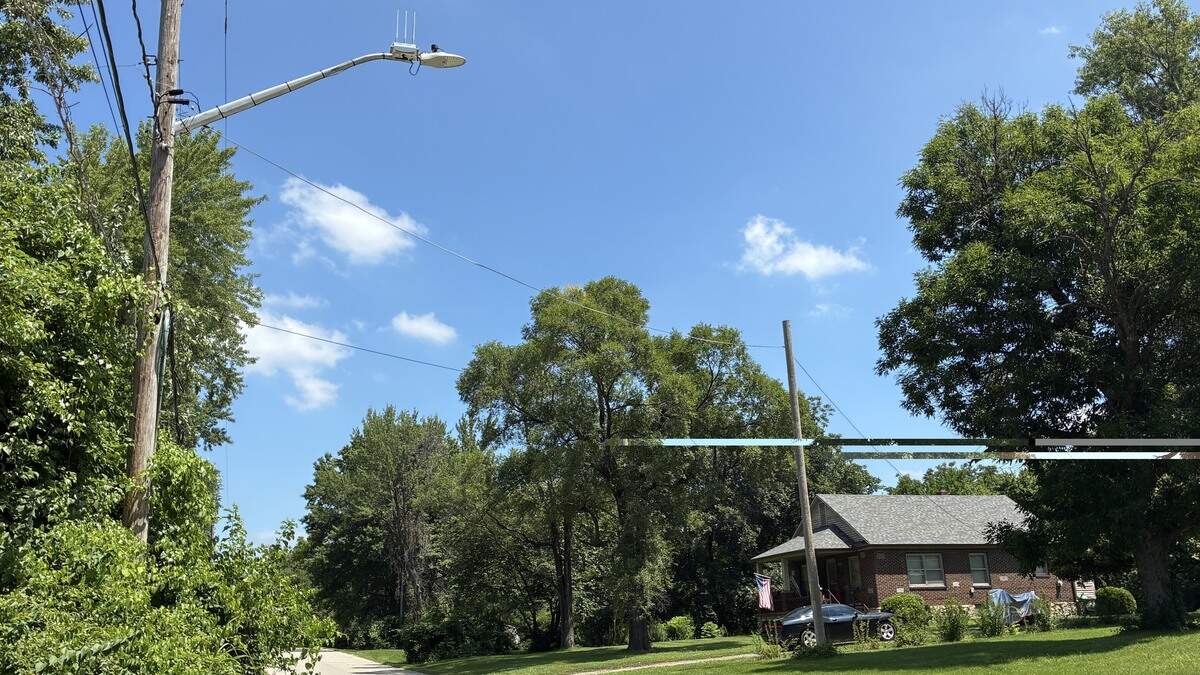
Joshua McKee was working on a power line Sunday when he died around 6 pm. He was up in the bucket of a truck, working on a utility pole. According to witnesses, his body was slumped, injured or lifeless, in the bucket. It was a very public death, outdoors in daylight and in full view of at least part of the neighborhood. In fact, a neighbor believes he saw the body.
And while the Kansas City Board of Public Utilities did announce the death on social media, it has yet to give out any more information. We don’t know what happened or how and why he died. We only know what we know because a city leader released his name and neighbors told The Star what they saw.
The utility has been fairly quiet so far.
BPU media representatives, who announced the death on Facebook three hours after it happened, have said the investigation is ongoing and refuse to release or even confirm any more information.
It’s completely understandable that not all information would be released immediately. I recognize the importance of compassion to the family and the need for an investigation to determine exactly what happened.
However, when someone dies so publicly, word spreads and people want to know who it was and where and why it happened. Do they have the right to know at least the basics of when and where McKee died, and the type of work he was doing?
Other utilities, faced with similar tragic accidents, have done just that.
Timeline of information
On Sunday at 9:30 p.m., the utility announced the death on Facebook:
“Today, the Kansas City Board of Public Utilities suffered the heartbreaking loss of one of our lineworkers while serving our community,” the utility said in the post. “Our hearts are with his family, friends, coworkers, and all who knew and loved him.”
On Monday, KCK Mayor Christal Watson identified the man killed as Joshua McKee. There was no confirmation or information released from the utility.
“Joshua was a valued member of the Board of Public Utilities family, and his loss is felt not only by those who worked alongside him each day, but by all of us who recognize the dedication and commitment of the men and women who serve our community,” Watson said.
A Star reporter talked to neighbors the next day. “I mean, I just seen him working right here,” one neighbor said.
In responding to news requests for information, BPU declined to say more. The Facebook page has yet to reveal any updates.
I wondered why, and emailed Amber Oetting, director of communications and Marketing for the utility. She wrote back:
“From the outset, BPU has been committed to communicating responsibly while the appropriate review processes establish the facts. Our focus has been on supporting his family and our employees while ensuring that any information we communicate is accurate and verified. We believe transparency and accuracy go hand in hand, and for that reason, we are not refuting or validating information that has not yet been established through those review processes.”
Understood. But why did other utilities, in examples of on-the-job deaths, appear to use more transparency with the public?
Utility worker deaths
Pottawatomie County, Kansas: In 2018, two workers died at the Jeffrey Energy Center in about 100 miles west of Kansas City. Westar Energy (now Evergy) made statements to reporters within one day detailing:
- Two workers died, and where.
- It happened at about 11:30 a.m. on Sunday, June 3, 2018.
- The workers were injured when a piece of equipment with high-pressure steam behind it failed.
The utility went on to say more, including about what steps it was taking to make the plant safe, how the workers were flown to KU Hospital in Kansas City, and the fact that the workers died there.
Boston: In 2022, two Eversource Energy employees were injured in an explosion. The utility:
- Confirmed the incident involved two employees.
- Stated that they were working on underground equipment.
- Gave the general location of the accident (downtown Boston).
- Gave a statement on Twitter.
The next day, the utility provided more details about the work the employees were doing: performing routine maintenance on a piece of underground equipment in a sidewalk vault.
Charlotte, North Carolina: In 2024, a lineworker died in an accident. Duke Energy released a statement:
- It said generally where the accident occurred.
- It explained when the accident occurred.
BPU’s Oetting said she couldn’t speak to the actions of the other utilities. “I can’t speak to the unique circumstances, review processes, or communication decisions of other utilities, so it would be inappropriate for me to compare this incident to theirs.”
Rightly so, but it shows there are instances when it is appropriate to share information, even when it’s sorrowful and personal.
It’s been four days at the time of writing this story since we’ve heard any public announcement on the circumstances surrounding the lineman, McKee. Oetting said its commitment to accuracy “has guided our communications from the beginning and continues to do so.”
The job of the news media is to gather information from public sources to share with citizens, especially about known accidents and accountability from its leaders. When those sources decline to give that information, we continue to ask. BPU may have reasons to hold back. We don't know.
We will freely receive that information when given, though, and continue to ask the tough questions.