What the 14th Amendment means for Kansas City and why it’s important now | Walker
Four days from our nation’s 250th birthday, the U.S. Supreme Court thankfully upheld what’s guaranteed in the 14th Amendment: birthright citizenship. From the amendment’s first section:
“All persons born or naturalized in the United States, and subject to the jurisdiction thereof, are citizens of the United States and of the State wherein they reside.”
Why did the high court have to spend its valuable time on what should be a no-brainer? President Donald Trump, of course, who tried to unilaterally strip citizenship from children born to undocumented parents in Trump v. Barbara.
Attempting to deny citizenship to people born here is a blatant violation of our founding principles. And that’s why the ruling, coming down this week, is so perfect.
The majority opinion so beautifully written by Chief Justice John Roberts, reads in part: “Citizenship, then and now, was the right to have rights — to freely participate in our political community. The framers of the 14th Amendment extended that promise to ‘every freeborn person in this land. We keep that promise today.”
Janet Murguía, President and CEO of UnidosUS, the nation’s largest Hispanic civil rights and advocacy organization, issued the following statement in reaction to the U.S. Supreme Court decision:
“Today, the United States Supreme Court affirmed what all of us already knew to be true: that the principles at the core of the 14th Amendment that provide for birthright citizenship cannot be undone by an executive order.”
‘I was frankly worried’
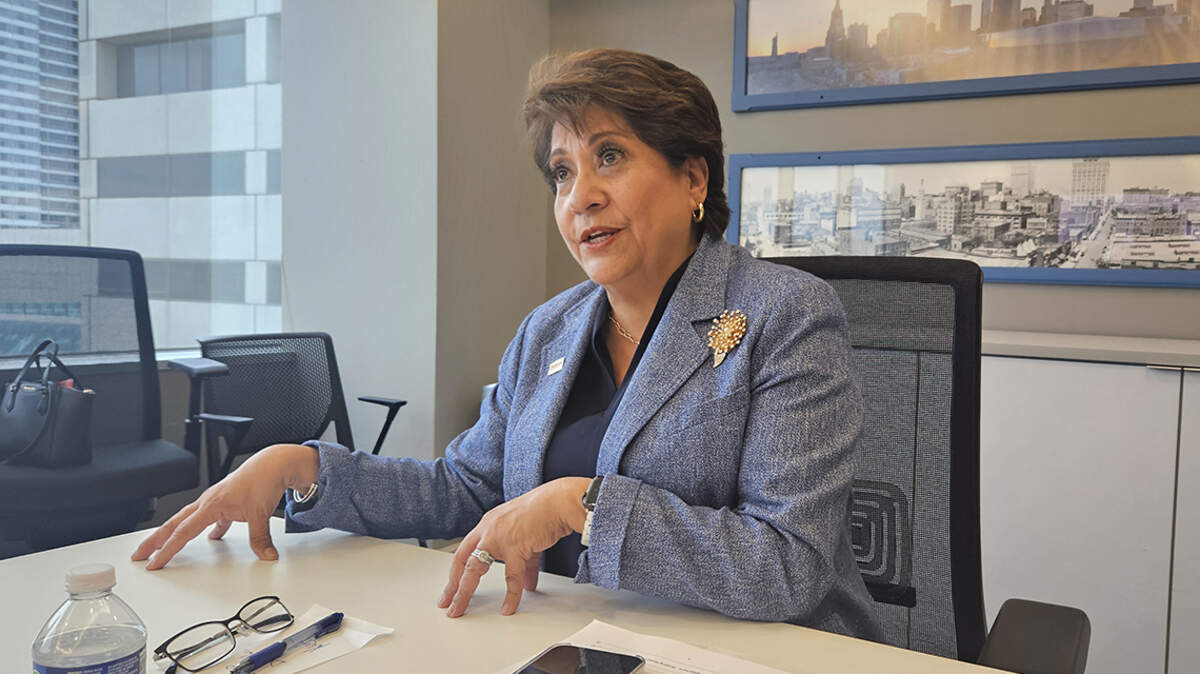
I spoke to Murguía in Kansas City Tuesday, and she called the ruling a relief, both personally and professionally. But she admitted she had been worried.
“I wish I could tell you I had the full confidence that I believe that the Supreme Court would do the right thing and defend and protect birthright citizenship pursuant to the long held precedent that we know should have held, but because of other related actions by the Supreme Court … I was frankly worried. But more than anything else, I felt great relief and satisfaction that we landed this in the right place.”
I asked her what this decision would do for Latino families.
“I think for us, at least initially, it will provide this sense of certainty in a period of a lot of instability and uncertainty,” she said. While acknowledging that UnidosUS was proud of this win, she mentioned that she and those in the Latino community are “not naive, we know that this was one calculated attack among many on Latino and immigrant families, and UnidosUS will stay vigilant and keep fighting for the dignity and safety of our communities, and we will be fighting to defend our democracy.”
Murguía and UnidosUS are a month out from the organization’s 2026 conference in Austin. The annual conference was held in Kansas City last year under the name Beacons of Change, and we marveled that it had been a year already. But she also reminded me that this year, they are in Texas.
“Texas is going to be a very important state as it relates to the elections this coming November. But it’s been a state that really I think can be quite representative of both the opportunities and challenges for our community right now. I mean, we’re, we represent 40% of that population … but we still have a ways to go, and we are battling so many headwinds when it comes to actions by the governor and by the president.”
How 14th Amendment relates
Trump had tried to force states’ rights into the mix, but again, the 14th reads: “No State shall make or enforce any law which shall abridge the privileges or immunities of citizens of the United States; nor shall any State deprive any person of life, liberty, or property, without due process of law; nor deny to any person within its jurisdiction the equal protection of the laws.” Roberts, again upholding the 14th, points out that “jurisdiction” denotes the authority of the United States to govern individuals within its borders.
In his defense of the amendment, Roberts pointed out that “jurisdiction” denotes the United States’ authority to govern individuals within its borders.
The decision was far from unanimous. Chief Justice Roberts delivered the opinion for a narrow five-justice majority with Justices Amy Coney Barrett, Sonia Sotomayor, Elena Kagan and Ketanji Brown Jackson. In contrast, Justices Neil Gorsuch, Clarence Thomas and Samuel Alito dissented, while Justice Brett Kavanaugh concurred in the final judgment despite expressing disagreement over the constitutional interpretation.
While Murguía and UnidosUS work on behalf of the Latino and immigrant communities, she pointed out that this decision greatly affects everyone based on other attempts from the Trump administration to unfairly target people.
“It’s not just immigrant communities — it’s longstanding citizens who are now collateral in this effort. … We’re seeing a lot of related actions that are being taken that aren’t just targeting immigrants, and certainly are not just targeting the worst of the worst, you know. One example that came up in the last 48 hours, there was a (Nigerian) nun near the border in McAllen, Texas, who was picked up and detained on her way to mass. This is a sign that no one is safe with these types of extreme actions and lack of procedures and accountability.”
Did Murguía have a message for Kansas City?
“I know that our affiliates here in Kansas City, folks like El Centro and Guadalupe Center and Mattie Rhodes, have stepped up alongside other allies and partners to really help us support one another in this time. … I think our message to folks here in Kansas City is to be vigilant and let’s continue to use our voice and our votes as we approach these very important midterm elections, and make sure that we work together to keep moving forward.”