
KC’s World Cup under Trump is no victory for immigration. It’s a warning | Opinion
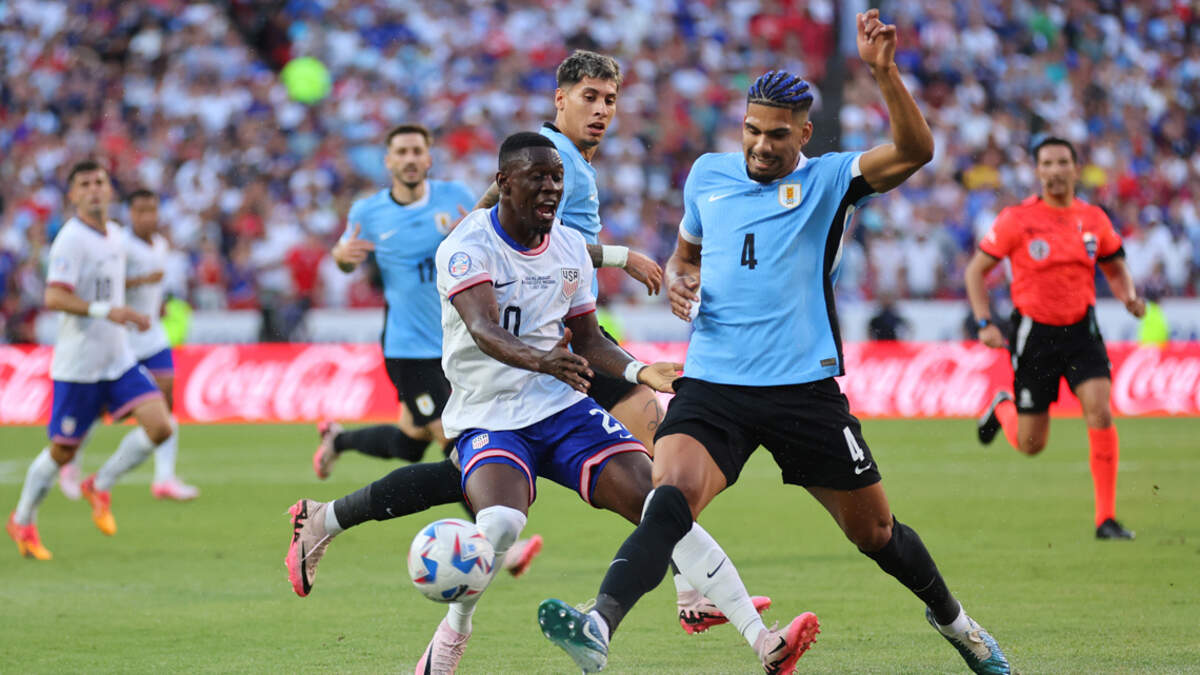
This year, a record 289 of the 1,248 players at the World Cup were born outside the country they represent, nearly 1 in 4. Some have called it proof of the tournament’s diversity. Look closer, and that story falls apart.
This World Cup isn’t a celebration of belonging. It’s a warning about how fragile belonging is. FIFA’s stadiums are staging the same test the far right has always set for immigrants: Perform, contribute, be useful and you can stay — on whatever terms the person in power decides that day.
Take Folarin Balogun. The American striker was sent off with a red card in the Round of 32 against Bosnia and Herzegovina — that is, until President Donald Trump called FIFA’s president and asked him to reconsider. The suspension was lifted, and Balogun returned for the next match.
Balogun was born in Brooklyn while his Nigerian parents were passing through the city, allowing him birthright citizenship — the exact principle Trump is trying to eliminate, and which the Supreme Court upheld just days before Balogun took the field. Trump didn’t change his position. He found one case, involving one useful player, where defending the principle worked in his favor.
That’s the flaw in usefulness as a test for belonging: It’s decided by whoever happens to be in power, not by the person being judged. Days later, Kylian Mbappé scored the penalty that eliminated Paraguay. A sitting Paraguayan senator, Celeste Amarilla, responded not to a bad game but to the best moment of his tournament. She called him a “colonised Cameroonian” who was only pretending to be French, and said France had “won by a fluke,” denying the performance that was supposed to protect him.
Between the two cases, the lesson cuts both ways. Usefulness earned Balogun one favorable phone call, not durable protection. Mbappé’s usefulness didn’t even survive the attempt.
This test runs well beyond one tournament. The U.S. recruited millions of Mexican laborers under the Bracero Program starting in 1942 to fill wartime labor shortages, then in 1954 — while the program was still actively recruiting — launched Operation Wetback, which by the government’s own count removed more than 1 million people that year, including U.S. citizens swept up in the raids. It runs through mineral extraction, too: The Democratic Republic of Congo supplies more than half the world’s cobalt, used in nearly every smartphone and electric vehicle battery, while many who mine it by hand earn less than $2 a day and see almost none of that wealth at home. Labor or minerals, the arrangement is the same: Extract the value and owe the people who produced it nothing.
I’ve watched this pattern for years. As interim CEO of Emgage USA — which has fought Trump’s Muslim and immigrant travel bans — and a board member of the Virginia Coalition for Immigrant Rights, I’ve organized immigrant and Muslim communities. Earlier in life, I helped sponsor more than 200 refugee families. I’ve watched people do everything asked of them — the paperwork, the civics test, the years of waiting — only to see the ground shift under them anyway.
That unease isn’t just anecdotal. A recent Opinium poll conducted for the Concordia Forum found that nearly half of American Muslims are often or always worried that they or someone close to them will be targeted by anti-Muslim violence, — despite supporting democracy more than native-born populations in the U.S. and the U.K. And only about 1 in 5 of Muslims believes they’re always treated equally under the law. That’s the same conditional belonging that all immigrants in the U.S. fear is escalating.
The Trump administration has directed immigration officials to refer 100 to 200 denaturalization cases a month to the Justice Department — a quota that, if met, would run roughly 10 times the historical annual average, met in a single month. Denaturalized citizens revert to green card status, lose the right to vote and can be removed from a country they’ve called home for decades. Legal experts across the political spectrum agree the quota itself is the danger — regardless of how many of the government’s cases fall apart in court — because of the fear it’s designed to spread among the 26 million naturalized Americans watching it unfold.
This isn’t abstract for Kansas City. The city hosted six World Cup matches this summer, including a quarterfinal this Saturday. A few miles from the stadium, Kansas City’s historic Northeast area — first settled by Italian immigrants — is now home to refugee families from Somalia, Burma, Iraq and the Congo.
If we don’t name this while the whole world is watching a tournament built on the supposedly most diverse squads in its history, nothing stops the same script from playing out quietly, in immigration offices and federal courtrooms, long after this World Cup is over.
Mohamed Gula is CEO of Emgage USA, a 501 (c)(3) nonprofit.