Fleeing war and persecution, refugees sought safety in Kansas City. They found much more
READ MORE
Refuge in Kansas City
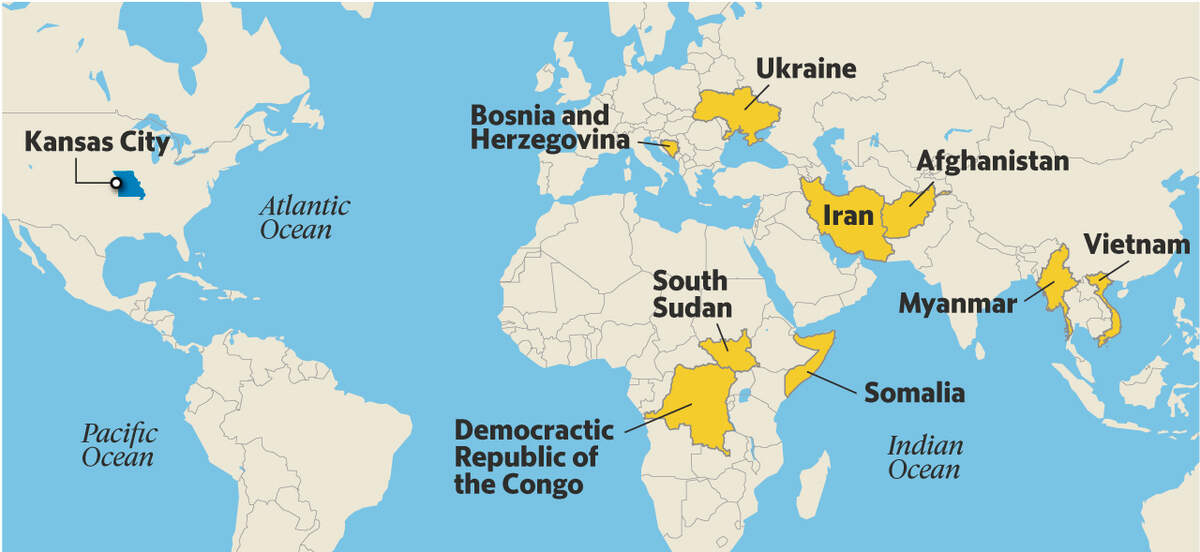
Kansas City resettles some 500 refugees a year on average, according to non-profit Refuge KC. The metro is home to a vast array of refugee cultures, including some 4,000 from Iraq, 3,000 from Burma and 1,200 from Sudan. For decades, these thriving communities and more have been relying on each other to make the transition to a new country easier, and to offer some familiarity of their own cultures.
Expand All
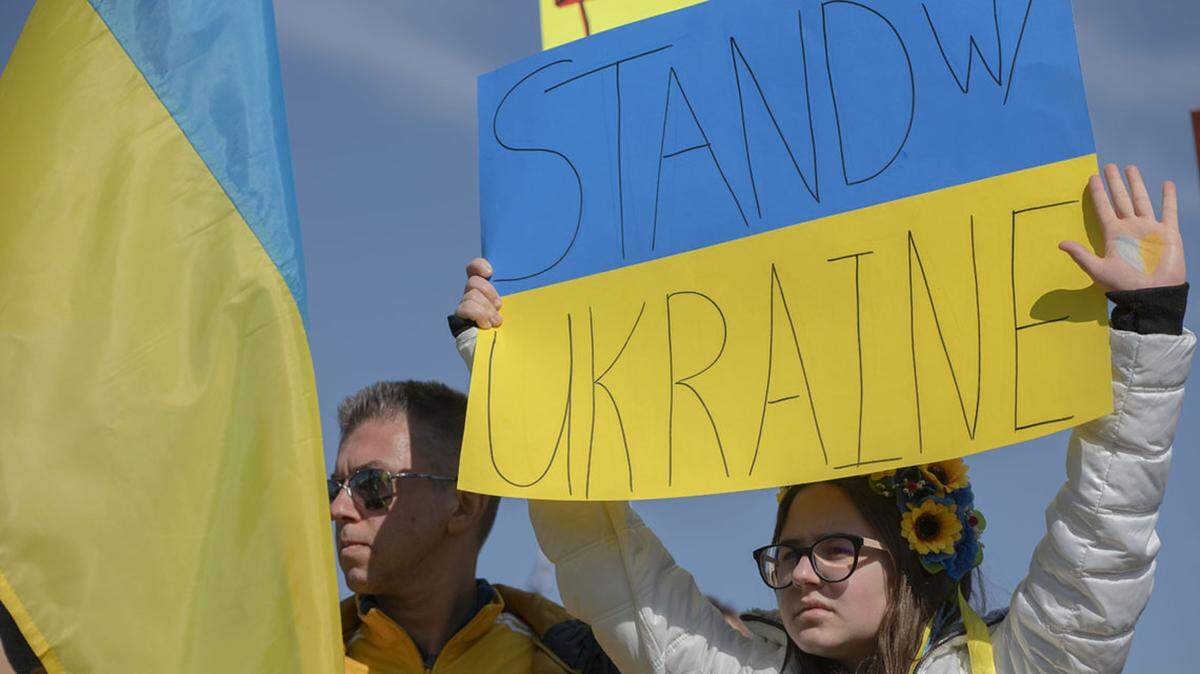
From Afghanistan to Ukraine, hundreds of thousands of people have fled violence and persecution over the last year in pursuit of security and a new start.
For many, that came in Kansas City.
Kansas City resettles some 500 refugees a year on average, according to nonprofit Refuge KC. While the metro has seen a recent influx of refugees from Afghanistan and Ukraine, the largest refugee population in Kansas City is Somali. It’s so large in fact that Somali is the third-most spoken language in Kansas City, according to Refuge KC.
The metro is home to a vast array of refugee cultures, including some 4,000 from Iraq, 3,000 from Burma and 1,200 from Sudan. For decades, these thriving communities and more have been relying on each other to make the transition to a new country easier, and to offer some familiarity of their own cultures.
Not all who resettle in Kansas City, however, have a robust community to lean on.
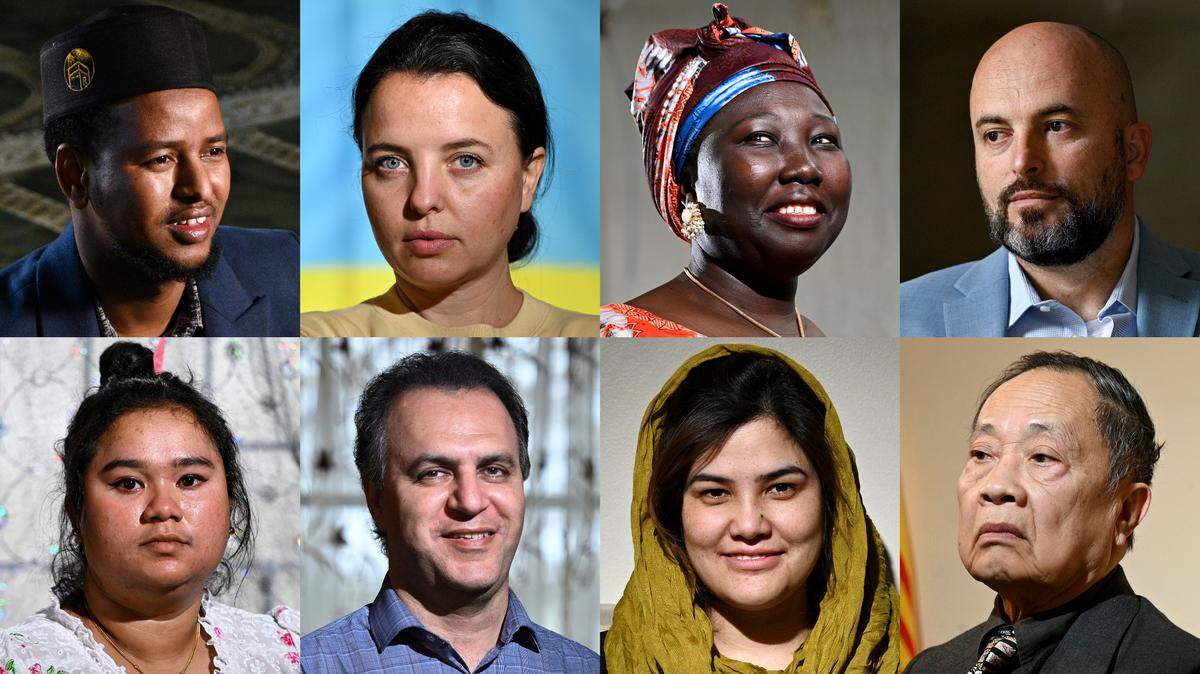
The Star spoke with eight refugees who have come to Kansas City fleeing their home countries for fear of safety. Some have found a city in which they’re free to practice their religion and some arrived to a thriving community ready to support them. There are those, however, who have had to look beyond their cultural ties for secure and welcoming community. Some refugees have had to create community on their own, and some are still searching for it.
The experience of fleeing one’s country, becoming a refugee, and resettling in a new and foreign culture is singular. It’s hard to understand, said Bajram Radoncic, a Bosnian refugee living in Kansas City.
Radoncic has been able to connect with other Bosnian refugees living across the metro through the trauma they all share, having escaped during the Bosnian genocide in the early- to mid-1990s.
“We have to rely on each others,” Radoncic said.
Iryna Yeromenko
Kansas was never supposed to be home.
“When we came to Lawrence to stay with friends for a couple weeks, we were hoping to go back home once it settled down,” Iryna Yeromenko said of fleeing Ukraine in May 2014.
But it never did.
The 41-year-old said she’s lived two lives: The first as a bureaucrat and owner of one of the largest English language schools in Ukraine; the second as a mother, building a new life and fighting to keep her family safe in Kansas.
In Ukraine, Yeromenko managed a more than 30-person staff, oversaw 500 students and worked alongside 25 partners from the Peace Corps to the United Nations. Yeromenko lived a comfortable life, she and her family had just moved into a penthouse apartment overlooking the city when Russian forces invaded her home of Donetsk.
Her diplomatic connections and work with Western nations, as well as vocal opposition to the invasion, placed targets on her and her family’s lives. A week after hanging the final curtain in the living room of their new home they fled the country, leaving money and belongings — a life — behind.
They landed in Lawrence, Kansas. A former Peace Corps volunteer offered to take them in as they waited to hear whether they would be granted asylum. Months went by. They weren’t allowed to work; their lives upended and in limbo. Ultimately, their application for asylum was denied.
“There was a moment where it felt like they were going to send us back to die,” she said. “I couldn’t let that happen.”
At risk of being sent back to Ukraine, Yeromenko turned to a familiar place. A rabbi at a local synagogue offered to help hold fundraisers so she could afford legal resources to appeal the asylum decision. Members of the temple also wrote letters to immigration services on her behalf.
Because she couldn’t work, Jewish Vocational Services gave Yeromenko a loan in 2017 for her to pursue a masters degree in health administration.
Her family was granted asylum the same year.
Yeromenko now works for the Kansas Department of Health and runs a hypnotherapy practice in Olathe. Her husband got a job driving a truck for Pepsi to help pay back JVS, a community they are now ingrained in.
“They didn’t just save our lives, they gave us the opportunity to save ourselves,” she said. “I’ll forever be grateful for that.”
Farzana
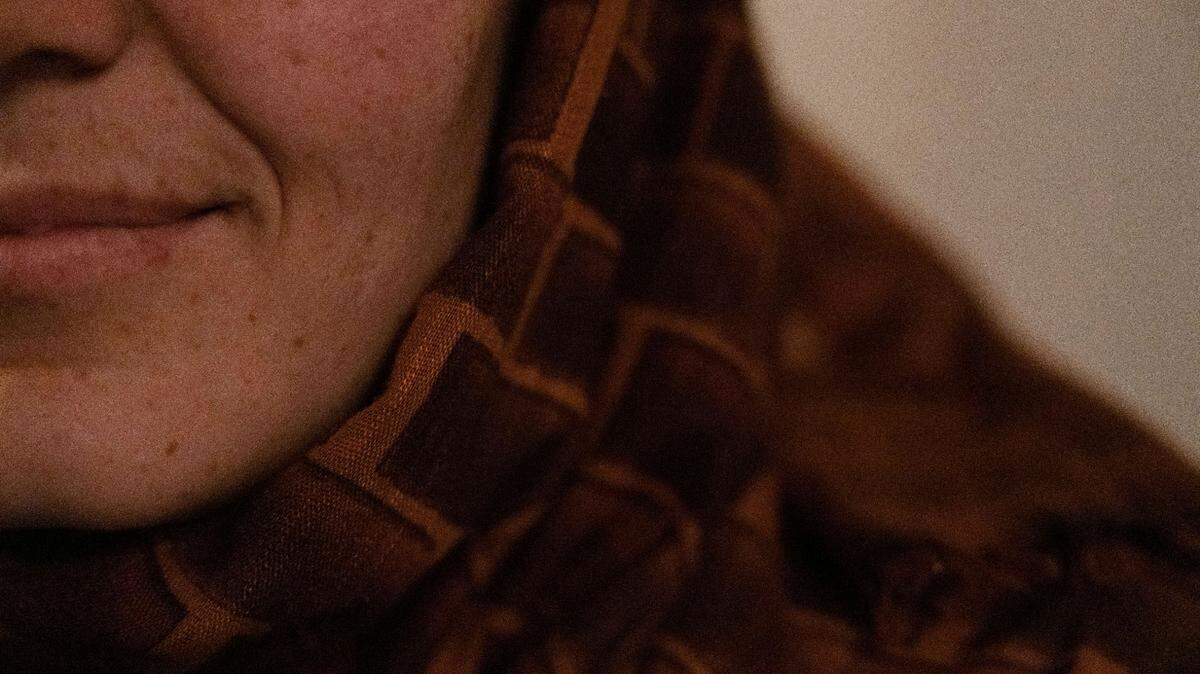
Farzana keeps $60 by her bedside. She’s 31 years old and those three $20 bills are the first she’s ever earned.
In a way, she has Kansas City to thank for that.
“When we got here volunteers came to the house and they were asking all these questions ‘What can you do? Do you know any activities?’ I said she can do anything, take a look around. They saw the Afghan mattresses she made and offered to pay,” her husband Mohamed interpreted. Farzana is still learning English.
When she and her husband came to Kansas City, having fled Afghanistan during the Taliban’s invasion and America’s exit, there was little here that provided the comforts of home. Even seating and furniture were too far elevated from the ground. Farzana and her husband missed the Afghan mattresses, also called toshaks — the equivalent of a floor cushion — common in homes.
They’re made with a long pillow that’s used for sitting in a living room or dining area and matching smaller pillow for lumbar support. It’s firm and stuffed with a freshly sewn blanket for a good few inches of cushion. Normally the mattresses are made with cotton, but that was out of Farzana’s price range. She sews an entire blanket to stuff it with instead.
While Farzana’s mattresses aren’t adorned with any significant design or meaning, for Afghan refugees in Kansas City they’ve taken on a out-sized meaning — a reminder of home.
She sells them for about $30 each. There were not many other places for the influx of Afghan refugees to get the piece of home. She churns out roughly 20 every few days.
KC for Refugees and Northeast Catholic Charities started giving out the sets in March to families fleeing Afghanistan.
Farzana fled in August. Both she and her husband are Hazara, the country’s largest ethnic minority and targets of mass-killings by the Taliban. Mohamed’s work with the U.S military earned them the documents needed to evacuate, but crowds at Kabul’s airport prevented them from getting out quickly. Mohamed carried Farzana on his shoulders through a sewage channel on the outskirts of the airport in order to get the attention of a patrol officer, who helped them onto a packed flight.
Their families are still in Afghanistan, struggling with little access to food and other resources. Farzana chats with them weekly, depending on their service. She tells her mother, who taught her to sew, about the business and how much the mattresses mean to arriving Afghans.
“[My mother] is so proud,” Farzana said tearfully.
Riaz Rabbani
Riaz Rabbani hasn’t stepped foot in Iran since he was 12. But if you were to ask him, the country is still home.
Kansas City, however, is where his community is.
Among the terraces and boulevards, his family, including two daughters, have found a place where they can freely practice their faith, and people who share it. Every month they gather at the Baha’i Center in the northeast corner of Kansas City for a feast, a cultural and spiritual gathering where they discuss unifying their community.
“Our basic precepts is the unity of mankind, that we are all really the same and that our purpose in life is to be of service. And that’s how you progress,” Rabbani said.
Rabbani has lived in the U.S since 2003, moving from Chicago to Portland, ultimately settling in Kansas City to raise his children.
Kansas City, he said, is the spiritual home to roughly 300 Baha’i practitioners and one of the reasons he was happy to move here.
Like many in the Baha’i community, Rabbani fled persecution in Iran after the 1979 Islamic Revolution. Many who were part of the country’s largest minority religion were imprisoned, tortured or killed.
At the age of 12, Rabbani’s mother, father and eight-year-old sister were smuggled to Turkey by Kurdish men under the guise of an elaborate family vacation.
“It’s difficult to explain the experience if you don’t know, or haven’t heard about it previously,” he said.
In Kansas City, Rabbani practices his faith and volunteers for the Baha’i center, doing paperwork and interpreting for newly resettled Afghan refugees. He also hosts free clinics at St. Luke’s Hospital, where he’s a cardiologist, to provide care to those in need.
“Having a community with people who understand your background as a refugee, as someone who didn’t know the language and whose family has been persecuted, it helps a lot,” he said.
Ty Bui
Ty Bui has been helping refugees in Kansas City for nearly 47 years.
He still walks through the halls of the Don Bosco Senior and Community Center, where he ran what used to be a refugee resettlement program, and finds himself organizing the chairs and tables left in the hallway.
He volunteers at the center every week, between trips to care for his mother-in-law and meetings with a group of former Vietnamese soldiers who, like him, fled the country following the war. This is where he’s helped build his community — basically from scratch.
Bui was 27 when he crossed the South and East China Seas. He traveled roughly 2,000 miles from Vietnam to South Korea, overcoming thunderstorms, famine, and engine troubles to make it to a refugee camp.
“My parents were still in Vietnam, they could not escape. Many people died trying to escape,” he said.
When he arrived in Kansas City in 1975, he was alone. He did not know of other Vietnamese people in the city and lived at a local rectory. There, he helped the church shuttle refugees from military camps in California to Kansas City — many of them also Vietnamese.
An immigration official, Bui said, visiting Kansas City to take note of the number of Vietnamese families who had resettled in the United States was shocked to hear that no organization had provided support — that it was merely Bui and a handful of volunteers.
Bui insisted that he was just doing what was in his heart. It was work he would continue to do for decades at the Don Bosco Community Center.
The families he helped chauffeur became extensions of his own in his eyes, Bui said. Only, they could be saved.
“It’s just something I do,” he said.
Shana Be
Shana Be never felt the need to know her neighbors.
Since she was born, they’d only been temporary fixtures in her life, from fleeing Myanmar with her family to growing up in the Thai refugee camp, even years later as she attempted to find work in Colorado, where she lived with her sister.
But when she moved to Kansas City with her children in 2018, it was a neighbor who came to her rescue.
Her apartment caught fire in February of that year.
A towel, left on the stove as milk for her new born warmed, went up in flames. Be, who was upstairs putting her other two daughters to bed, smelled the smoke first. Though she rushed to the fire and attempted to stamp out the fire it was spreading.
After a few minutes she resigned herself to saving her children. She grabbed a blanket and hurried them out of their beds. They ran outside barefoot in the dark of Kansas City winter.
A neighbor interrupted her mid panic, yelling for Shana to call the fire department. But Shana had no idea what that was. Her English was modest at best, enough for the part-time job she held at a manufacturing warehouse.
The neighbor called the police and reluctantly allowed Shana and her family to sleep in her basement, despite the threat of COVID-19.
The fire had spread through Be’s entire apartment. They lost everything.
Volunteers were called to help Shana and her family get back on their feet. They found a new home in section 8 housing.
Be still has reservations about Kansas City, she said. She hasn’t received much help, she said, and she doesn’t plan on seeking out more than her mother and the few volunteers dispatched to help care for her children.
She’s independent and has always dreamed of being a defense attorney so she could help protect people who’ve been wronged, people who are otherwise defenseless.
Be wants to be the one looking out for her kids, protecting them and keeping them on track. She’s the provider and they deserve all of her. Together, she said, they’re all each other needs.
Tasilia Dale
Over plates of okra and asida, a bread of corn, red millet and other grains, Tasilia Dale tries to keep the culture of Maban County in South Sudan where she grew up alive.
“The kids, they are not so interested,” Dale said. “They rather go on their phones or eat in another room. When back at home we always ate together.”
Dale is one of the few Maban families who’ve resettled in the metro area, though the area is home to nearly 1,200 Sudanese. She attends the Sudanese community events around town, but still she often feels isolated. The Maban are an ethnic minority in Chad and South Sudan.
“The culture is different, the dialect is different. We just have different experiences,” she said.
When Dale fled Maban county, she grabbed her children and ran from border patrol officers amid a shower of gunfire. She spent the next decade in a refugee camp in Ethiopia, where the family struggled, waiting out a civil war in Sudan that has yet to cease.
“What we’ve been through, it is not the experience of most,” she said.
Without a Maban community with which to share her fears, her traumas, as well as her triumphs, she has leaned on the refugee women from other countries who work alongside her in a northeast Kansas City warehouse where she is a seamstress.
“We all know each other’s kids and we help them get to school and talk about our lives,” she said, smiling.
One of the women, who fled from Pakistan to Kansas City in 2005, has even celebrated holidays with Dale’s family. She’s even helped Dale with English classes.
“We rely on each other, it’s what we have to do to survive,” she said.
Shafi Mohamed
On an average day, Shafi Mohamed drives a seven hour shift for Uber, then he volunteers, offering rides to Afghan families in his northeast neighborhood who are out of the range of Kansas City’s public transit.
He doesn’t mind their late night calls, he said, or the fact that few can communicate in English. He understands what it is to be in a foreign city, and to feel hapless.
Mohamed fled Somalia as civil war broke out in 1991. He and his mother escaped the country with nothing but the clothes on their backs, landing in a Kenyan refugee camp for 20 years.
He was resettled to St. Louis in 2016, but without his mother.
“It was hard to leave her behind, she sacrificed so much to give me my life,” he said.
Even more difficult was finding a community able to support him in his new home.
After a few months in St. Louis, he heard of the vibrant Somali community in Kansas City — one of the largest in the country — and hopped on a bus. He was met by Somalis in the mosques, supermarkets and community centers, all eager to make him feel at home.
They taught him how to drive, connected him with jobs in the area and helped him with his English.
“When my mother did come to Kansas City, I wouldn’t have been able to take care of her if they hadn’t helped me,” he said.
All the more reason why Mohamed feels its necessary to give back to his Afghan neighbors, who have a far smaller refugee community than that of his own.
“Its a small way to help out but I see that it makes a difference,” he said.
Bajram Radoncic
Bajram Radoncic rarely speaks to community members in Kansas City about the horrors he witnessed during the Bosnian genocide — even though the city is also home to Bosnians who share his trauma.
“Bosnians are full of pride. I’m sure that 95% of our community is suffering from PTSD, me being one of them,” he said. “But I never seek any help ... People will think less of you.”
Radoncic has seen fellow Bosnian refugees who resettled in Kansas City die of suicide, he said, unable to reconcile with the trauma. Others have joined law enforcement, eager to provide the protection denied to them back home.
For Radoncic, nothing can ameliorate the loss of his brother, who at 12 years old was buried with only an arm and a hip. Nothing can calm the fear that takes over when he hears sirens ringing.
Half of his family was killed after they relocated to Blagaj, a claustrophobic town filled with Muslims displaced by Serbian militia in the early 90’s. Radoncic, in search of something, joined the infantry at 14 years old.
“It was not because I was brave,” he said. “When my mom asked me why I joined the military my answer was I’m going to die anyway.”
He came to Kansas City May 28, 1997. An uncle who had fled to the metro two years prior sponsored the family.
Kansas City’s Bosnian community, he said, has been isolated in their trauma. Now, with a family of his own, Radoncic works to find respite for them and himself through prayer.
“There’s a verse of the Quran that’s talking about patience that says in English: God is with the patient ones. And it means it you have a problem and you have patience, it will get better by time,” he said.
He prays for patience about five times a day at the Islamic Center Bosnjak on Northeast Antioch Road, where he also serves as a chairman.
Since 2014, he’s organized holiday celebrations, extra-curricular programs for children and fundraisers for Syrian and Afghan refugees. He’s also helped put together ceremonies to honor the victims of the Bosnian genocide, in a quest to help the community heal, even if its in silence.
“It can feel like living through hell again, but you know we have to, to live through it and deal with it,” he said.
This story was originally published May 18, 2022 at 5:00 AM.