‘KCATA knows it has a trust issue’ so how can AI cameras on buses succeed? | Porter
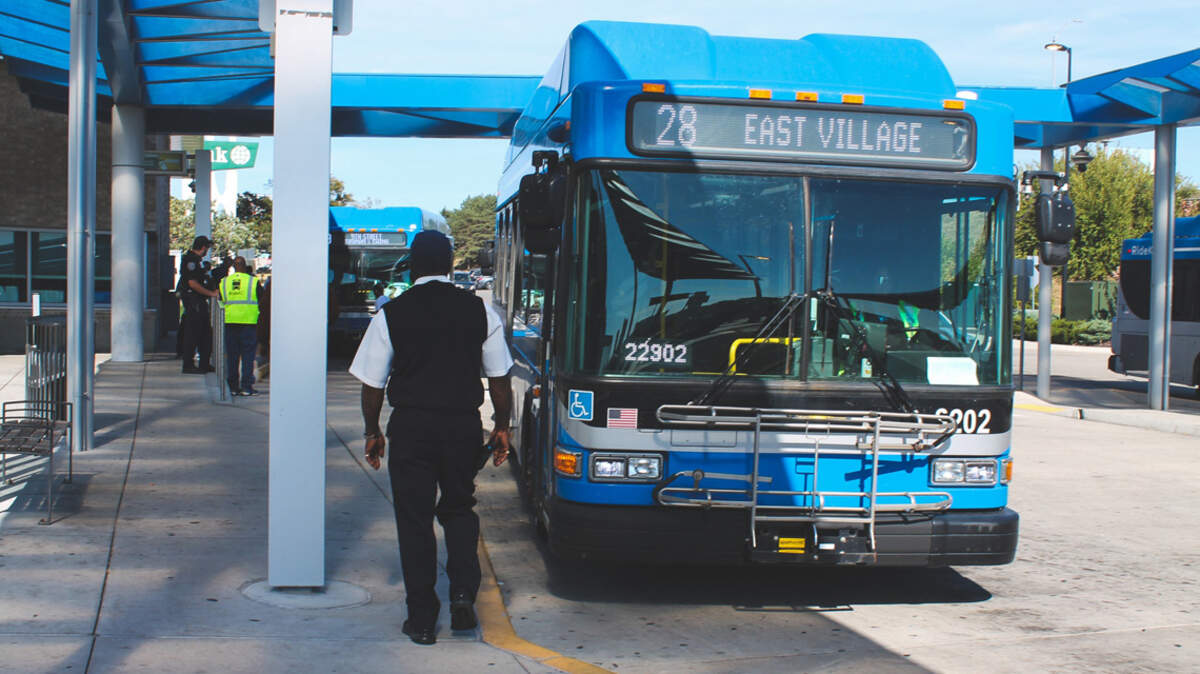
Kansas City could become one of the first cities in the nation to install artificial intelligence-powered facial recognition cameras on public buses. I don’t know about you, but the sheer thought of the Kansas City Area Transportation Authority using AI cameras to capture riders’ facial features as they board city buses is unnerving.
I am firmly against the KCATA’s proposal, and you should be too. As Will Owen, communications director for the New York-based nonprofit advocacy group Surveillance Technology Oversight Project, told the Associated Press: “City residents should not be guinea pigs for transit systems to test Silicon Valley’s latest unproven, biased surveillance tech.”
KCATA officials claim the software is needed to identify banned passengers and missing people, but is using facial recognition technology really necessary to do so? The agency partnered with a company called SafeSpace Global to implement the pilot program on about nine buses. The kickoff was supposed to begin this month during the FIFA World Cup tournament being hosted here. Thankfully, the rollout was delayed because of technical and financial issues, according to Tyler Means, chief mobility and strategy officer for KCATA. If the program proceeds, up to 30 buses could be equipped with AI software, Means told me recently in a phone interview.
The KCATA operates about 236 buses, according to its website.
“What I’d like to do is, do about a year (of testing) and then set some goals and hypotheses on what we’re trying to study, evaluate and reevaluate those hypotheses three to six months in,” he said. “If we need to pivot, make changes, test them out as well and then put a report out saying this is where we think this technology is, where we think it could play a role at the ATA and from there we’ll probably be looking at a larger camera roll out.”
Mass surveillance already in use
Kansas Citians should be able to move about the city freely without being subjected to mass surveillance programs such as facial recognition, automatic license plate reader cameras or unmanned aircraft systems known as drones.
Because some of our most vulnerable citizens and low-wage earners use KCATA buses to get to and from work, doctor appointments, grocery stores and other important matters, we all should stand firmly against the agency’s plan to install facial recognition software on city buses. Some of us are fortunate to have cars, bicycles or other means of transportation. But not everyone drives, and many of us must rely on public transportation to get from Point A to Point B.
“I will do everything I can to make sure this program doesn’t go forward,” Sixth District Kansas City Councilman Johnathan Duncan told me during a recent phone interview. Mayor Quinton Lucas recently appointed Duncan to the KCATA Board of Commissioners, which greenlit the program before Duncan joined the board.
The agency’s recent decision to end its zero-fare program and institute a cashless payment system caused great consternation among transit users, Duncan said. Adding AI to the mix so soon after is bad business, he said.
“My main concern is ridership privacy and a lack of trust in the organization,” Duncan said. “KCATA knows it has a trust issue with the broader community and riders in general and this is one of the reasons why.”
Using facial recognition
Here’s how the facial recognition program would work, according to the AP: Images captured by cameras aboard the buses would immediately be checked against any active missing person or banned rider alert, or if someone on a law enforcement watch list designated by the transportation authority is identified.
“It’s not sitting there filming all the time,” SafeSpace Global CEO Scott Boruff told the AP. “It just captures the face and goes away.”
According to the KCATA’s Means, the facial data won’t be retained if no match or safety issue is detected. The agency already uses cameras to record activity on or near its fleet of buses, Means said.
“They’re recording anytime the bus is on,,” he said. “So when you turn the bus on, it turns the cameras on. We have a back-end portal that only limited people have access to.”
Regular video footage is stored on a local server for up to five years, the statute of limitations for anyone to file legal claims against the agency, according to Means. With the facial recognition program, Means said he was confused about some of the pushback the KCATA has gotten about its plan.
“We’ve had cameras on our vehicles for well over 30 years recording people all the time,” he said. “The AI portion of it is very limited in scope.”
My main concern is the very likelihood that minority and low-income bus riders here would be targeted. There’s a reason the use of facial recognition technology has been banned in major cities such as Boston, Portland, San Francisco and others — the probability of a false match is all too real. According to the American Civil Rights Union, more than a dozen wrongful arrests have been made in recent years due to police reliance on facial recognition technology.
One false arrest is one too many. I would hate to see anything remotely close to that occurring here.