Kansas City police drones at World Cup 2026: Data at risk? Pentagon thinks so | Opinion
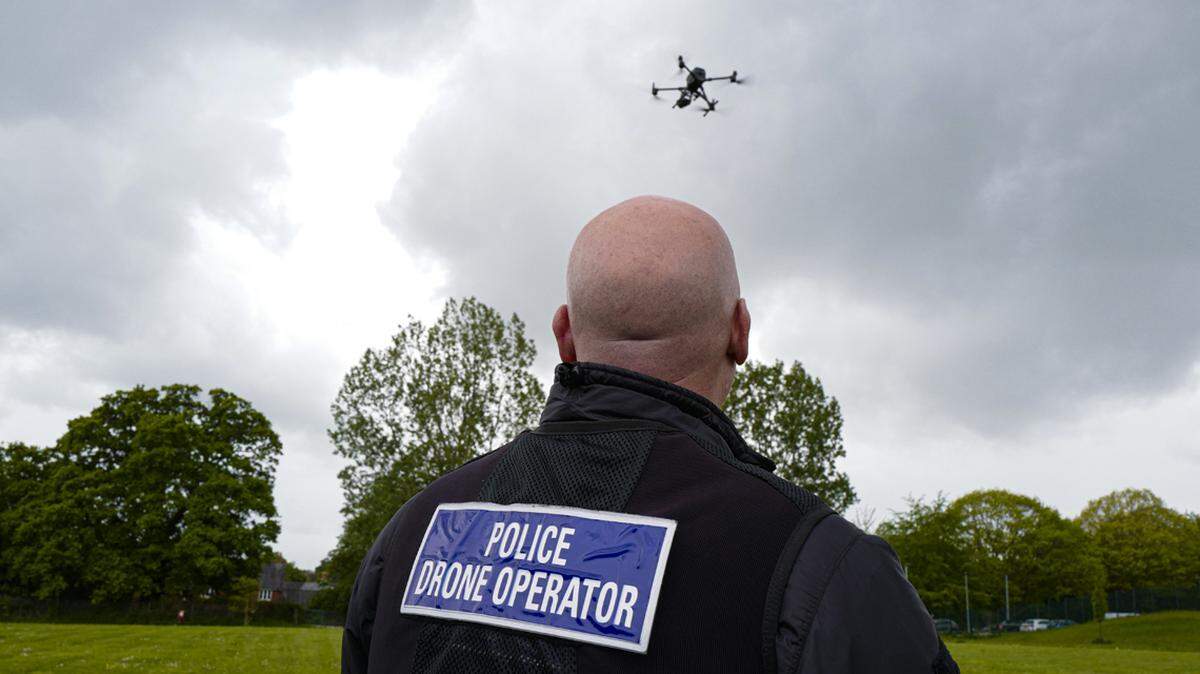
The Kansas City Police Department’s fleet of drones will be at the ready during the FIFA World Cup 2026 tournament held here June 11 to July 19, department officials said this week. While I have little doubt that security at this massive global event is very important, I do have some concerns about the drones the department has at its disposal.
And you should, too.
KCPD’s drone as first responder program deploys a fleet of nine foreign-made drones manufactured by a Chinese company called DJI. In all, the Kansas City Police Department has a total of 34 DJI drones, and each of them will be used during the World Cup, according to Police Sgt. Phil DiMartino.
Here’s the problem: The Federal Communications Commission and the Pentagon are concerned they may be a risk to national security.
When asked if the drones would be used for surveillance, DiMartino wrote: “Drones are not used for random surveillance. They can be used for emergency calls for service, search and rescue, situational awareness, scene documentation, tactical deployments, and visual perspectives (crowd control and accident management).”
DJI accounts for more than half of all U.S. commercial drone sales. Although very popular among recreational drone enthusiasts and law enforcement agencies in the U.S. and elsewhere, the FCC and the Pentagon have labeled these and other foreign-made unmanned aircraft a risk to national security.
New drone models banned
Late last year, the FCC barred the import of all new models of foreign-made drones and their critical components, and DJI was among those companies affected.
“The United States is preparing to host several major mass‑gathering events to include the FIFA World Cup, America250 celebrations, and the Olympic and Paralympic Games,” the FCC wrote in its summary. “These events will involve unprecedented numbers of spectators, critical‑infrastructure nodes, and other high‑value targets in dense urban areas. The Cybersecurity and Infrastructure Security Agency (CISA) and other federal partners have stated that (unmanned aircraft systems ) are a routine part of the threat landscape for soft targets and crowded places.”
DJI officials have denied the drones used by KCPD and other agencies are a security risk, and even challenged the FCC’s ban in a lawsuit.
The FCC’s decision “carelessly restricts DJI’s business in the U.S. and summarily denies U.S. customers access to its latest technology,” the Chinese drone-maker told Reuters.
Cybersecurity a legitimate concern
Although the legal process has yet to fully play out, Kansas Citians have a right to know that its police department is using unmanned units that have faced federal scrutiny. Last fall, DJI’s bid to be removed from the U.S. Department of Defense’s list of companies allegedly working with Beijing’s military was rejected in court.
“At this time, there is currently no federal prohibition preventing state or local law enforcement agencies from operating and purchasing some DJI drone systems for public safety purposes,” KCPD’s DiMartino wrote in an email.
DiMartino added that cybersecurity and data security are legitimate concerns anytime agencies deploy connected technologies, regardless of manufacturer or country of origin.
“Because of that, KCPD evaluates these systems carefully and implements operational safeguards designed to mitigate potential risk,” he wrote. “Those safeguards include limiting unnecessary external connectivity, controlling data management practices, utilizing secured law enforcement networks, and evaluating how systems integrate into departmental infrastructure and evidence systems.”
KCPD currently utilizes an American-made software platform for its drone first responder operations, according to DiMartino. Still, I have reservations about the foreign-made drones being used here.
Don’t get me wrong— I strongly support the use of technology to help law enforcement officials solve serious crimes or locate missing individuals. No one could argue that public-facing technological advances such as automated license plate readers and drones have a place in modern policing.
But I don’t want to live in a police state where every one of our moves are recorded and our data and privacy are put at risk anytime an officer wants to summon information about us on a whim.