Kansas City hosted hundreds of Nazis and other enemy soldiers during WWII. Here’s why
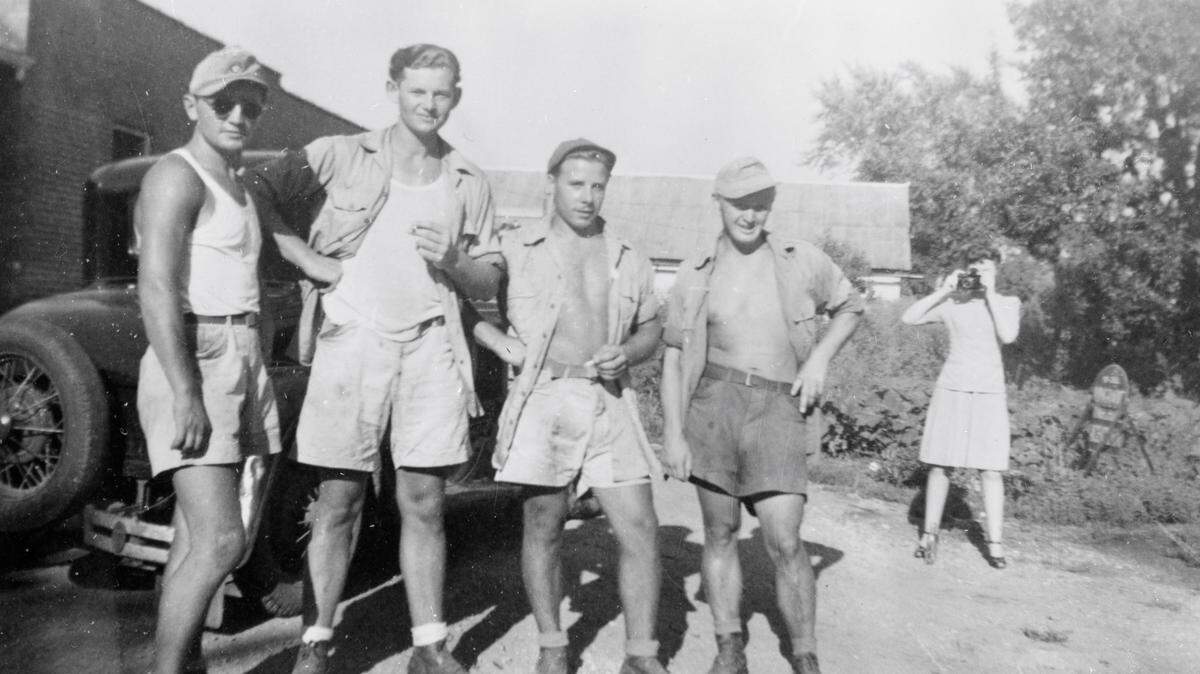
It might surprise even some longtime Kansas Citians to learn that the area once boasted a booming potato-farming industry. Perhaps even more shocking is that those potato farms were briefly invaded by Nazis.
Don’t worry: The Jackson County farmers invited the Nazis onto their property.
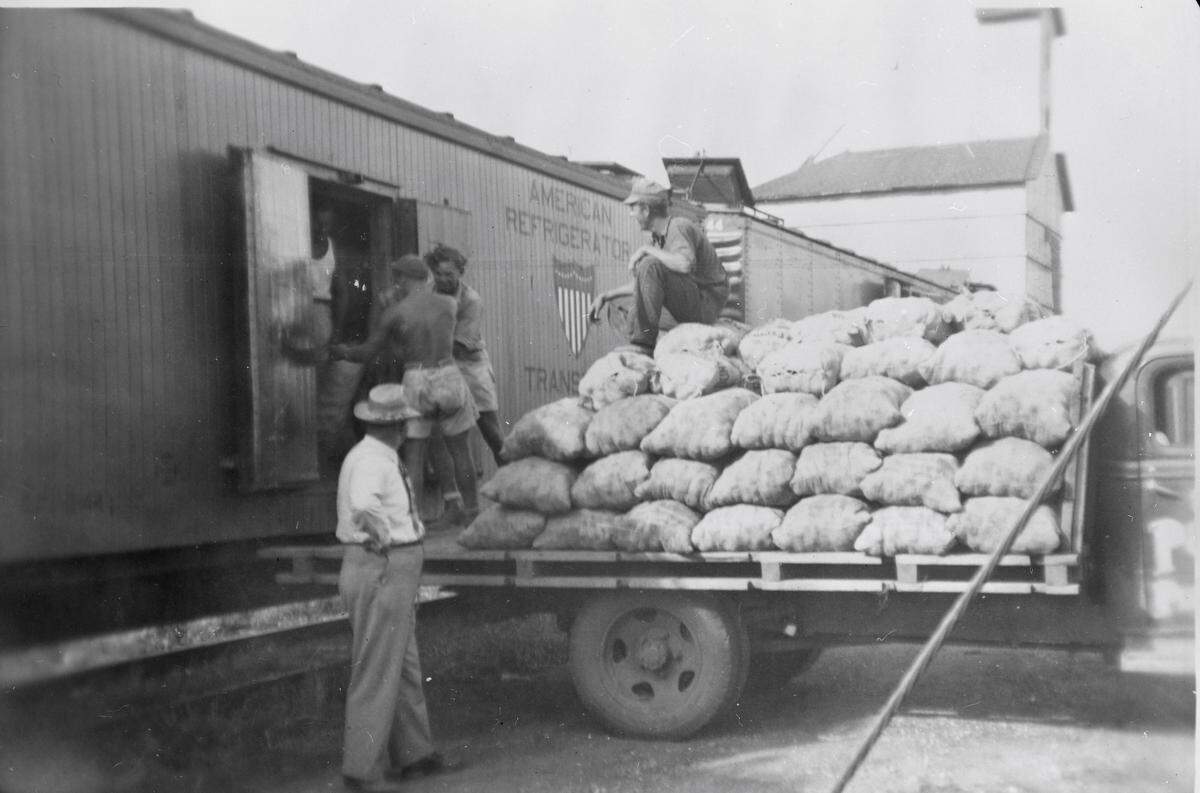
Thousands of prisoners of war, mostly German and Italian, were housed in Kansas and Missouri during World War II, and many spent time in the Kansas City area. POWs from the Axis powers stayed in several camps in the region and performed a variety of jobs to help fill the manpower shortage created by the war. Most worked on farms — including harvesting potatoes on about 2,000 acres of Missouri River bottomland.
Reader Ken Levy reached out to What’s Your KCQ?, a partnership between the Kansas City Library and The Star, to learn more about local WWII prisoners:
I am curious as to how many POW camps were in the Kansas City area, whether the prisoners were paid for work they did outside the camps and whether any prisoners remained in the U.S. after the end of the war. Any information on how the prisoners were transported to the interior of the U.S. after capture in Europe would be of interest, as well.
The final part of his query is easy.
After being captured in Europe or North Africa, the prisoners were put on ships to cross the Atlantic Ocean. Then, in Norfolk, Virginia, or some other East Coast port, they boarded trains to ride blindly for hours in boxcars to points west. A few lucky ones rode coach.
Levy became interested in this subject during a tour of the Mid-Continent Public Library’s Woodneath property just west of Liberty, where he learned that “POW” had been painted on the beam of an old barn there.
That story is plausible because the Woodneath library complex includes a Greek Revival-style house built in 1855-56 that was part of a large farm. It operated as Crouch Farm Dairy before, during and after World War II.
Mark Livengood, Story Center director at Woodneath, said members of the Crouch family, which sold the property to MCPL, had heard stories of German POWs working at the farm. He said the barn was razed in 2020.
Although no records confirm that POWs worked at the Crouch Farm Dairy, it certainly is possible given its proximity to a camp in Liberty.
Or perhaps the painted “POW” came from escaped Germans, who occasionally wandered the area after slipping away from prison camps. They never posed much threat to the local community, according to David Fiedler, author of “The Enemy Among Us: German and Italian POWs in Missouri During World War II.”
“They were mostly one offs,” Fiedler said in an interview. “One or two guys would get away, maybe five or six. But they were really more comical than anything else. They didn’t have money, they didn’t have language skills, they didn’t have transportation. There was only so far you could go on foot. … Most of them ended up knocking on the door of a farmhouse, saying, ‘This was a bad idea. Please take us back.’”
Captive life
Virtually every state had at least one camp for the more than 425,000 POWs, consisting of about 370,000 Germans, 50,000 Italians and 5,000 Japanese.
There were about 15,000 prisoners at four major camps in Missouri (Clark in Vernon County, Crowder in Newton County, Weingarten in Sainte Genevieve County and Fort Leonard Wood in Pulaski County), plus about 30 branch camps.
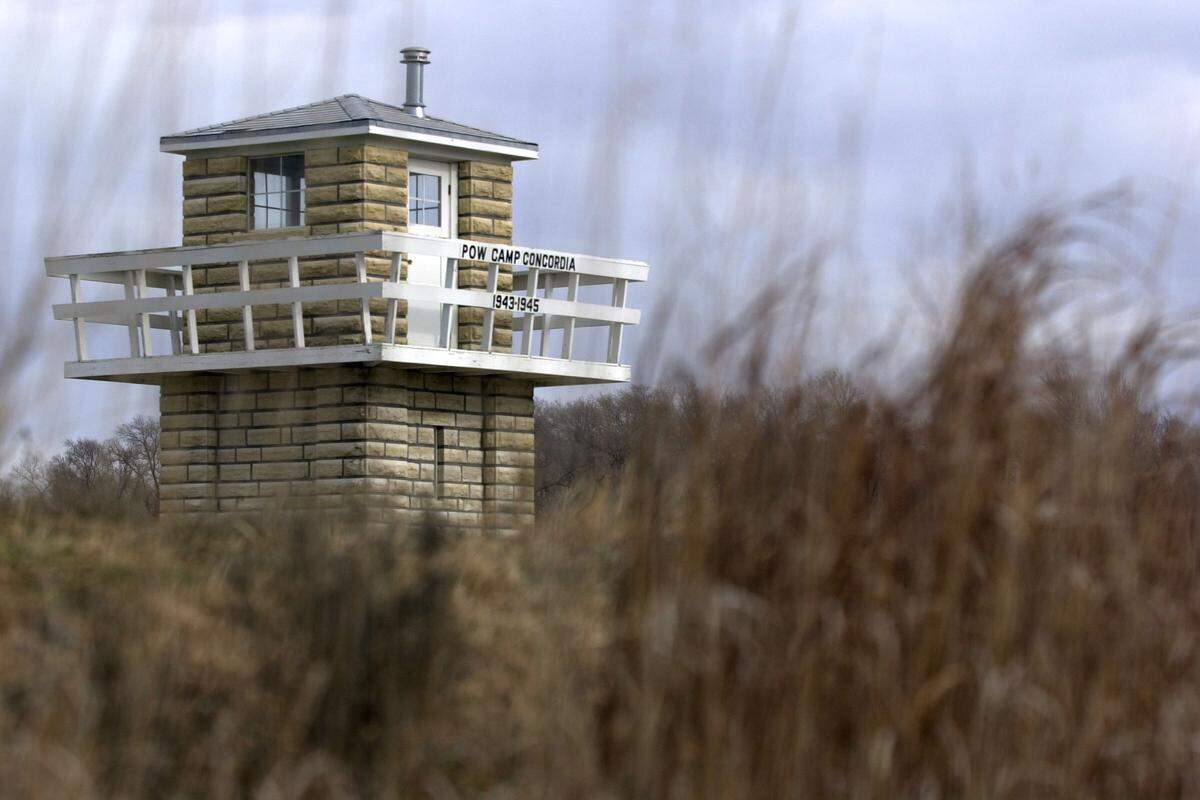
Kansas had three main facilities (Fort Riley in Geary and Riley counties, Concordia in Cloud County and Phillips in Saline County) holding about 7,000 POWs, with more than a dozen branch camps. Fort Leavenworth also housed POWs in its disciplinary barracks.
The branch camps are where the Kansas City area was involved. Fiedler’s 2003 book describes camps in Liberty, Orrick, Atherton and Riverside, which was unique among the nation’s more than 700 camps in that the POWs were housed at a former horse track.
Other branch camps near Kansas City included Lexington, Marshall and the Sedalia Army Air Field (now Whiteman Air Force Base). A bit farther east, Italians worked the cornfields of Boone and Callaway counties while staying in Columbia at University of Missouri fraternity houses and empty buildings at Stephens College.
“Because they were seasonal agriculture, they were short term,” Fiedler said of the branch camps. “They would come back, and they were pretty small numbers.”
The government provided about 265,000 POWs to alleviate labor shortages in agriculture, fruit picking, canning and similar occupations. Farmers paid the government 45 cents per hour per POW, and prisoners earned 80 cents a day — paid in camp scrip so they had no cash if they escaped. They could spend their wages on candy, tobacco, low-alcohol beer and other goods in the camp canteens.
‘Pleasant experience’
To be sure, life in the camps was more “Hogan’s Heroes” than “The Bridge on the River Kwai.”
“The Enemy Among Us” describes them as “a surprisingly pleasant experience. … The internees frequently worked on local farms, often ‘guarded’ only by a bored GI snoozing under a shade tree.”
Some Americans complained that the POWs were being treated too well, but the local reaction was largely positive based on firsthand accounts.
There was a 6-acre camp — with no fences — on Frank Barnes’ farm near Atherton in eastern Jackson County for about 250 Italian prisoners who had been shipped in stock trucks from Camp Clark in June 1943. He said the POWs put on shows for area potato farmers with boxing, singing and violin concertos.
“We had a problem communicating with them at first, but it wasn’t long before they understood us,” Barnes said in a 1972 article in The Star. “They acted very well. They weren’t belligerent at all.”
In fact, some of the Italians got too friendly with local girls, he said, and it was difficult to keep them apart.
The next year, KC area potato farmers contracted for about 340 German prisoners, who Barnes said were “pretty snooty” and prone to trouble-making before some hardcore Nazi officers were replaced.
After the war, Barnes received a letter from an officer who had been in the camp telling him of the difficult times in post-war Germany. “He asked me to send him some potatoes for the winter,” Barnes said.
Fiedler’s book describes the Liberty facility, which kept about 600 POWs at a former turkey farm 2 miles south of town, as a “true work camp.” It dispatched prisoners in groups of 10 — accompanied by one guard — to farm operations as well as to a paper box company, the stockyards, apple orchards and more.
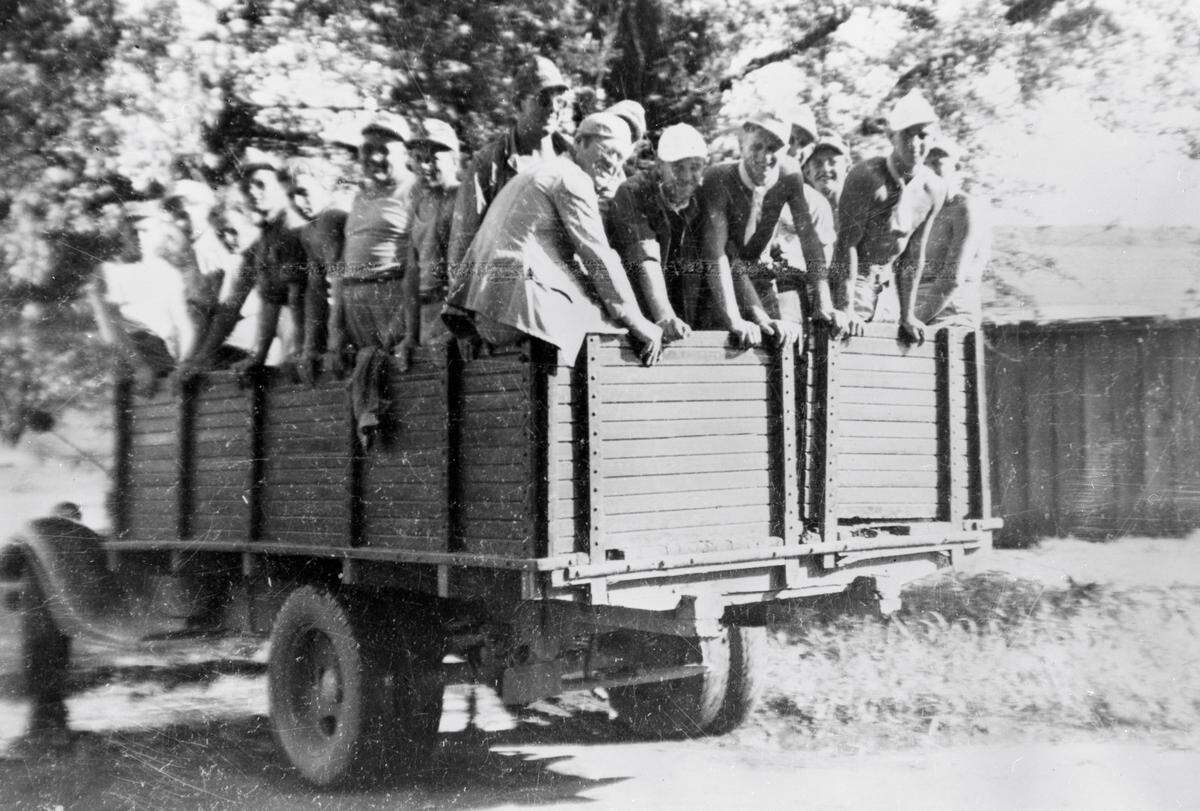
At the abandoned Riverside racetrack (which had been founded and operated by KC boss Tom Pendergast), 60-70 Italian prisoners bunked in the clubhouse briefly in 1944 and worked on farms and at the U.S. Cold Storage Company and the U.S. Gypsum Company. On Sundays, they were bused across the Missouri River to attend Mass at Holy Rosary Catholic Church in heavily Italian Northeast Kansas City.
Parishioners welcomed the Italians, as did at least some folks who lived in Riverside.
“We’d go down and talk to the prisoners,” Vernon Davis said in “The Enemy Among Us.” “A lot of them could speak pretty good English. And they liked it here because they knew they weren’t getting shot at.”
Kansas camps
Lawrence housed one of the largest Kansas branch camps and the closest one to Kansas City. More than 300 German POWs stayed for eight months in 1945 on a 5-acre site near 11th Street and Haskell Avenue while working in the fields and food-processing plants of Douglas County.
Other branch camps included Lake Wabaunsee west of Eskridge and Camp Fremont east of Council Grove.
An estimated 150,000 U.S. soldiers trained at Camp Phillips, which existed for only two years during World War II. Some 4,000 POWs arrived late in the war and were used to dismantle the hundreds of buildings that had been hastily constructed.
Charles Cash, who became a Kansas City attorney, had been a captain at Phillips.
“The prisoners would come off the coaches, always blinking, or at least that’s how it seemed to me,” he told The Kansas City Times in 1967. “They had been on the trains since the East Coast, and they’d stagger around a little. I always wondered what they thought when they looked northwest across that flat land. But then I didn’t speak either Italian or German, so I never could ask.
“Those Italian boys were tickled pink to be in the great state of Kansas.”
Light and dark
The interactions on the home front between everyday Americans and enemy soldiers created an environment that contrasted with the hate and animosity of the times.
“Certainly, having prisoners in close proximity of the local people helped the perceptions on both sides,” Fiedler said. “These are just ordinary people caught up in the war. They weren’t nearly the sort of frightening monsters they might have been made out to be or perceived to be.”
Of course, as Fiedler said, “It wasn’t always flowers and sunshine.”
The Italian prisoners generally caused little trouble, but the Germans were another matter. There were fights, as well as suicides and even murders at the main camps.
In fact, one murder led to the largest single execution in the United States in the 20th century, and the execution occurred in the Kansas City area.
On Aug. 25, 1945 — more than three months after Germany surrendered — seven young German POW submariners were hanged at Fort Leavenworth for the murder of a fellow German at a POW facility in Arizona. They considered the victim to be a traitor because he helped interrogate other German prisoners.
Those seven and seven other German POWs executed for the murders of fellow prisoners are buried in the Fort Leavenworth Military Prison Cemetery.
More memories
▪ Many German prisoners remained believers in Adolf Hitler and the Nazi cause to the bitter end.
One German POW who suffered a hand injury in a power-saw accident and was brought to Kansas City for care was surprised when he saw the skyline of undamaged buildings. “We were told Kansas City had been bombed,” he said.
▪ According to Smithsonian Magazine, less than 1% of the nearly half-million foreign POWs — 2,222 — tried to escape, and most were quickly rounded up.
Georg Gaertner, on the other hand, fled Camp Deming, New Mexico, on Sept. 21, 1945, and lived in the United States undetected for 40 years. The German surrendered in September 1985, when he released his book, “’Hitler’s Last Soldier in America.”
▪ Fiedler said a decent number of the POWs returned after the war to live in the United States.
“There’s no official count of how many returned as immigrants,” he said. “The best estimate I’ve heard is between 5,000 and 10,000.”
Fiedler interviewed a few who had relocated to St. Louis, where he lives, for his 2003 book. “I don’t know of any in Kansas City,” he said, “but there were bound to be some.”
Where to find out more
Bushwhacker Museum: Nevada, Missouri. bushwhacker.org
POW Camp Concordia Museum: Concordia, Kansas. powcampconcordia.org
John B. Mahaffey Museum Complex: Fort Leonard Wood, Missouri. visitmo.com
Ste. Genevieve Museum Learning Center: Ste. Genevieve, Missouri. stegenmuseum.org
This story was originally published March 30, 2025 at 12:00 AM.