
Kansas City considered a highway from downtown to the Plaza. Then residents fought back
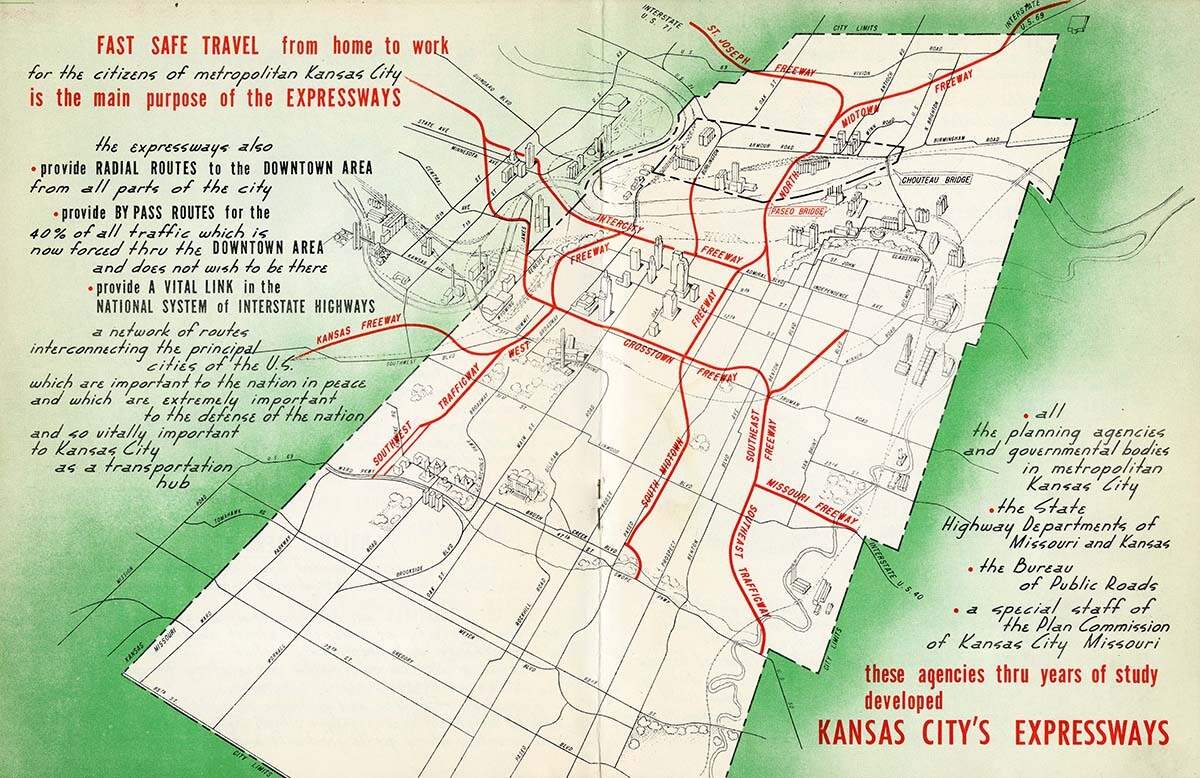
In the wake of World War II, car ownership surged, and Kansas City developed a reputation as a car-crazy town. So, in 1951, City Manager L.P. Cookingham published a report outlining the framework for a new — and necessary — regional interstate highway system.
Notably absent from the plan was convenient highway access to Brookside, Waldo, and the Country Club neighborhoods south of Brush Creek, all areas with high rates of vehicle ownership and use.
A new Southtown resident questioned the lack of connectivity to the freeway system and wondered why it had been designed that way.
The city’s 1951 plan designated the South Midtown Freeway to connect downtown with the rapidly growing communities southeast of the city. But it never came to fruition as intended.
Traffic and transportation in Southtown KC
As vehicle ownership increased, more urban residents relocated to the suburbs. In the Country Club District south of the Plaza, residents grew frustrated with freight trucks and commuter traffic clogging their neighborhood streets and demanded action.
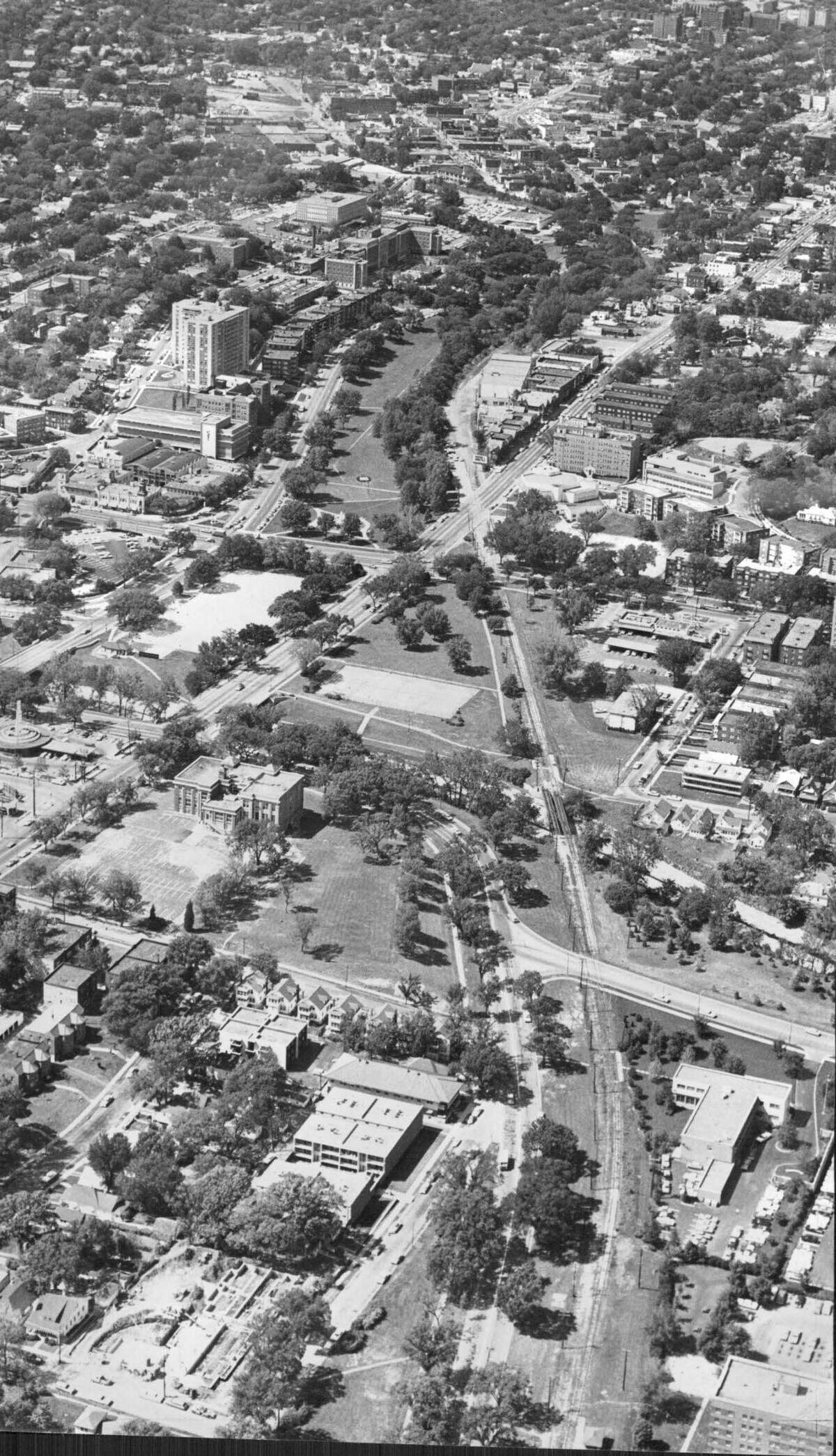
The Kansas City Public Service Company — the predecessor of the Kansas City Area Transportation Authority (KCATA) — began phasing out streetcar service in the 1950s. The once-popular Country Club line ceased operations in 1957, leaving a relatively clear route from Westport to 87th Street, much of it running along Brookside Boulevard, an ideal location for a multilane trafficway to ease congestion in Southtown neighborhoods.
However, the plan was not without its challenges.
First, the Country Club Line right-of-way wasn’t used exclusively for streetcar traffic; more than 70 businesses from Westport to Waldo depended on the tracks for freight deliveries. Additionally, residents opposed the potential loss of homes and other structures to road construction. Most critically, how the city would fund it remained uncertain.
Eventually, the city reached a compromise on the rail issue: a single track would be preserved for freight service. With the trafficway plan finalized, the city began condemnation proceedings to acquire the right-of-way in 1959.
Litigation and funding challenges persisted, delaying progress. Residents were displeased when council members suggested they be taxed to pay for the new road. Meanwhile, concerns grew over the potential impact a major traffic thoroughfare could have on property values.
In 1961, when the city failed to secure funding for the trafficway, the Missouri Highway Department introduced its own plan, leveraging state and federal highway construction funds. No longer a trafficway, the Country Club Freeway would replace the South Midtown route as the connection between downtown and the southeast.
KC residents fight against highway plan
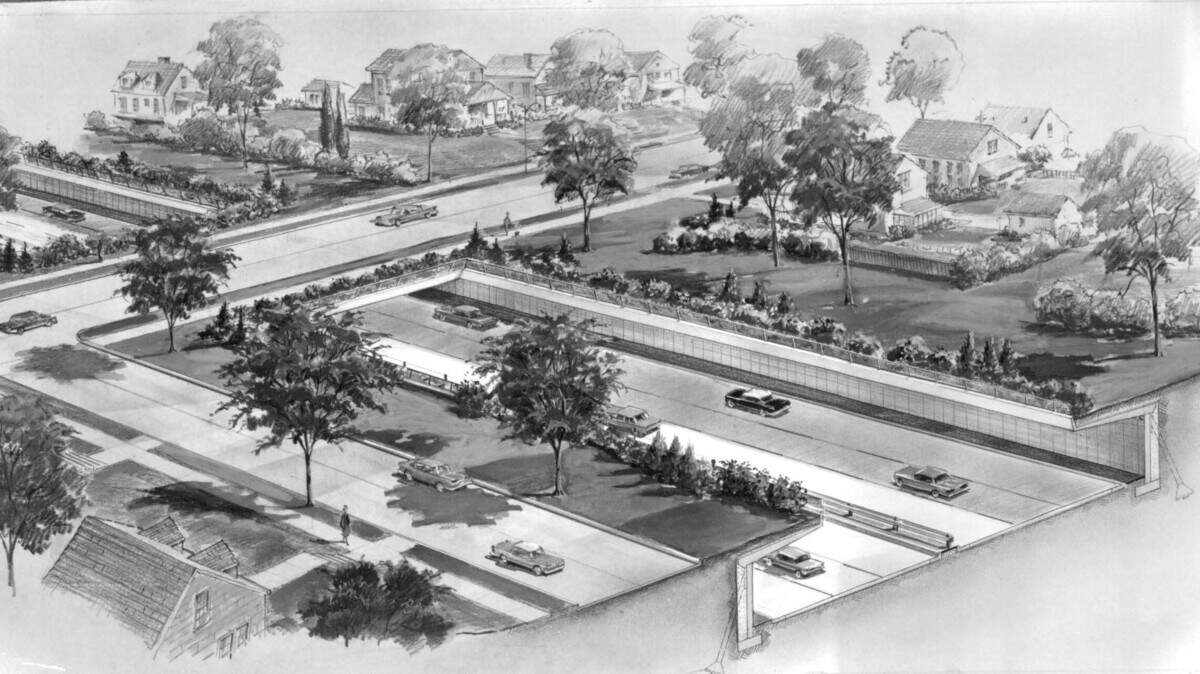
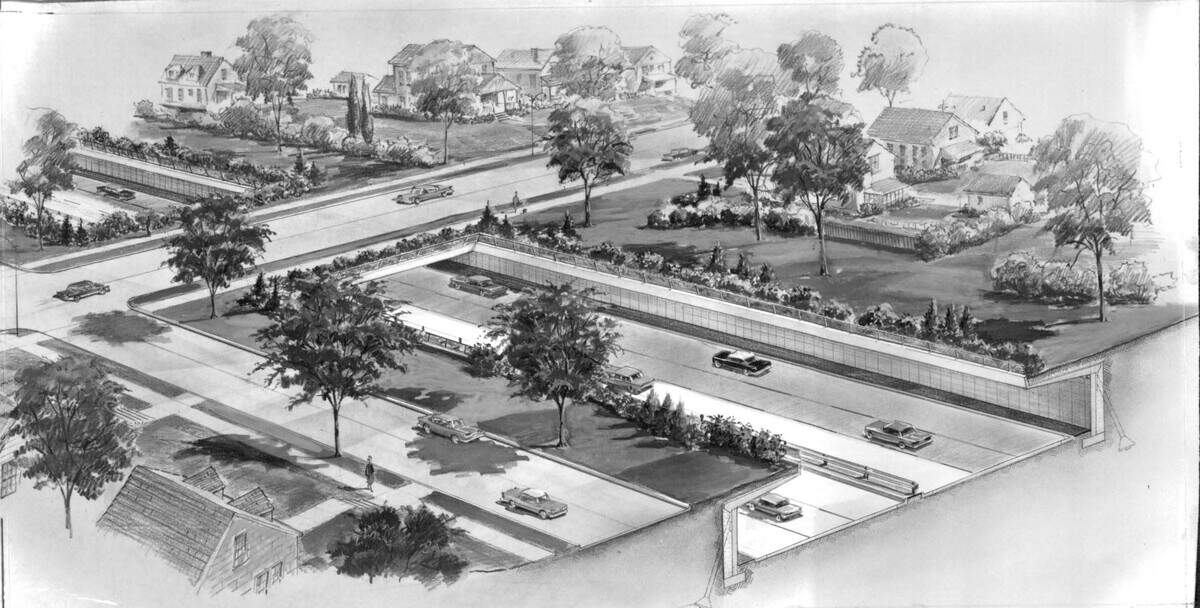
Residents and business owners began attending public meetings and city council sessions to voice their concerns. At a meeting held at Southwest High School on Sept. 18, 1961, Missouri highway engineers outlined the plan — a six-lane, high-speed, limited-access highway, much of it depressed 20 feet or more below the surface. The northern end of the downtown expressway loop was cited as a comparable model.
Meetings that drew modest attendance in fall 1961 attracted crowds in the hundreds by winter. In response, various opposition groups joined forces to form the Kansas City Betterment Association, presenting a unified front against the freeway plan.
In addition to concerns about declining property values, resident displacement, and the disruption of their communities’ character, the association raised fears about children having to cross a hazardous freeway to visit friends or walk to school.
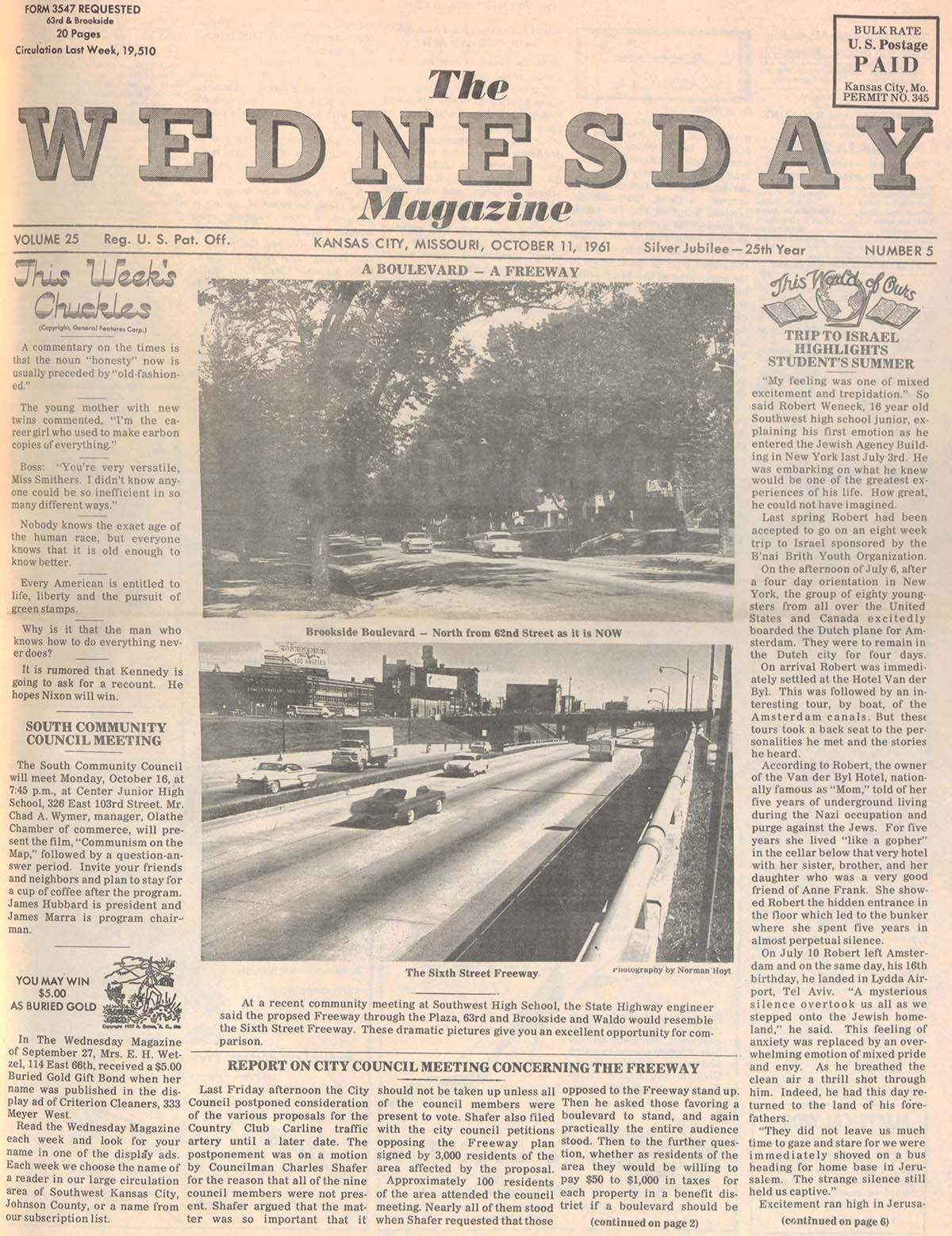
An Oct. 4, 1961, article in “The Wednesday Magazine,” a once-popular Southtown periodical, stated, “But we are not so sure the City and State Highway Department ought to destroy the cultural value of a beautiful part of the city for this purpose, especially when such a freeway could be located, as is the usual custom, in areas where property values are not so high.”
The cover of the following issue featured a striking juxtaposition: a photograph of the bucolic, tree-lined Brookside Boulevard alongside an image of the concrete-choked north end of the downtown loop.
Not everyone opposed the plan. The Downtown Committee and the Chamber of Commerce both voiced their support for the state’s proposal. Kansas Citians living south and east of the route, who stood to benefit from the expressway without disruption to their homes or businesses, also spoke in favor of the project.
Even the J.C. Nichols Company backed the plan, with company president Miller Nichols acknowledging that while construction would pose challenges for the Country Club Plaza and the neighborhoods the company had developed, the long-term improvements to traffic flow would justify the inconvenience.
The condemnation suit over the old Country Club streetcar line dragged on, and as public support diminished, so did the transit authority’s commitment to the city’s plans. In 1963, before the litigation was resolved, the right-of-way was sold to a local family, who continued local freight service.
Some members of the city council continued advocating for a trafficway, but no viable funding plan emerged. In 1964, the Missouri State Highway Commission presented the city with two options: build the Country Club Expressway or revert to the original 1951 plan and construct the South Midtown Freeway.
.jpg "ccf06 (1).jpg")
The state favored the South Midtown route, noting that it was 2 miles shorter, less expensive to construct, and would preserve the Country Club right-of-way for future mass transit use.
The city remained undecided until 1965, when its condemnation case was dismissed. A circuit court judge ruled that the city had no authority to seize an active railway. Following the decision, the city council approved the South Midtown Freeway plan.
The creation of Bruce R. Watkins Drive
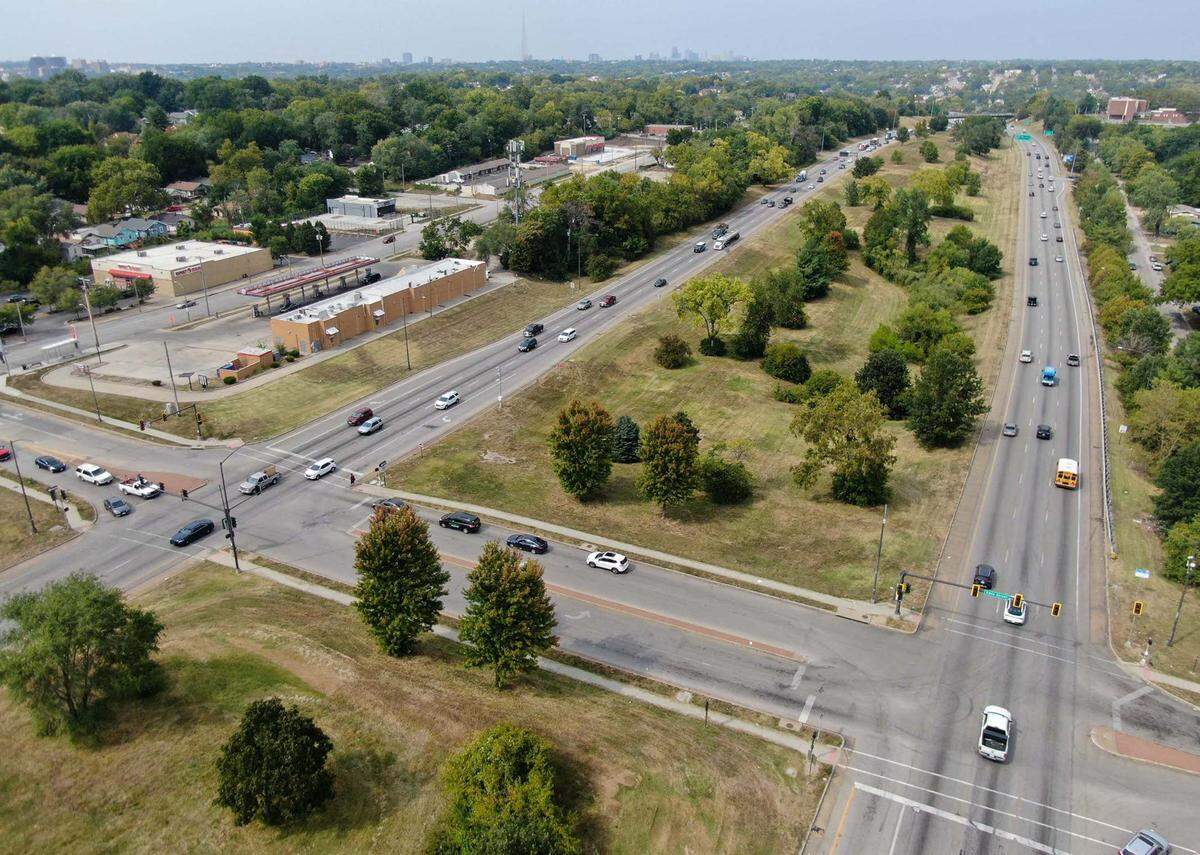
Opponents of the Country Club Freeway got their wish. Instead of an expressway cutting through their neighborhoods, the road was rerouted through the predominantly Black communities to the east.
East Side neighborhood, business, and civil rights organizations fought against the plan but ultimately secured only a few modifications, including stoplights at certain intersections, a reduced speed limit, and landscaping to mitigate environmental impacts. Frequently discussed plans to add mass transit to Bruce R. Watkins Drive have never materialized.
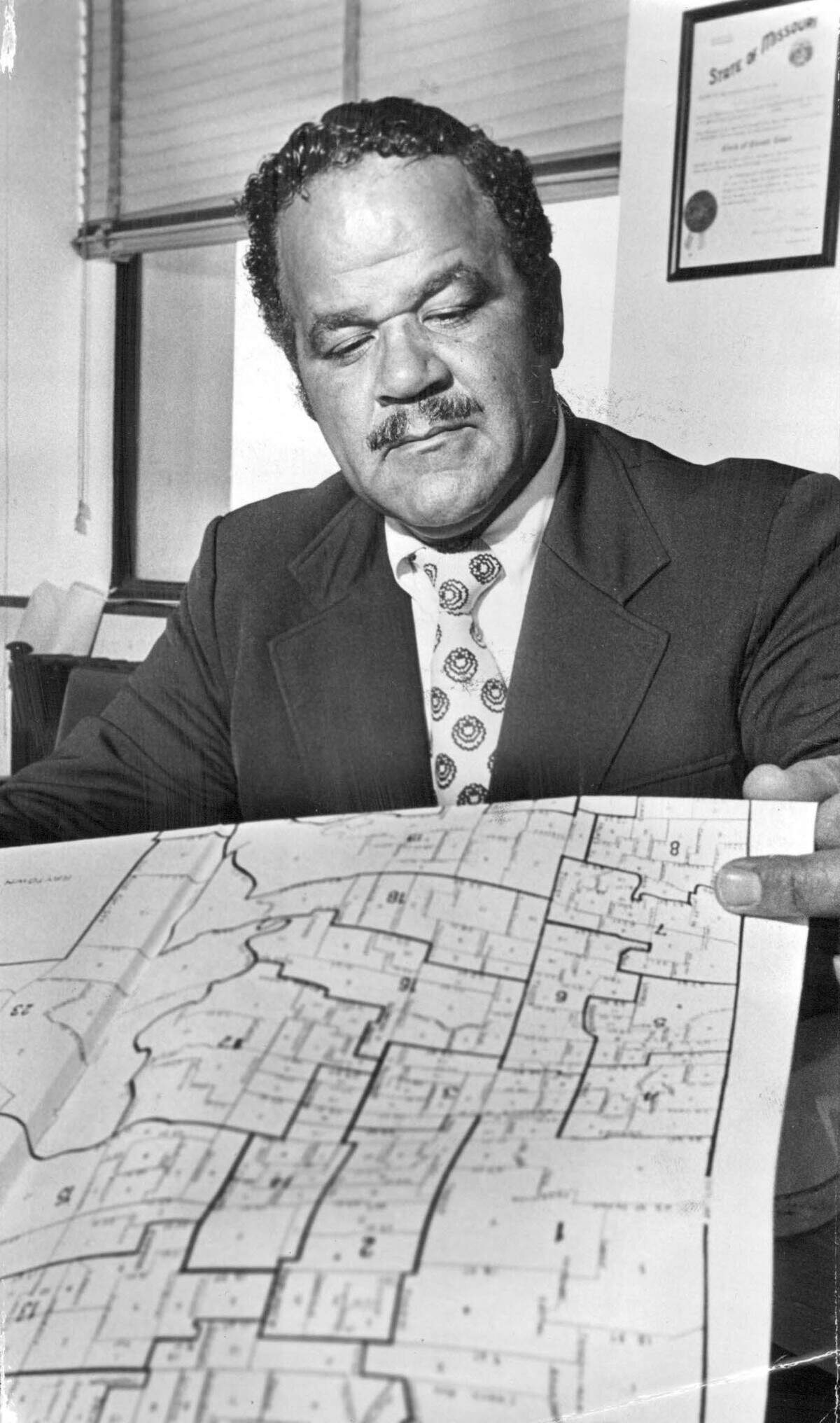
The redesigned highway/parkway hybrid was later renamed Bruce R. Watkins Drive in honor of one of Freedom, Inc.’s co-founders — and one of the project’s most vocal opponents — who once questioned whether it would become Kansas City’s own Berlin Wall.
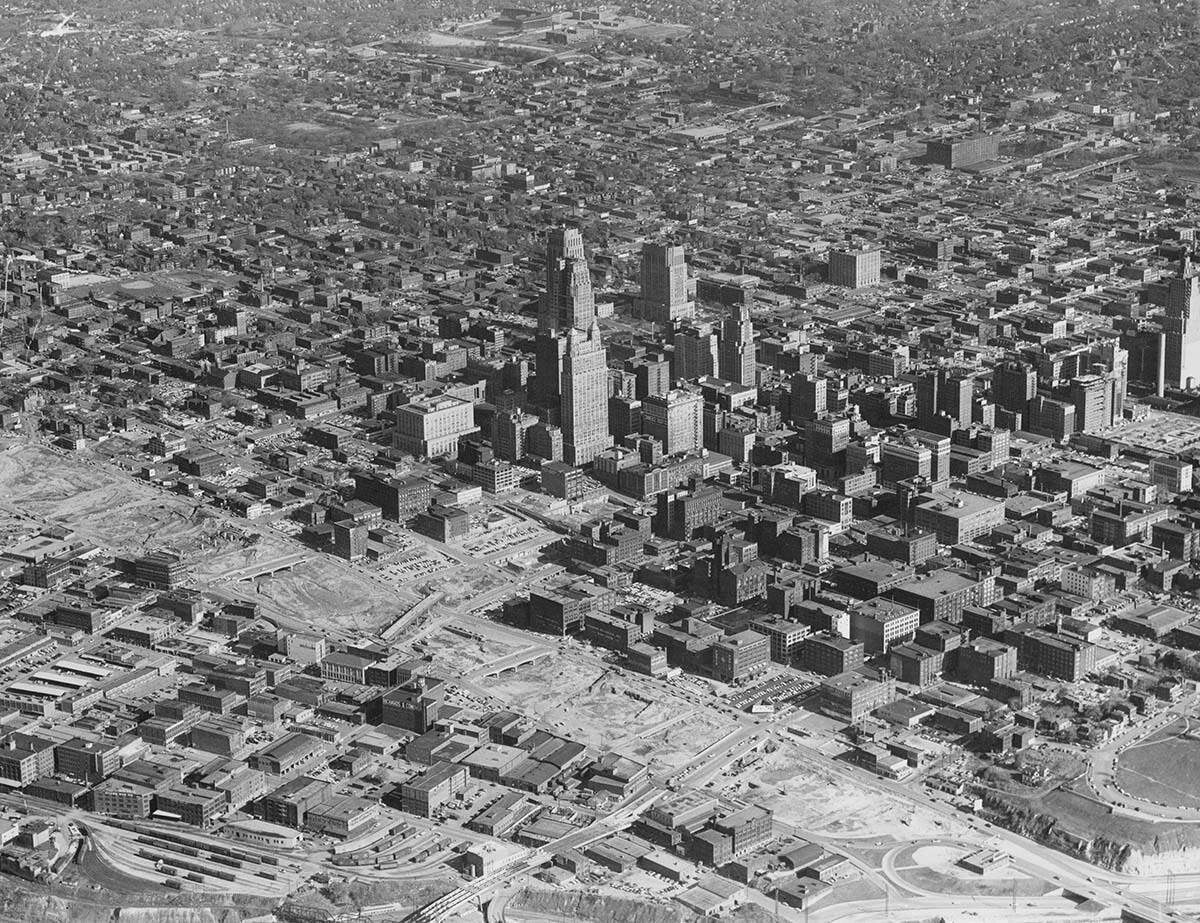
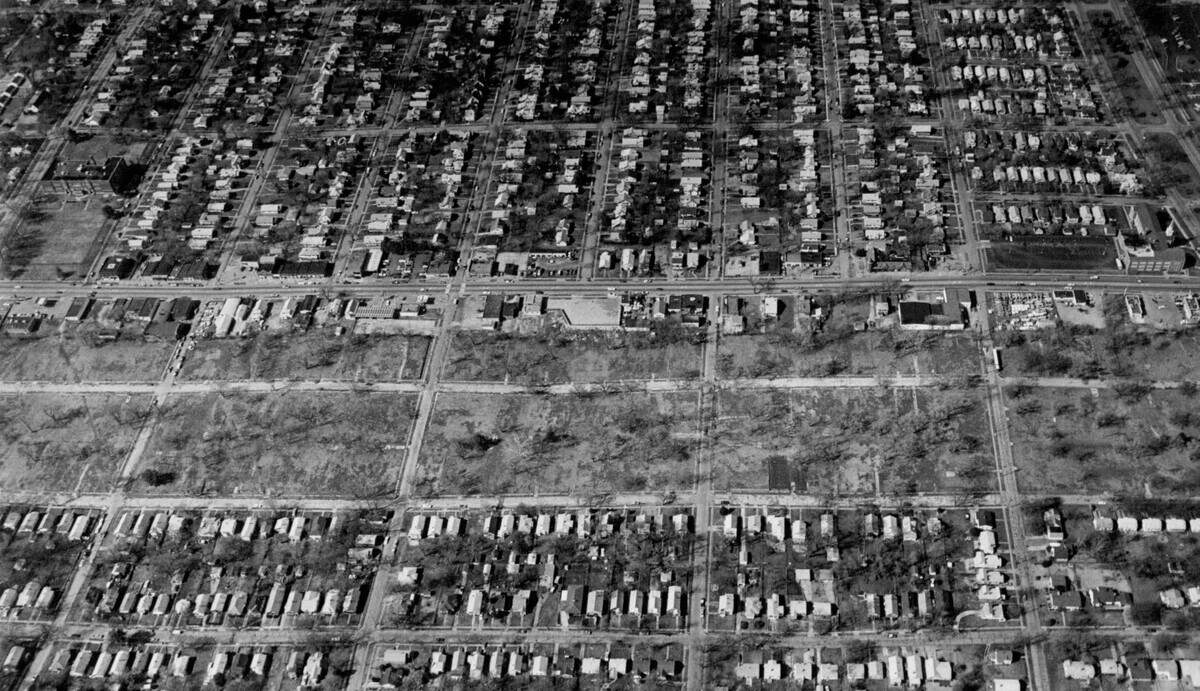
The perceived threats that motivated Plaza-area residents to fight highway planners became realities for those living along the South Midtown route. In 1969, work crews began demolishing buildings in the path, creating a desolate 10-mile strip through East Side neighborhoods. For 25 years, this scar on the city remained a haunting reminder of what was lost until construction finally began after delays in 1994.
The fate of the old Country Club right-of-way remained uncertain. In 1981, the KCATA repurchased it for $1.5 million with plans to install light rail service. However, as federal transportation funding declined during the Reagan administration, those hopes gradually faded.
Locals began using the right-of-way as a recreational trail, and in the late 1990s, the KCATA and the city invested $2 million to develop it into a new public amenity — the Trolley Track Trail.
A tale of two neighborhoods
Instead of a highway, Southtown residents adapted to ongoing traffic congestion. They also benefited from public investment in their community, an investment that undoubtedly boosted their property values.
Kansas Citians living about 2 miles east experienced very different outcomes. They learned to live with declining property values, the displacement of thousands of residents, and the dividing of their neighborhoods from downtown to Bannister Road.
“Detoured: The Making of Bruce R. Watkins Drive,” an exhibition documenting the complex 50-year history of the roadway — from concept to completion — and its lasting impact on Kansas City’s East Side neighborhoods, is now open on the fifth floor of the Central Library at 14 W. 10th St.
To celebrate its opening, Tulane University professor and Kansas City native Kevin Fox Gotham will discuss the major conflicts and struggles among neighborhood residents, city leaders, and highway officials over the planning and development of Bruce R. Watkins Drive. The event will take place at the Central Library at 6 p.m. (reception 5:30 p.m.) on Wednesday, March 12.
This story was originally published March 9, 2025 at 5:00 AM.