At Kansas City museum named for slave owner, staff members search for lost identities
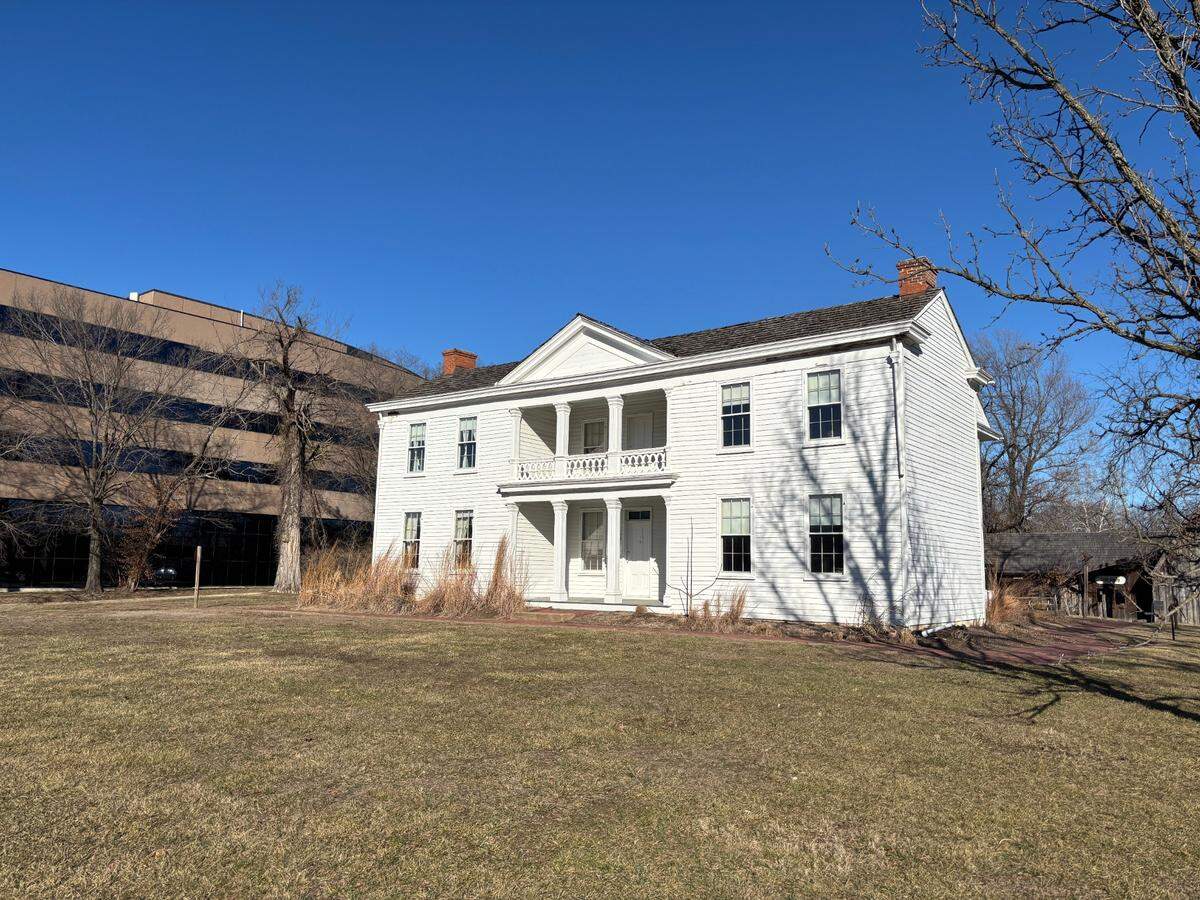
Off of busy State Line Road and nestled next to an office building, birds chirp and the wind rustles leaves at the Alexander Majors House as they did more than 160 years ago.
In 1856, enslaved people built the white clapboard structure when what is now Leawood and south Kansas City were large swaths of prairie. At the edge of the United States — Kansas wouldn’t become a state until 1861 — Alexander Majors, the white man credited with founding the Pony Express, lived on the property with as many as 22 Black people he enslaved.
The names and ages of nine of them were preserved in 1860:
Amos, 45 years old
Henry, 45 years old
Sarah, 32 years old
Charles, 30 years old
John, 25 years old
John, 21 years old
Thomas, 21 years old
Little John, 18 years old
Milly, 12 years old
Sarah Bader-King felt “disbelief and shock” when she found these nine names while looking through an 1860 property record in spring 2024.
Bader-King is the executive director of the Wornall/Majors House Museums, a three-person nonprofit that manages the two Civil War era houses. Visitors to the houses learn about the Civil War and the Pony Express in the Kansas City area through the lens of those who lived and worked at the Wornall and Majors houses.
Bader-King pointed out that both homes were built by enslaved people and both patriarchs were enslavers. For that reason, she said the nonprofit has worked on the signage inside the houses to make “sure that we’re talking about the enslaved people just as much as we’re talking about John Wornall, Alexander Majors, because (the enslaved people) were just as present as those men.”
Though the organization has worked to find information on people enslaved at the two houses, Bader-King didn’t set out to find the names. The museums received a 2020 grant to update signage “to make it more complete,” and found the names of four additional enslaved people at the Wornall House in 2020.
She was looking at documents detailing Majors’ personal property and land to understand how the estate grew and shrunk over time. While the numbers of enslaved people are listed on 19th century censuses, Bader-King said identifying details are hard to find.
“Anytime we can get a piece of information, it’s so exciting, and it helps us to kind of create a fuller picture of who they were,” Bader-King said.
Inside the house
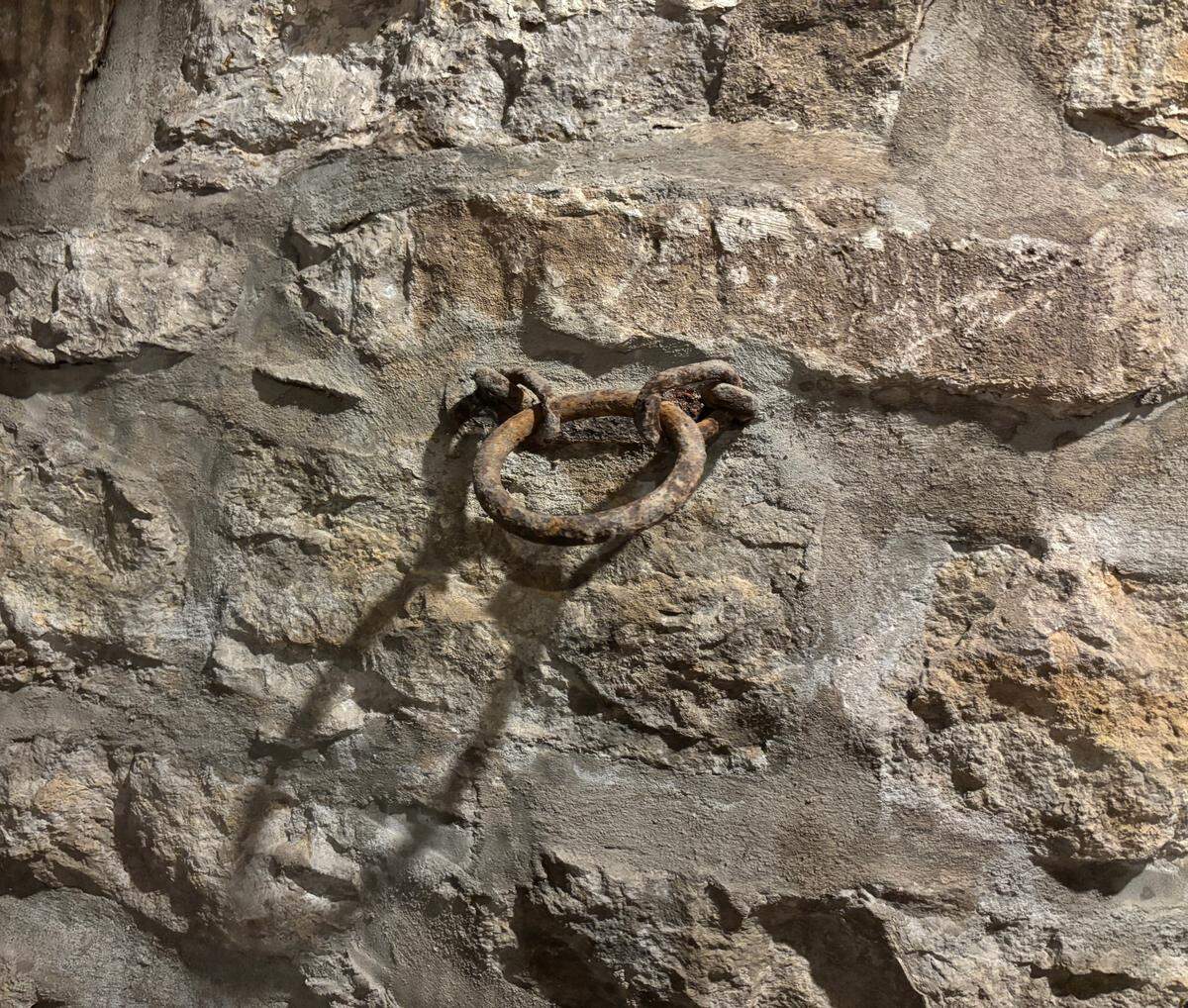
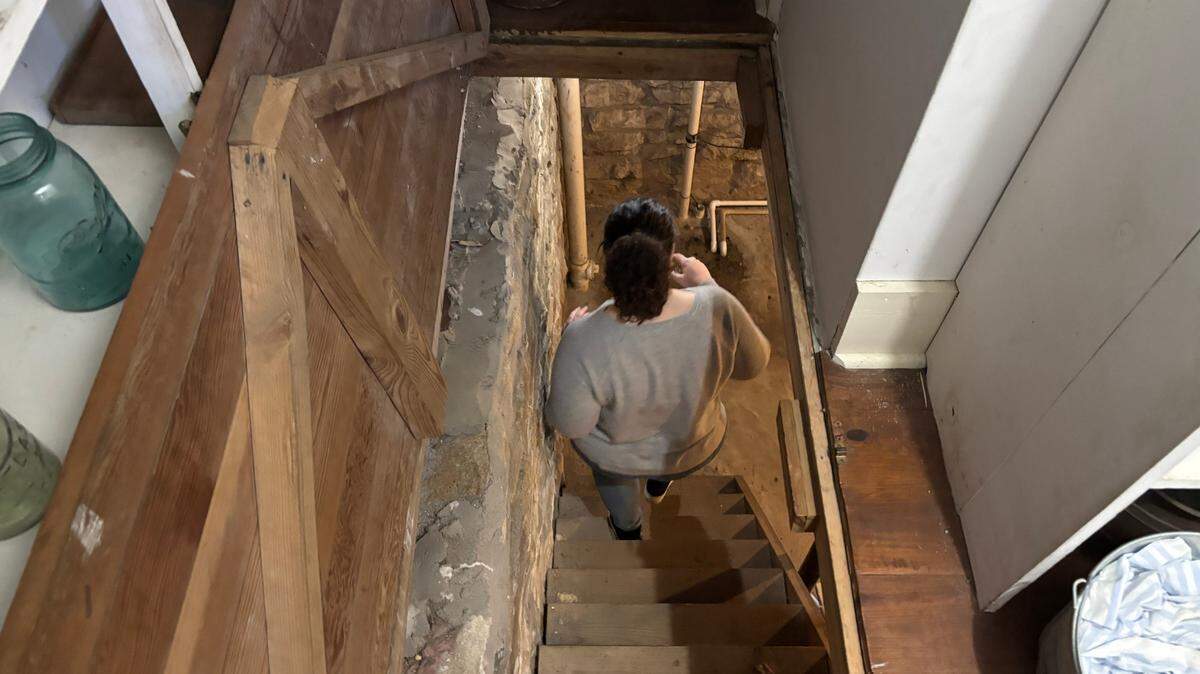
While walking through the house recently, Bader-Knight bent down to open a creaky cellar door in the floor of the Majors house. In the basement of the structure, embedded in the stone wall, is a metal ring. This is believed to have been used to restrain enslaved people.
“It’s pretty heavy to look at, but it’s like the one really tangible thing that we have.” Bader-Knight said. “We don’t have a lot of artifacts related to slavery, because people didn’t keep that stuff. They didn’t want to be reminded of it.”
‘Ho! For Freedom!’
Majors did not keep all the people in captivity for long.
The escape of six people enslaved by Majors from Nebraska to Iowa was described in a June 1860 article in the Nebraska City News with the headline “Ho! For Freedom!”
The article stated, “A reward of $1,000 is offered for the apprehension and recovery of the fugitives.”
Bader-King does not know if these were the same people listed in property records.
She said that the nonprofit plans on continuing its research on people enslaved in the Kansas City area.
Bader-King said that the Wornall/Majors House Museums plan on building a searchable database of thousands of enslaved people in Jackson County using a three-year grant from UMKC, to help genealogists and researchers.
Have more questions about Kansas City history? Ask the Service Journalism team at kcq@kcstar.com.