Will rain derail your weekend plans in Kansas City? Here’s the latest forecast
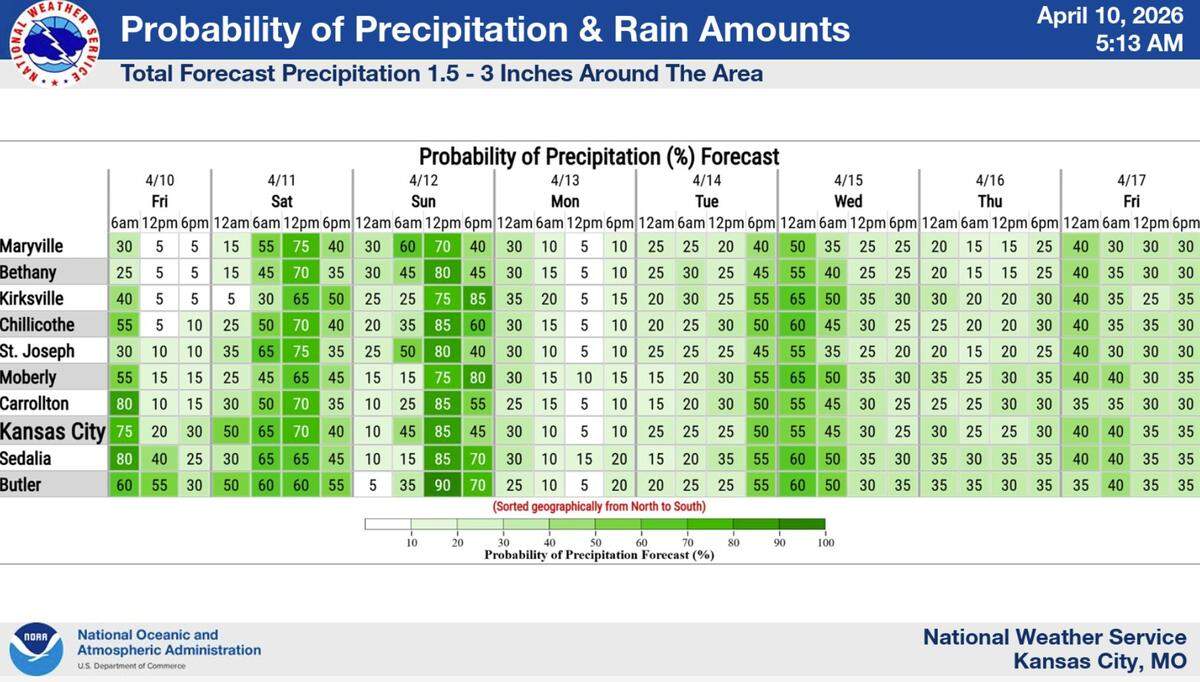
Kansas City is in for a wet weekend, with waves of showers and thunderstorms bringing repeated rain chances through Sunday and into next week and a risk of localized flooding in spots, according to the National Weather Service.
“Seemingly never-ending chances for showers and storms, and that about sums it up,” the weather service said. “From today (Friday) through at least the middle of next week, there will be almost daily opportunities for showers and storms across the area.”
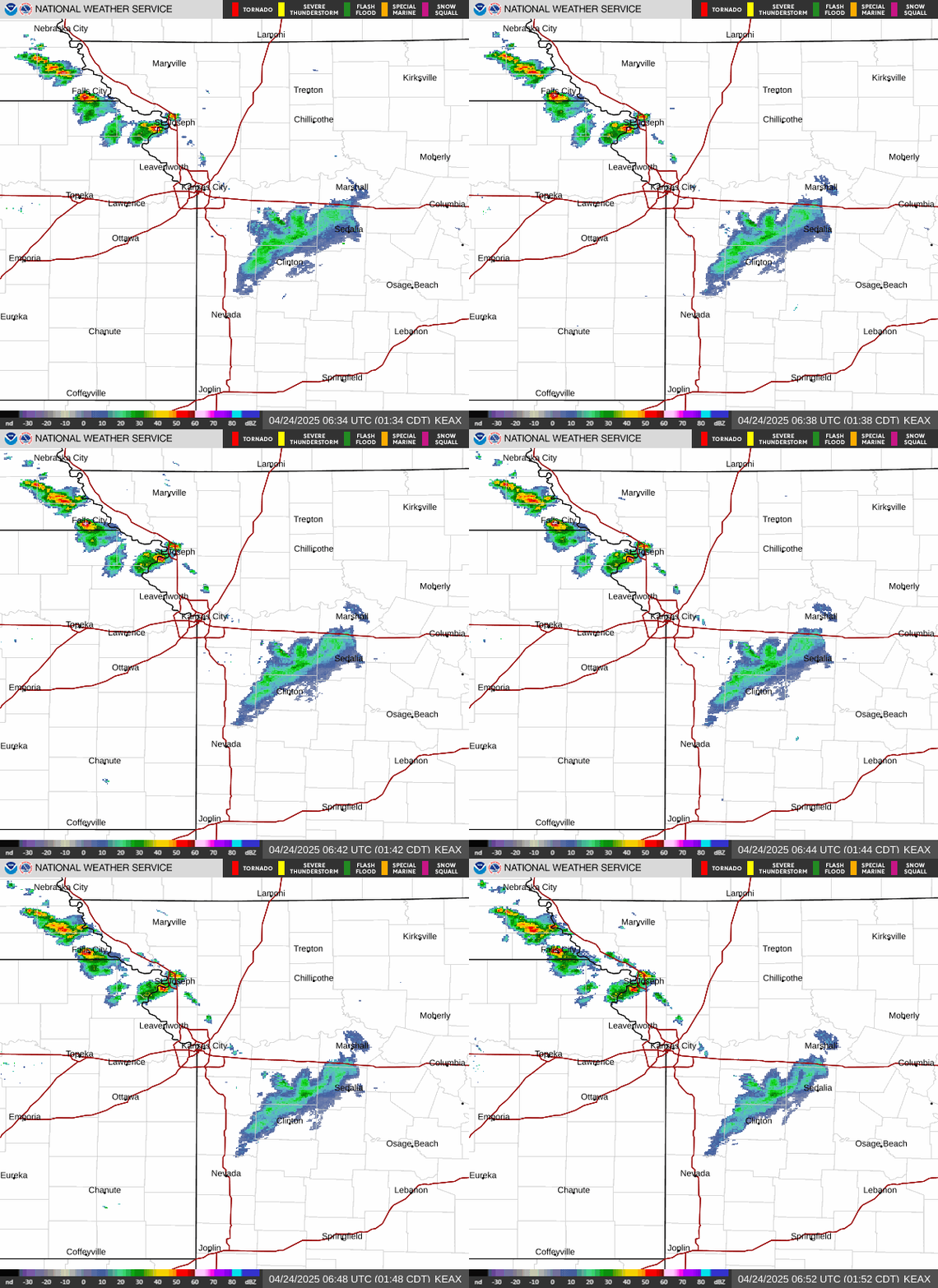
Overnight showers and thunderstorms were tapering off across the Kansas City metro Friday after dropping up to 2.5 inches of rain in some areas and causing isolated flooding — including in the northwest corner of the downtown loop, where eastbound Interstate 70 was closed for a few hours early Friday.
Some leftover showers and thunderstorms may hang on in the southern part of the region, the weather service said.
Temperatures will be noticeably cooler, topping out near 60 degrees, below the normal of 64 degrees for this time of year.
Another batch of showers and thunderstorms will move back into the area late Friday into Saturday morning, the weather service said. While rain chances linger and skies may stay mostly cloudy, temperatures will rebound into the mid-70s.
More rain is expected on Sunday with scattered showers and thunderstorms possible. Temperatures will be a couple of degrees cooler, hovering in the low 70s.
“Through the weekend, the overall strong to severe storm threat is low,” the weather service said. “By Monday night and possibly Tuesday and into Wednesday, better chances for a few strong to severe storms may cross the area.”
The timing and location of the stronger storms are still uncertain.
Overall flooding risk remains low, but it could increase if heavier downpours repeatedly track over the same areas. With several chances for rain through early next week, the weather service said soils may become saturated and creeks and rivers could rise, raising the risk of localized flooding, especially in poor-drainage areas.