
Kansas City under excessive heat watch as dangerously hot conditions threaten metro
READ MORE
Excessive Kansas City heat
Tornadoes, hurricanes and floods often capture the public’s attention, but it’s the extreme heat that’s deserving of more awareness — it’s the No. 1 weather-related killer. Excessive heat claimed an average of 138 lives per year in the U.S. from 1990 through 2019, according to the
. When Kansas City’s heat turns blistering, we’ve got you covered.
Expand All
Get ready to find a way to stay cool Kansas City — the metro’s first heat wave in two years could arrive Friday and stretch into next week, according to the National Weather Service in Kansas City.
“HOT. HOT. HOT,” the weather service said in its area forecast discussion. “Heat is expected to build each day with the mid-90s expected Friday and continuing into next week. Heat indices will be near or above 100 Friday through much next week.”
The potential of dangerous heat has prompted the weather service to issue an excessive heat watch for the Kansas City metropolitan area.
Large metro areas like Kansas City see hotter summertime temperatures and are more likely to trap the heat than their surrounding rural areas — a phenomenon known as an “urban heat island.”
“Extreme heat and humidity will significantly increase the potential for heat related illness, particularly for those working or participating in outdoor activities,” the weather service said.
In addition to sizzling heat index values, overnight temperatures are expected to remain above 75 degrees each night, providing little relief.
Heat wave
The weather service defines a heat wave as a period of abnormally hot weather that generally lasts more than two days. The last time Kansas City had three or more consecutive days of temperatures above 95 degrees was a period of four days ending on July 20, 2019.
Extreme heat is the No. 1 weather-related killer, claiming an average of 138 lives per year in the U.S. from 1990 through 2019, according to the weather service.
The excessive heat watch has been issued for Leavenworth, Wyandotte and Johnson counties in Kansas and Platte, Clay and Jackson counties in Missouri and includes Fort Leavenworth, Leavenworth, Lansing, Kansas City Kansas, Overland Park, Olathe, Shawnee, Lenexa, Parkville, Platte City, Riverside, Gladstone, Liberty, Excelsior Springs, Kansas City and Independence.
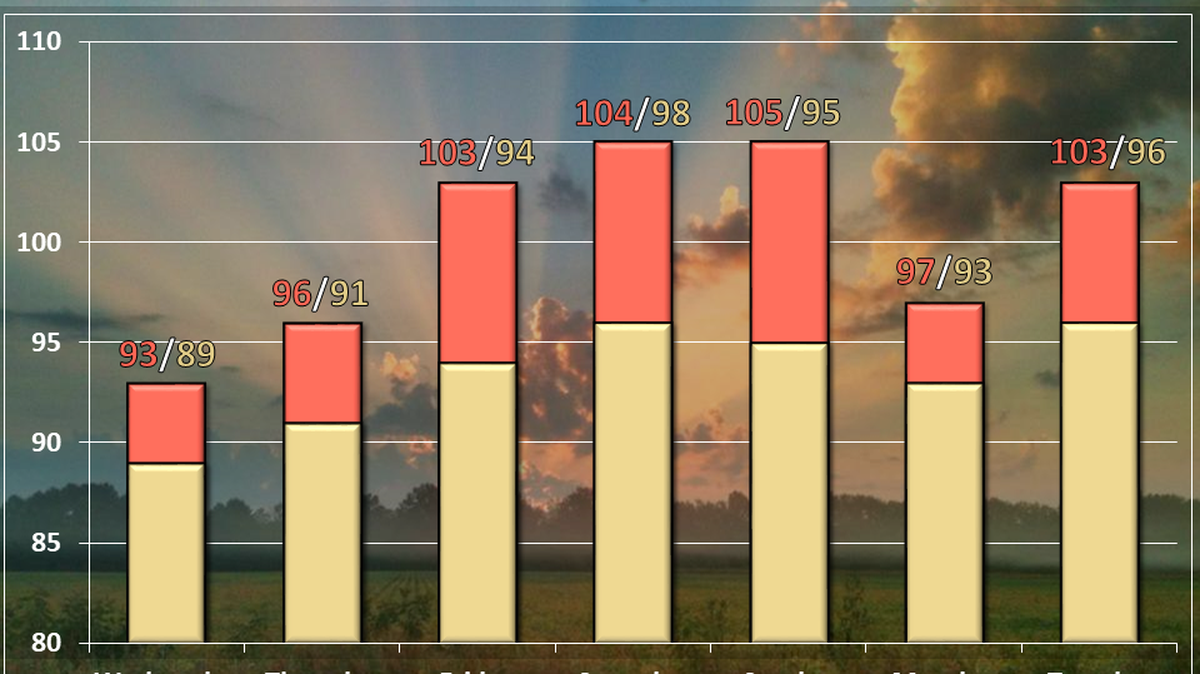
The metro can expect Wednesday to be the coolest day from now through next week with afternoon highs topping out in the upper 80s.
A prolonged period of hot and humid conditions is expected to build into the area on Thursday, with temperatures around 90 degrees and heat index values in the mid-90s. Moisture from the Gulf of Mexico is expected to stream north, causing dew points to rise and making it feel “a bit sticky,” the weather service said.
Generally, most people find dew points less than 60 degrees comfortable. When it rises above 65 degrees, people will begin feeling that the air is “sticky.” When it climbs into the 70s, the humidity becomes a nuisance to more and more people and the heat feels oppressive.
Weather forecast
Temperatures are expected to soar into the mid-90s Friday afternoon with a heat index around 100 degrees possible in the afternoon. Conditions will be similar on Saturday. Dew point values are expected to be in the lower to mid-70s, which will make Saturday afternoon feel “quite unpleasant,” the weather service said.
Conditions on Sunday will be a near repeat, with temperatures climbing into the mid-90s and heat index values between 100 and 105 degrees. There’s a possibility of clouds and rain on Monday, which could provided a break from the excessive heat.
The heat returns on Tuesday with next week possibly being even hotter with heat index values between 105 to 110 degrees.
The weather service is urging to people to be prepared to drink plenty of fluids, stay in an air-conditioned room, stay out of the sun and check up on relatives and neighbors.
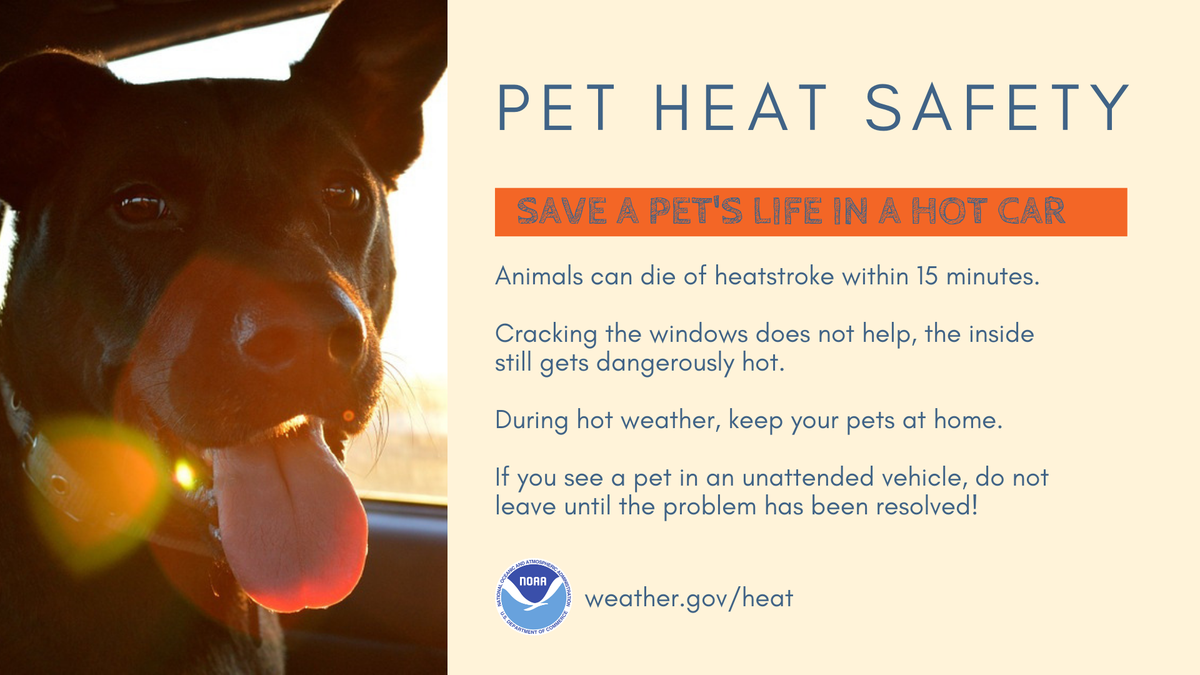
“Young children and pets should never be left unattended in vehicles under any circumstances,” the weather service said. “This is especially true during warm or hot weather when car interiors can reach lethal temperatures in a matter of minutes.”
This story was originally published July 21, 2021 at 9:58 AM.


.png)