Wrongly convicted, he left prison with $14. Missouri offers ‘nothing’ to the innocent
READ MORE
Missouri exonerees
In Missouri, the wrongfully convicted receive little to no help from the state upon their release. State and local officials agree there has to be a better way.
Expand All
Wrongly convicted, he left prison with $14. Missouri offers ‘nothing’ to the innocent
Want to help exonerees and the wrongly imprisoned in Missouri? Here’s how
In Missouri, innocence is not enough to free the wrongfully convicted. Here’s why
Interactive: See how Missouri and Kansas treat the wrongfully convicted

For Missouri exonerees, the struggle doesn’t stop at being declared innocent
Editor’s note: This story includes a quote containing a racial slur.
When Joe Amrine was proven innocent of a murder that kept him locked behind bars for 17 years, the state cut him a $14 check.
It was his own money, left over from the prison commissary.
Like most prisoners released after a wrongful conviction in Missouri, Amrine did not receive a dime from the state. Unlike with guilty prisoners, a parole officer did not help Amrine find counseling, housing or work. He has fed himself at times by going to a food pantry.
He now lives in an apartment attached to a home once owned by his mother, who died while he was on death row. His water and electricity have been cut off for weeks at a time. He just became eligible for Medicaid, 18 years after his release.
“Maybe they’ll cover some of his therapy,” said Sean O’Brien, an attorney who helped free Amrine, now 65. “But he’s got medical needs that Missouri has basically been saying, ‘F—k you, Joe.’”
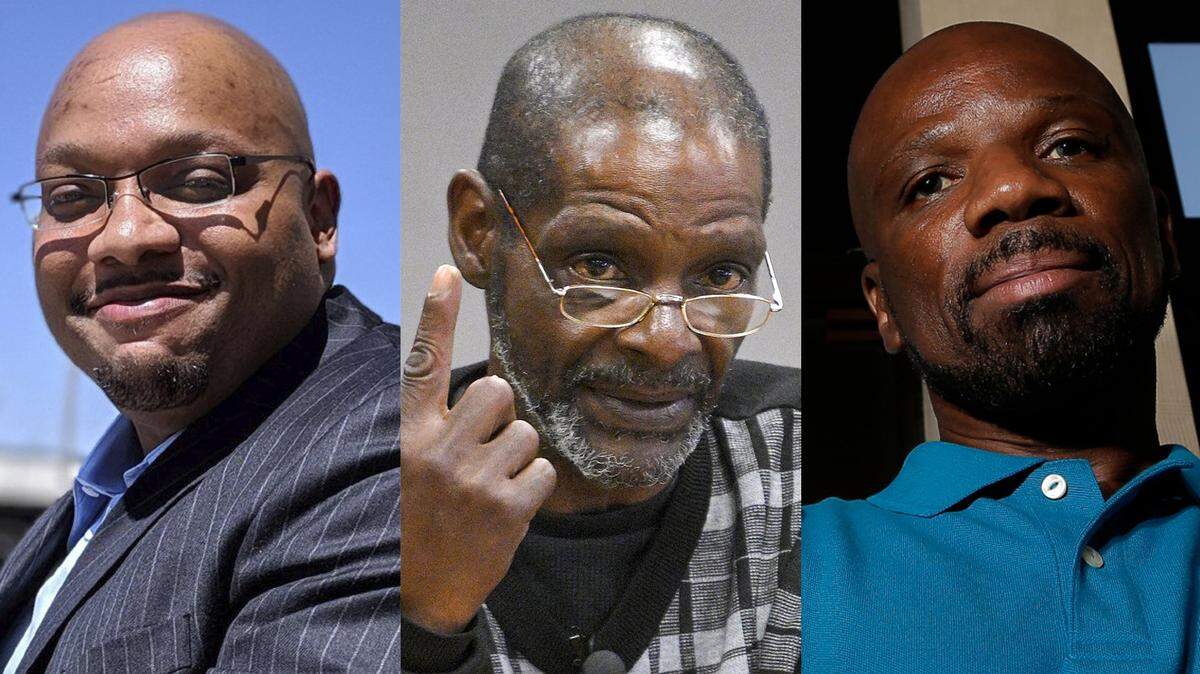
In interviews with The Star, five Missouri exonerees described their arrests as kidnappings, their wrongful imprisonments as torture and their freedom as being secured only after grueling court battles. Unlike the exonerated in some other states, including Kansas, most never get compensation, therapy or so much as an apology from Missouri.
“People think that they’re free. ‘Good. Finally, that boy get to move on with his life.’ Can he really?” asked Ricky Kidd, a Kansas City man who spent 23 years in prison for a double murder he did not commit. Kidd pointed out that he pays for therapy out of his own pocket. “I’m finding out just how broken I was — how much they broke me in those 23 years.”
Jackson County Prosecutor Jean Peters Baker and some state officials agree there must be a better model than providing the wrongly imprisoned “nothing” upon release. One state lawmaker from Kansas City has vowed to introduce legislation that would broaden the state’s compensation law, ensuring that exonerees are paid and receive social services, such as healthcare.
The Missouri Department of Corrections said exonerees don’t get help from parole officers because they are not under that form of supervision, which “comes with many, many restrictions.” But its spokeswoman, Karen Pojmann, said there are resources in prison that aim to assist people in re-entering society, including vocational education programs and parenting courses.
Pojmann sent The Star a timeline of preparations taken before a prisoner is released, which includes a 30-day pre-release job placement. She said former prisoners, regardless of how they were released, can also contact the Office of Reentry Services.
“Someone who has been exonerated might not have enough advance notice to progress through this timeline, but the resources, including community resources, are available nonetheless,” she said.
When Amrine, then 46, was freed in 2003, The Star followed him during his first year out of prison. He had highs: speaking out against the death penalty. There were lows too, including days-long drinking binges.
Speaking to The Star in October, as he sat in a beat-up chair behind his apartment, Amrine recalled that one of his cousins, who made parole after serving 22 years for a murder he was guilty of, received food stamps and a disability check. He was also eligible for Medicaid and got drugs through its coverage — which he then sold.
“Here I am, I’m exonerated, and I can’t get none of this,” he said.
Amrine’s situation is not unique. While a judge on Tuesday exonerated Kevin Strickland — who suffered one of the longest wrongful convictions in U.S. history — lawyers and exonerees said it’s not only exceptionally difficult to free the wrongly convicted in Missouri, but if they are among the lucky few to go home, most of them are spit out of the system with no assistance from the state.
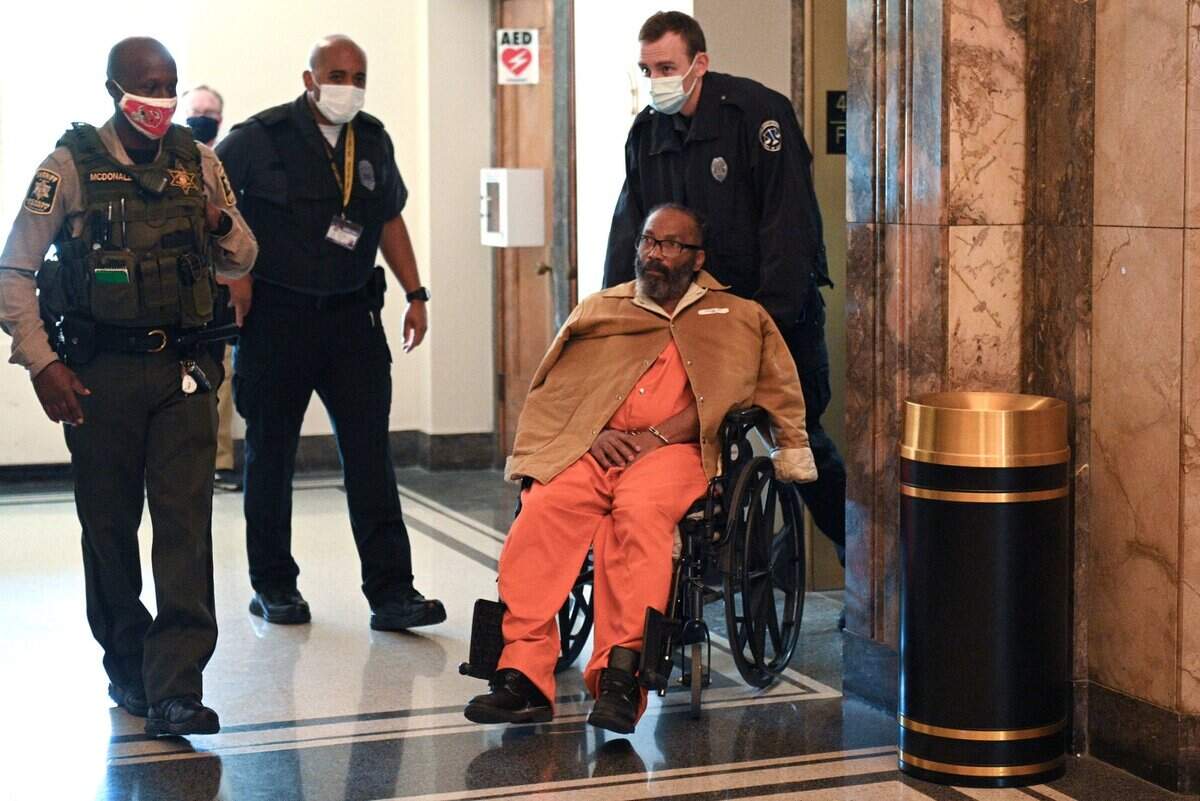
Over the years, reporters have asked Amrine if he has any animosity in his heart. He thinks they want him to say no — but of course he’s still angry at the state of Missouri, he said.
“I’ve been telling the same lie for 18 years,” Amrine said. “I’m tired of living a lie.”
‘Hook or crook’
Decades ago, Amrine and his brother robbed a Safeway store with an unloaded gun. It landed him in prison in 1977.
Amrine was more than halfway through his 15-year sentence when a fellow prisoner named Gary Barber was stabbed to death in 1985 at the Missouri State Penitentiary in Jefferson City. At the time, Amrine was about 90 days away from getting paroled.
Based on the word of three other prisoners — at times dubious testimony that has led to other wrongful convictions in Missouri — Amrine was found guilty in 1986 of first-degree murder. Like Strickland, who Amrine once shared a cell with, he was a Black man convicted by an all-white jury. Amrine was sentenced to die.
He spent time on what a lawyer once called “one of the worst death rows in the country,” where low-wattage light bulbs and painted-over windows created a “dungeon-like atmosphere,” according to news reports at the time. Two prisoners said they preferred to proceed with their executions rather than spend more time on Missouri’s death row, The Star reported in 1986.
During Amrine’s time on death row, more than 60 prisoners, including men with whom he became close friends, were executed.
In 1995, a prisoner he played basketball with called out to him as guards came to take the man away. Amrine had said so many goodbyes by then, he could do nothing more than pull the covers over his head and curl into a ball.
“That f—ked me up,” Amrine said.
During his 6,043 days on death row, Amrine himself faced execution four times. He came within hours of death.
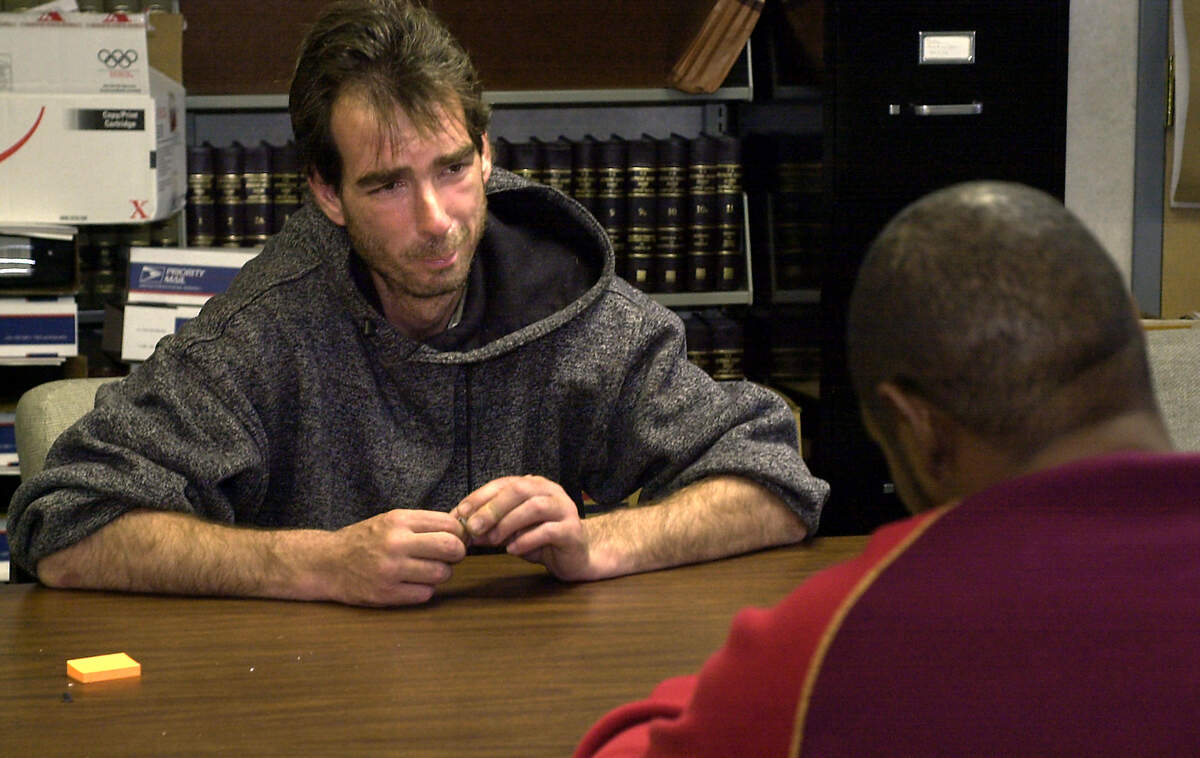
The three prisoners who testified against him eventually recanted and admitted they lied for their own benefit. But the Missouri Attorney General’s Office — which has fought just about every wrongful conviction claim to come before it in recent memory, including Strickland’s — argued that Amrine should be executed in the name of finality.
“Are you suggesting ... even if we find that Mr. Amrine is actually innocent, he should be executed?” Laura Denvir Stith, a state Supreme Court justice, asked of Assistant Attorney General Frank Jung in 2003.
Jung responded: “That’s correct, your honor.”
Amrine was not in the room for the exchange. But to him, it seems like Missouri stands by its convictions “hook or crook.”
“I went two years there with no appeals at all, you know, so I just knew I was going to get executed,” Amrine, standing next to O’Brien, told a swarm of reporters the day he was freed.
Because of Amrine’s prison reputation, which included at least one stabbing he admits he committed, even his mother thought he carried out Barber’s killing, and that Missouri was going to kill him for it. She never learned he would now be among four prisoners who were sentenced to die in Missouri and later exonerated.
Now, Amrine says if she hadn’t left her house to her kids, he’d be homeless.
O’Brien said the only way most Missouri exonerees receive money is by suing. Some have won millions. But for a lawsuit to succeed, the exoneree would have to show that police or prosecutors acted in bad faith, which he called “a very steep uphill climb.”
In 2007, a federal judge threw out Amrine’s civil rights lawsuit. He then filed a malpractice suit against his public defender.
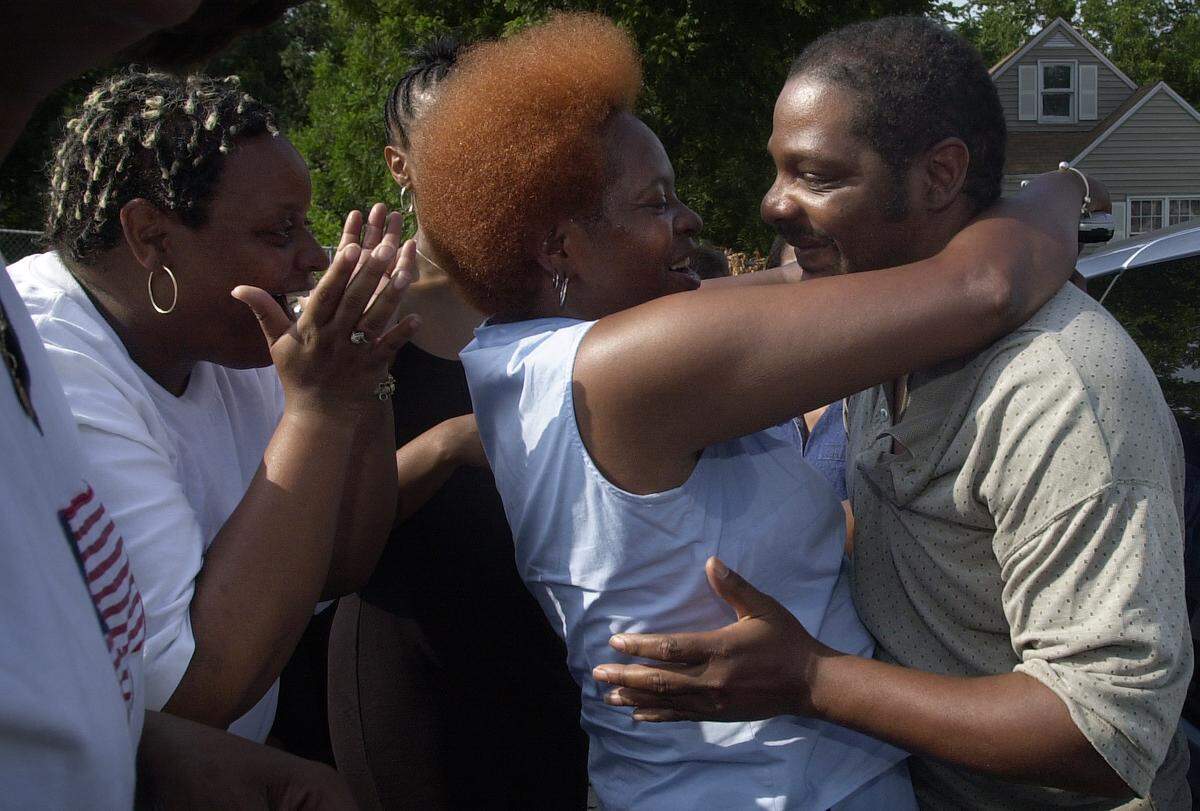
For more than six years, Amrine had to take the case to court three times before the attorney general’s office agreed to settle. One of those times, the judge ordered a re-trial after a juror said, “We’re not going to give that nigger a dime,” O’Brien recalled. Amrine ultimately got about $130,000. That’s around $7,600 for each year he wrongly spent on death row.
Amrine, however, was never compensated by the state. As of October, he said he had been going once a week to a food pantry at an East Side church. Since then, he has gotten a job washing dishes at a hotel in the Crossroads.
Since his highly-publicized exoneration, Amrine has struggled financially and emotionally. He suffers from post-traumatic stress disorder, depression and survivor’s guilt. He hoped it would get better with time — it hasn’t.
He has not been doing as many speaking engagements, for which he typically makes $250 a pop, since the pandemic. Lawyers who set up those events say they make sure he gets compensated for them. He is, after all, talking about the worst thing that has ever happened to him.
“Unfortunately, it grows and grows,” Amrine said. “My mental issues steady growing. I mean, everyday I find something different.”
Most aren’t compensated
In Kansas, exonerees are eligible to receive $65,000 for each year they were imprisoned as well as social services that include housing and counseling. They can participate in the state’s healthcare program and receive tuition assistance on top of that.
They are also handed a certificate of innocence, which means more to them than many might realize.
Missouri exonerees get no such support.
Local attorneys say they tend to see Kansas exonerees fare better than those in Missouri. In the Show Me State, “if exonerees are doing well, it’s in spite of the system, not because of it,” said O’Brien, who has worked with 17 exonerees.
While Missouri has a compensation law, unlike 13 other states, it’s so narrow that most exonerees never see a dime.
Prisoners who prove their innocence “solely as a result” of DNA testing through a specific statute are entitled to money, but they are not if they win their freedom with DNA another way. For the eligible few, they are entitled to $100 for each day they were imprisoned, which experts say is less than what other states pay.
The federal standard for compensation is $50,000 for each year of wrongful imprisonment. The majority of states with a compensation law — including Indiana, Alabama and Texas — provide that or more.
Missouri, however, caps the payments at $36,500 a year, so if a person was imprisoned for 10 years and proved their innocence through the DNA statute, the $365,000 they are owed would be spread out over 10 years. That’s a problem, innocence advocates say, because the state does not pay interest and because payments are terminated upon the exoneree’s death.
“Suppose you were exonerated after 20 years in prison. Why should you have to wait another 20 years before receiving the full compensation that Missouri provides?” asked Jon Eldan, founder of After Innocence, a nonprofit that has helped more than 800 exonerees across the U.S. “And if you do not live that long, why should the state keep the money you were promised?”
Fifty people have been exonerated in Missouri, including defendants acquitted at retrials and prisoners declared actually innocent. At least 15 were freed with the assistance of DNA. Some of them were not compensated.
Even if a prisoner is compensated through the DNA statute, they are then barred from filing a lawsuit, which could reveal wrongdoing through discovery. The civil process, lawyers say, could help identify bad actors in the legal system.
In August, state Rep. Richard Brown said he planned to introduce legislation that would ensure the wrongly convicted, whether freed through DNA or not, are compensated. It would include access to job training and health services, among other things.
Brown, a Kansas City Democrat, noted that an online fundraiser for Lamar Johnson, who has served 26 years for a 1994 murder that St. Louis prosecutors say he did not commit, has raised about $3,000.
“Congratulations, Mr. Johnson,” Brown said sarcastically. “When you are released, you will have enough money to be counted among our citizens who live in poverty.”
‘On your own’
Reggie Griffin spent more than two decades in prison, including time on death row, for a 1983 prison murder at a correctional facility in Moberly. He was freed in late 2012 and exonerated the next year.
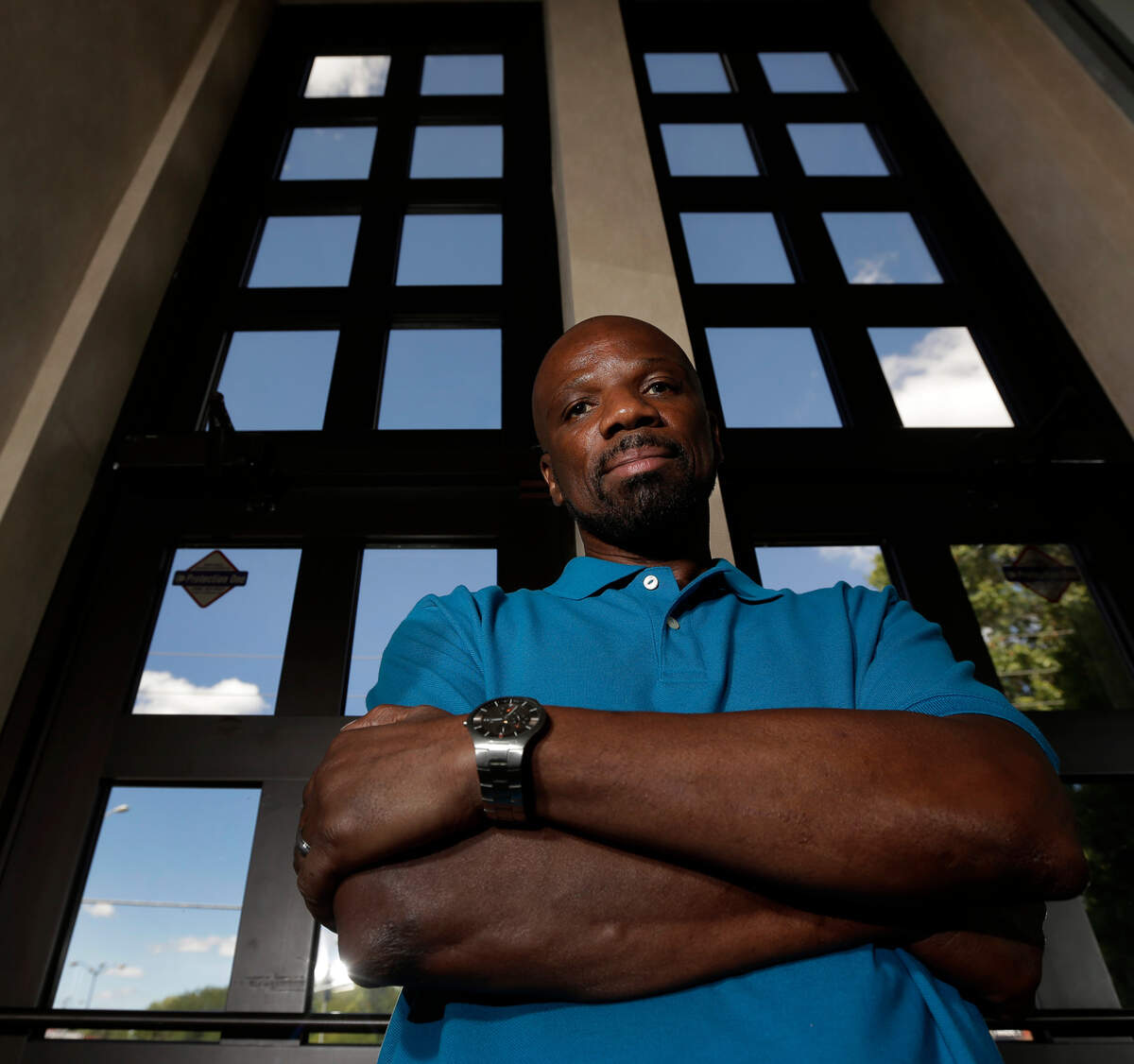
Griffin was happy to be free, but he soon learned that while there are “all kinds of programs” for parolees and those on probation, he was just released back into the world, he said.
“They have nothing set up for an exoneree,” Griffin said. “You’re on your own.”
Since his release, he and Amrine have made money by cleaning the offices of the lawyers who secured their freedom. Amrine has also cut the home yard of another post-conviction attorney, while Griffin has worked as a janitor and in construction and lawn care.
Griffin was laid off when COVID-19 hit. His emergency funds ran out. Last year, he set up an online fundraiser seeking donations; it raised about $3,300. In September, he said, he was behind on rent, could lose his apartment and may have to go to a shelter.
Nearly a decade after his release, Griffin described life as still being an “uphill battle.” He and Amrine have separately said they believe they are still being punished. The exonerated, Griffin said, “just fall by the wayside.”
Tricia Rojo Bushnell, executive director of the Midwest Innocence Project, has seen exonerees struggle. Unlike guilty prisoners, she said, they don’t get a caseworker to help them find a job or obtain an identification card.
“How do you return to the world when nobody is there to help you?” she asked.
Complex PTSD
When Ricky Kidd in 2019 walked out of the Cameron prison, he hugged his attorneys and loved ones, a beaming smile on his face. He spoke to relatives through a video call.
“You guys are inside of a phone,” he said. “How did that happen?”
In the early months of his freedom, Kidd thought he did not need therapy. Then the survivor’s guilt and complex, post-traumatic stress disorder hit him, and he now goes weekly. He suffers from intense nightmares of being back in prison, begging guards to let him out as he holds the paperwork ordering his release. He tells them he does not belong there.
He wakes up shaking. His wife consoles him. She prays over him, hoping the horrors stop.
Because he has never been compensated, Kidd has thought about forgoing therapy so he can keep the $100 it costs for each session. He noted he lost most of his 20s, all of his 30s and half of his 40s — years when most people are establishing careers and stashing away 401Ks — to wrongful imprisonment. He needs all of his dollars, but he’s also learned he can’t end therapy now.
Most people freed after wrongful conviction exhibit symptoms of PTSD, from dissociation to irritability, attorneys say. Many are hyper vigilant; they save receipts and make sure store cameras see them in case they ever need an alibi. Others fall into drug abuse and find themselves back in prison, especially if they lack a support system. Some have died by suicide.
Few researchers have studied the psychological impact of wrongful imprisonment, but an Ohio exoneree who has examined PTSD among the exonerated has said she imagines they have higher rates of the psychiatric disorder than veterans.
“They have been living 24/7 in a war zone,” said Josh Kezer, who spent 16 years in prison for a southeast Missouri murder that a judge said he could not have possibly committed. “They will resemble soldiers of war.”
After he got out, Amrine started seeing a psychiatrist to help him with his anger, he told The Star at the time.
But he stopped going when the funding of a grant he was awarded ran out, he said. He had no insurance. He drank “all the time,” he said, and did drugs. He went days without doing anything.
Nonprofit help
Missouri exonerees say they have had to rely on nonprofits for help. The Miracle of Innocence, an Overland Park-based foundation created by exonerees Lamonte McIntyre and Darryl Burton, for example, remodeled Amrine’s apartment last year.
They have also leaned on each other. When Amrine got out, an exoneree took him to get his Social Security card and his driver’s license. Eight months later, he did the same thing for a newly freed exoneree — even though the man was a racist, Amrine said.
Earlier this week, Amrine was on the phone with Eldan, an attorney based in California who is helping him get a “new smile” to replace his missing teeth. Eldan’s nonprofit has assisted at least 18 exonerees in Missouri with the long list of challenges they face, such as finding employment and tending to healthcare needs.
Eldan’s organization also helped Kidd get dental care, including a $5,000 extraction, and navigated him through signing up for medical insurance. That came in handy when Kidd suffered a heart attack and underwent triple bypass surgery in March.
“Boy, if he didn’t walk me through that insurance,” Kidd said. “It made a world of a difference.”
Before doctors put him to sleep ahead of surgery, Kidd tried to console himself.
“I was telling myself, if this goes wrong, Ricky, at least I would’ve died in a free world,” he recalled. “I made it out free.”
Asked what exonerees are owed, Kenneth Nixon — chairman of a group of Michigan exonerees called the National Organization of Exonerees — suggested $1 million for each year behind bars. But no amount of money can make a person whole, said Nixon, who was exonerated in February after spending about 16 years in prison for a Detroit crime.
“If everything was taken from you ... what would it take for you to rebuild your life, starting from absolute scratch?” Nixon asked. “That’s not including the sentimental or emotional things. We don’t know what birthdays look like; we don’t know what Christmases look like.
“We’ve lost all of that — those days become numb to us.”
The Star’s Katie Moore and Jill Toyoshiba contributed to this report.
This story was originally published November 24, 2021 at 5:00 AM.