Does jail question on KC’s April ballot echo 2024 stadium vote? Critics see similarities
.JPG "Kansas City contracts with jails in Vernon County in other parts of Missouri to house people awaiting court dates or who are serving short sentences for municipal offenses. KC City Hall is on the right.")
Next month’s vote to renew a public safety tax feels like deja vu to Kansas City Councilman Johnathan Duncan.
“This tax and and the construction project that it’s centered on is eerily similar to the stadium vote,” he said in an interview the other day. “We don’t have a plan, right? There are no renderings. What are we actually building? What is it actually for?”
Last April, Jackson County voters (two thirds of county residents live in Kansas City) rejected the extension of a countywide sale tax to pay for what many believed was an ill-conceived plan to build a new Royals ballpark and make renovations at Arrowhead Stadium.
Both projects were wanting in relevant details. The Royals never did say, for instance, exactly how much they were going to put into their project. The Chiefs’ plans were skimpy at best.
Duncan sees similarities with this year’s tax renewal that would pay for a new city jail. Voters are likewise being asked to approve a sales tax measure that critics say is short on details. The bulk of the revenue raised by extending the quarter-cent public safety tax for another 20 years would go to pay for construction of a new city jail to replace the one the city shuttered in 2009.
But how big of a jail? How much will it cost? And whatever happened to the mental health and rehabilitative services that were supposed to be part of what the city bills as a “detention and rehabilitation center?”
All that remains fuzzy to some even as in-person absentee voting began this week. Which is why Duncan, a first-term councilman who represents the 6th District, is urging his constituents to vote no.
Besides, he said, there’s the timing, what with inflation and all the uncertainty in the economy right now.
“I think it’s going to be hard to pass a tax these days. People are strapped, right?” Duncan said.
But Duncan’s council colleague and former county prosecutor Crispin Rea, who represents the 4th District At Large, said in a separate interview that he thinks voters will recognize the need and approve the renewal.. And he says there are fewer uncertainties than Duncan and others claim. The jail will have about 250 beds. Inmates will have access to mental health services. Only the exact cost remains in question with a known range.
“I can tell you that any neighborhood meeting I go to, you know, with regular folks, public safety is the number one issue, and detention is a part of the strategy,” Rea said.
He says the city has done a lot of work studying what is needed in a new jail, and officials have been assured that the tax will cover construction of a new jail with money left over for improving the city’s 911 emergency call system and other needs.
“I think folks know that we are at a critical moment in our city’s direction, and we could either try and implement common sense solutions, or we can continue trying to figure out how to address this,” he said.
Many groups oppose jail tax
Like Duncan, many social justice and civil rights groups oppose building a new jail on principle, even as the city continues to spend millions of dollars each year paying the sheriff’s departments in Vernon and Johnson counties in Missouri to house people charged with municipal offenses.
A progressive coalition that includes Decarcerate KC, Stand Up KC and KC Tenants believes building a jail is an inappropriate use of sales tax dollars that have historically gone to pay for new police stations, emergency dispatchers, ambulances, helicopters and patrol cars.
“We believe city funding allocated for ‘Public Safety’ should be spent on initiatives that emphasize education, healthcare, housing, and other resources that would better increase public safety,” said a March 14 letter signed by 15 advocacy groups that believe the city should be investing in crime control strategies that focus less on incarceration for the mostly minor, nonviolent violations of municipal ordinances.
“At any given time, around 70% of Kansas City’s jail population is Black, highlighting a devastating racial disparity in arrests and incarceration,” it said.
Also opposed to spending money on a jail at this time are the region’s oldest Black civil rights groups.
At a meeting of the Urban Summit on Friday, Bishop James Tindall announced that the Urban League of Greater Kansas City, the local chapter of the Southern Christian Leadership Conference and the NAACP could not not support the public safety sales tax extension, despite having concerns about the need to combat costly nuisance crimes that harm businesses in predominantly Black parts of town.
“Right now we don’t believe that the necessary arrangements for mental health and other needed issues surrounding the jail have been made possible,” said Tindall, the Urban Summit’s president and founder.
KC needs a jail, councilman says
Like Duncan, Rea is in his first term on the City Council. Both served on the city’s committee that studied the jail issue known as the Municipal Detention and Rehabilitation Committee.
Yet as a former assistant county prosecutor, Rea supports building a new jail. Since closing its own jail known as the Municipal Farm 15 years ago, Kansas City has lacked what Rea called in a January op-ed piece in The Star “an adequate detention strategy for people prosecuted in the municipal criminal justice system.”
The current system doesn’t measure up, he said. Currently, Kansas City contracts for 105 beds total between the county jails in Warrensburg and Nevada to house people awaiting court dates or who are serving short sentences.
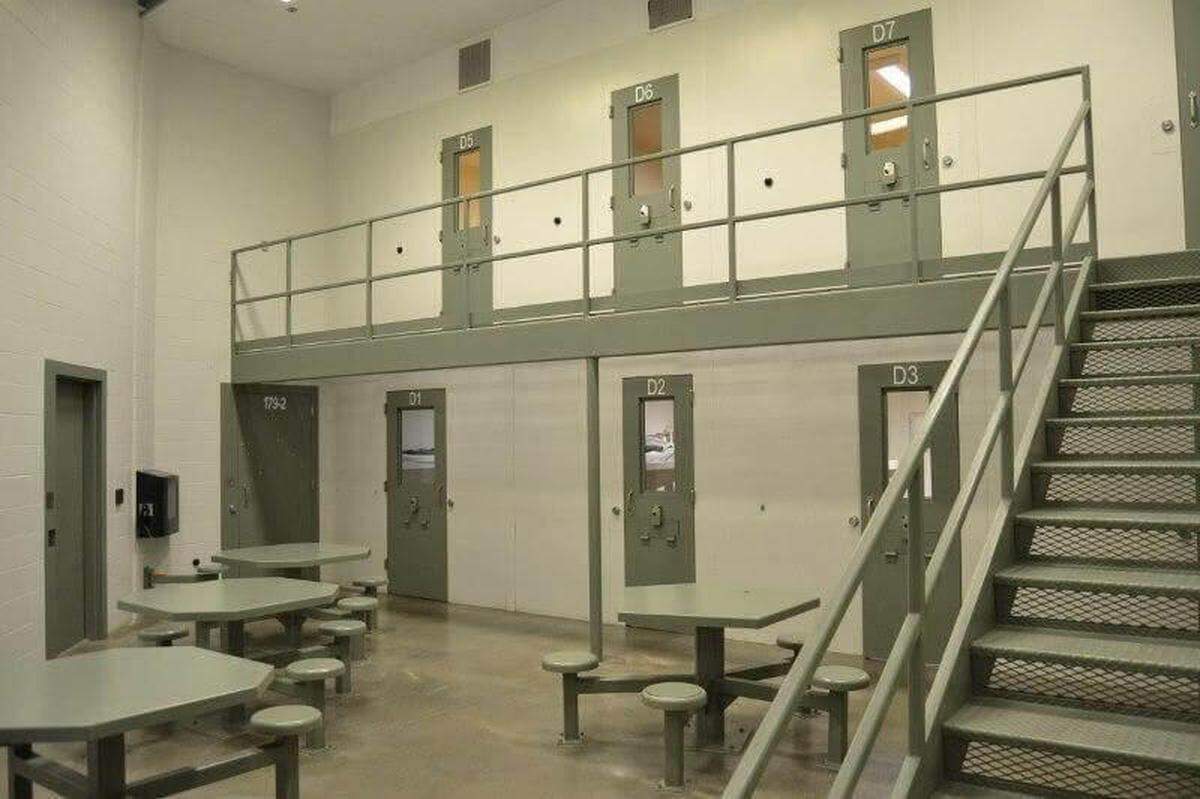
That’s not nearly enough beds, Rea says, which means that some people who should be in jail are never put behind bars or are let go earlier than than they should be. That frustrates their victims and the police who make the arrests, sending those offenders back on the street right away.
“The crimes that are charged in our city code are divided between jailable offenses and non-jailable offenses,” Rea said.
Most traffic violations and other minor offenses won’t land you in jail. More serious violations can.
“A lot of the obvious stuff, like assault, domestic violence, property crimes, property damages, those types of things, are ordinarily jailable offenses,” he said. “And as long as we’ve got jailable offenses in our code, we have to have some kind of detention strategy available.”
Rea’s response to those who say we don’t need a city jail and that social service solutions are almost always preferable?
“Unless someone’s going to file an ordinance to decriminalize domestic violence and make it a non-jailable offense, then we need to have a detention strategy for it and to keep those victims safe.”
According to Rea, 64% of the people charged with city crimes have committed violent offenses, “and a lot of that is domestic violence.”
Only the more serious cases, like those involving strangulation, wind up in state court.
Rehab services needed
Duncan agrees that some people committing municipal offenses need to be detained. But he says a majority of those who go through the city’s jail system are in for things like public urination, trespassing, sleeping outdoors and petty theft,
“The average length of stay is less than three days before we release these folks back onto the streets they came from,” he said in a social media post this week. “A new city jail won’t solve this problem, it will only centralize it. Homeless people will still go unhoused, mental health needs will still go unaddressed, and the biggest offenses throughout Kansas City will never even get to the City Jail in the first place.”
Because the people who commit the serious crimes that make headlines and ruin the lives of their victims end up in the county jail.
While the city does not have an exact cost on what a new jail would cost, the current estimate ranges between $150 million and $200 million, Rea said. Duncan says it will be more like $250 million.
Whatever the cost, Duncan, Councilwoman Melissa Robinson and others would rather the city spend much of that on a Community Resource Center that would help keep people out of jail.
But the county won’t allow the city to put such a center next to the new county jail, Duncan said. It will have to be established somewhere else at a cost over and above that of the new city jail being proposed.
Rea says the city is committed to establishing such a facility closer to the center of the city, where detainees who are being released from custody would have better transit access than at the jail site. at 7000 E. U.S. Highway 40.
Well-funded ballot campaign
Together KC, the well-funded political action committee running the campaign in support of renewing the public safety tax, is affiliated with Mayor Quinton Lucas and has an unbroken string of successes.
According to campaign finance records, Together KC has raised at least $215,000 in the past month to pay for mailers and other advertising expenses.
Of that, $50,000 came from the Fraternal Order of Police, with the remainder from business and union PACs in increments of $25,000 each from the Chamber of Commerce of Greater Kansas City, the Civic Council, Heavy Constructors Association, J.E. Dunn Construction Co., the Mid-America Carpenters Regional Council and Northland Strong, a political action committee largely funded by private airport parking lot company PCA-KC LLC and its president, Richard Chaves.
McCown Gordon Construction Co. contributed $15,000.
Safety and Justice Alliance, a recently formed campaign committee opposed to the tax, has so far reported receiving a single, $15,000 donation from Decarcerate KC.
But as last year’s stadium tax ballot measure proved once more is that the side with the most money to spend doesn’t always end up winning.
The pro-stadiums tax Committee to Keep the Royals and Chiefs and the Royals on their own spent more than a combined $6 million and still lost by a near landslide, with 58% of the voters opposing the tax.
The prevailing side spent about $150,000.
This story was originally published March 26, 2025 at 6:00 AM.