Liquor store owners oppose Kansas City’s ‘redlined’ ban on this type of drink. See why
AI-generated summary reviewed by our newsroom.
- A liquor store owner filed a lawsuit to block Kansas City’s single-serve alcohol ban.
- One owner said single-serve alcohol is about 30% of revenue at her stores.
- City and civic groups say the ordinance targets public nuisance and community safety.
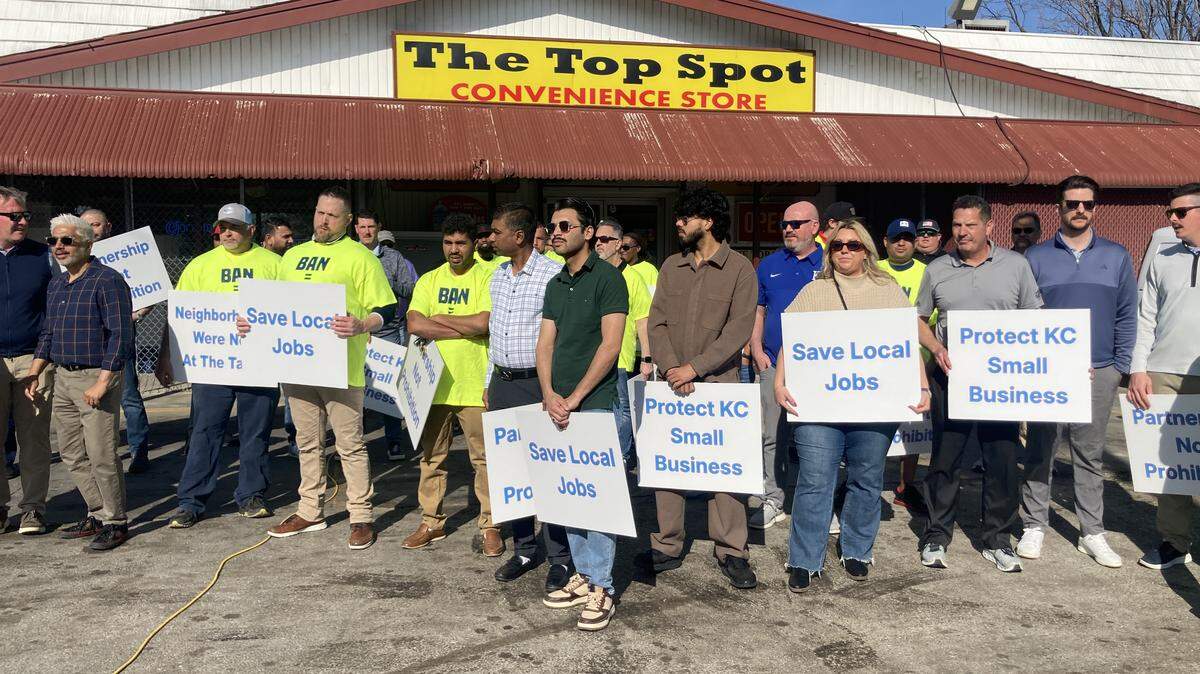
Liquor store owners have rallied their support behind a lawsuit that would prevent Kansas City’s ban on the sale of mini-liquor bottles and single servings of beer in certain neighborhoods.
The ordinance was meant to deter public nuisance and crime from excessive public drinking. But the owners of liquor and convenience stores argued that it would prohibit some of their most popular and profitable items.
Kay White, the owner of WW Crown Liquor Grocer & Grill, said that single-serving alcohol is about 30% of the revenue at her stores. She’s expecting to have to lay off employees if the ordinance goes into effect on June 8.
She compared the neighborhoods where mini liquor bottle sales are prohibited to redlining, a term used to describe historical discrimination against minorities based on neighborhoods. The original ordinance included Midtown, but was later amended to exclude the area.
“It shows that you could pick what areas you wanted to pick. And it’s awfully funny that it’s the 3rd and the 5th districts that are predominantly Black,” White said.
Megan Strickland, a spokesperson for Mayor Quinton Lucas, defended the ordinance and said that some liquor stores have exploited communities with a disproportionate number of liquor stores.
“Kansas City supports public order and public safety and welcomes collaborative efforts from the liquor industry to help our communities become safer, cleaner, and more vibrant—rather than exploiting communities that can least afford the negative effects of clustered liquor sales,” Strickland said.
Shawn Coudry, who owns more than 25 liquor and convenience stores in and around Kansas City, said he was “absolutely” in support of the lawsuit to block the ordinance.
He said that the measure is going to destroy businesses, and that people who would’ve bought single-serve liquor will now steal larger bottles of liquor.
“They can’t afford a $10 bottle now,” he said. “They’re going to steal them. Or they’re going to buy the big ones and get drunk. So, what it is solving?”
Coudry also spoke against what he sees as the ordinance’s discriminatory foundation, allowing sales in grocery stores but not in nearby liquor or convenience stores.
“I would really understand it if the whole of Kansas City was shut down,” Coudry said. “But if you can go and buy across the street, but you can’t buy here, that’s a big problem. Midtown can sell, but downtown cannot. Consentino’s Market can sell, but Gram Slam and Downtown Market cannot. That is just nuts.”
Joe Sacco, the owner of the liquor store that filed the lawsuit against the city, declined to comment but has previously shared his dissatisfaction with the proposal.
“This is not going to solve crime,” Sacco said in March. “There’s more things to it: There’s drugs. There’s violence. There’s homelessness.”
But local civic groups that pushed for the ordinance say the effort is a much-needed public safety measure.
“This ordinance grew out of several months of organizing, public safety meetings, neighborhood complaints, data analysis, and collaboration among residents, law enforcement, prosecutors, city officials, health advocates, and community organizations,” said Gwen Grant, CEO and president of the Urban League of Greater Kansas City. “The community demanded action because the status quo was a plague on our neighborhoods.”
“People are calling this a liquor ordinance. But for residents living with violence, loitering, litter, and chronic disorder, this has always been a community stabilization ordinance,” Grant said.