Is Missouri heading for an illegal primary election? Opponents of new map say yes
AI-generated summary reviewed by our newsroom.
- Court ruled referendum can't pause redistricting until it's approved to go on the ballot.
- Hoskins said he'll wait until July 28 to start certification; must be done by primary day.
- Critics warn primary election could later be deemed illegal if maps are overturned.
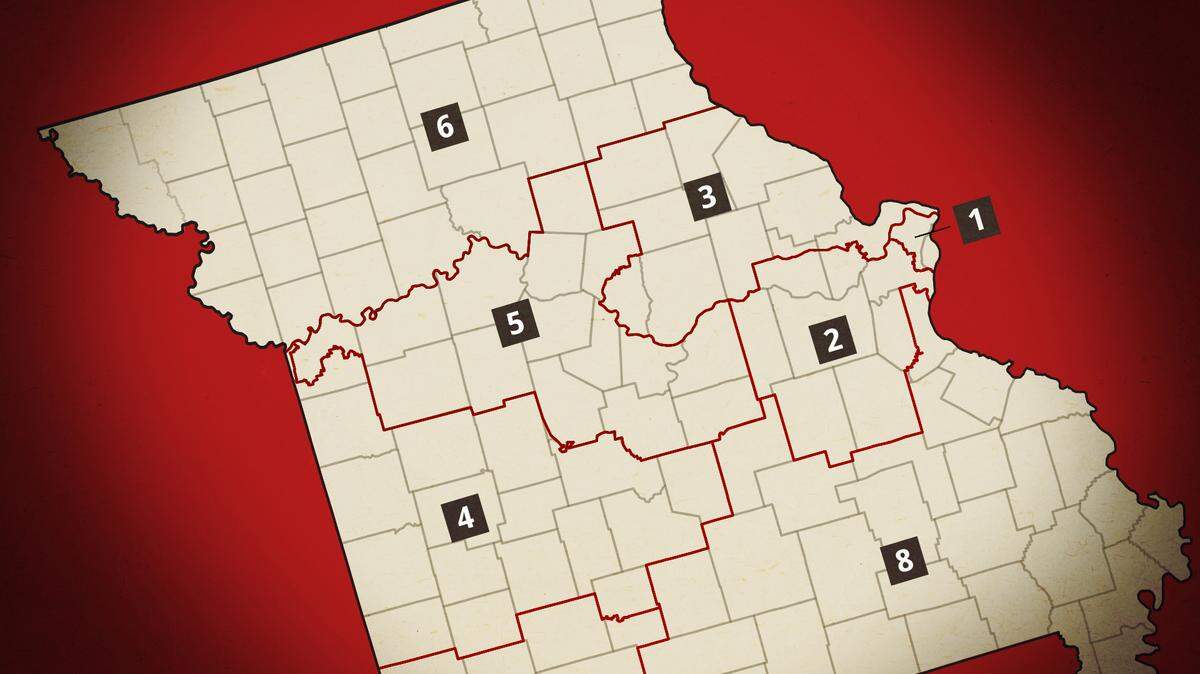
Missouri voters could cast ballots in an election that is later deemed illegal, opponents of the state’s new gerrymandered congressional districts warn.
The Missouri Supreme Court ruled on Tuesday that a proposed referendum to reverse the state’s new congressional map couldn’t pause redistricting until it is approved to go on the ballot.
Missouri’s Republican Secretary of State Denny Hoskins indicated that he’ll wait until July 28 to start the process of certifying the referendum, the day after the deadline for local election authorities to turn in signatures. He must issue a decision by Aug. 4, the day of Missouri’s primary elections.
The office has already received enough signatures to qualify for the ballot, according to records retained by the Missouri Secretary of State’s office. But the office has leeway on when to certify it as sufficient to be placed on the ballot.
“The end result that we are going to get to in this process is not unclear,” Richard Von Glahn, campaign director of the referendum campaign, called People Not Politicians, said in a press conference. “The referendum is legal, it was timely, and it is sufficient.”
Opponents of the map, called House Bill 1, argue that the court’s decision sets up a scenario that could invalidate an election after it has happened. The Supreme Court opinion says that the legislation that authorized the new maps would be paused from the day the referendum campaign turned in signatures if the referendum effort is green-lit.
“The court is saying that if there is eventually a sufficient determination made, then House Bill 1 was suspended as of December 9,” said Chuck Hatfield, a prominent attorney involved in a slew of redistricting fights.
But the delay could cause a situation where the Secretary of State doesn’t certify or reject the referendum until after votes have been cast. Hoskins hinted that he may reject the referendum based on constitutionality, further delaying the process.
“I do have some questions as far as the constitutionality of the old maps, and the referendum, because with the referendum, I do question where there can be a referendum on a congressional redistribution,” Hoskins said on Tuesday.
Supporters of the redrawn congressional districts say that courts may not be able to rule on the map if the decision is made near an election under what’s called the Purcell principle, a United States Supreme Court doctrine that courts shouldn’t change election rules too close to an election.
Hatfield noted that the Purcell principle is a federal doctrine and questioned whether it would apply to state-level court decisions.
“I’m not aware of Purcell ever being applied to prohibit a state court from making pronouncements about its own state laws,” Hatfield said. “Both Louisiana and Alabama are redrawing their district lines after primaries already started. So, I think we could do it.”
Republicans declare victory
The state Supreme Court decision on Tuesday is the latest in a string of court opinions favoring the map Missouri lawmakers approved in a special session last summer. Republicans rebuffed any notion that the map wouldn’t stand on Election Day.
Mark Ellinger, a prominent Republican attorney who defended the map in court, said the high court’s ruling reinforces that the new map is legitimate.
“There are obviously other paths down the road that something else could develop, but at this point, the new map is in effect and the August election will be held on the new map,” Ellinger said.
He emphasized the preliminary nature of the signature verification data and declined to speculate on what would happen if Hoskins had to concede that the map challenge is ballot-worthy.
“Until we know what the final numbers are and the secretary completes his process, it’s probably a little premature to worry about what’s going to happen next,” Ellinger said, adding that, “Until that process is concluded, the referendum petition is just something that’s been filed to be verified.”
Taylor Burks, a former Boone County Clerk that is seeking the nomination in Missouri’s redrawn 5th district, said the decision on Tuesday affirmed his view that the map will stand for the current election cycle.
“They’ve had multiple opportunities and windows of time to hold the map, pause the map, reject the map,” Burks said. “I think opponents of this map and the suggestion that we’re going to have some future illegal election, we’re now grasping at straws.”
Sen. Rick Brattin, a Harrisonville Republican who’s seeking the nomination for the 5th District, celebrated the court decision on social media.
“The law is clear; the legislature has the authority to redraw Congressional districts. These lawsuits were politically-motivated attempts to block a map that better reflects our state and I am glad the Missouri Supreme Court upheld the map passed by the legislature,” Brattin posted to social media.
National perspective
The Missouri gerrymandering ruling comes amid an intensifying redistricting battle playing out in states across the country that will likely determine which party controls the U.S. House through 2028.
A series of high-profile court rulings has upended standard election processes in some states, including Louisiana, where thousands of voters have already cast ballots in contests that could be upended by a new map. In Alabama, state officials are scrambling to finalize the details of two separate primary elections to accommodate a map that nixes two majority-Black districts.
Kareem Crayton, vice president at the Washington D.C. office of the Brennan Center for Justice, a left-leaning policy law and policy institute, said proponents of the new Missouri map appear to believe that using the new district configuration for the primary will legitimize the map without voters weighing in.
“Once an election is started, it’s a train that usually needs to move without being stopped,” Crayton said. “The gamesmanship seems to be organized around that very point, that if they can just make it to the start of the primary, nobody’s going to really try to upset it.”
Whether that argument can withstand a legal challenge remains to be seen, Crayton said.
The nationwide redistricting frenzy is doing nothing to reassure voters that they are adequately represented and that their vote matters, he said.
“The focus of this moment is people in power essentially — one might call it adjusting, others might call it manipulating — to try to stay in power,” Crayton said.
He said the Missouri Supreme Court’s decision not to prohibit implementation of the new map until voters have a chance to weigh in represents a cheapening of the democratic process that Missourians have come to rely on.
“The reform of systems so that the public can’t actually serve as its own watchdog — the fact that this is at the center of this play that the secretary of state and maybe now the state supreme court are essentially trying to blunt its power — it’s disheartening,” Crayton said. “It’s disheartening to anyone who believes in self-governance and popular control of processes like the ballot.”