Attorneys urge Missouri high court to block KC’s gerrymandered map in key cases
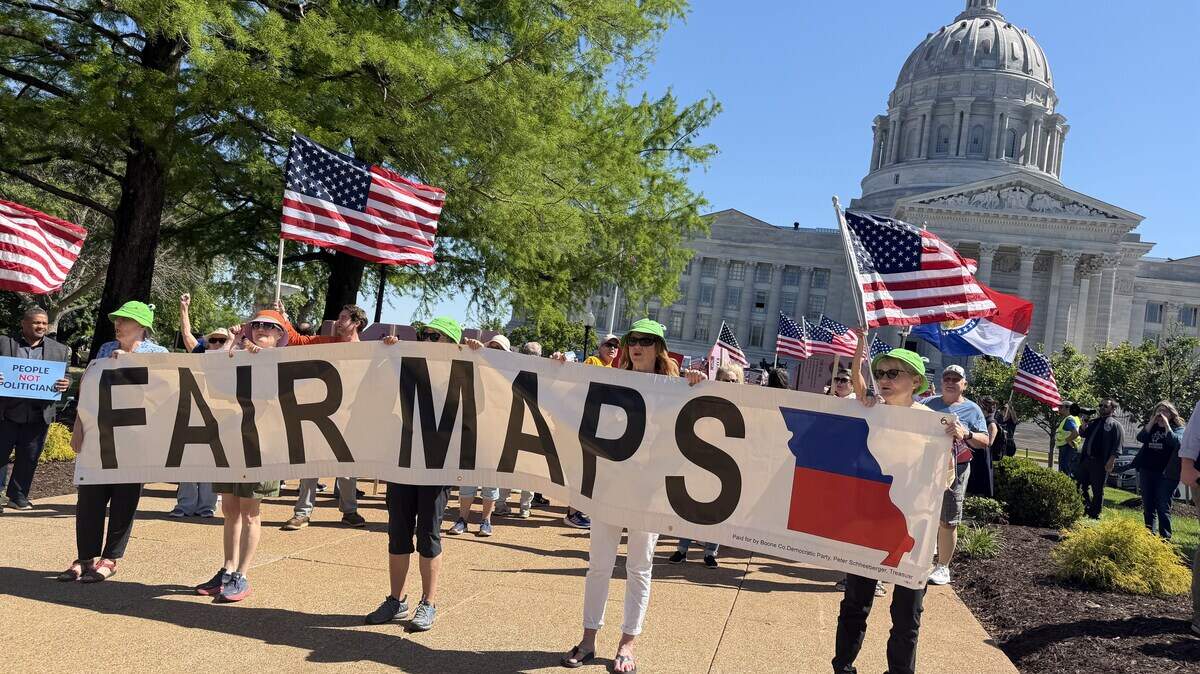.jpg "A crowd gathers outside the Missouri Supreme Court after legal arguments on May 12, 2026, in a trio of cases that could decide whether Missouri’s gerrymandered congressional map, which slices through Kansas City, can be used in the 2026 midterm election.")
A few steps from the Missouri Supreme Court, McClain Bryant Macklin emphasized the stakes of the legal arguments that had just taken place inside the imposing, red-bricked building Tuesday morning.
Whatever the state’s highest court decides could “set the stage for years and for many future generations,” Bryant Macklin, a Kansas City civic leader and healthcare executive, told a crowd gathered on a pathway nudged between the court and the state Capitol in Jefferson City.
Minutes earlier, the state Supreme Court had just wrapped up arguments in a trio of cases that could decide whether Missouri’s gerrymandered congressional map, which carves up Kansas City, can be used in the 2026 midterm election.
“This court decision will be a watershed decision, a precedent setting decision that will shape the future of our state and the strength of our democracy for generations to come,” Bryant Macklin told the crowd of individuals who traveled to Jefferson City to protest the new Republican-backed map.
Tuesday’s high-profile Supreme Court arguments marked the biggest test of the map, which Republican lawmakers approved last year under pressure from President Donald Trump. Decisions in any of the three cases could clear a path for Republicans to unseat U.S. Rep. Emanuel Cleaver, Kansas City’s longtime Democratic congressman, or strike a major blow to the Republican president.
Each case takes aim at the map, which carves Kansas City into three Republican-leaning districts. For roughly 90 minutes, attorneys for map opponents attempted to convince the seven judges that it should be either struck down or blocked. In return, attorneys for the state of Missouri argued that the congressional map should be in effect for the upcoming elections.
The court did not make any decisions Tuesday morning and the judges largely remained silent as attorneys for map opponents and supporters traded arguments. Rulings are likely to come soon as local election officials must have ballots for the August primaries finalized by May 26.
Decisions in any of the three cases are likely to force Kansas City and Missouri onto the national stage amid a bitter, partisan fight for U.S. House seats across the country. Map opponents framed Tuesday’s argument as a pivotal moment in Missouri history.
“The stakes are big for Missouri,” Gillian Wilcox, an attorney for the ACLU of Missouri, told reporters after arguments completed Tuesday morning.
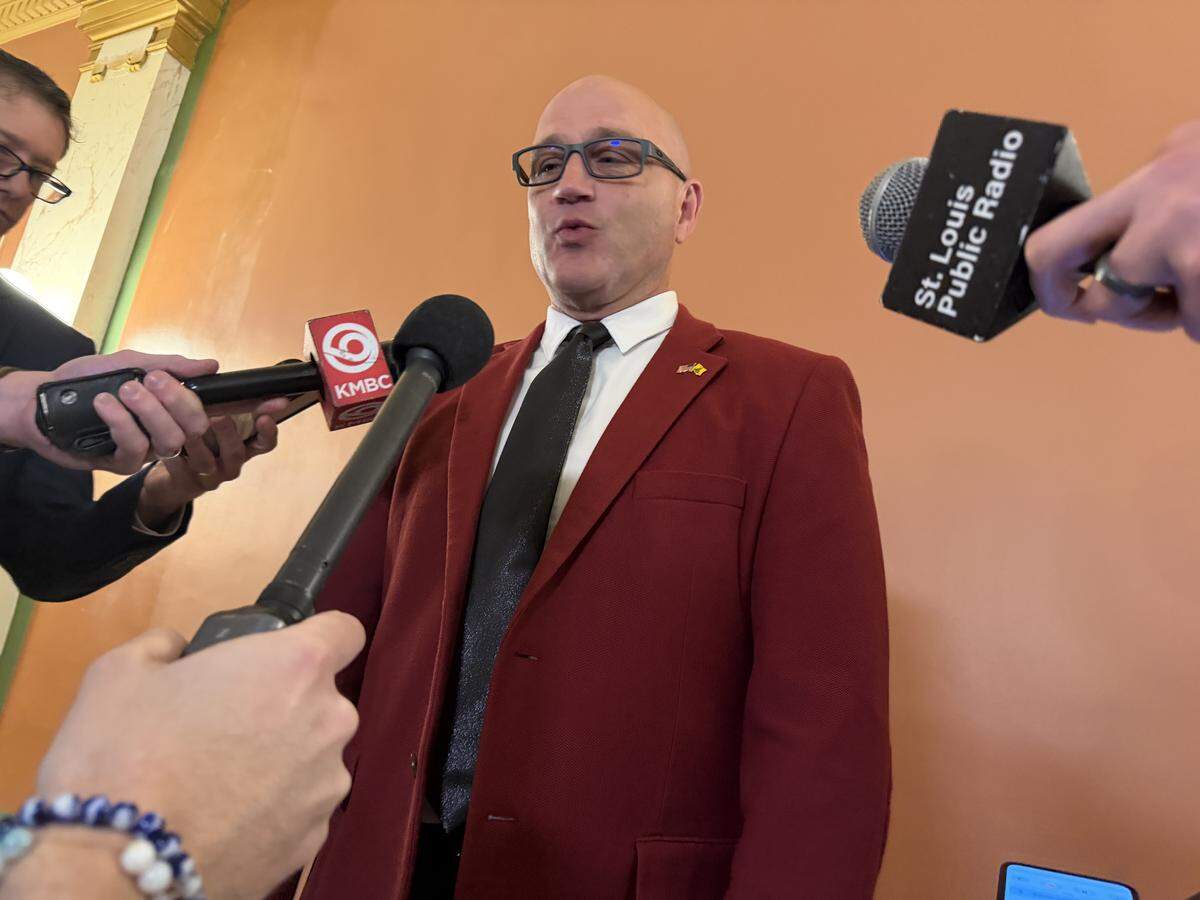
Meanwhile, Secretary of State Denny Hoskins, a Republican and defendant in each of the cases, conveyed confidence that the map would withstand the legal challenges. He called it the “Missouri First Map,” a nickname coined by Republican supporters.
“Winner, winner, chicken dinner,” Hoskins told reporters. “I thought that our legal team did an excellent job as far as laying forth the case that the Missouri First Map is in effect today.”
Inside the arguments
The first two cases, which were argued together, dealt with the map’s boundaries. A pair of lawsuits, brought by the ACLU of Missouri and the National Redistricting Foundation, argue that the new map illegally splits up Kansas City, with its own industries, city plans and shared identities, in violation of the Missouri Constitution.
The ACLU also contends that the map included a crucial error that placed more than hundreds of Kansas Citians in two separate districts at the same time.
A decision in those two cases will weigh whether the map itself should be struck down before the 2026 election, potentially reverting Kansas City’s congressional district back to the boundaries lawmakers approved in 2022 and clearing a path for Cleaver to win reelection.
However, the case that will arguably have the most immediate impact on the upcoming election came third. That case centered on whether the map should be paused or in effect for the primaries and the November election.
Arguments in that case focused on a campaign seeking to strike the map down at the ballot box through a process called the referendum, which allows citizens to challenge most laws passed by state lawmakers.
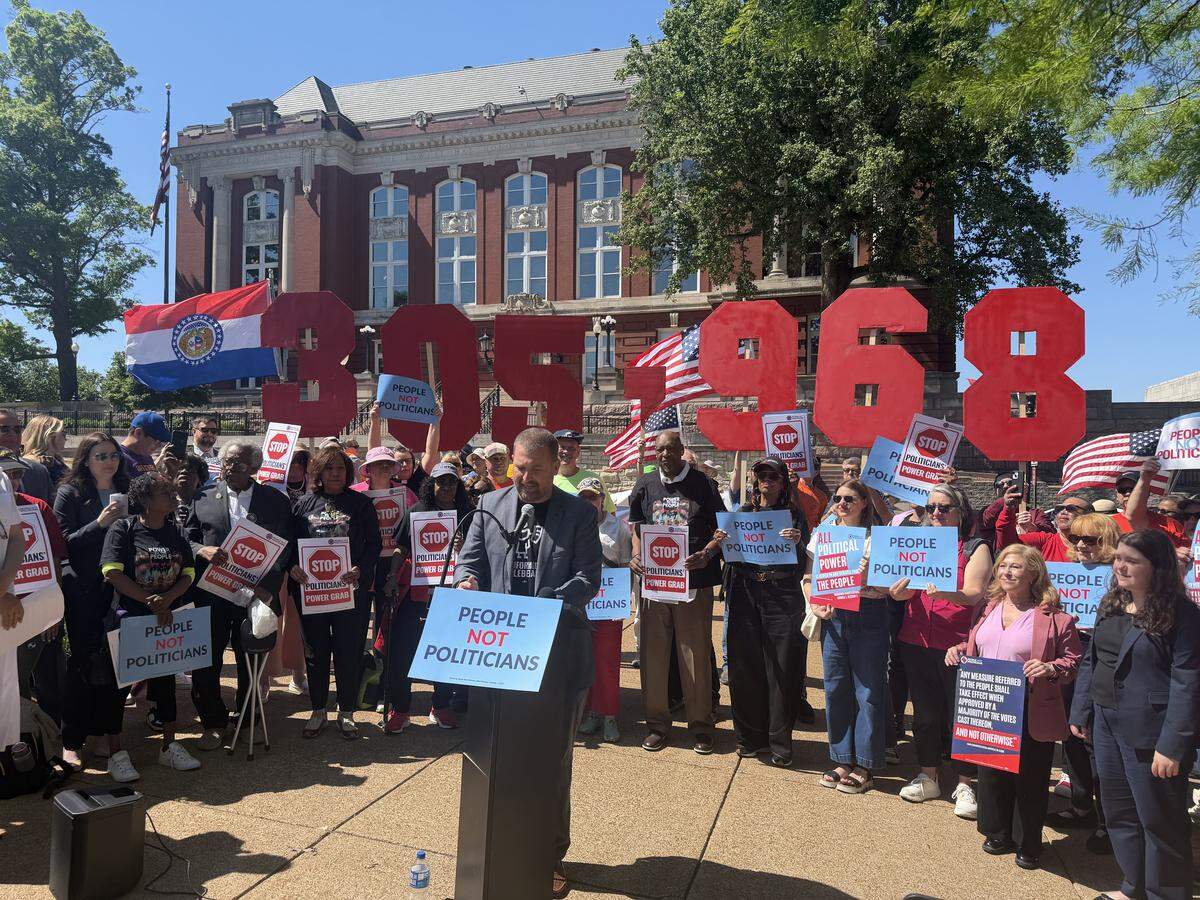
That campaign, called People Not Politicians, raced across Missouri last year to collect more than 300,000 signatures to force a statewide vote on the map in November. Despite that effort, Hoskins and other Republican statewide officials enacted the map in defiance of decades of precedent.
“The people of Missouri are not spectators in our democracy,” Tori Schafer, an attorney with the ACLU of Missouri, said, referencing the referendum campaign. “They are participants in it.”
The looming court ruling will decide whether the map should be blocked before Missourians have a chance to vote on it in November, which could ultimately decide if the map will be in effect for the 2026 election.
The case also poses a key test for the state’s referendum process. A ruling against the lawsuit could significantly weaken citizens’ ability to pause legislation by collecting signatures, a powerful tool for direct democracy utilized for more than a century.
As the legal arguments played out inside the courtroom, a crowd of protesters began gathering outside. They held signs touting the referendum campaign and hurled chants in opposition to the map.
One by one, several speakers stepped up to a microphone to address the crowd. Bryant Macklin, the civic and healthcare leader, referenced the map’s impact on Kansas City.
She said it was not lost on her that its boundaries used Troost Avenue, Kansas City’s historic racial dividing line, to split the city’s voters into new districts. That was no coincidence, she said.
“It reminds residents of the tactics used to segregate our communities in the past,” she said. “And we refuse to go backwards.”
This story was originally published May 12, 2026 at 1:48 PM.