Missouri governor downplays a new gerrymandering push after Supreme Court ruling
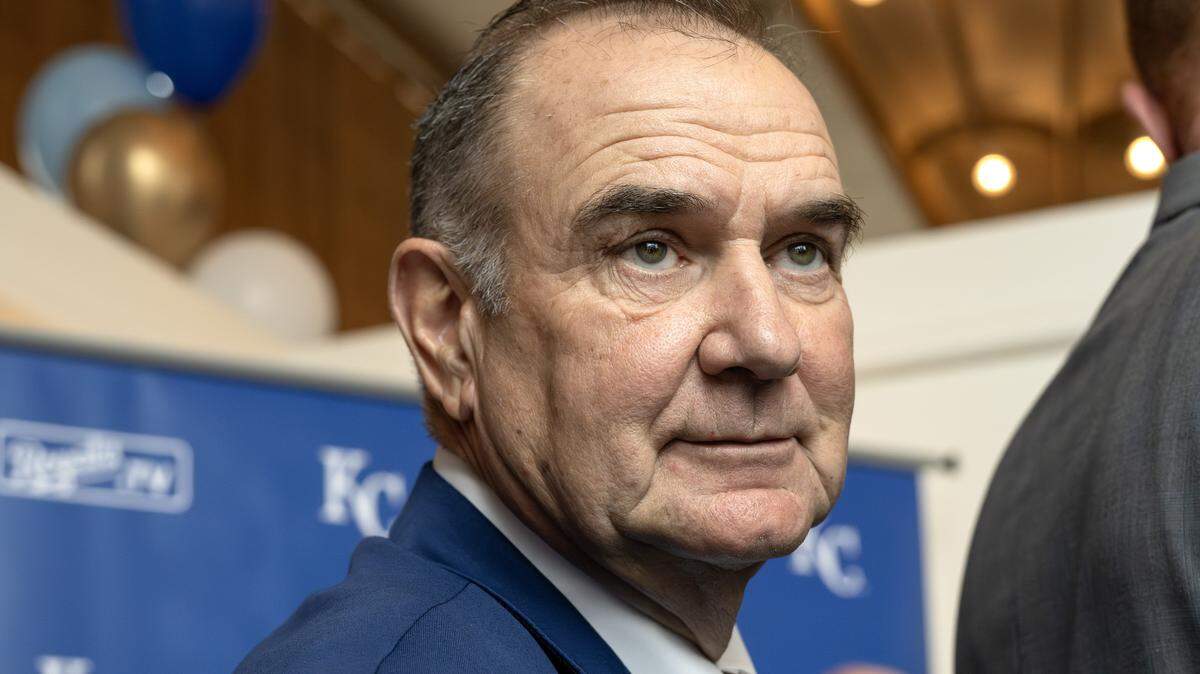
Missouri Gov. Mike Kehoe on Wednesday appeared to downplay the possibility of redrawing the state’s congressional map this year after a landmark U.S. Supreme Court decision weakened a key portion of the federal Voting Rights Act.
Kehoe, a Republican who last year signed a new, gerrymandered congressional map that carved up Kansas City, signaled that splitting St. Louis would be unlikely ahead of the 2026 midterm elections. He pointed to the current map, which he dubbed the “Missouri First Map.”
“We’re happy with the Missouri First Map that we drew last year and we’re looking forward to seeing how that works out this election cycle,” Kehoe told The Star after an unrelated event in Kansas City just hours after the Supreme Court released its decision.
The nation’s highest court, in a 6-3 decision, found that Louisiana illegally used race when drawing a new majority-Black congressional district. The ruling sharply curtailed lawmakers’ ability to use race as a consideration when drawing voting maps, a seismic decision that is likely to kick off a wave of heated redistricting battles across the country.
The sweeping opinion, coupled with an onslaught of redistricting fights in Missouri and across the U.S., could shape the future of the state and nation for years to come. Until Wednesday, the federal Civil Rights era law prevented states from drawing maps that dilute the voting power of minority voters.
In the wake of the decision, some Republicans in Missouri and other states, such as Florida, have already pushed to redraw their states’ maps. The mid-decade redistricting effort comes as President Donald Trump has pressured Republican-led states to gerrymander their U.S. House maps so Republicans can maintain a majority in Congress.
“It was a 90-page-ish decision, so we’re just now going through it at a high level,” Kehoe told The Star. “I understand what the implications are.”
The Republican governor also pointed to the fact that Republican Attorney General Catherine Hanaway had filed a brief in support of Louisiana’s challenge to that state’s map.
Before Kehoe’s comments, the likelihood of Missouri lawmakers redrawing a map before the 2026 mid-term elections was already slim due to time constraints. But the Republican governor appeared to leave open the possibility of future redistricting fights.
Scores of voting rights advocates and Democrats, including U.S. Rep. Emanuel Cleaver and Mayor Quinton Lucas, immediately excoriated the ruling as an attack on democracy and voting protections secured during the Civil Rights Movement.
“Today’s appalling decision by the Supreme Court to unilaterally gut this historic law is not only wrong—it is deeply disrespectful of the generations of African Americans and civil rights advocates who gave their freedom, their blood, and even their lives to make it possible,” Cleaver said in a statement.
Lucas also pointed to the decision’s impact on Black voters across the country.
“Make no mistake, today’s decision will gut the voting power of those in our country who already are routinely excluded from the chambers of power,” Lucas wrote on social media. “The Court today shuts the door on Black voices in parts of our country where discrimination remains an obstacle to success for all.”
Republicans target St. Louis
Future redistricting fights in Missouri are likely to center on St. Louis, the state’s other blue-leaning hub. When Kehoe called on Republican lawmakers to gerrymander the state’s congressional map last year, much of the focus was on Democratic U.S. Rep. Emanuel Cleaver’s Kansas City-based 5th Congressional District.
The map lawmakers approved last year, which carves Kansas City voters into three GOP-leaning districts, faces a series of legal challenges and a looming referendum that could strike it down in court or at the ballot box. If used in the 2026 election, Republicans are hopeful the map will force Cleaver out of office and give the GOP control of seven of the state’s eight districts.
Before Wednesday’s decision, the 1st District in St. Louis was most likely protected from “discriminatory” changes by the federal Voting Rights Act because it is a majority-minority district in which Black voters constitute a majority of the voting-age population.
But the landmark ruling on Wednesday appeared to put that district’s future in doubt.
Chuck Hatfield, a prominent Missouri attorney involved in redistricting battles, told The Star on Wednesday that the decision made it more likely that Missouri lawmakers could carve up St. Louis without violating federal law, providing the state with eight GOP congressional seats.
“It’s not completely gone, but the arguments that 8-0 would be illegal got weaker,” Hatfield said in a text message.
But Hatfield also cautioned that effort could be a dangerous political gamble for Republicans.
“If the winds swing around just a little, (it) makes it more likely that Democrats grab 3 seats rather than just 2,” he said. “It’s difficult to break up St. Louis without creating some districts that are more purple than red.”
Some legal experts, Republican lawmakers and consultants argue that St. Louis, with swarms of Democratic voters, would be harder to split into GOP-leaning districts than Kansas City. That could prevent Republicans from attempting to carve up St. Louis amid fears the effort could backfire under what’s called a “dummymander” and lead to Democrats winning other competitive districts.
However, at least one Republican lawmaker has signaled a plan to push for a map that would split up St. Louis and allow Republicans to pick up all eight of Missouri’s congressional districts.
“Hello 8-0 my old friend! We’ve come to introduce you again,” Sen. Nick Schroer, a Defiance Republican, wrote on social media.
Other prominent Republican consultants and politicos echoed Schroer’s argument throughout Wednesday afternoon.
But, Cleaver, the target of Missouri’s most recent gerrymandering effort, urged lawmakers to “reject the court’s invitation to racially gerrymander our fellow citizens out of representation in the halls of power.”
The Kansas City Democrat called on his colleagues in Congress to enact legislation to prohibit “these undemocratic practices,” an apparent reference to political and racial gerrymandering.
“Failure to do so would be an everlasting stain on this chapter of American history,” he said.
This story was originally published April 29, 2026 at 3:23 PM.