Bill would let Missouri place foster kids in unlicensed Christian boarding schools
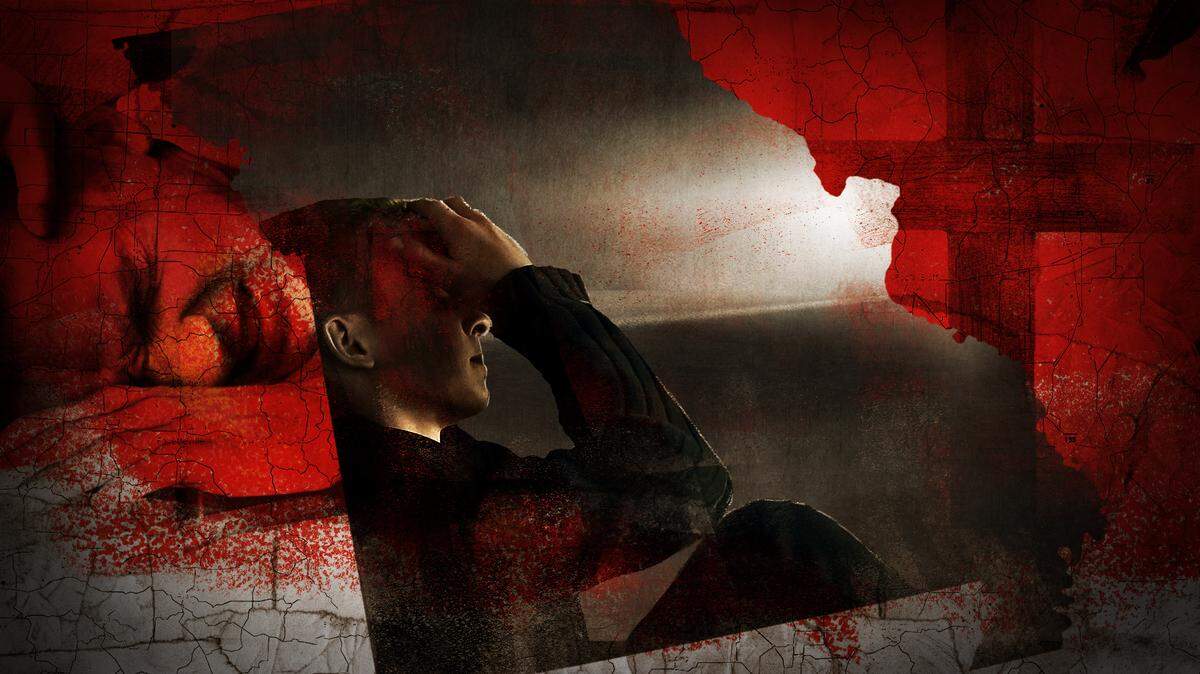
After years of working to rid Missouri of abusive Christian boarding schools, child advocates and some lawmakers fear a bill still alive in the legislature would undo that effort.
What’s more, those opponents say, the measure would allow foster kids to be placed in unlicensed residential facilities that are not regulated or overseen by the state.
“This bill has the potential to dial up risk for child sexual abuse occurring in our state,” Emily van Schenkhof, executive director of the Children’s Trust Fund, Missouri’s foundation for child abuse prevention, said in a recent hearing. “Because we have seen, unfortunately, far too many cases in our state where our religious institutions grossly failed to protect children.”
The legislation, HB 2241, has been sitting in the House Professional Registration and Licensing Committee for more than a month and in late February had a hearing. Lawmakers and advocates say it could still come up for a vote this session.
Identical to a Senate measure and similar to proposals the past two legislative sessions, the bill allows organizations — those that don’t want state licensing because they fear it will interfere with their religious beliefs — to instead register with a “qualified association.” That association, which must have been in operation for at least 20 years, would then oversee those facilities.
A registered organization that meets the requirements of the qualified association may then apply to the Children’s Division to accept foster children. Under the proposed bill, unlicensed schools would not be required to directly answer to the Department of Social Services. Instead, those facilities would be overseen by a “Child Protection Board” within DSS.
As for the qualified association, critics note that only one organization in the state — the Missouri Association of Christian Child Care Agencies — meets the criteria of being in operation for at least 20 years.
And the three who founded it in 1998 ran two unlicensed boarding schools in Missouri that have since been closed amid abuse allegations. One of those men, the late James Clemensen, opened Agape Boarding School in Missouri in 1996, a connection some find troubling.
“We know that abuse went on there for many, many, many years,” Rep. Jo Doll, D-St. Louis, said in the February hearing. “And for no one in this governing organization to be aware of that is incredibly concerning.”
Proponents say the bill addresses a shortage of foster homes in Missouri and protects religious freedom.
“There is a crisis in the foster care system,” said Chad Puckett, director of Show-Me Christian Youth Home and president of the Missouri Association of Christian Child Care Agencies. “With, as we’ve said, too many children and too few homes.
“We want to come alongside the state of Missouri in this crisis to help foster children enjoy a better future.”
He said, however, that these organizations believe that requiring them to be licensed is “just a slippery slope in our religious freedom, in this secular culture.”
As for stories of abuse, Puckett said, there are similar allegations in licensed public and private institutions as well.
An outcry five years ago
Missouri’s history with Christian boarding schools is why the previous attempts to pass this kind of legislation failed to get any traction. It’s why advocates don’t understand yet another attempt.
“Memories are short in the Capitol,” said Jessica Seitz, executive director of the Missouri Network Against Child Abuse. “And here we are now in 2026, considering a bill that would allow a child in Children’s Division’s custody to be placed in an unlicensed facility (that) is registered by a private association comprised of those facilities.
“Lawmakers made it clear merely five years ago — Missouri is no longer a haven for these facilities. Are we reopening our state?”
In August 2020, The Star began investigating Missouri’s Christian boarding schools, including Agape and Circle of Hope Girls Ranch in Cedar County. The investigation ultimately found that more than a dozen unlicensed schools were operating in Missouri, which had become a safe harbor because of a nearly 40-year-old law that exempts faith-based facilities.
Owners of those schools often settled in rural and secluded areas where they could fly under the radar. The Star interviewed more than 80 former students who recounted stories of physical, emotional and sexual abuse they say were inflicted by staff and fellow students.
Several schools closed, including four in Cedar County.
The outcry from the reporting also led to the passage of a new law in 2021 that for the first time implemented some regulations on faith-based boarding schools. Former students from across the nation testified on behalf of the legislation.
Rep. Rudy Veit, R-Wardsville, said the new proposal — which he called “vague” — could unravel “what we worked so hard to get.”
“We fully investigated this before, and came up with a plan that seemed to be solving the problem, or at least if the problem arose, provide a way that we could handle it and resolve it,” said Veit, a sponsor of the 2021 bill. “And this just takes us back to where we were at.
“I’m in support of religious organizations having these schools, but they, like any other organization, need to be supervised.”
Added Seitz: “When we decrease oversight and accountability we create shield for perpetrators of abuse. The risk of sexual abuse increases. Children are unsafe.”
A contentious hearing
Rep. Jamie Gragg, R-Ozark and the sponsor of the bill, spoke in February’s hearing and used an analogy about raising chickens. That’s something many Missourians do, he said.
They also have dogs, which like to go after chickens, he said, so you have to make sure you have a good fence to protect them. This legislation, he and other proponents agree, is an attempt to build that fence.
“That’s what this bill is about,” he said. “I’ve got folks that want to help, and I’ve got children who need help. “
However, he said, “We have to build a good fence to make sure that we’re protecting the children. We have to make sure, because we all know there are bad stories. We all have heard them. “
The “Child Protection Board” that would oversee the unlicensed facilities shall consist of 13 members, 11 appointed by the governor “with the advice and consent of the Senate, without regard to political affiliation,” the bill said.
The other two members must be state representatives — one from each party — appointed by the House speaker. The board must include two foster parents; someone in a leadership position of a faith-based child care agency, provided that the agency has been in existence at least 20 years; five members of faith-based child care agencies; a member with expertise in nutrition; a teacher with a certificate to teach issued by the state Board of Education or any other educator or administrator required to maintain a professional license issued by the state Board of Education; and a guardian ad litem.
Two former students from Show-Me Christian Youth Home spoke in favor of the bill at the February hearing, saying their time at the unlicensed school gave them guidance, a loving home and made them feel safe.
Ashlea Belcher, executive director of the Children’s Center of Southwest Missouri, testified against the measure. Before she became executive director, she said, she spent nine years as a forensic interviewer, talking to children “who were brave enough to sit in a room with a stranger and tell the truth about what happened to them.”
“I have sat across from children who paid the price for gaps in accountability,” Belcher told lawmakers. “I have listened to them try to explain pain they did not yet have language for. I have watched them wrestle with fear, shame, confusion and trauma that will follow them into adulthood.”
She told the committee that “some of the most severe cases and deeply disturbing cases” of her career involved children in unlicensed Missouri boarding schools, including Agape and Circle of Hope.
“Missouri confronted this reality once, thank God,” Belcher said at the hearing. “And we addressed it thoughtfully and carefully. Reversing those protections now would not be neutral. It would be a step backward.
“No institution responsible for children should ever be permitted to regulate itself.”
Rep. Ray Reed, D-St. Louis, said the measure would create a two-tiered child-care system in which one tier would be licensed and regulated and one would not.
“What this bill is saying is that state licensing isn’t necessary,” he said. “ ... If state licensing isn’t necessary and a private association is enough, then why have child care facilities at all that are licensed? Either licensing protects kids or it doesn’t. Which one?
“...We’re talking about placing some of Missouri’s most vulnerable kids, children in foster care, into facilities that are not state licensed, and I think that we shouldn’t be treating these children as test subjects for deregulation.”