‘We are essentially describing torture.’ An emotional hearing on MO reform school abuse
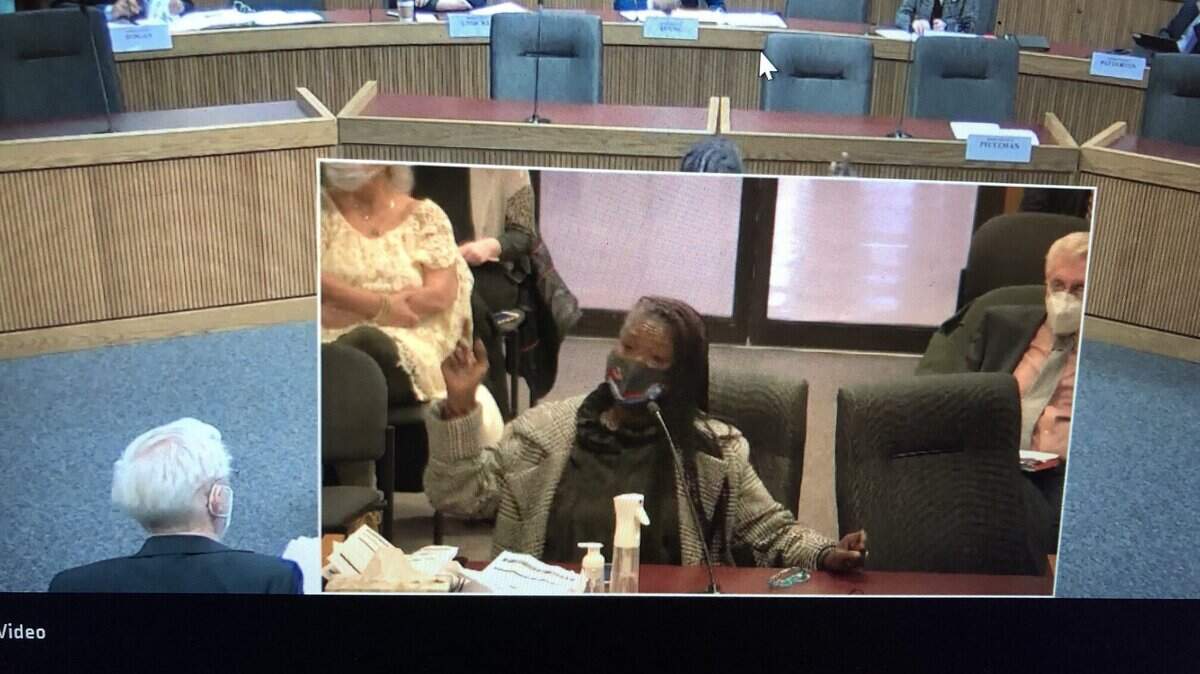
Former students of Missouri’s unlicensed boarding schools pleaded with legislators Wednesday to stop the abuse they say has gone unchecked for years.
By the end of the emotional, nearly two-hour hearing, one lawmaker had heard enough. She directed her ire at an official with Missouri’s child welfare agency who acknowledged that existing state law has led to systemic breakdowns that then allowed children to be abused in these religious schools.
“I’m sitting up here a little steamed because I’m realizing the state has known about this,” said Rep. Dottie Bailey, R-Eureka, after hearing former students talk about abuse they endured. “You’re gonna push it back on the legislature. It’s our fault. I’m calling you out on that.
“Somebody needs to be accountable for it. If you knew this was going on, somebody from your department should have come to one of the legislators or senators and said, ‘Hey, we’ve got a problem we need to investigate’. …. But it takes The Kansas City Star to bring it to our attention.”
Wednesday’s hearing before the House Children and Families Committee comes as The Star has been investigating faith-based reform schools, which are exempt from state oversight. A 1982 law allows religious organizations to claim an exemption from Missouri’s licensing requirement. The state is one of only two — South Carolina is the other — that has no regulations for exempt schools.
Since early September, The Star has spoken to more than 50 former students who attended several of these unlicensed facilities in Missouri. They have said that some school owners were lured to Missouri because of a lack of regulations and came here after being investigated or shut down in other states.
Former students and one parent — who drove all night to be there — came from across the country to testify at Wednesday’s hearing on a new measure that would for the first time give the state oversight of unlicensed reform schools. No one spoke in opposition.
Those who testified took lawmakers back to when they lived inside the locked compounds tucked in rural areas of Missouri.
“I was beaten, assaulted, starved,” said Colton Schrag, of New Mexico, who attended Agape Boarding School in Cedar County from 2006 to 2010. “I’ve seen kids put through walls; I’ve been put through a wall. Kids getting slammed on tile, concrete and asphalt.
“I don’t know how a kid has not died in your state in these schools that exist.”
Allen Knoll, of Seattle, said he was sent to Agape Boarding School at 13 and was there 31 months. He had been at another school in Mississippi before that.
He warned lawmakers that they may not see the devastating toll from these schools for more than a decade, because kids don’t talk about it right away.
“You won’t hear about it for 15 years because these people are going to kill themselves,” Knoll said. “They’re going to turn to drugs and alcohol. It’s going to take them a long time to recover.”
He said he’s opposed to states regulating religious programs, because he believes in separation of church and state.
“But I also believe in the civil rights of these children,” Knoll said. “This is their one shot...Please act, and act now.”
Bailey spoke directly to Knoll: “I do apologize for what happened to you. … Honestly, that you’re doing this right now is huge, and I thank you for being here and I’m sorry they did that in the name of Christ because that’s not what Christ is about.”
Rep. Mary Elizabeth Coleman, the committee chairwoman, was on the verge of tears after Knoll spoke.
“I’m a mother of six,” said Coleman, R-Arnold. “I have five sons. And I see my sons being there. And this is very emotional testimony, and they’re all going to be very emotional, and I just want to thank you for sharing your story. And I apologize on behalf of the state.”
Several advocates spoke in favor of the proposed legislation. Jessica Seitz, of Missouri KidsFirst, said the measure would “help us know where these facilities are, be able to check on kids, and if necessary shut them down.”
“We’ve got to protect children and ensure our state is not a hospitable place for predators,” she said.
Emily van Schenkhof, director of the Missouri Children’s Trust Fund, said Wednesday’s hearing was “probably one of the most painful I’ve ever sat through.”
“The stories that I’ve heard today have just broken my heart and have left me feeling embarrassed and ashamed of our state that we did not correct these problems much earlier,” Schenkhof said. “It also makes me feel embarrassment and shame that I did not know that these issues were going on as a child advocate. … I should have asked you all to fix these problems many years ago.”
Sponsors of the identical House bills are Rep. Rudy Veit, R-Wardsville, and Rep. Keri Ingle, D-Lee’s Summit, who was the first to call for legislative reform.
Known as The Child Residential Home Notification Act, the proposed legislation would require all faith-based boarding schools to register with the state — referred to in the measures as “notification” — and mandate federal criminal background checks for all employees and volunteers. Any person who fails to complete a criminal background check is guilty of a class B misdemeanor. The schools also would have to adhere to fire, safety and health regulations.
The measure would require schools’ registration to include a description of the agency or organization running the facility, the names of all the students and the contact information for their parents or guardians. The schools also would have to provide the name of the executive director and all staff members, as well as a copy of the fire, safety and health inspections and proof that every child’s medical records are on file.
A legislative effort to change the law in 2003 died in the House after intense pressure from opponents who said it would interfere with religious freedom. But sponsors of the new bill and child advocates insist the issue is not about religion.
“These are bad actors who are using other people’s faith to abuse children,” Ingle said. “People of faith could not commit these atrocious acts. We are essentially describing torture.”
Kelly Schultz, director of the Missouri Office of Child Advocate, said the new measure specifically says “that treatment, curriculum, is something that the state is not going to mess with.”
“This is not church versus state or state versus the church,” she said. “This is state versus people hurting kids and giving us the bare minimum of what we need to do to protect children in the state of Missouri.”
And unlike in 2003, lawmakers say this legislative push is bolstered by the testimony of many former students and has bipartisan support, including that of House Speaker Robert Vescovo, a Republican from Arnold.
“I’m so impressed with Speaker Vescovo and his dedication to improving our child welfare system and ensuring that all children of the state of Missouri are safe and we couldn’t do any of this without his support,” Ingle said.
Veit said he thinks the chances of passage are good: “I feel very confident about it.”
“I have talked to several organizations,” he said, “and they all agree that this bill doesn’t require them to do anything that a good, caring business would not do anyway.”
The state currently does not track these schools in any way. That means it doesn’t know where they are located or how many there are in Missouri.
Failure to comply with the law could ultimately result in the removal of children or a facility being shut down.
Coleman said the committee will work on the bill at its next hearing. The goal is to make sure the language is what it needs to be. She only wishes state officials would have come to lawmakers sooner so additional abuse could have been prevented.
“This should never have happened,” Coleman said. “And if we can give more tools to ensure that it never happens, then I don’t see how we can’t.”
This story was originally published February 10, 2021 at 2:26 PM.