KU opens investigation into another fraternity for possible hazing violations
AI-generated summary reviewed by our newsroom.
- KU opened a formal investigation into Delta Upsilon over alleged hazing this semester.
- University cited hazing, harm to persons and registered-organization violations.
- Delta Upsilon faces co-investigation, potential discipline and non-student oversight.
Editor’s Note: A previous version of this story included incorrect information about when KU lifted Delta Upsilon’s earlier suspension for hazing. The fraternity was allowed to begin recruiting again in 2022 and was officially reinstalled in 2023.
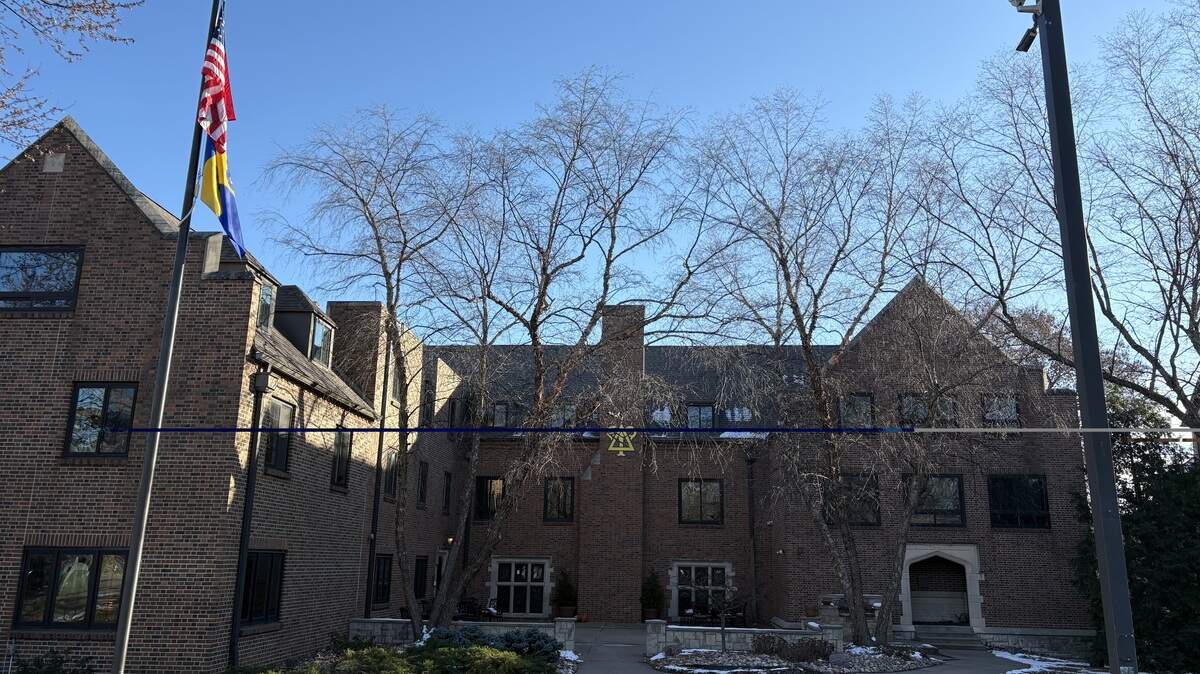
Another fraternity at the University of Kansas has been placed under investigation following a report that members engaged in hazing and other harmful behavior this semester.
KU notified Delta Upsilon of the investigation in a formal letter, dated Oct. 6. The letter outlines potential violations but does not include specific allegations against fraternity members.
Delta Upsilon was previously suspended by the university for four years following a separate hazing investigation. The fraternity was allowed to begin recruiting again in 2022 and the chapter was officially reinstalled in 2023.
“With the information received regarding the alleged hazing, the university will conduct an investigation to determine what occurred and whether it is a violation of university policy. The purpose of the investigation is simply to gather information and determine appropriate next steps, if any,” reads the letter, which The Star obtained through an open records request.
Delta Upsilon International Executive Director Justin Kirk said in an email statement that the organization “proactively placed the (KU) chapter on reorganization status” in November. That means a committee of non-student leaders is now overseeing chapter operations, approving all activities and conducting membership reviews, Kirk said.
“After the University of Kansas notified Delta Upsilon of policy violations involving our Kansas Chapter on Oct. 6, 2025, the Fraternity immediately began a co-investigation with the university,” Kirk said. “This has included interviews with chapter officers and members. The conduct process is still ongoing, and we continue to work with the university on next steps.”
A KU spokesperson did not respond to multiple requests for comment.
Details of KU investigation
According to the letter, KU is investigating Delta Upsilon for three potential student code of conduct violations. They include “hazing,” “harm to persons” and “registered organization” — a provision that allows the university to punish student organizations for conduct violations committed by individual members.
The letter warned that retaliation against those who filed a complaint or participated in the investigation was strictly prohibited and could result in disciplinary action. It also said that “falsification, distortion, or misrepresentation of facts by individuals participating in the investigation or in follow-up interviews” could result in disciplinary charges, “for obstructing the investigative process.”
Another KU fraternity, Sigma Alpha Epsilon, was sanctioned in September for lying to officials during a hazing investigation into an incident on the first day of fall semester classes when paramedics were called to the fraternity house to render emergency life support for a young member who had lost consciousness.
An online list of KU student organizations that have been sanctioned for violating university rules shows that another fraternity, Alpha Tau Omega, was placed on probation in October for the same three conduct violations that Delta Upsilon is accused of committing — “hazing,” “harm to persons” and “registered organization.”
Records obtained by The Star indicate those violations occurred during the fall 2024 semester but provide no details about what harmful behavior members were found to have engaged in.
Delta Upsilon past hazing
Delta Upsilon was originally chartered at KU in 1920.
The international organization disbanded its KU chapter in 2018 after a scandal where pledges were urinated on, spat on and hit repeatedly for coming forward with hazing reports, according to a story in The Kansan, the university newspaper.
The chapter was revived in the fall of 2022 with all new members, and it officially regained its charter in December 2023.
A request for comment sent to an email address designated for chapter leaders on the Delta Upsilon website went unanswered, and the chapter’s fraternity mother referred a reporter to the international organization.
In August, The Star interviewed a senior at KU who identified himself as one of the founding members of the Delta Upsilon chapter that reformed in 2023. At the time, he said the fraternity had a zero-tolerance policy for hazing because of its destructive nature that “splinters a good bonding experience.”
He said he had witnessed a “toxic” culture within some fraternities at KU, but described Delta Upsilon as a different kind of organization known among members as “the frat for non-frat guys.”
The Star’s Judy Thomas contributed reporting.
This story was originally published December 4, 2025 at 11:52 AM.
CORRECTION: A previous version of this story included incorrect information about when KU lifted Delta Upsilon’s earlier suspension for hazing. The fraternity was allowed to begin recruiting again in 2022 and was officially reinstalled in 2023.