KU lifts hazing suspensions against 3 fraternities. But 2 never really shut down
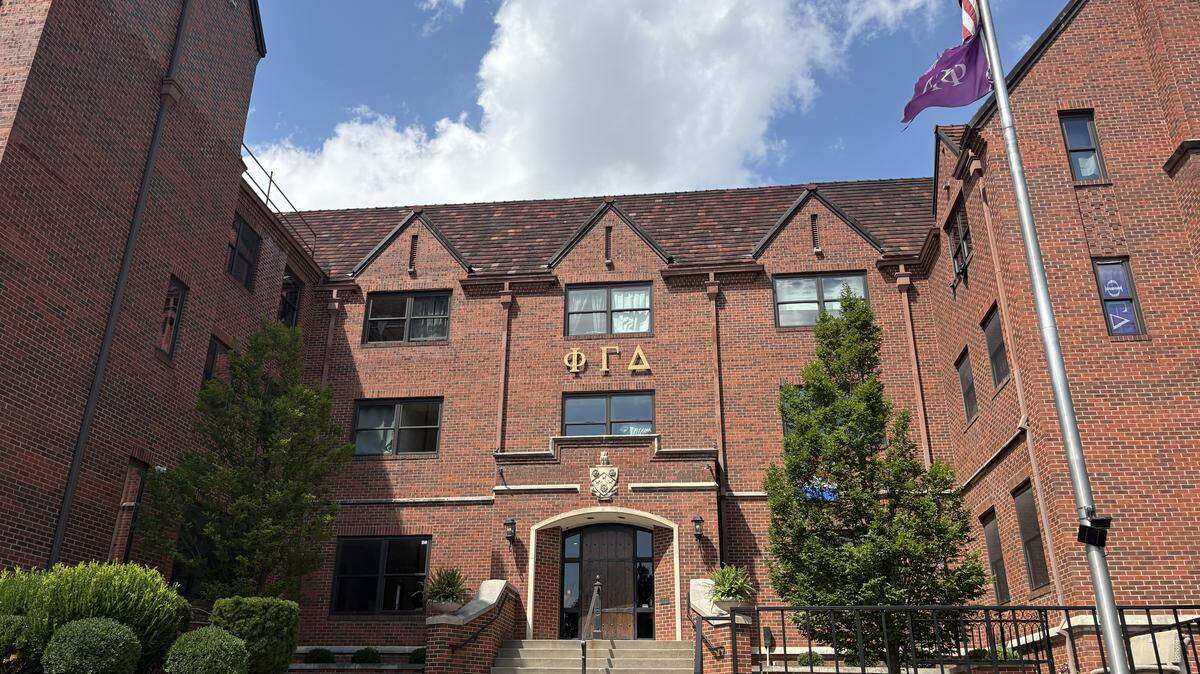
A former Phi Gamma Delta pledge at the University of Kansas allegedly endured up to four sleepless nights at the Lawrence fraternity house.
Throughout those nights, older members wandered into the room frequently to slam pledges’ beds against the wall in a practice known as “tacoing,” he noted in his complaint. On another occasion, pledges were forced to “sleep in vomit covered sheets,” he claimed.
Following a university investigation, KU suspended Phi Gamma Delta and another fraternity, Phi Delta Theta, for five years in January 2022, concluding that both organizations had fostered toxic and longstanding cultures of hazing.
Six months later, a third fraternity, Sigma Chi, was shut down by its national chapter and suspended by KU for participating in years of hazing activities and lying about it to national leaders.
This semester, KU allowed all three previously suspended fraternities to resume operations. But in reality, two of them never shut down.
Phi Gamma Delta, commonly known as FIJI, and Phi Delta Theta have maintained chapters at their Lawrence frat houses for more than three years since the damning hazing investigation.
That’s because their national organizations, which pay for insurance on the expensive properties, never pulled their charters, opting instead to dole out their own discipline. They also reached agreements with KU to shorten the suspensions by a year and a half.
“(The university) used to like to let the nationals do their dirty work. Well, they have two instances where they just, in the nationals’ opinion, overreached,” said Aaron Racine, a Johnson County attorney and executive director of the Kansas Fraternity Landlords’ League, or KFLL, a nonprofit group that represents the landlords of 11 KU fraternity houses.
Phi Gamma Delta and Phi Delta Theta are two of the member houses represented by KFLL. So is Sigma Chi, but because its national leadership disbanded the KU chapter, the fraternity will have to start recruiting from scratch.
“Sigma Chi, which was sanctioned by its national organization, does not have current members and is now focused on rebuilding its membership,” said university spokesperson Erinn Barcomb-Peterson in an email to The Star. “A staff member from the national Sigma Chi organization is working on recruitment for a KU chapter.”
Tim Piazza’s story
On Aug. 20, at KFLL’s invitation, hundreds of fraternity and sorority members packed KU’s performing arts center to hear from the parents of Tim Piazza. The 19-year-old pledge at Pennsylvania State University died in 2017 after twice falling down the stairs of the Beta Theta Pi house in a drunken daze.
Jim and Evelyn Piazza described how pledges were forced to navigate an obstacle course of drinking games that resulted in their son consuming at least 18 drinks before returning to the house and being plied with more alcohol.
Video recording from within the fraternity house shows that Tim attempted to leave, but he was too disoriented to open the front door and stumbled to the basement steps. He fell headfirst down 15 steps, and four fraternity brothers could be seen carrying his limp body back upstairs to a couch.
For the next several hours, Jim Piazza said, members poured beer on Tim, performed a sternum rub, slapped him, held him down on the couch and threw things at him in an attempt to revive him. At least several members knew Tim needed medical attention, his father said, but when they suggested calling 911, they were overruled by chapter officers.
At some point, everyone went to bed and Tim was left alone. He was last seen on the video stumbling toward the basement stairs again, and he was found in the February morning curled up in a fetal position at the bottom of the steps without a shirt on. “He was stiff and his body was turning gray,” Jim Piazza recounted.
When first responders were finally alerted — roughly 12 hours after Tim’s first fall — he was airlifted to a hospital for emergency surgery, his father said. His brain was bleeding, his spleen was ruptured and he had a punctured lung. He went into cardiac arrest and died.
“We miss Tim every day,” said Evelyn Piazza, her voice choked with emotion. “Our family of four is a family of three. Holidays suck. Thanksgiving, we can’t be at home anymore. Christmas, we feel like we have to escape and go somewhere else. Everything hurts.”
Finn Romeiser, a freshman and member of the Delta Chi fraternity at KU, said the Piazza’s presentation was “very moving.”
“I’ve always heard of the stories, of course, but it’s so easy on social media to kind of just scroll by it,” he said.
Romeiser said he hadn’t been pressured to drink or witnessed any behavior in his fraternity that he would consider dangerous.
Tragedies at KU fraternities
KU is no exception when it comes to hazing-related tragedies involving fraternities.
In 2009, Jason Wren, a 19-year-old freshman from Colorado, was found dead in his bed at the Sigma Alpha Epsilon house after a night of binge drinking. An autopsy found that he died of alcohol poisoning, with a blood alcohol concentration more than four times the legal limit for driving in Kansas.
Wren’s father said his underage son had begun drinking pitchers of margaritas at dinner with friends and later continued drinking beer and whiskey at the fraternity house into the morning hours.
The family sued the fraternity, alleging that Wren and other underage pledges were forced to quickly down large amounts of alcohol as part of a challenge. The first person to stop drinking or vomit was deemed the loser of the challenge, the lawsuit said.
At least 10 people who had some responsibility for Jason Wren were aware of fraternity rules against underage drinking, the suit alleged, but “served him alcohol and failed to assist him with medical attention even after it was clear that he needed medical attention.”
The lawsuit was settled in 2011, but the details were not made public.
In 2015, the university placed SAE on a one-year warning for hazing, and in January 2018, the fraternity was put on probation following a new hazing investigation. Five weeks later, the national office of Sigma Alpha Epsilon suspended the KU chapter. It reopened in 2022.
An April 8, 2024, story in The Kansan, the university newspaper, said the SAE chapter had undergone “a remarkable resurrection,” growing from four members when it reopened to more than 60 members that spring.
Then-chapter president Andrew Fisher told The Kansan that the revival was long and challenging.
“There were a lot of conversations, a lot of proving ourselves to the university and the community,” he said. “But seeing this house full of brothers again, it’s absolutely worth it.”
Fisher said the chapter had a renewed focus on philanthropy and responsible conduct.
“We have zero tolerance for hazing,” he told The Kansan. “Our focus is on academics, brotherhood, and giving back to the community.”
A year and a half after Wren’s death, an incident at another KU fraternity left a pledge with devastating injuries.
Matt Fritzie was paralyzed from the chest down after diving into a makeshift pool at the Phi Gamma Delta fraternity’s “Fiji Island” party in September 2010. An investigation by the university found that hazing was involved but could not confirm whether Fritzie was ordered to take the dive.
The university placed the chapter on two years of probation following an investigation.
Fritzie sued the fraternity and its chapter house association. The suit alleged that minors were allowed to consume alcohol during the party and that a fraternity member ordered the 18-year-old freshman to dive into the homemade pool. Fritzie suffered “severe injuries, including permanent spine damage and paralysis,” the lawsuit said.
Other KU fraternities have faced suspensions
Other KU fraternities have faced suspensions for hazing in recent years as well, according to an online list of registered organizations that have been sanctioned for violating university rules. The site names those that have been disciplined since 2018.
Sigma Phi Epsilon was suspended by its national office in 2018 while it investigated allegations of hazing, and the fraternity was placed on probation by the university in March 2018. The probation was to end March 15, 2019.
Delta Upsilon was shut down in July 2018 for hazing and “harm to persons,” and the fraternity’s national office suspended the KU chapter. The chapter was officially reinstalled in December 2023.
In January 2019, Pi Kappa Alpha was removed from campus until the fall of 2023 for “harm to persons,” hazing, and alcohol and drug use.
And in November 2020, the university shut down Pi Kappa Phi until Dec. 31, 2025, because of repeated violations of the university’s hazing ban and “an open culture of illegal drug use.”
Numerous other fraternities and a handful of sororities have received probation and warnings for hazing in the period from 2018 through the spring 2025 semester. Most of those sanctions had a duration of one year or less, and none are still in effect, according to the university’s online list. Organizations that are currently under investigation are not included on the list.
Those placed on probation for hazing during that time frame included Theta Chi, Zeta Beta Tau, Alpha Kappa Lambda, Delta Chi, Delta Tau Delta, Sigma Chi, Sigma Pi, Delta Upsilon, Sigma Phi Epsilon and Beta Theta Pi. Kappa Sigma was cited for “harm to persons.”
Those receiving warnings for hazing were the Alpha Kappa Alpha sorority, Phi Gamma Delta, Pi Beta Phi, Theta Chi, Alpha Epsilon Pi, and Alpha Chi Omega sorority for alcohol and drugs.
Though fraternities comprise an overwhelming majority of the organizations sanctioned by the university, other groups made the list as well.
The KU Cheer Team was placed on probation in September 2017 for violating policies on “harm to persons” and hazing. The probation ended Sept. 26, 2018. The KU Rock Climbing Club was placed on probation for one year starting in May 2019 for “harm to persons” and alcohol and drugs.
And the Stephenson Scholarship Hall was issued a one-year warning in May 2024 for alcohol violations.
Reversing the trend
Robert Eppler, speaker of the Students’ Assembly, told The Star last spring that KU “definitely has a reputation in Kansas as a party school compared to the other institutions,” adding that the culture of fake IDs and underage drinking extends beyond Greek life.
“Obviously, it looks bad on us,” Eppler said. “I feel like every frat probably does some hazing because every frat has their own secret rituals, so it’s probably easy to interpret that as hazing.”
Chapter leaders of Phi Gamma Delta and Phi Delta Theta did not respond to repeated requests for comment about how their organizations have changed in the years since the hazing findings.
But Rob Caudill, Phi Gamma Delta’s national executive director, said after the violations that led to the 2022 suspension, the fraternity took action to hold its KU chapter and members accountable.
“Among the many steps taken with the support of local alumni serving as Trustees, the Chapter completed a membership review and adopted the Fraternity’s Built to Lead model, which emphasizes continuous recruitment and multi-level member development in place of the traditional pledging system,” Caudill said in an email to The Star.
Katelyn Ferguson, a spokesperson for Phi Delta Theta said an email statement that the organization partnered with the university and local volunteers to investigate the hazing allegations and take corrective action in 2022.
“The resolution included removal of membership for individuals found responsible of violating policy, growth of volunteer advisory boards, and hazing prevention and educational programming requirements,” Ferguson said.
Billy Eckles, a sophomore and Phi Delta Theta member, said alcohol consumption is not allowed in the fraternity house and that the organization’s “frat mom” keeps members on their best behavior.
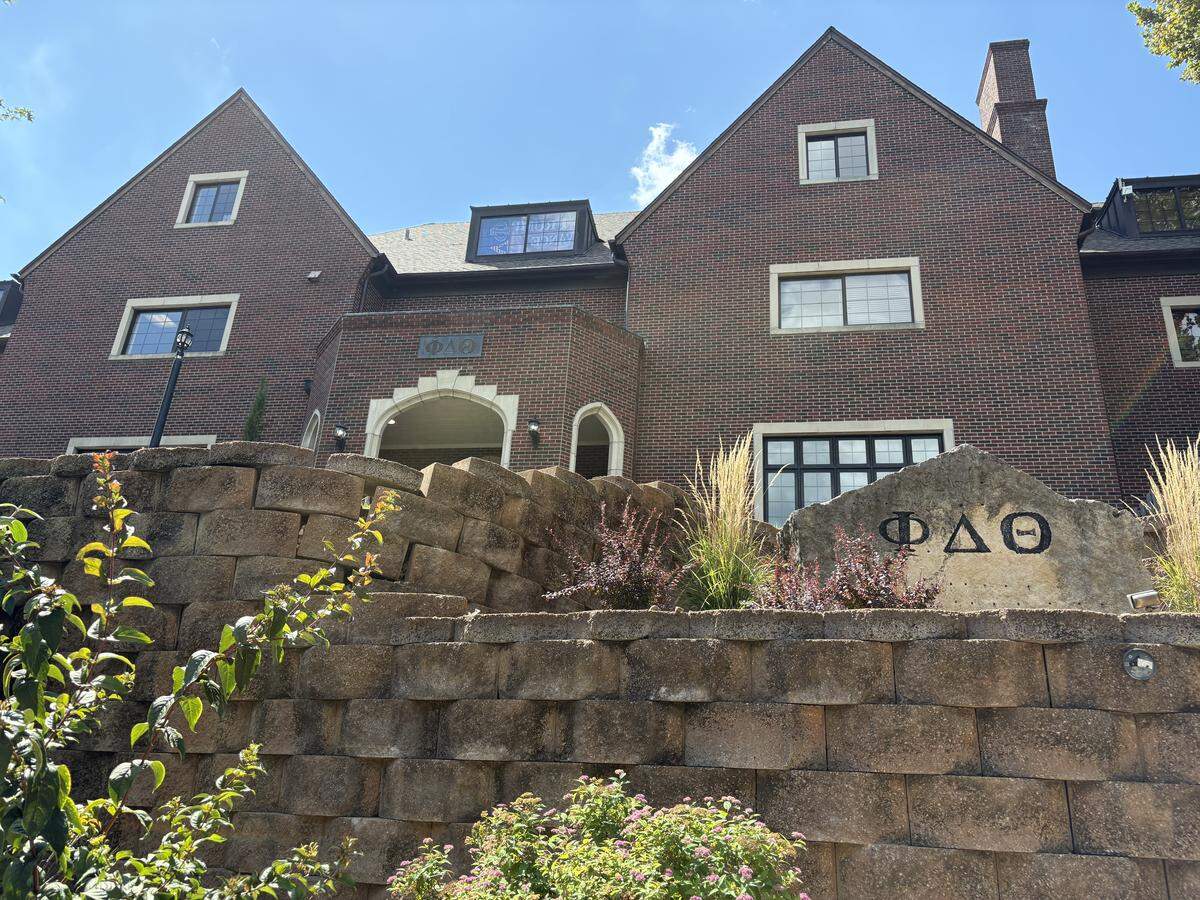
Community forum pages dedicated to rating Greek life organizations show some evidence of the chapters’ exploits over the last three years. They received mixed reviews — some glowing, some critical and others taunting.
On the Greek Review page for Phi Gamma Delta, one user referenced the university sanctions against the fraternity in a March 2024 post: “Top house for sure, can’t wait for them to get off probation so we can all be blessed with more fiji parties. keep up the good work boys.”
On the Phi Delta Theta Greek Review page, one user who identified as an ex-member expressed disillusionment with the organization in a December 2024 post.
“They were big back then but now they either face (sexual assault) allegations, probation, or some other problem every year,” the user wrote. “To remain relevant, they need (to) stay out of problems and it’s just something I don’t see them doing in the direction they’ve been heading for the past five years.”
Another anonymous reviewer wrote of Phi Delta Theta in March 2025, “don’t let us near ur girl fosho.”
Phi Gamma Delta is re-registering as a KU student organization, but Phi Delta Theta opted instead to join an independent fraternity leadership council outside the umbrella of university oversight.
Racine, the fraternity landlord representative, said at least three other KU fraternities have let their student organization status lapse in the last 18 months.
“It really has been a trend nationally over the last two or three years, I think probably in response to — I don’t know if you want to call it anti-Greek sentiment — but there would be an incident … and these campus presidents would just say, ‘We’re freezing the Greek system,’” Racine said. “You know, something bad happened at one house.”
The 2022 suspensions of Phi Gamma Delta and Phi Delta Theta were announced at the same time after investigations into separate hazing complaints.
Phi Delta Theta, the fraternity now disaffiliating with KU, was suspended after multiple hazing incidents were reported through university channels. One informant whose identity became known within the fraternity was called a “snitch” and a “loser” by other members, investigative records show. He ultimately left the state.
KU requires students in Greek life to complete an online risk management class that covers the dangers of excessive drinking and hazing. The university spokesperson did not respond to follow-up questions about expectations for fraternities that are no longer affiliated with KU or how the university would handle claims of wrongdoing at those chapters’ houses just off campus.
Racine acknowledged that Evelyn Piazza, the mother of the Penn State pledge who died in 2017, criticized the decision for chapters to rescind their student organization status.
“She said, ‘That’s just bad optics. It just looks like you’re trying to get away with stuff and not have university oversight.’ And that really isn’t the case,” Racine said.
On top of oversight from national organization leaders, KU can issue student conduct violations against individual members, he said. In serious cases, criminal charges can be brought.
Hazing is a misdemeanor in Kansas.
At Wednesday’s event, Heidi Garcia, director of KU’s Health Education Resource Office, reminded attendees that the university has an amnesty policy that encourages students to seek medical help for drug- and alcohol-related emergencies without facing conduct violations.
Building back
Luke Bolander is a senior and one of the founding fathers of KU’s new Delta Upsilon chapter, which was reinstated in 2023 after a 2018 scandal where pledges were urinated on, spat on and hit repeatedly for coming forward with hazing reports, The Kansan wrote.
“When I got here freshman year, a couple buddies and I restarted it because his dad was an alumni from like 1970,” Bolander said.
They began with 16 members, and they’re now up to 103 by his count.
Bolander said Delta Upsilon members refer to themselves as “the frat for non-frat guys,” adding that he feels personally responsible for protecting his brothers and cultivating a healthy group dynamic. Hazing, he said, has no place in their house.
“We prefer woodworking,” Bolander said. “So we got a lot of drills and we like building stuff.”
Bolander, a conservation technician set to earn his environmental studies degree next spring, said authenticity is a value he wants to instill in his fraternity brothers and those who will follow.
“I don’t want to bring down other fraternities,” Bolander said. “But I see a lot of kind of like, toxic personalities — wanting to be, I guess, I don’t know — they want them to be something they’re not. And we really want people to just be themselves.”
He said he hopes Sigma Chi, the lone reinstated fraternity that actually ceased operations in 2022, takes its time rebuilding at KU.
“They have a beautiful opportunity to start something brand new.”
This story was originally published August 24, 2025 at 6:00 AM.